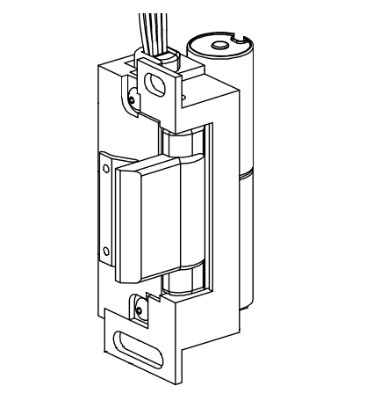
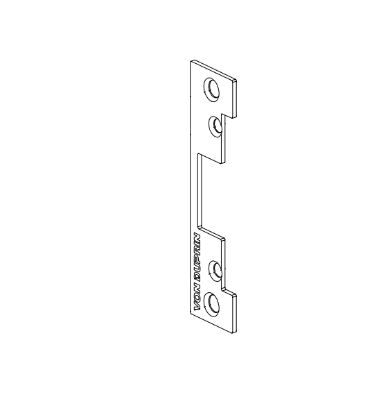
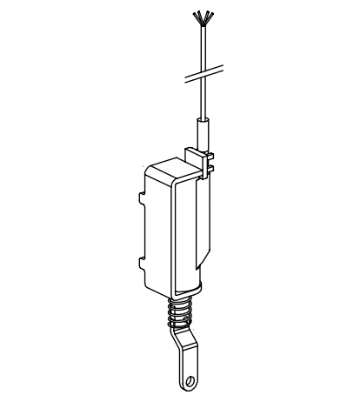
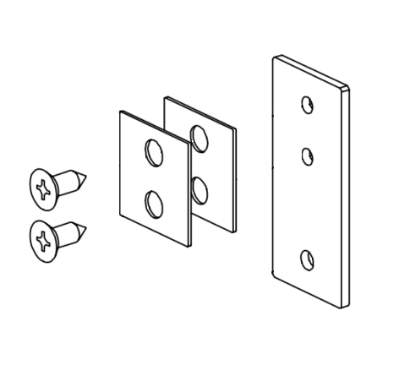
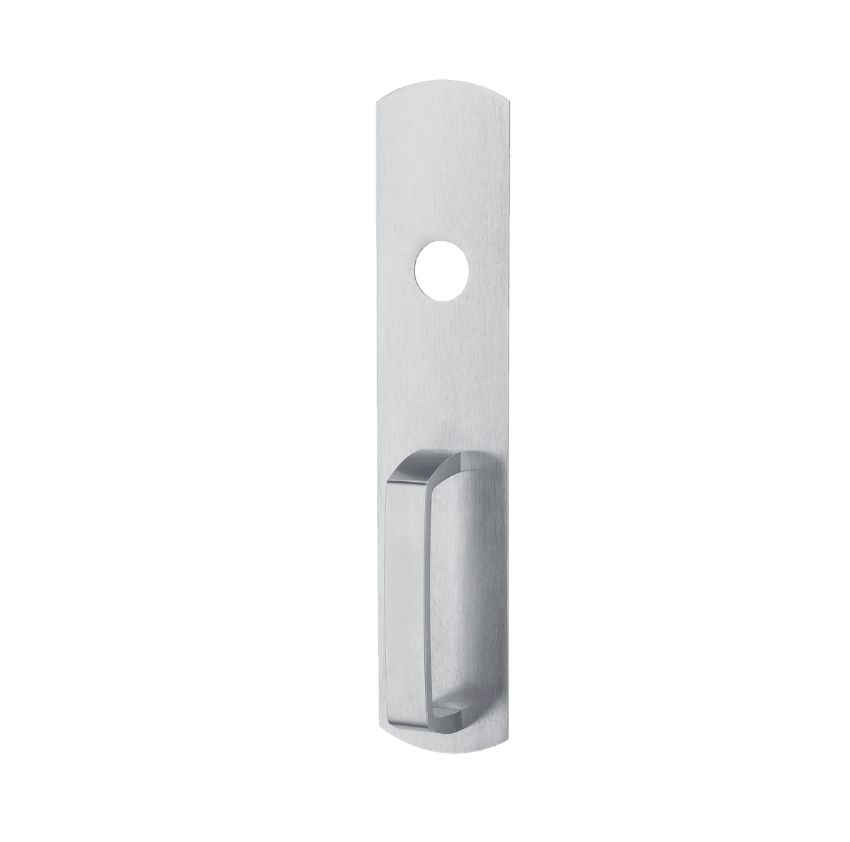
If you are searching for Von Duprin 9947 CVR exit device parts, this guide gives you everything needed to identify the correct components, understand the configuration differences, and order without a return. The 9947 is the concealed vertical rod designation in the Von Duprin 98/99 series, one of the most widely installed institutional exit device families in North America. Because devices in this series have been in service for decades, identifying the correct part requires knowing the manufacture date, the panic or fire configuration, the metal door or wood door variant, and the dogging type. Every part number and specification in this guide is sourced directly from the official Von Duprin 98/9947 Series Parts Manual and Installation Instructions.
Browse the Von Duprin 98/9947 CVR parts catalog at SecurityParts.com, or browse the complete Von Duprin parts catalog for the full range of 98/99 series components.
What Is the Von Duprin 9947 CVR Exit Device
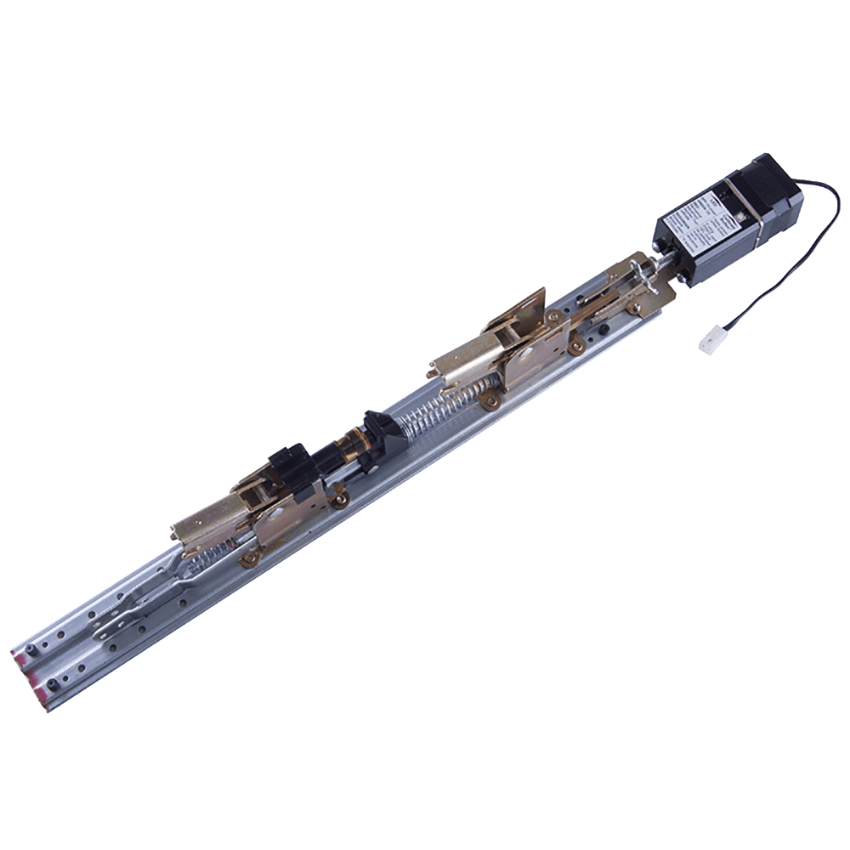
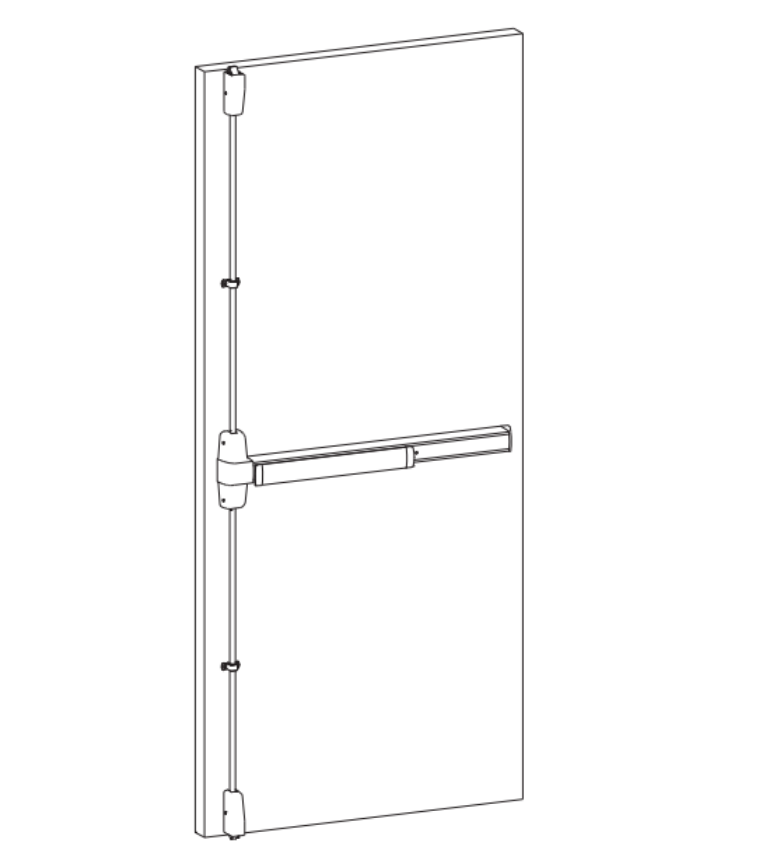
The Von Duprin 9947 is a concealed vertical rod (CVR) exit device in the 98/99 series. CVR means the vertical rods that connect the push bar to the top and bottom latches run inside the door stile rather than along the door face. When someone presses the push bar, both the top latch at the door head and the bottom latch at the threshold retract simultaneously, releasing the door. No rods are visible on the door surface.
This configuration is specified in three situations: double doors without a center mullion that require top and bottom engagement, architectural environments where exposed surface rods are not acceptable, and high-traffic institutional openings in hospitals, schools, and government buildings where door face cleanliness is a maintenance or design requirement.
The 9947 carries ANSI/BHMA A156.3 Grade 1 certification as part of the 98/99 series. It is available in panic and fire exit hardware versions, with multiple dogging options, electrified upgrade paths, and monitoring options. For an overview of how the 9947 fits within the broader Von Duprin product family, see the Von Duprin series guide and the Von Duprin exit device series comparison.
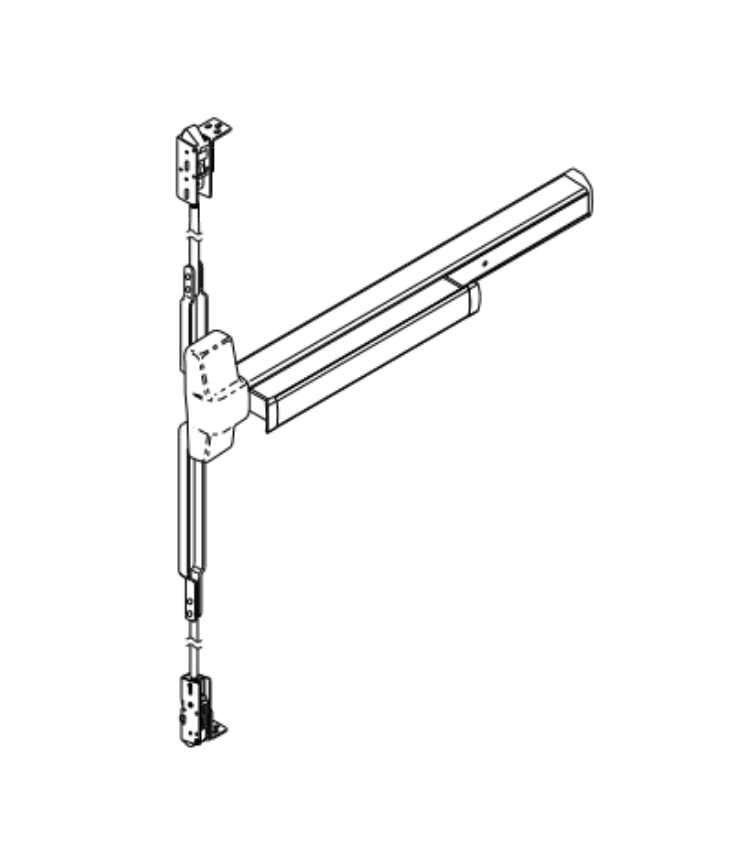
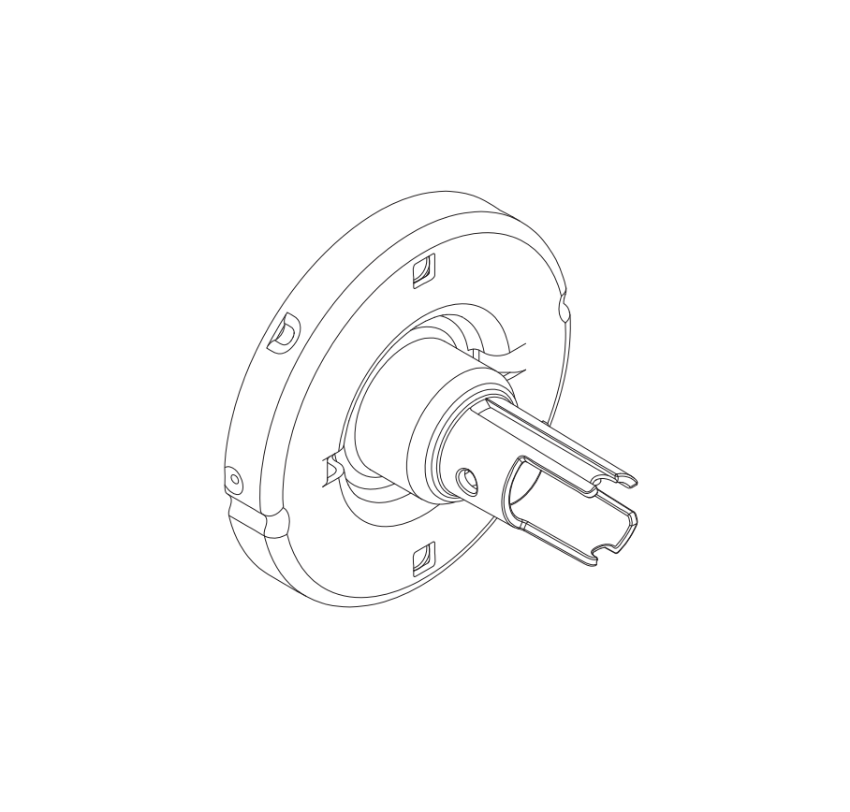
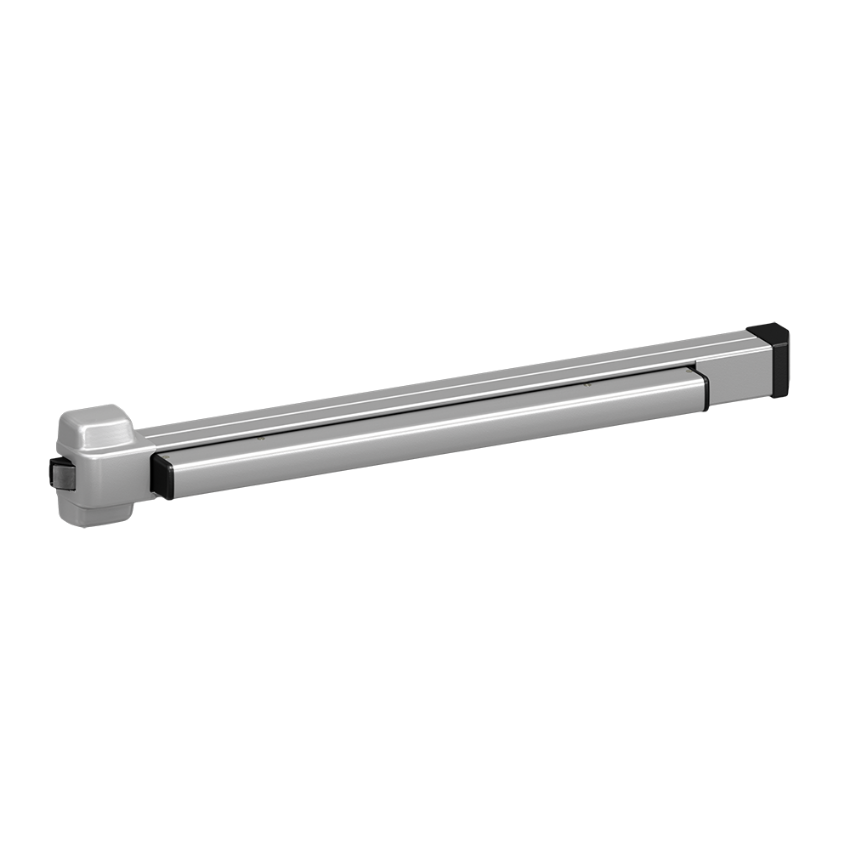
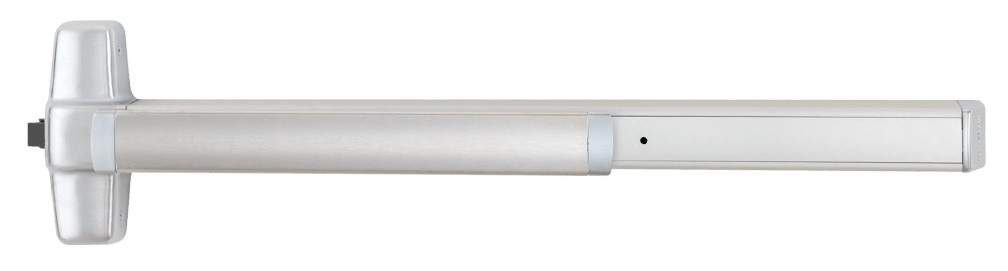
Von Duprin 98/9947 CVR concealed vertical rod exit device. OEM replacement parts including latch kits, rod assemblies, dogging components, and electrified options available at SecurityParts.com.
Von Duprin 9947 vs 9847: Understanding the Model Number Difference
The most common source of confusion when ordering parts for a CVR exit device in the 98/99 series is the 9947 versus 9847 designation. These are not two separate products. They are two naming designations for the same concealed vertical rod configuration, used at different points in the product history.
The 9847 designation was used on devices manufactured through the mid-to-late 1990s. The 9947 is the current active designation. The physical rod hardware, latch assemblies, mechanism case, and baseplate are functionally identical between the two designations. When a service manual or parts catalog lists a part as compatible with "98/9947," it applies equally to devices labeled 9847 on the door, provided the manufacture date falls within the same era.
The prefix digit is a separate matter. The 98-prefix (as in 9847, 9849, 9850) designates a smooth mechanism case. The 99-prefix (as in 9947, 9949, 9950) designates a grooved mechanism case. Both use the same internal parts. The grooved case on 99-series devices provides a better grip surface on high-contact institutional openings, which is why healthcare and educational facility specifications often call for the 99-prefix specifically.
For a complete guide to the 9847 CVR configuration and its part numbers, see the Von Duprin 9847 CVR exit device parts guide at SecurityParts.com. The 9847 and 9947 guides cross-reference each other for shared parts.
How to Read the Von Duprin 9947 Model Number
The full model designation on a Von Duprin 9947 CVR device appears on a label near the mechanism case housing on the hinge side of the device body. Reading this label correctly determines which replacement parts apply before any order is placed.
What the Prefix Tells You
The 98 prefix means smooth mechanism case. The 99 prefix means grooved mechanism case. Both prefixes share the same internal parts and latch kits. The mechanism case itself is listed separately by prefix when ordering because the case housings differ in texture.
What the Suffix Tells You
No suffix after 9947 means a standard panic exit hardware device. Cylinder dogging and hex dogging are permitted. The -F suffix (9947-F) means fire exit hardware. Dogging of any kind is prohibited, and the latch mounting bracket count per latch doubles from one to two. WDC suffix means Wood Door Concealed, a configuration with dedicated rod kits that are not interchangeable with metal door rod kits. LBR suffix means Less Bottom Rod, a fire device configuration that omits the bottom vertical rod and uses a spring-loaded floor latch instead.
The Manufacture Date: Why It Determines Your Parts
The manufacture date stamp on the device label is the single most important piece of information for ordering dogging components on the 9947. Two separate date thresholds create three distinct generations of replacement parts:
Devices shipped before August 1997: Use old-style dogging replacement kit 050153. This kit includes the old-style hex dog shaft 968112, the old-style dogging hook 969941, hitch pin 963909, and the CD actuator arm 968116 for CD-dogging configurations. Current-specification dogging parts do not fit these earlier devices.
Devices shipped between August 1997 and January 2002: Use current-specification dogging parts, hex dogging shaft 090040, dogging adapter 090043, dogging adapter spring 090042. The newer-style end cap kit (050014) can also be used on these devices, but requires that the mechanism case and cover plate on the hinge stile have a square cut and a clean edge.
Devices shipped after January 2002: Current-specification parts apply across all assemblies. No legacy substitutions needed.
A second date threshold applies to electrified devices only: the EL solenoid replacement kit 050218 is a legacy kit for devices shipped before January 1987. This kit replaces old-style EL solenoid parts with the new style. If you have a pre-1987 EL9947 device, this kit restores electrified function without replacing the entire device.
Von Duprin 9947 Configurations: Choosing the Correct Parts Path
Before ordering any replacement part for a Von Duprin 9947 CVR device, confirm all four of the following:
Panic or Fire Exit Hardware
Look for the -F suffix in the model number. Fire hardware fundamentally changes which parts apply. Fire devices require two latch mounting brackets per latch (panic uses one), have no dogging capability of any kind, use a different center case kit (050022 for fire vs standard panic center case kit), and require a center case cover kit (050073) that includes parts for a three-piece cover conversion. Ordering panic latch kits for a fire device results in the wrong bracket count every time.
Metal Door or WDC Wood Door Concealed
Metal door and WDC variants use different rod kits that are not interchangeable. The WDC designation appears in the model number. If the device is in a wood door, the WDC-specific top rod (050582) and WDC-specific bottom rod kit (050583) apply. Metal door installations use top rod 050574 and bottom rod kit 050575. Using metal door rod kits on a WDC installation will not produce the correct fit or engagement geometry.
Door Width: 3-Foot or 4-Foot Device
The push bar retrofit kit (PBKIT) and some mechanism case components are door-size specific. A 3-foot device uses a different PBKIT from a 4-foot device, and the mechanism cases are also listed separately: 99 Series mechanism case for 3-foot (968144), 99 Series mechanism case for 4-foot (968146), 98 Series mechanism case for 3-foot (970191), 98 Series mechanism case for 4-foot (970192). Always measure door width before ordering push bar or mechanism case components.
Manufacture Date
As described above: pre-August 1997 devices use old-style dogging parts (050153 kit). Post-1997 devices use current-specification dogging parts. This is the one variable that cannot be determined from the model number alone, it requires reading the date stamp on the label.
Von Duprin 9947 Latch Kits and Rod Assemblies
Latch assemblies and vertical rod kits are the most frequently replaced components on CVR exit devices. They wear at pivot points and latch bolt faces on high-cycle openings and are the first parts to check when a door is not latching properly at the top or bottom. All part numbers below apply to both the 9847 and 9947 designations on post-1997 devices.
Latch Kits, Metal Door Configurations
050492, 98/9947 Top Latch Kit. Replaces the top latch assembly at the door head. Each kit includes one latch mounting bracket. Panic devices use one bracket per latch (one total per top latch). Fire devices use two brackets per latch (two total per top latch).
050493, 98/9947 Bottom Latch Kit. Replaces the bottom latch assembly at the door threshold. Does not apply to LBR (Less Bottom Rod) fire devices, which use a separate fire latch kit. Same bracket quantity rules as the top latch kit.
109324, 98/9947 Latch Mounting Bracket. The bracket that mounts the latch case to the door preparation. Panic device: one per latch, two total for both latches. Fire device: two per latch, four total. This is the part most frequently under-ordered, confirm device type before determining quantity.
Latch Retrofit Kits: Converting 9947 to 9948 Latch Design
When a 9947 latch assembly is worn beyond individual component replacement, or when individual latch parts for the 9947 design are no longer available separately, retrofit kits convert the original 9947/9847 latch to the updated 9948 latch system. Retrofit kits include items equivalent to the top and bottom latch kits plus one mounting bracket per latch.
050047, 98/9948 Latch Retrofit Kit (non-EL). For panic devices. Includes parts to convert the original 98/9947 latch to the 98/9948 system.
050048, 98/9948-F Latch Retrofit Kit (non-EL). For fire-rated devices.
050522, EL98/9948 Latch Retrofit Kit. For panic devices with electric latch retraction.
050523, EL98/9948-F Latch Retrofit Kit. For fire-rated devices with electric latch retraction.
Call 845-935-0301 before ordering retrofit kits on older 9947 devices. SecurityParts.com pre-order support can confirm which kit applies to your specific device before the order ships.
Vertical Rod Kits
050574, Adjustable Top Rod, metal door, standard door height range of 6 feet 8 inches to 8 feet 4 inches. The top rod is adjustable to match door height and must be set before hanging the door to achieve correct latch bolt engagement at the top strike.
050575, Adjustable Bottom Rod Kit, metal door. Includes the rod and adjustment hardware. The bottom rod adjustment sets the clearance between the bottom latch bolt and the floor or bottom strike.
050582, WDC Adjustable Top Rod, wood door concealed variant only. Not interchangeable with metal door top rod 050574.
050583, WDC Adjustable Bottom Rod Kit, wood door concealed variant only. Not interchangeable with metal door bottom rod kit 050575.
Rod Connecting Screws
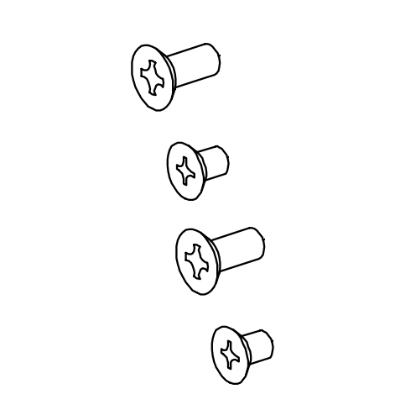
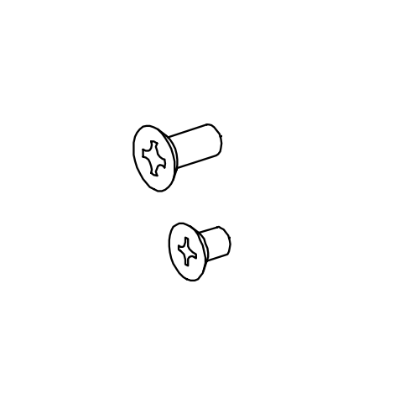
090071, 98/9947 Rod Connecting Screw (package of 2). Used to connect rods on 9947-design devices.
090072, 98/9948 Rod Connecting Screw (package of 2). Used after converting to the 9948 latch retrofit system.
900620, 98/9947 Adjusting Screw Package (package of 2). The screws used to fine-tune top and bottom rod engagement at the latch bolts.
900898, 98/9947 Adjusting Screw LBR Package. The adjusting screw package specific to Less Bottom Rod fire configurations.
Von Duprin 9947 Baseplate and Dogging Assembly Parts
The baseplate assembly contains the dogging mechanism that holds the push bar in the depressed position during business hours. Dogging parts wear most quickly on high-traffic doors where the hex key is used multiple times daily.
Current-Specification Dogging Parts (Post-August 1997 Devices)
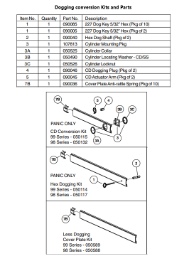
090040, Hex Dogging Shaft (package of 2). The most commonly replaced dogging component on the 9947. The shaft strips when a misaligned or improperly seated hex key is forced into the dogging socket. Replace whenever the push bar will not stay dogged or requires unusual force to dog.
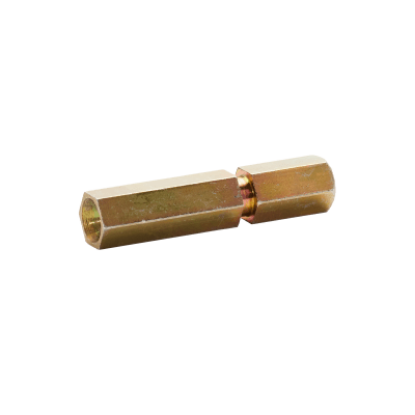
Von Duprin 090040 Hex Dogging Shaft (package of 2), the most commonly replaced dogging component on the 9947. In stock at SecurityParts.com.
090042, Dogging Adapter Spring (package of 2). The spring that locks the dogging adapter into the mounting bracket. Fatigue failure on high-cycle doors presents as a push bar that releases from the dogged position prematurely.
090043, Dogging Adapter (package of 2). The housing the dogging shaft and adapter spring fit through. Inspect the adapter for cracks whenever the shaft is replaced.
090085, 227 Dog Key, 5/32-inch hex (package of 10). The hex key used for field dogging of the 9947 push bar.
090005, 227 Dog Key, 5/32-inch hex (package of 2). Smaller quantity of the same dogging hex key.
Old-Style Dogging Service Replacement Items (Pre-August 1997 Devices)
For devices shipped before August 1997, use only the following old-style parts. Current-specification dogging parts do not fit these earlier devices.
050153, Old Style Hex Dogging Replacement Kit. The complete kit for restoring dogging function on pre-August 1997 devices. Includes the old-style hex dog shaft, dogging hook, and hitch pin.
968112, Old Style Hex Dog Shaft. Individual shaft component from the legacy assembly.
969941, Old Style Dogging Hook.
963909, Number 22 Hitch Pin (Hex/CD Dogging, Old Style).
968116, Old Style CD Actuator Arm. For cylinder dogging configurations on pre-August 1997 devices.
Cylinder Dogging (CD) Components, Panic Devices Only
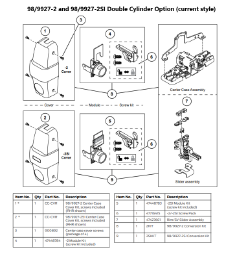
107813, Cylinder Mounting Package. Required when installing or replacing cylinder dogging on the 9947. Includes the cylinder collar, locating washer, and locknut.
090046, CD Dogging Plug (package of 2). Seals the cylinder dogging access hole in the mechanism case on CD-equipped devices.
090045, CD Actuator Arm (package of 2). Connects the mortise cylinder rotation to the dogging mechanism. Cylinder dogging is available on panic devices only; it cannot be installed on fire-rated 9947-F devices.
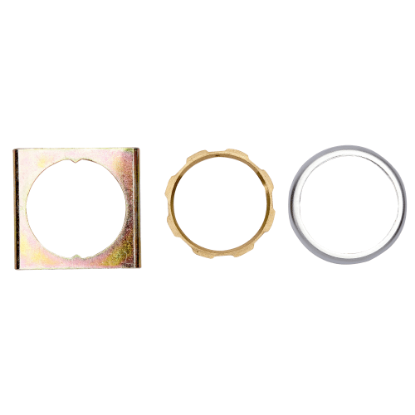
Von Duprin 107813 Cylinder Dogging Kit, required for installing or replacing cylinder dogging on panic-configuration 9947 devices. Includes cylinder collar, locating washer, and locknut. In stock at SecurityParts.com.
Von Duprin 9947 Mechanism Case, End Cap, and Center Case Assembly
Mechanism Case
968144, 99 Series Mechanism Case, 3-foot door (finished item, specify finish).
968146, 99 Series Mechanism Case, 4-foot door (finished item, specify finish).
970191, 98 Series Mechanism Case, 3-foot door (finished item, specify finish).
970192, 98 Series Mechanism Case, 4-foot door (finished item, specify finish).
End Cap Assembly
050014, 98/99 Series End Cap Kit (finished item). The current-specification end cap kit for all post-January 2002 devices and for pre-2002 devices where the mechanism case and cover plate have a square cut and a clean edge.
050524, Impact Resistant End Cap Bracket. The reinforced bracket inside the end cap assembly for high-abuse openings.
090036, Cover Plate Anti-Rattle Spring (package of 10). Prevents rattling of the cover plate at the end cap on installed devices.
900597, Device End Cap and Center Case Screw Package (finished item). The hardware package covering mounting screws for both the end cap and center case.
Old-style end cap components for pre-January 2002 devices: 900905 (old-style end cap and bracket assembly), 970548 (old-style cover plate stop), 900901 (old-style end cap screw package), and finish-specific end cap options 971082 (stainless steel), 971083 (brass), 971084 (bronze), 971085 (aluminum).
Center Case Assembly, Fire Devices
050022, 98/9947-F Center Case Kit Less Cover. The center case kit for fire-rated 9947 devices. Does not include the cover.
050073, 98/9947-F Center Case Cover Kit (finished item). Includes parts for the three-piece cover conversion on fire devices. Specify finish when ordering.
Other Center Case Components
050491, Shock Absorber and Holder Assembly. Absorbs impact when the push bar returns from the fully depressed position.
050529, 98/99 Series Control Link Pin and Retaining Ring.
090031, 98/99 Series Control Link Pin (package of 10).
050564, Center Case Cover Bracket.
900892, Center Case Cover Screws (package of 4, finished item).
090049, Push Bar Guide (package of 10).
Von Duprin 9947 Springs and Internal Pins
Springs and pins are the smallest components in the 9947 assembly and often the least expensive, but fatigue failure in any spring causes immediate operational symptoms. All are sold in multi-unit packages because field replacement typically uncovers adjacent spring wear at the same time.
090065, Bolt Return Spring (package of 10). Returns the latch bolt to the extended (latched) position after the push bar is released. Failure presents as a latch bolt that does not fully extend after the push bar is released.
090066, Top Latch Compression Spring (package of 10). Applies closing force to the top latch bolt. Fatigue failure presents as a top latch that does not fully extend or that requires the door to slam to engage the top strike.
090069, Ratchet Lever Spring (package of 2). Part of the ratchet release assembly. Replace whenever the ratchet release does not snap positively.
090064, Latch Link Pin (package of 10). Connects the latch link to the latch case at the pivot point. Wear at the pin bore on high-cycle installations causes latch movement to feel loose before full failure occurs.
090062, Bottom Latch Case Spirol Pin (package of 10). Retains the bottom latch assembly components within the latch case.
090063, Retaining Ring (package of 10). Secures the rod assembly at the latch connection points.
090039, Latch Return Spring (package of 10). Returns the latch to the engaged position on high-cycle openings. Fatigue failure is more common on exterior openings exposed to temperature cycling.
970978, 98/9947 Ratchet Release Spacer. The spacer used in the ratchet release assembly that allows rod length adjustment.
LBR (Less Bottom Rod) Fire Device Configuration
The LBR configuration is a fire exit hardware variant of the 9947-F that omits the bottom vertical rod. Rather than a rod engaging a bottom strike in the door threshold, the LBR uses a spring-loaded bottom latch that sits flush with the door bottom when released. This configuration is used where a threshold would create a tripping hazard, in facilities requiring ADA-compliant accessible thresholds, or where floor conditions do not permit a standard bottom strike installation.
The LBR configuration requires its own fire latch kit, separate from the standard 9947-F latch kit. It also uses the LBR-specific adjusting screw package 900898 rather than the standard 900620. Never order a standard 9947-F latch kit for an LBR configuration, the parts differ and will not install correctly.
Confirm LBR status from the model label before ordering any latch or rod components on a fire-rated 9947-F device. If the model shows 9947-F LBR or 9947WDC-F LBR, use the LBR-specific latch kit and the LBR adjusting screw package.
Fire Exit Hardware Rules Under NFPA 80: What the 9947-F Requires
The Von Duprin 9947-F fire exit hardware version carries requirements under NFPA 80 that do not apply to the panic version. Facility managers and service technicians working on fire-rated CVR openings need to understand these requirements before replacing any component.
Positive Latching on Every Cycle
A fire-rated 9947-F device must positively latch at both the top and bottom strike on every door close without any assistance. After replacing any latch component on a fire device, test the door by releasing it from fully open without pushing or assisting the close. Both latch bolts must engage their respective strikes fully under the spring force alone. A top or bottom latch that does not fully engage after parts replacement is a NFPA 80 deficiency that will be cited on the next annual fire door inspection. This is why the fire device uses two latch mounting brackets per latch rather than one, the additional bracket increases the mechanical advantage of the spring return.
No Dogging of Any Kind
NFPA 80 Section 4.7.1 prohibits any device that holds a fire door in the open position in a manner not connected to the building fire alarm system. Mechanical dogging, including hex dogging and cylinder dogging, cannot be installed or used on a 9947-F fire device. If a 9947-F device in your facility has a hex dogging mechanism installed, it is a fire code violation. This must be corrected before the next NFPA 80 annual fire door inspection. For guidance on fire door hardware compliance, see the commercial door fire rating guide.
OEM Parts Only to Maintain UL Listing
Only OEM replacement parts maintain the UL fire listing on the 9947-F device. Aftermarket latch kits, rod assemblies, or center case components installed on a fire-rated device can void the UL fire listing and create documented liability during an NFPA 80 fire door assembly inspection. For the complete case for OEM parts on fire-rated hardware, see the OEM vs aftermarket commercial door hardware parts guide.
Monthly Inspection Requirement
The official Von Duprin installation documentation specifies routine maintenance at intervals of not more than one month for fire-rated CVR devices. Monthly checks should confirm all components are in satisfactory working condition, the operating force to release the exit device has not changed significantly from the force recorded at original installation, the top and bottom strikes are clean and free from obstruction, the device has appropriate lubrication, no additional locking devices have been added to the door since installation, and all fixing screws are tight. Documenting these inspections is required for NFPA 80 compliance and provides evidence of proper maintenance if a device failure is ever disputed.
Electric Latch Retraction Options on the Von Duprin 9947
The Von Duprin 9947 supports three electrified upgrade options that convert a mechanical CVR device to provide remote latch release capability. All three options are available on panic versions only. None are available on fire-rated 9947-F devices.
EL, Electric Latch Retraction
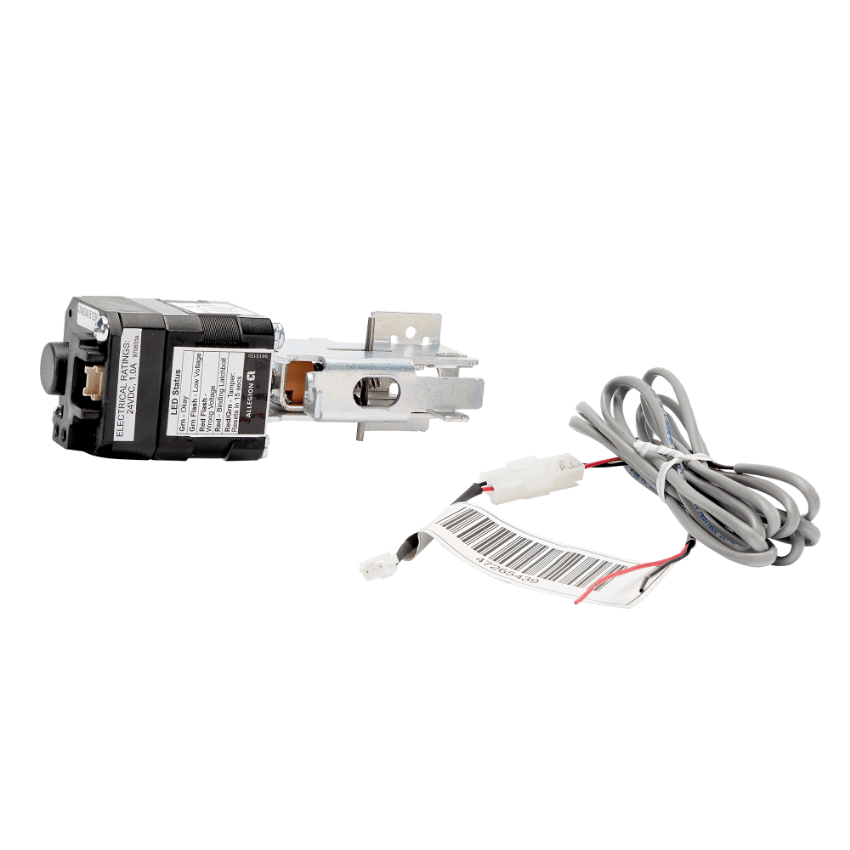
The EL9947 designation indicates a device with electric latch retraction. When the access control panel sends a signal, the solenoid retracts both CVR latches simultaneously, releasing the door without anyone pressing the push bar. The push bar can still be pressed manually for egress at any time. EL function on the 9947 is a field-installable addition to an existing mechanical device via an EL solenoid kit.
For devices shipped before January 1987, the EL solenoid replacement kit 050218 replaces old-style EL solenoid parts with the new style. This kit is the correct solution for restoring EL function on pre-1987 EL9947 devices without replacing the full device.
HD-EL, Hex Dogging with Electric Latch Retraction
The HD-EL9947 designation adds hex dogging capability to an electrified device. HD-EL allows the push bar to be manually dogged in the depressed position independently of the EL function, providing both electronic latch release for access control and manual hold-open capability for high-traffic periods. HD-EL9947 uses dedicated dogging rod kits: EL dogging rod kit for 3-foot door (050531) and EL dogging rod kit for 4-foot door (050532).
QEL, Quiet Electric Latch Retraction
The QEL designation indicates quiet electric latch retraction, a motorized, slower-speed latch retraction that produces significantly less noise and mechanical shock than the standard EL solenoid actuation. QEL is specified for healthcare settings, executive offices, and other environments where the click and thud of standard EL activation is unacceptable. For a detailed comparison of EL and QEL across the 98/99 series, see the Von Duprin QEL vs MEL guide.
For more information on access control integration with electrified exit devices including the 9947 series, see the Von Duprin electric strike parts guide for the frame-side components that work alongside electrified CVR devices.
RX and LX Monitoring Options on the Von Duprin 9947
RX: Request to Exit
RX places a switch in the push bar that closes when the push bar is depressed for egress. The signal tells the access control panel that a valid exit is occurring from the secured side, suppressing the forced-entry alarm that would otherwise trigger when the door opens without a credential presentation from the exterior. RX is the standard monitoring option for electrified 9947 installations connected to a modern access control panel. Without RX, every interior push bar activation generates a false alarm at the panel.
LX: Latch Bolt Monitor
LX monitors the latch bolt position in real time, signaling the access control panel whether the latch is extended (door latched) or retracted (door not latched). Unlike a standard door position switch that only signals whether the door is open or closed, LX specifically monitors the latch state. This distinction matters on fire-rated openings where a door that is physically closed but not latched represents a NFPA 80 deficiency. LX is specified on openings with latch compliance monitoring requirements, high-security applications where verifying the door is truly secured is required, and inspection programs that generate automated alerts on latch failure events.
Troubleshooting Common Von Duprin 9947 CVR Problems
Most field failures on the Von Duprin 9947 trace back to a small number of recurring causes. The following troubleshooting guide addresses the most common issues encountered on installed CVR devices.
Top Latch Does Not Fully Engage the Top Strike
Causes in order of frequency: top latch compression spring 090066 has fatigued and no longer provides sufficient force to drive the latch bolt into the strike; top rod adjustment has shifted, causing the latch bolt to engage the strike at an incorrect height; the top strike ratchet release is misaligned and retaining the latch bolt in the retracted position after the door closes. Check spring condition first, then rod adjustment, then ratchet release alignment per the Von Duprin installation instructions adjustment procedure.
Bottom Latch Does Not Engage the Bottom Strike or Floor Strike
Causes: bottom rod adjustment set incorrectly, placing the latch bolt above or below the floor strike pocket; bottom latch bolt return spring 090065 fatigued; bottom adjusting screw 900620 has backed out, changing the rod length; on WDC configurations, metal door rod kit installed instead of WDC-specific kit 050583, geometry mismatch prevents correct engagement.
Push Bar Will Not Dog or Releases from Dogged Position Prematurely
For post-1997 devices: hex dogging shaft 090040 is stripped, most common cause; dogging adapter spring 090042 has fatigued, second most common; dogging adapter 090043 is cracked, inspect whenever the shaft is replaced. For pre-1997 devices: use old-style hex dogging replacement kit 050153. Do not attempt to install current-specification dogging parts on pre-August 1997 devices.
Push Bar Returns Slowly or Incompletely After Being Pressed
Causes: latch return spring 090039 has fatigued on one or both latches; shock absorber and holder assembly 050491 has deteriorated, adding drag to the push bar return cycle; push bar guides 090049 are worn, causing friction in the push bar travel path.
Latch Bolt Movement Feels Loose or Sloppy Before Full Failure
Latch link pin 090064 has worn at the pin bore, the primary cause of loose latch movement before the latch fails to engage altogether. Inspect and replace latch link pins at both the top and bottom latch when this symptom appears, since the wear pattern is typically symmetric on high-cycle openings.
Top Latch Retracted but Does Not Return on Door Close
The ratchet release mechanism is not releasing the top latch bolt when the door closes. Check ratchet release plunger position in the door, it must pass through the hole in the door and be adjusted so the plunger triggers the latch release when the door is fully closed. Also check ratchet lever spring 090069 for fatigue.
EL9947 Device Latches Do Not Retract on Signal
For devices shipped after January 1987: confirm the solenoid is receiving correct voltage at the device terminals. Confirm the EL dogging rod kit is correctly installed if the device is an HD-EL configuration. If the signal voltage is correct and the latch does not retract, the EL solenoid assembly requires replacement. For devices shipped before January 1987: use EL solenoid replacement kit 050218 to replace old-style solenoid components with the current style before concluding the device needs full replacement.
How to Order Von Duprin 9947 Parts Without a Return
Commercial door hardware returns on exit devices are time-consuming and often hold up repairs on critical openings. Confirming five pieces of information before placing any order prevents the most common mis-orders on the 9947.
Confirm Panic or Fire Exit Hardware
The -F suffix confirms fire hardware. Without -F is panic. This single distinction changes latch mounting bracket quantities, dogging parts applicability, center case kit selection, and center case cover kit selection.
Confirm Metal Door or WDC
WDC appears in the model number. Metal door and WDC rod kits are not interchangeable.
Confirm Door Width
Measure the door width. Mechanism cases, push bar retrofit kits, and some baseplate components differ between 3-foot and 4-foot devices.
Confirm the Manufacture Date
Read the date stamp on the device label. Dogging parts differ across the August 1997 threshold. End cap kits differ across the January 2002 threshold. EL solenoid parts differ across the January 1987 threshold.
Confirm Whether the Device Has Cylinder Dogging
A mortise cylinder slot in the mechanism case confirms CD dogging. CD-equipped devices have the dogging plug 090046 and CD actuator arm 090045 as active assembly components. Non-CD devices do not have these parts installed.
Call 845-935-0301 before ordering latch kits on an older 9947 device. SecurityParts.com pre-order support can confirm which latch system applies to your specific device, current 9947 latch kits or the 9948 retrofit kit, before the order ships.
Von Duprin 9947 vs Other 98/99 Series CVR Configurations
Von Duprin 98/99 Series exit device parts at SecurityParts.com, OEM replacement components for CVR, SVR, and rim configurations including the 9947 and 9847 concealed vertical rod series.
The 9947 is one of three CVR configurations in the 98/99 series. Understanding the full CVR family helps when specifying replacements or comparing device options.
9947 (Standard CVR, Standard Rod)
The 9947 uses adjustable vertical rods connecting the push bar to the top and bottom latch assemblies. Rods run inside the door stile. This is the standard CVR configuration for metal and wood door applications up to 8 feet 4 inches in door height. The 9947 is the most widely installed CVR configuration in the 98/99 series.
9949 (CVR, Standard Rod, Additional Configuration)
The 9949 is a related CVR designation in the 98/99 series that uses the same latch kits and rod hardware as the 9947 in many configurations. Both the 9947 and 9949 share the same baseplate assembly and many center case components. Consult the parts manual for your specific device designation to confirm which components are shared.
9950 WDC (Concealed Vertical Cable, Wood Door)
The 9950WDC uses concealed vertical cables rather than rods in wood door concealed applications. The cable transmission system differs from the rod system used in the 9947WDC. Do not order 9947 rod kits for a 9950WDC device.
For the complete 98/99 series parts overview including rim and surface vertical rod configurations, see the Von Duprin 98/99 Series exit device parts guide. For a device-type comparison covering CVR, SVR, and rim configurations across the full Von Duprin catalog, see the commercial exit device parts guide.
Where the 9947 CVR Fits in the Von Duprin Exit Device Family
The Von Duprin 98/99 series spans three physical configurations: rim, surface vertical rod (SVR), and concealed vertical rod (CVR). Each serves different door types and architectural requirements.
The rim device mounts on the door face and latches at a single frame-side strike. It is the correct specification for single doors and paired doors with a center mullion. For guidance on rim device parts and configurations, see the rim exit devices guide.
The SVR device uses exposed top and bottom rods on the door face, providing three-point locking on double doors without a center mullion. The SVR rods are visible on the door surface. SVR is specified where concealed rods are not required but three-point locking is still needed.
The CVR device, the 9947, conceals both rods inside the door stile. It is the architectural choice for double doors where surface rod hardware would be visually unacceptable and three-point locking is required. For a side-by-side comparison of all Von Duprin series configurations, see the Von Duprin exit device series comparison. For a broader overview of exit device types and how CVR fits within commercial door hardware systems, see the panic hardware for commercial doors guide.
Why Choose SecurityParts.com for Von Duprin 9947 Parts
SecurityParts.com has supplied commercial door hardware parts since 2001. The Von Duprin catalog at SecurityParts.com covers the complete 98/99 series including the 9947 CVR configuration, with OEM replacement parts and same-day shipping from US warehouses on stocked components.
9947 and 9847 Cross-Referenced
SecurityParts.com documents the 9947 and 9847 as the same physical device with different naming conventions, so locksmiths and facility managers searching either designation find the correct parts without confusion.
Manufacture Date Guidance Included
The pre-order support team at SecurityParts.com can confirm which dogging and end cap parts apply to your specific device across the August 1997 and January 2002 manufacture date thresholds before the order ships. Call 845-935-0301.
Panic vs Fire Parts Clearly Separated
Latch mounting bracket quantities, center case kits, and cover kits for fire devices differ from panic specifications. SecurityParts.com documents these differences so the correct quantity and configuration is ordered the first time.
OEM Parts Only
Every Von Duprin 9947 replacement part stocked at SecurityParts.com is genuine OEM, maintaining UL fire listing integrity on fire-rated CVR devices and ANSI/BHMA Grade 1 compliance on panic devices.
Browse the Von Duprin 98/9947 CVR parts catalog, the 98/99 series parts page, and the complete exit devices catalog at SecurityParts.com. Free shipping on orders $300 and over. Same-day shipping on stocked OEM parts. For parts identification and pre-order configuration support, call 845-935-0301 or visit the SecurityParts.com contact page.

Von Duprin commercial door hardware at SecurityParts.com, OEM replacement parts for the full Von Duprin exit device catalog including 98/99 series, 22 series, 33/35A series, 75 series, and 88 series. Same-day shipping on stocked parts.
About the Author
This guide is published by the commercial door hardware team at SecurityParts.com, a supplier of OEM Von Duprin, Schlage, LCN, Falcon, and Detex parts since 2001. The technical information in this guide is sourced directly from the official Von Duprin 98/9947 Series Parts Manual, the Von Duprin 98/9947 and 98/9949 Series Exit Devices Parts Manual, and the Von Duprin 98/9947 Concealed Vertical Rod Exit Device Installation Instructions (document 107603). For Von Duprin 9947 CVR parts identification, manufacture date verification, and same-day shipping availability, call 845-935-0301 or visit the SecurityParts.com contact page.
 Trusted Since 2001