RSS

Blog posts of '2026' 'March'

Von Duprin 575/2 Mortise Lock Strike: Specifications, Compatibility, and When to Use It

The Von Duprin 575/2 mortise lock strike is the optional pairs strike for double door openings on 1-3/4 inch wood doors. It receives the latch bolt from the active leaf's Von Duprin mortise exit device when both doors close. Where the standard 575 covers single door configurations, the 575/2 addresses the specific geometry of a double door pair with a coordinator and astragal. Ordering the wrong strike produces a door that fails to latch, rattles in the frame, or creates a compliance gap.


Quick Answer

  • The Von Duprin 575/2 mortise lock strike is for double door pairs on 1-3/4 inch wood doors with a coordinator and astragal. It is not interchangeable with the standard 575.
  • Compatible with Von Duprin mortise exit device series: 55, 88, 94/95, and 98/9975 (all using the 7500 mortise lock body).
  • Strike face dimensions: 1-1/2 inches by 4-7/8 inches. The standard 575 strike face is 1-25/32 inches by 4-7/8 inches - do not substitute one for the other.
  • A coordinator is required to ensure the inactive leaf closes before the active leaf. Without it, the bolt has no proper seat.
  • The part number is 575-2. Order from the Von Duprin 575/2 product page at SecurityParts.com.


Von Duprin 575/2 Mortise Lock Strike Specifications
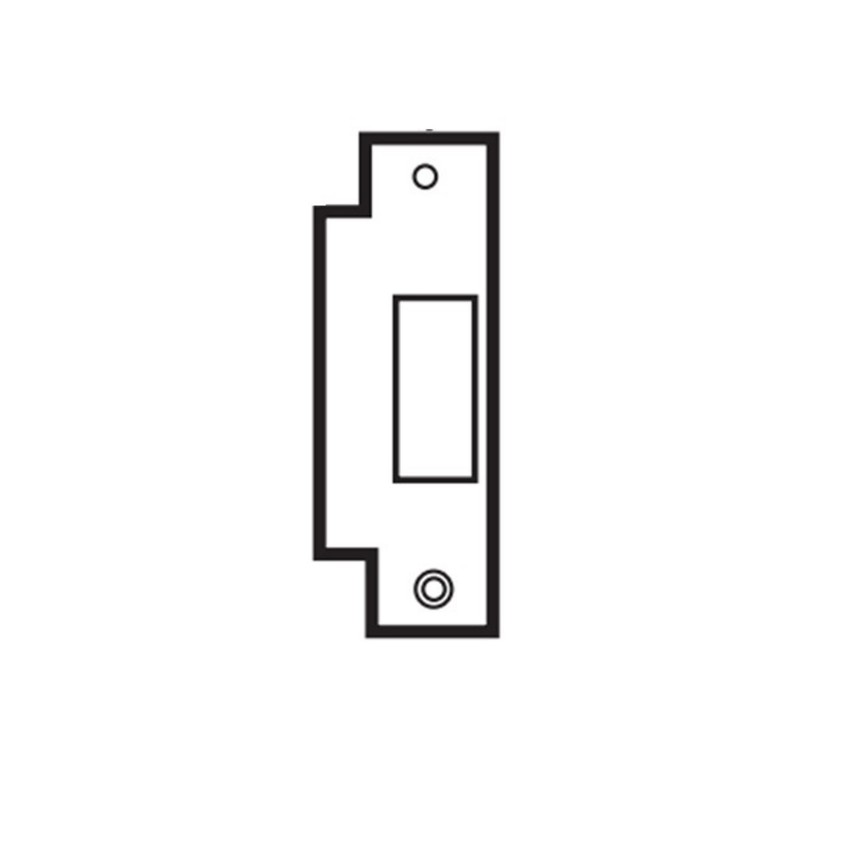
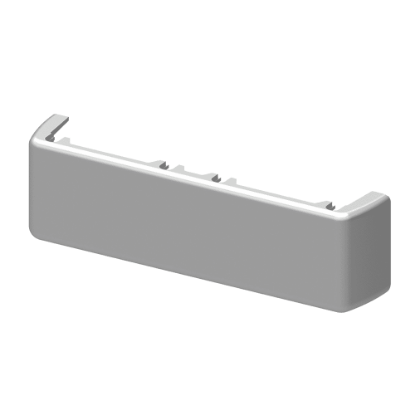
Von Duprin 575/2 mortise lock strike for double door pair applications at SecurityParts.com

Von Duprin 575-2 mortise lock strike. OEM replacement available at SecurityParts.com.


  • Part number: 575-2
  • Strike type: Mortise lock strike (optional pairs strike)
  • Door material: Wood door only
  • Door thickness: 1-3/4 inch
  • Door configuration: Double door pair with coordinator and astragal
  • Strike face dimensions: 1-1/2 inches by 4-7/8 inches
  • Compatible mortise lock body: 7500 mortise lock
  • Compatible series: Von Duprin 55, 88, 94/95, 98/9975
  • Available finishes: US3 (Bright Brass), US4 (Satin Brass), US10 (Satin Bronze), US26 (Polished Chrome), US26D (Satin Chrome), US28 (Satin Aluminum), 313 (Duranodic Dark Bronze)

When ordering, confirm the finish code matches the existing hardware on the inactive leaf. Finish mismatch is a common ordering error on replacement jobs. For guidance on ANSI finish codes and matching, see the commercial door hardware finish guide.


What the 575/2 Actually Does Inside a Mortise Exit Device Assembly

Understanding where this part lives in the assembly makes ordering it correctly much easier.

A Von Duprin mortise exit device houses the 7500 mortise lock body inside the door itself, recessed into a pocket cut into the door edge. When the push bar depresses, the mechanism retracts both the latch bolt and the deadlatch simultaneously. The strike plate mounted on the door frame or inactive leaf is what receives those bolts when the door closes.

On a single door, that strike is on the frame. On a double door pair, the active leaf closes against the inactive leaf, and the 575/2 is what sits on the inactive leaf to receive the active door's latch. The coordinator sequences the closing order so the inactive leaf always closes first. Without that sequence, the inactive leaf blocks the active door from closing into the strike. Without the correct strike on that inactive leaf, the bolt has no proper seat.

The "/2" in the part number is not a revision indicator. It specifically means pairs. That single character in the part number is what separates a correct specification from a component that physically will not fit the opening.


What Is a Coordinator and Why the 575/2 Requires One

A coordinator is a mechanical device mounted at the top of a double door frame that controls the closing sequence of both leaves. Its job is to ensure the inactive leaf always closes and latches before the active leaf swings shut.

This sequence is critical because the inactive leaf carries the 575/2 strike on its edge. If the active leaf closes first, it physically blocks the inactive leaf from reaching its closed position. When that happens, neither leaf latches correctly, and the 575/2 has no bolt to receive.

On fire-rated openings, a coordinator is mandatory. NFPA 80 requires that both leaves of a paired fire door assembly latch independently upon closing. A missing or broken coordinator is one of the most common fire door compliance failures found during AHJ inspections. For a full explanation of fire door hardware requirements, see the commercial door fire rating guide.

The astragal seals the gap between the two leaves and provides the surface the active leaf closes against. The 575/2's narrower strike face (1-1/2 inches versus the 575's 1-25/32 inches) reflects the geometry of the inactive leaf edge where the astragal is present.


Series Compatibility: Where the 575/2 Mortise Lock Strike Applies

The 575/2 is the appropriate optional strike for double door pair configurations across these Von Duprin mortise exit device series:

  • Von Duprin 55 Series - the standard commercial mortise exit device for a wide range of interior and exterior openings. On paired 55 Series installations with a 1-3/4 inch wood inactive leaf, the 575/2 is the correct strike. See the Von Duprin 55 Series parts guide.
  • Von Duprin 88 Series - heavy-duty, abuse-resistant specification for correctional facilities, government buildings, and high-security openings. The 88 Series uses the same 7500 mortise lock body, so the 575/2 applies identically on paired configurations. See the Von Duprin 88 Series buyers guide.
  • Von Duprin 94/95 Series - the mortise device variant of the INPACT recessed push pad line. On paired 1-3/4 inch wood door applications, the 575/2 is the correct inactive leaf strike. See the Von Duprin 94/95 Series parts guide.
  • Von Duprin 98/99 Series mortise device (9875/9975) - the same double door pair application on this series requires the 575/2 as the inactive leaf strike. See the Von Duprin 98/99 Series parts guide.

The common thread across all four is the 7500 mortise lock body and the bolt geometry it produces. The 575/2 is sized and positioned for that specific bolt pattern. If you are working with a device that uses a different mortise lock body, verify strike dimensions before assuming this part applies. For a full comparison of Von Duprin series and their configurations, see the Von Duprin exit device series comparison.


575 vs 575/2: The Specification Decision That Cannot Be Made by Eye

These two parts look similar. They serve the same functional role. The difference is entirely in the door configuration they are designed for, and that difference is not adjustable in the field.

The 575 is the standard single door strike. It fits 1-3/4 inch and 2-1/4 inch single doors, plus 2-1/4 inch double door applications with a coordinator. Its strike face measures 1-25/32 inches by 4-7/8 inches.

The 575/2 is the optional pair strike for double door applications at 1-3/4 inch door thickness, where the opening uses a coordinator and astragal. Its strike face is 1-1/2 inches by 4-7/8 inches - nominally narrower, which reflects the geometry of the inactive leaf edge where it is installed.

The decision rule is clear. If the active leaf of a 1-3/4 inch double door pair runs a Von Duprin 55, 88, 94/95, or 9975 mortise device, the inactive leaf needs the 575/2. Every other configuration points to the 575 or a different strike entirely.

Ordering by description instead of by part number and confirmed door configuration is where most 575/2 errors originate. For deeper context on mortise lock hardware and how strikes fit into the full assembly, see the mortise lock parts guide and the commercial mortise locks guide.


How to Identify and Order the Correct 575/2 Replacement

If you are replacing a worn or damaged 575/2 on an existing installation, confirm these four parameters before placing the order:

  1. Door configuration: Double door pair only. Single door installations do not use the 575/2.
  2. Door material and thickness: Wood door, 1-3/4 inch. Steel or hollow metal door applications require a different strike.
  3. Coordinator present: Confirm the coordinator is installed and functional. A worn coordinator that no longer sequences the closing order correctly will cause the same symptoms as a mismatched strike.
  4. Finish code: Match the finish code to the existing hardware. Order the specific ANSI finish, not just the part number, to ensure a visual match on the inactive leaf.

If you are unsure whether the installed device is compatible with the 575/2, locate the series number on the mechanism case label of the active leaf's mortise exit device. If it reads 55, 88, 94/95, or 98/9975, and the door is a 1-3/4 inch wood door pair with a coordinator, the 575/2 is the correct strike. Call 845-935-0301 before ordering if you need compatibility confirmation.


Why Security Parts Is the Right Place to Source the 575/2

Hardware this specific requires a sourcing process that is equally specific. General distributors list the 575 and 575/2 side by side with minimal context on which configuration each applies to. When a contractor or facility manager is moving fast, that ambiguity leads directly to a wrong-part order, a return, a delay, and a door that stays non-compliant longer than it should.

Security Parts structures this differently. The 575/2 product page presents the part against its confirmed series compatibility, door thickness, and material requirement so you can verify fit before ordering.


Organized the Way Field Professionals Think

Every series on the platform has its own model page with parts sorted by component category. If you are servicing a 55 Series or 88 Series mortise device installation and need to confirm which strike applies, the exit devices section and mortise locks catalog are organized so you move from series to model to part without navigating through unrelated hardware.

Interactive diagrams on each supported series page show where the 575/2 sits in the complete assembly. That visual confirmation is what prevents the wrong-part order that costs time on both ends of the transaction.


Two Decades of Commercial Hardware Knowledge

Security Parts has operated in the commercial door hardware market since 2001. That history means the catalog supports not just current-generation Von Duprin hardware but legacy models still running in buildings that have not refreshed their hardware inventory in a decade or more. Part number cross-references across generations, compatibility notes across series, and the ability to confirm whether a current part number applies to an older device are all built into how the platform works. That is not something a general hardware distributor provides.


Shipping Timelines That Work for Compliance Deadlines

When a double door pair is out of compliance because the inactive leaf is missing its strike or running a mismatched one, the correction is time-sensitive. Common components including the 575/2 are stocked across multiple US warehouses. Most orders process the same business day. UPS ground is standard, with expedited options when the timeline requires it. Free shipping applies to orders of $450 and above.


Pre-Order Support That Prevents Post-Order Problems

The team is reachable at 845-935-0301 and [email protected]. Compatibility questions, cross-references on older devices, and confirmation that a part number applies to a specific installation are handled before the order goes through. That conversation costs nothing and prevents the return that costs everyone time.


Everything for the Opening, Not Just One Component

A service call on a double door pair rarely ends at the strike. The inspection often reveals worn mortise lock components on the active leaf, a failing door closer, or an electric strike downstream that needs attention. All of it is in the same catalog, sourced from one place. For the full Von Duprin parts catalog, see the Von Duprin parts guide.


Conclusion

The Von Duprin 575/2 mortise lock strike is a precise component for a precise application. Double door pairs, 1-3/4 inch wood doors, coordinator-equipped openings, Von Duprin mortise series 55, 88, 94/95, or 9875/9975. Confirming those four parameters before ordering eliminates every wrong-part outcome this component is known for. Security Parts stocks the Von Duprin 575/2 with same-day shipping on stocked components, full series compatibility documentation on the product page, and direct support for pre-order verification at 845-935-0301. Order by confirmed configuration, not by description, and the installation is right the first time.


About the Author

This guide is published by the commercial door hardware team at SecurityParts.com, a supplier of OEM Von Duprin, Schlage, LCN, Falcon, and Detex parts since 2001. All part numbers, series compatibility information, and specifications are verified against live SecurityParts.com product pages and official Von Duprin documentation. For Von Duprin 575/2 ordering and pre-order compatibility support, call 845-935-0301 or visit the SecurityParts.com contact page.
 

Rim Exit Devices: A Field Guide for Facility Managers, Contractors, and Locksmiths

A rim exit device is the most widely installed category of panic hardware in commercial buildings. It mounts on the surface of the door, the latch bolt extends horizontally into a rim strike on the frame or mullion, and it releases in a single push. That simplicity is why architects, contractors, and facility managers have specified rim devices on everything from school corridors to hospital wings for decades.

Understanding how a rim exit device works, which components carry the most wear, and how to identify the right replacement part is not optional knowledge for anyone responsible for commercial door hardware. Building codes, life safety compliance, and operational continuity depend on it.


Quick Answer

  • A rim exit device is a surface-mounted panic bar that releases a horizontal latch bolt with a single push. No rods, no floor anchors, no overhead strikes.
  • It is non-handed, ANSI/BHMA A156.3 Grade 1 tested, and the most common egress hardware type in commercial buildings.
  • The Von Duprin 98/99, 22, 88, and 78 series are the dominant rim device lines in North American commercial specifications.
  • Rim devices require specific rail sizes matched to door width. Ordering the wrong rail is one of the most common job-site errors.
  • Key replacement parts: center case, dogging assembly, latch bolt, rim strike, end cap kit, and mounting package.
  • For fire-rated openings, the device must carry a UL fire-exit hardware listing, not just a panic hardware listing.
  • OEM replacement parts for all Von Duprin and Falcon rim series are available at SecurityParts.com with same-day shipping on stocked components.


How a Rim Exit Device Works and Where It Fits in the Exit Hardware Family

Exit devices fall into three configurations: rim, surface vertical rod, and concealed vertical rod. Rim devices are the most common because they are the simplest to install, the easiest to service, and compatible with the widest range of door types.

The mechanism is simple. A horizontal push bar or touchbar sits across the door face. When depressed, it drives an internal linkage that retracts a spring-loaded latch bolt. That bolt, when locked, projects into a rim strike mounted on the door frame or mullion. No rods, no floor anchors, no overhead strikes. The entire function happens in a single surface-mounted housing.

Rim devices are non-handed by design, meaning the same unit works on both left and right swing doors without modification. They are tested to ANSI/BHMA A156.3 Grade 1 standards, which requires the device to survive 2 million operation cycles and resist kick-in forces that would compromise a lower-grade product. For fire-rated assemblies, IBC and NFPA 80 compliance requires that the device be UL listed as fire-exit hardware, not just panic hardware. That distinction matters during inspections.

The dogging feature is one functional detail that separates rim devices used in commercial practice from a basic description. Dogging holds the latch in the retracted position, allowing free push-pull access without engaging the mechanism. It is used on non-fire-rated openings during business hours. On fire-rated doors, dogging is prohibited. Misunderstanding or misusing this feature is one of the most common compliance errors found during fire door audits.

For a full breakdown of how exit device types compare, see the Von Duprin exit device series comparison guide. For panic hardware code requirements and application guidance, see the panic hardware for commercial doors guide.


Rim Exit Device Parts: What Each Component Does

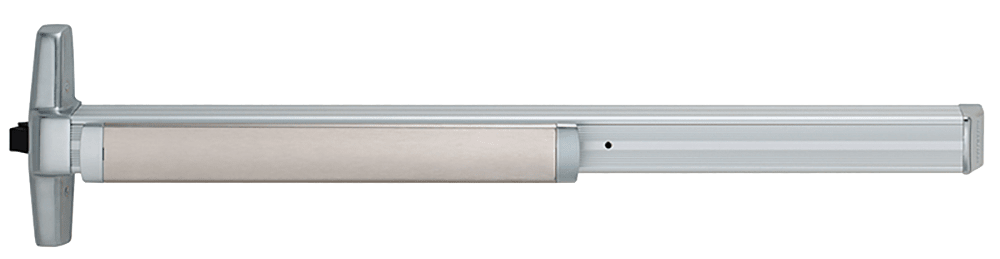
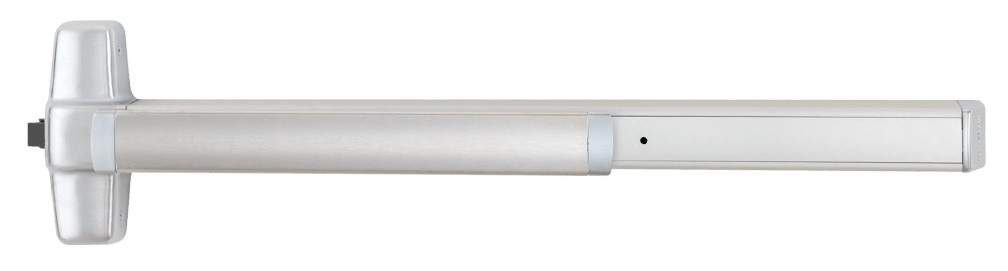
Von Duprin 98/99 series rim exit device parts and replacement components at SecurityParts.com

Von Duprin 98/99 series rim exit device. OEM replacement parts for the full 98/99 series are available at SecurityParts.com through the 98/99 series parts catalog.


A rim exit device contains fewer moving parts than most commercial locks, but each component serves a specific function. Knowing what each part does makes the service call faster and eliminates wrong-part orders.

  • Push bar / touchbar: The horizontal bar across the door face. When depressed, it drives the latch retraction mechanism. Push bars are solid across the full door width. Touchbars activate from a narrower central section.
  • Center case: The internal housing that contains the latch mechanism and connects the push bar to the latch bolt. On the 98/99 series, the center case is the primary structural component and the most frequently replaced case component after heavy use or forced entry.
  • Latch bolt: The spring-loaded bolt that projects into the rim strike when the door is in the locked position. Retracts when the push bar is depressed.
  • Rim strike: The metal plate mounted on the door frame or mullion that receives the latch bolt. Rim strikes must match the device series. A mismatched strike is the most common cause of intermittent latching failures.
  • Dogging assembly: The mechanism that holds the latch in the retracted position. Consists of a dogging shaft, dogging spring, and adapter components. The hex dogging shaft is the highest-wear part on high-traffic non-fire-rated openings.
  • End cap kit: The plastic or metal caps that close the ends of the mechanism case. Impact-resistant end caps prevent case damage from carts and equipment in high-traffic corridors.
  • Mounting package: The fasteners, through-bolts, and backplates used to secure the device to the door. Includes components for both standard and thick-door applications.

For complete part diagrams and OEM replacement parts by component type, see the exit devices parts guide and the Von Duprin panic bar parts catalog.


Rim Exit Device vs Surface Vertical Rod vs Concealed Vertical Rod

All three exit device types share the same push-bar egress mechanism, but they differ in how the latch engages the door frame and where they are used.

Rim Exit Device

Mounts entirely on the door surface. A single latch bolt engages a rim strike on the frame or mullion. Correct for single doors and the active leaf of double doors with a mullion. The simplest to install, easiest to service, and the most widely specified configuration in commercial construction.


Surface Vertical Rod (SVR) Exit Device

Uses exposed vertical rods running along the door surface to shoot latch bolts at both the top and bottom of the door frame simultaneously. Correct for double doors without a center mullion where a rim device on each leaf would conflict. The exposed rods are serviceable without door removal but are more vulnerable to damage in high-abuse environments. For SVR parts, see the Von Duprin 9847 CVR parts guide.


Concealed Vertical Rod (CVR) Exit Device

Same multi-point latch engagement as SVR but with rods concealed inside the door stile. Preferred where exposed hardware is architecturally unacceptable. Requires a mortised door preparation, making it more expensive to install and more complex to service. For CVR parts, see the Von Duprin 9947 CVR parts guide.

For most single-door commercial applications, the rim exit device is the correct specification. SVR and CVR configurations address specific double-door and architectural requirements that a rim device cannot meet.


Rail Sizing and Door Width: Getting This Right Before You Order

Rim exit device rails are manufactured in standard lengths that correspond to door width ranges. Ordering the wrong rail size is one of the most common job-site problems with exit devices, and it is entirely avoidable if you confirm the door width before placing the order.

Most manufacturers produce four standard rail sizes covering doors from approximately 24 inches to 48 inches wide. A standard commercial 36-inch door typically requires the rail sized for the 33-to-36-inch door width range. The rail is cut at the factory to the top of its range, so if you order the wrong size bracket, the device will not mount correctly to the door.

Narrow stile doors , most commonly aluminum-framed storefront doors , require a narrow stile device. Standard wide stile rim devices will not fit on narrow stile aluminum frames. The Von Duprin 78 Series is the correct specification for narrow stile aluminum doors. Standard-width 98/99, 22, and 88 series devices are for wide stile doors only.

Always note the exact door width and stile type before ordering any rim exit device or replacement rail component. If you are replacing a rail on an existing device, confirm the door width and the existing rail size from the device's model label before ordering.


Code and Compliance Requirements for Rim Exit Devices

Rim exit devices installed on commercial openings are subject to several overlapping code requirements. Non-compliance creates inspection failures, liability exposure, and in fire-rated applications, potential invalidation of the door assembly's fire rating.


ANSI/BHMA A156.3 Grading

All commercial rim exit devices must meet ANSI/BHMA A156.3 standards. Grade 1 is required for commercial applications and represents the highest level of cycle testing (2 million operations) and forced entry resistance. Grade 2 is permitted for lighter commercial applications. For a full explanation of ANSI grading across all commercial hardware, see the ANSI/BHMA door hardware standards guide.


Panic Hardware vs Fire-Exit Hardware

A rim exit device on a non-fire-rated door must carry a UL 305 panic hardware listing. A rim exit device on a fire-rated door must carry a UL 10C fire-exit hardware listing. These are two separate UL certifications. The UL label is stamped on the device body. Installing a panic-only device on a fire-rated opening creates an immediate compliance failure. For fire door assembly requirements, see the commercial door fire rating guide.


ADA Mounting Requirements

The Americans with Disabilities Act requires that exit device push bars be mounted between 34 and 48 inches above the finished floor. The push force required to activate the device must not exceed 5 pounds on any door required to be accessible. Most Grade 1 rim exit devices meet this threshold under normal operating conditions. Verify the operating force after any major service that involves the latch mechanism or push bar assembly.


NFPA 101 and Dogging Prohibition

NFPA 101 and NFPA 80 prohibit the use of the dogging feature on fire-rated openings. The dogging mechanism holds the latch retracted, which would prevent the door from latching automatically on closing , a requirement for all fire-rated assemblies. A hex dogging key must not be left in place on any fire-rated door. Some devices include automatic dogging release features that disengage when the fire alarm activates.


The Von Duprin Series That Dominate Commercial Specifications

When a specification sheet calls for a rim exit device, it is almost always pointing at one of these.

Von Duprin 98/99 Series is the flagship. The 98 has a smooth mechanism case, the 99 has a grooved case, and internal components are identical between the two. This series handles the full range of commercial applications from office buildings to institutional facilities. Parts are stocked, service documentation is thorough, and compatibility across generations of the same series is well-maintained. The catalog covers center cases, dogging assemblies, latch components, end caps, and electrified options including electric latch retraction. Browse the Von Duprin 98/99 series parts catalog or the 98/99 series parts and service guide.


Von Duprin 22 Series is the entry-level rim device for medium and low-traffic openings. It carries Grade 1 certification and shares much of the same design logic as the 98/99, but at a lower price point. The 22 Series is appropriate for office interiors, retail, and lighter institutional applications. See the 22 Series parts catalog and the Von Duprin 22 series parts guide.


Von Duprin 88 Series is the heavy-duty option, designed for high-security and abuse-resistant environments. Correctional facilities, government buildings, and any application where the device takes physical punishment from forced entry attempts or continuous heavy use. The 88 Series reflects that specification with reinforced construction throughout. See the 88 Series parts catalog and the Von Duprin 88 Series buyer's guide.


Von Duprin 78 Series covers narrow-stile aluminum doors. These are the all-glass storefronts and aluminum framed doors common in retail and commercial lobbies. The 78 Series is a specialized narrow-stile rim device, and its parts are not interchangeable with the standard-width series. If you are servicing an aluminum frame storefront door, confirm you are working with 78 Series hardware before ordering anything. See the 78 Series parts catalog and the Von Duprin 75/78/88/94/95/54 series parts guide.


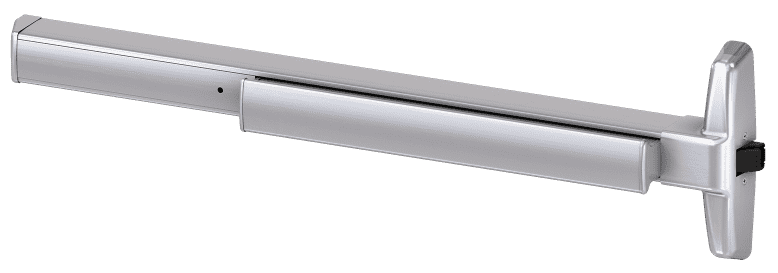
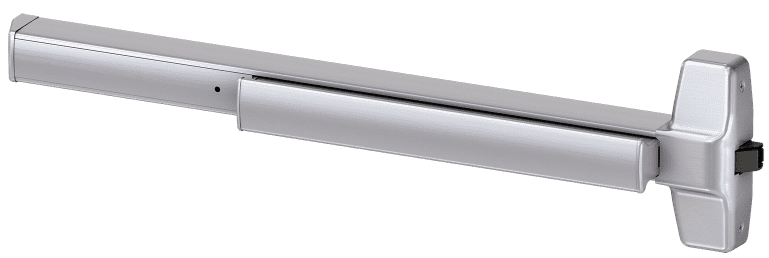
Von Duprin 78 series narrow stile rim exit device for aluminum storefront doors at SecurityParts.com

Von Duprin 78 Series narrow stile rim exit device. Required for aluminum storefront and all-glass door applications. OEM replacement parts available through the 78 Series parts catalog at SecurityParts.com.


The full catalog of rim exit devices, including all Von Duprin and Falcon series, is organized by model with interactive parts diagrams. You select the brand, select the series, and the parts are laid out visually against a diagram of the device so you can confirm exactly what you are ordering before it ships. Browse the complete exit devices catalog at SecurityParts.com.

For a side-by-side comparison of all Von Duprin series, see the Von Duprin exit device series comparison. For the full Von Duprin parts catalog across all product lines, see the Von Duprin parts guide.


Electrified Rim Exit Device Options: EL, QEL, and MEL

Rim exit devices can be ordered or upgraded with electrified options that integrate with access control systems. These options add electronic control over the latch bolt while maintaining the push-bar egress function required by code.


Electric Latch Retraction (EL)

The EL option retracts the latch bolt electronically via a solenoid. When the access control system sends an unlock signal, the bolt retracts and the door can be pulled open from outside without operating the push bar. EL devices draw significant inrush current on activation and require proper power supply sizing.


QEL and MEL: Quiet and Motor-Driven Options

Standard EL devices produce a mechanical snap when the solenoid fires. QEL (Quiet Electric Latch Retraction) uses a different mechanism to reduce that sound, which is important in healthcare, judicial, and education environments where door hardware noise is a functional concern. MEL (Motor-Driven Electric Latch Retraction) uses a motor rather than a solenoid and typically draws lower steady-state current. For a detailed comparison, see the QEL vs MEL guide.

If you are integrating a rim exit device with an electric strike on the same opening, see the electric strike parts guide and the Von Duprin electric strike parts guide. For electric strike selection and access control integration, the electric strikes catalog is organized by type and compatibility.


Why Security Parts Is the Right Source for Rim Exit Device Components

Every contractor, locksmith, and facility manager has dealt with the same problem at least once: the part arrives, it looks right, and it does not fit. Wrong generation, wrong finish, wrong series variant. The return takes five business days. The door stays out of compliance. The inspection gets flagged.

That problem does not come from ordering the wrong brand. It comes from sourcing parts through a platform that was not built for the precision this hardware demands. Security Parts was.


Built Around How Field Professionals Actually Work

Most hardware distributors organize their catalogs by category and manufacturer, which works fine for specifying new equipment. It breaks down completely when you are on a service call trying to replace a dogging spring on a Von Duprin 99 from a 2009 installation and you need to know whether the current part number still applies.

Security Parts is organized model-first. Every series, from the Von Duprin 98/99 to the 22 Series, the 78 Series for narrow-stile aluminum doors, and the 88 Series for heavy-duty applications, has its own dedicated page. Parts are categorized by component type within each model: center cases, dogging assemblies, latch components, end caps, electrified options. You are not scrolling through 400 line items trying to match a number from a service manual.

The interactive diagrams are what make the difference on a time-sensitive call. Before you add anything to the cart, you can confirm the component visually against an exploded diagram of your specific device. That single step eliminates the majority of wrong-part returns that plague sourcing through general distributors.


Over Two Decades in Commercial Door Hardware

Security Parts has been in the commercial door hardware business since 2001. That tenure matters because the exit device catalog in most commercial buildings spans multiple decades of hardware. A school built in 1998 may still be running original Von Duprin devices on fire-rated corridor doors. A hospital renovation from 2011 might have a mix of legacy and current-generation hardware on the same floor.

Knowing which part numbers cross-reference across generations, which components were revised and when, and which series share interchangeable components requires the kind of institutional knowledge that comes from two decades of working in this specific product category. That knowledge is baked into how the catalog is structured, not something you have to extract from a customer service call.


Shipping That Matches the Reality of Commercial Maintenance

When a rim exit device fails on a fire-rated opening, the timeline is not flexible. Common components are stocked across multiple US warehouses, and most orders are processed the same business day. UPS ground is the default carrier, with expedited options available when the situation requires it. Free shipping applies to orders over $450, which is a realistic threshold for any multi-part service call or facility stock order.


Support Before the Order, Not After

The team at Security Parts is reachable by phone at 845-935-0301 and by email at [email protected]. The value of that access is not general customer service. It is pre-order compatibility confirmation. If you have an older device and you are not certain whether a current part number applies to your specific generation, that is the conversation to have before the order ships, not after it arrives wrong.


One Catalog for the Entire Door Opening

A rim exit device rarely fails in isolation. The service call that starts with a broken dogging spring often reveals a door closer that needs attention or an electric strike that has been failing intermittently on the same opening. Security Parts carries replacement components across the full door hardware ecosystem, organized with the same model-specific structure as the exit device catalog. Browse door closer parts, electric strike parts, and the full commercial door hardware parts catalog at SecurityParts.com. That continuity reduces the number of vendors you are coordinating across a single project and means your parts arrive from one source on one timeline.

For guidance on when to use OEM parts vs aftermarket alternatives on commercial hardware, see the OEM vs aftermarket commercial door hardware guide. For a complete commercial maintenance schedule that covers exit devices and all related hardware, see the commercial door hardware maintenance checklist.


Conclusion

Rim exit devices are not complicated hardware. What makes them difficult is the precision required to order and replace individual components correctly, particularly on legacy devices where part-number drift across product generations can send even experienced technicians in the wrong direction.

The path to getting it right is the same every time: identify the exact series, locate the component visually against a parts diagram, confirm finish and generation compatibility, and order from a source that ships quickly and backs the transaction with real hardware knowledge. Security Parts offers that process for the full range of Von Duprin and Falcon rim exit devices, with same-day shipping on stocked components and accessible support for the compatibility questions that come up before the order goes through. Go directly to the exit devices catalog for the device you are servicing or call 845-935-0301 to confirm compatibility before ordering.


About the Author

This guide is published by the commercial door hardware team at SecurityParts.com, a supplier of OEM Von Duprin, Schlage, LCN, Falcon, and Detex parts since 2001. Technical specifications, ANSI/BHMA standards references, and series compatibility information are verified against live SecurityParts.com product pages and manufacturer documentation. For rim exit device part identification and same-day shipping, call 845-935-0301 or visit the SecurityParts.com contact page.

 

Deadbolt Parts Guide: Every Component Explained, What Fails First, and How to Replace It

Most people only think about their deadbolt when something goes wrong. The key is stiff, the bolt is not throwing all the way, or the lock is suddenly wobbly. At that point, you have two choices: call a locksmith or figure out which specific deadbolt part has failed and fix it yourself.

The second option is usually faster and cheaper, but only if you know what you are looking at. This deadbolt parts guide breaks down every major component inside a residential and commercial deadbolt, explains what each part does, tells you how to recognize when it is failing, and walks you through how to find and order the right replacement. Whether you are a facility manager maintaining dozens of commercial doors or a homeowner dealing with a sticky lock, this is the reference you need. For a labeled visual reference, see the Schlage deadbolt diagram at SecurityParts.com.


What Makes a Deadbolt Different From Other Locks

Before getting into the parts, it helps to understand what separates a deadbolt from a spring latch lock. A spring latch closes automatically when the door shuts and can be pushed back with a credit card or shim. A deadbolt does not use a spring to engage. It requires a deliberate rotation of a key or thumb turn to throw the bolt into the strike plate. That rotation is what makes it significantly harder to force open.

The bolt on a deadbolt is square-shaped and rigid, and it extends a full inch into the door frame when locked. That single design choice is why deadbolts are the standard security hardware on nearly every exterior door in commercial and residential buildings.


Deadbolt Types: Single Cylinder, Double Cylinder, and Mortise

Understanding which type of deadbolt is installed is the first step before ordering any replacement part. Parts are not interchangeable across types.


Single Cylinder Deadbolt

The most common configuration. Keyed entry from outside, thumb turn on the inside. Standard on residential exterior doors and most commercial interior doors that require key control. One cylinder to service, one set of parts to maintain.


Double Cylinder Deadbolt

Both sides require a key. There is no thumb turn on the interior side. Used where the door has a glass panel adjacent to the lock that could otherwise allow an intruder to reach through, break the glass, and operate the thumb turn. Double cylinder deadbolts carry fire safety implications and are restricted or prohibited on some egress doors under local codes. Confirm compliance with local building requirements before specifying a double cylinder on any egress door.


Mortise Deadbolt

A mortise deadbolt is part of a mortise lock chassis that mounts inside a pocket cut into the door edge. The deadbolt and the latchbolt are housed in the same chassis. Common on high-security commercial openings, hotel corridor doors, and older institutional buildings. Mortise components are not interchangeable with cylindrical deadbolt components. For mortise lock parts and specifications, see the mortise lock parts guide and the mortise locks vs cylindrical locks guide at SecurityParts.com.


The Complete Deadbolt Parts Breakdown

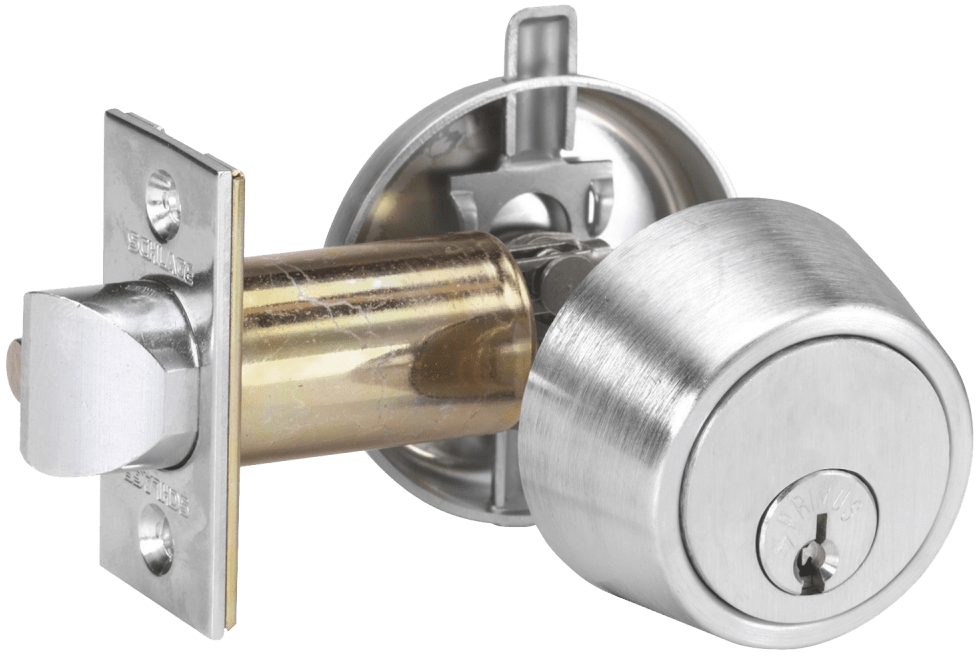
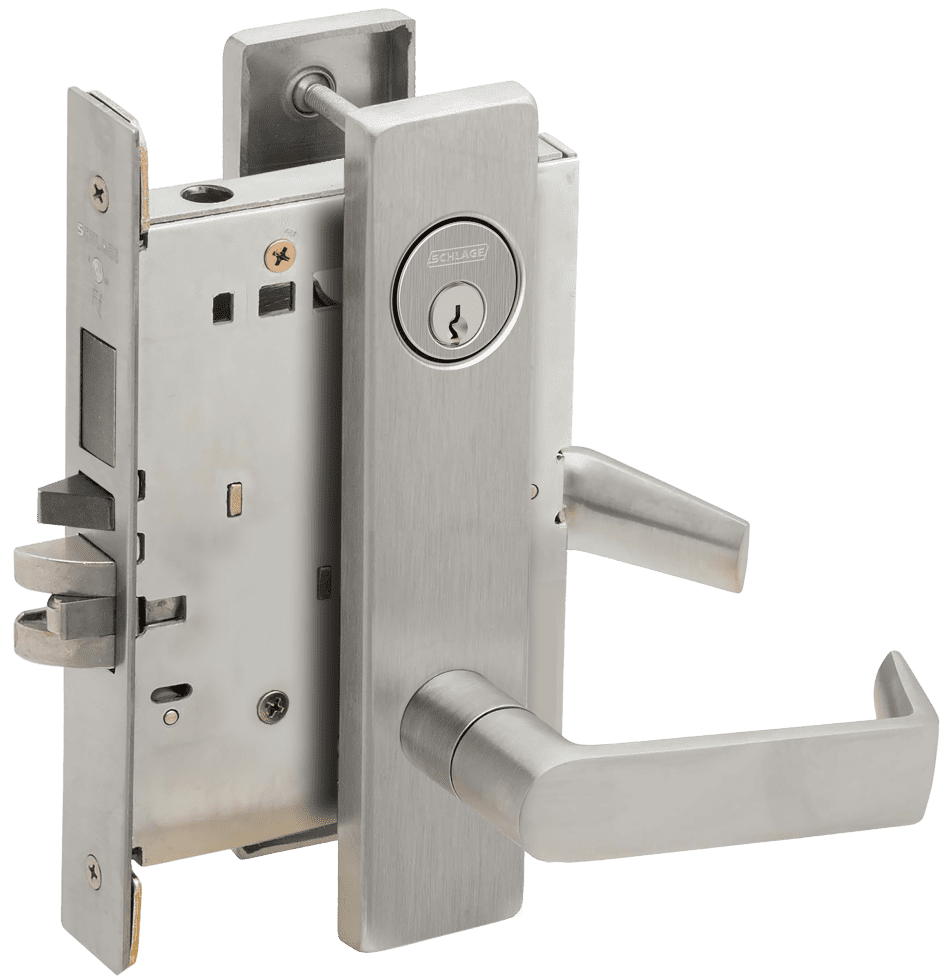
Schlage commercial deadbolt parts and replacement hardware at SecurityParts.com

Schlage commercial deadbolt replacement parts at SecurityParts.com. OEM components for B-Series and L-Series deadbolts including cylinders, bolts, rose plates, strike plates, and connecting hardware.

1. The Deadbolt Itself (The Bolt)

The deadbolt, also called the bolt or throw bolt, is the solid metal bar that slides horizontally into the strike plate when you lock the door. It is typically made from case-hardened steel, which resists sawing and cutting.

A standard residential bolt extends one inch. Commercial-grade bolts, such as those in the Schlage B-Series, are tested to ANSI Grade 1 standards for bolt strength and resistance to forced entry. When you see a Grade 1 rating on a deadbolt, one of the things it is testing is bolt strength.

What failure looks like: The bolt refuses to extend fully, or it extends but does not retract cleanly. This usually happens because the bolt housing is misaligned with the strike plate, or because the bolt itself has been damaged from a forced entry attempt. In rare cases, the bolt can corrode in humid environments and stop moving freely.

When to replace it: If the bolt is visibly bent, chipped, or corroded, replace it. A bolt that is simply stiff can often be fixed by lubricating it with a graphite-based lubricant, not oil-based products, which attract dirt and gum up the mechanism over time.


2. The Lock Cylinder (Key Cylinder)

The cylinder is the round metal housing that accepts your key. Inside it is a series of pin tumblers that align when the correct key is inserted, allowing the plug to rotate and throw the bolt. Most residential deadbolts use a 5-pin tumbler system. Higher-security deadbolts use 6 or 7 pins, which increases the number of possible key combinations and makes the lock significantly harder to pick.

What failure looks like: The key is difficult to insert or turn, or it works inconsistently depending on temperature or time of day. Cylinders also wear after years of use, especially in high-traffic commercial doors. You may notice the key wobbles more than it used to, or the lock requires noticeably more force to operate.

When to replace it: If the cylinder has been forcibly drilled, shows signs of picking attempts such as scratch marks around the keyway, or has simply worn out after years of use, replace the cylinder. Many deadbolts allow you to swap just the cylinder without replacing the entire lock body, which saves considerable time and cost on commercial doors. For Schlage deadbolt cylinder options including conventional, Primus, and interchangeable core formats, see the Schlage key systems guide.


3. The Plug and Pin Tumbler Assembly

The plug is the cylindrical piece inside the cylinder that actually rotates when the correct key is inserted. The pin tumbler assembly sits above the plug and consists of key pins, driver pins, and springs.

When no key is in the lock, the driver pins sit across the shear line, the gap between the plug and the outer cylinder housing. This prevents the plug from rotating. When you insert the correct key, the unique cuts on the blade push the key pins up to precise heights, lifting each driver pin just enough to clear the shear line and allowing the plug to turn.

The cam is a metal piece attached to the back of the plug. When the plug rotates, the cam drives the tailpiece, which in turn throws or retracts the bolt. A broken cam means the plug rotates freely but the bolt does not move.

What failure looks like: A single worn or broken driver pin will cause the lock to sometimes work and sometimes not, depending on the exact position of the key. Broken springs cause very similar symptoms.

When to replace it: Individual pins and springs can be replaced with a pinning kit, which is exactly what a locksmith does during rekeying. If you are comfortable with fine mechanical work, you can repin a cylinder yourself using a follower tool and plug follower kit.


4. The Thumb Turn (Thumb Latch)

On a single-cylinder deadbolt, the thumb turn is the knob or lever on the interior side of the door that you rotate to lock and unlock the deadbolt without a key. It connects directly to the bolt mechanism through the tailpiece. For a detailed breakdown of thumb turn types and configurations, see the thumbturn cylinder guide.

What failure looks like: The thumb turn spins freely without engaging the bolt, or it feels stiff and requires significant force to turn. A freely spinning thumb turn almost always means the cam or connecting piece inside has broken away from the bolt mechanism.

When to replace it: Thumb turn assemblies are usually sold as part of the interior trim set. On most deadbolts you can replace just the thumb turn side without replacing the full lock.


5. The Strike Plate

The strike plate is the metal plate installed in the door frame that receives the bolt when the door is locked. It has a hole precisely sized for the bolt to enter.

This is one of the most overlooked parts in door security and also one of the most important. A deadbolt is only as strong as the strike plate and the screws holding it to the frame. Builder-grade strike plates commonly ship with short screws that only reach the door frame casing, not the structural framing behind it. A properly installed strike plate uses longer screws that anchor into the framing behind the jamb.

Reinforced strike plates, sometimes called security strike plates, have longer plates that spread the force across more of the door frame.

What failure looks like: The bolt does not catch cleanly, or the door rattles even when locked. Scrape marks on the strike plate where the bolt is hitting the edge instead of entering the hole cleanly indicate the door has settled and the strike plate needs to be repositioned or replaced.

When to replace it: Replace the strike plate if it is bent, if the hole has deformed from repeated impact, or any time you upgrade to a higher-security deadbolt.


6. The Faceplate (Door Edge Plate)

The faceplate is the small rectangular metal plate visible on the edge of the door. It sits flush with the door edge and has a hole the bolt passes through when extended. On a deadbolt, the faceplate is sometimes called the mortise plate or door edge plate.

What failure looks like: The faceplate is bent or pulling away from the door edge. This can happen from a forced entry attempt or from years of door slamming. A damaged faceplate can misalign the bolt path and make locking difficult.

When to replace it: Faceplates on most deadbolts are held in by the lock body itself and come out when you remove the lock. They are inexpensive to replace and should be swapped out if visibly damaged.


7. The Connecting Screws and Tailpiece

The connecting screws are the long screws that pass through the interior rose plate, through the door, and thread into the exterior cylinder housing, holding the entire lock assembly together through the door. Most deadbolts use two connecting screws.

The tailpiece is the metal bar that connects the cylinder plug to the bolt mechanism. It transmits the rotation of the key or thumb turn into the throw or retraction of the bolt. A broken tailpiece means the key turns but the bolt does not move.

What failure looks like: A wobbly lock that moves when you press on it is almost always caused by loose or stripped connecting screws. This is one of the most common maintenance issues on high-traffic commercial doors and one of the easiest to fix.

When to replace it: If the screws are stripped, replace them with the correct size. Using improper screws creates exactly the kind of wobble that accelerates wear on every other component.


8. The Rose Plates (Escutcheon Plates)

The rose plates are the circular or rectangular plates on both sides of the door that cover the drill hole and support the cylinder on the exterior and the thumb turn on the interior. They distribute the load of the lock across a larger area of the door surface.

Schlage B-Series rose and turn assembly deadbolt component at SecurityParts.com

Schlage B-Series rose and turn assembly. The rose plate and thumb turn are sold as trim components for the B-Series deadbolt line. OEM replacement parts available through the Schlage B-Series parts catalog at SecurityParts.com.

What failure looks like: Cracked rose plates or plates that no longer sit flush against the door. This is usually a cosmetic issue but can expose the connecting screws to tampering.

When to replace it: Rose plates are sold as trim sets and can usually be replaced without touching the lock mechanism itself.


9. The Cylinder Collar

The cylinder collar is the hardened steel ring that surrounds the cylinder on the exterior side of the door. Its function is entirely security-focused: it prevents someone from gripping the cylinder with pliers or a pipe wrench and twisting it off the door. The collar rotates freely against the door surface, so there is nothing to grip.

Not all residential deadbolts include a reinforced cylinder collar. This is one of the features that separates ANSI Grade 1 hardware from lower-grade products.

What failure looks like: A missing, cracked, or loose collar. If the collar is missing in a higher-risk environment, consider upgrading to a deadbolt with a hardened steel rotating collar.


10. The Lock Body and Backset

The backset is the distance from the edge of the door to the center of the deadbolt hole. Standard residential backsets are 2-3/8 inches or 2-3/4 inches. Getting this measurement wrong when ordering a replacement lock means the lock will not fit correctly. The Schlage B-Series adjusts between both standard backsets without requiring a separate part.

The lock body is the housing that contains the bolt mechanism, springs, and cam. It mounts inside the drilled hole in the door and is the structural heart of the entire assembly.


ANSI Grading: What It Means for Each Component

When you see Grade 1, Grade 2, or Grade 3 on a deadbolt, those grades tell you how every component inside has been tested to perform. For a full breakdown of ANSI and BHMA grading standards across commercial door hardware, see the ANSI/BHMA door hardware standards guide.

ANSI Grade 1 is the commercial standard and the highest level of protection available for door locks. The bolt and the entire lock assembly are tested at defined force thresholds for forced entry resistance. The cylinder is tested to resist picking, drilling, and pulling. This is the grade you want on any exterior door in a commercial facility. Schlage commercial hardware, including the B-Series and L-Series deadbolt lines, is built to Grade 1 across their commercial product range.

ANSI Grade 2 is the residential standard. Adequate for most home applications where the threat level is moderate.

ANSI Grade 3 is the minimum grade. Fine for interior doors and light-duty applications only, and not appropriate for any exterior entry point.


Schlage Deadbolt Parts: B-Series and L-Series

SecurityParts.com specializes in OEM replacement parts for commercial door hardware. For deadbolts, the two primary Schlage lines in commercial use are the B-Series (cylindrical deadbolts) and the L-Series (mortise locks with integrated deadbolt function).


Schlage B-Series Deadbolt Parts

The Schlage B-Series is the most widely installed Grade 1 deadbolt in North American commercial buildings. The B-Series includes the B60N (single cylinder), B62N (double cylinder), B663 (classroom deadbolt with ANSI function E0171), and related configurations. All share a common bolt and backset adjustment mechanism but differ in center case configuration, cylinder housing, and trim options.

OEM replacement parts for the full B-Series range are available at SecurityParts.com. Interactive parts diagrams on each model page allow you to visually identify the exact component before ordering. Browse the complete Schlage B-Series deadbolt parts guide or the Schlage B-Series parts catalog. For the classroom deadbolt configuration specifically, see the Schlage B663 classroom deadbolt guide.


Schlage L-Series Mortise Deadbolt Parts

The Schlage L-Series is a mortise lock chassis that integrates the deadbolt function directly into the lock body. It is the standard for high-security commercial openings, institutional buildings, and any application requiring multiple functions from a single lock. L-Series parts are not interchangeable with B-Series parts. For L-Series component diagrams and part numbers, see the Schlage L-Series parts diagrams.

Schlage B-Series commercial deadbolt replacement parts at SecurityParts.com

Schlage B-Series commercial deadbolt replacement parts at SecurityParts.com. OEM parts for the full B-Series range including B60N, B62N, B663, and related configurations. Same-day shipping on stocked components.


Cylinder Formats: What Changes When You Replace a Cylinder

Not all deadbolt cylinders are the same format, and the format determines which replacement cylinder will fit your lock. Getting the format wrong is the most common cause of a returned cylinder order.

Standard 6-Pin Conventional Cylinder

The most common format in commercial deadbolts. Accepts a conventional key and supports master keying, construction keying, and standard key control. The Schlage B-Series ships with a conventional cylinder as standard.


Primus and Primus XP High-Security Cylinders

Schlage Primus cylinders add a secondary locking bar to the cylinder body that resists picking and manipulation. Key control is restricted, meaning Primus keys cannot be duplicated at standard hardware stores. The Primus XP adds additional security attributes. Both are available for the B-Series and L-Series platforms.


Interchangeable Core (IC) Formats

Full Size Interchangeable Core (FSIC) and Small Format Interchangeable Core (SFIC) cylinders can be removed and rekeyed without disassembling the lock body, using a specialized control key. This is the standard in institutional and hospitality environments where rapid rekeying across hundreds of doors is required. SFIC requires a different door preparation and has specific door thickness requirements compared to conventional cylinders.

For guidance on Schlage key systems and cylinder options, see the Schlage key systems guide.


How to Replace a Deadbolt Cylinder

Replacing only the cylinder is the most cost-effective repair on a worn or compromised deadbolt. On the Schlage B-Series and most commercial deadbolts, the cylinder is an independently replaceable component.

Step 1: Identify the cylinder format. Confirm whether the installed cylinder is conventional, Primus, FSIC, or SFIC. Check the cylinder face for a manufacturer marking and confirm the keyway. Order the replacement cylinder to match the exact format and keyway.

Step 2: Remove the interior trim. On the B-Series, remove the two connecting screws from the interior rose plate. Pull the interior trim and thumb turn assembly away from the door.

Step 3: Remove the cylinder retainer screw. The cylinder is held in the exterior housing by a single retainer screw, usually accessible from the interior after the trim is removed. Remove this screw and pull the cylinder straight out from the exterior.

Step 4: Insert the replacement cylinder. Align the cam at the back of the new cylinder with the cam follower in the lock body. Push the cylinder in from the exterior until it seats fully. Reinstall the retainer screw.

Step 5: Reinstall the interior trim and test. Reconnect the interior trim with the connecting screws. Test the key and the thumb turn through a full lock and unlock cycle before returning the door to service.

If the replacement cylinder will be on a door in a master key system, confirm the cylinder has been pinned to the correct master key level before installation. For a full overview of cylinder ordering and key system considerations, see the Schlage key systems guide.


Which Parts Fail First: A Realistic Breakdown

Based on actual field patterns from commercial hardware maintenance, here is a realistic failure sequence.

First to fail: Connecting screws loosen. This happens within the first few years on any high-use door and is fixed with a screwdriver in two minutes. Tighten them as part of your annual maintenance round.

Second most common: Cylinder wear. After several years of daily use, key pins and driver pins wear down, leading to sticky operation or a key that works only at certain angles or with extra force.

Third: Strike plate misalignment. Doors settle, frames shift, and the bolt no longer aligns cleanly with the strike hole. This is especially common in older buildings and in climates with significant temperature and humidity swings.

Fourth: Bolt mechanism failure. The least common internal failure, but when it happens, usually from a forced entry attempt, the entire lock body needs replacement.

Least common: Thumb turn failure and rose plate damage, which are more likely to result from physical abuse than normal wear and use.


How to Identify the Right Deadbolt Replacement Part

Before ordering any replacement, you need three pieces of information.

The brand and series. Look for a name stamped on the cylinder face or on the bolt faceplate. Parts are not cross-compatible across brands, and in many cases not across different series within the same brand. Always order by part number, not by description alone.

The backset. Measure from the door edge to the center of the bolt hole. Standard backsets are 2-3/8 inches and 2-3/4 inches. Getting this wrong means the replacement will not fit.

The ANSI grade. If replacing a commercial lock, confirm the grade of the original to ensure the replacement meets the same standard. Downgrading the grade in a commercial installation can create liability and code compliance issues.

SecurityParts.com carries OEM replacement deadbolt parts for Schlage, Von Duprin, LCN, and Falcon. Interactive parts diagrams on each model page let you confirm the exact component before ordering. Browse the complete Schlage lock replacement parts guide and the full commercial door hardware parts catalog at SecurityParts.com.


Commercial Deadbolt Parts vs Residential Deadbolt Parts

The components inside a commercial and residential deadbolt are conceptually the same, but the specifications differ in ways that matter for replacement ordering.

Commercial deadbolts, including the Schlage B-Series Grade 1, are manufactured to tighter tolerances, tested to higher force thresholds, and built for thousands of operations per day. Cylinders use 6-pin formats with restricted keyways. Strike plates are heavier gauge steel with more robust anchoring. The lock body itself is made from heavier materials and the bolt is manufactured from case-hardened steel rather than standard zinc alloy.

Residential deadbolts are less expensive, built for moderate-frequency use, and often use 5-pin cylinders with common keyways.

When maintaining commercial facilities, always replace commercial deadbolt components with OEM commercial-grade parts. Substituting residential components into a commercial installation reduces the security rating of the opening and may affect insurance coverage and code compliance. For guidance on OEM vs aftermarket parts in commercial hardware, see the OEM vs aftermarket commercial door hardware guide.


Deadbolts and the Wider Door Hardware System

A deadbolt does not work in isolation. It is one component in a door assembly that also includes cylindrical locksets, mortise locks, door closers, and in commercial applications, electric strikes and access control hardware.

If you manage a commercial facility, you may also be maintaining cylindrical lock parts on interior doors, mortise lock parts on high-security openings, and electric strikes on access-controlled entries. The same discipline of knowing individual component failure signs applies across all of them. For troubleshooting across all commercial door hardware, see the commercial door hardware troubleshooting guide.


How to Maintain Your Deadbolt So Parts Last Longer

A deadbolt that is properly maintained will last many years before any component needs replacement. Here is a practical maintenance routine. For a complete commercial facility maintenance schedule, see the commercial door hardware maintenance checklist.

Every six months: Apply a small amount of graphite powder or dry PTFE lubricant to the keyway. Do not use WD-40 or oil-based lubricants. They attract dust and gum up the pin tumblers over time.

Once a year: Check the connecting screws and tighten them if any movement is felt. Check the strike plate screws and confirm they are still seated in the door stud, not just the casing.

Any time the door settles or is rehung: Realign the strike plate to the bolt. A bolt that rubs the edge of the strike hole every time you lock the door will wear down both the bolt and the plate within a single year of use.

After any forced entry attempt: Inspect every component before reusing the lock. A bolt that has taken impact may look fine but have a micro-fracture that will fail under moderate force in the future.


Where to Find Deadbolt Replacement Parts

SecurityParts.com has supplied OEM commercial door hardware parts since 2001, with a focus on Schlage, Von Duprin, LCN, and Falcon, the brands professionals actually work with every day on commercial openings. Whether you need a Schlage B-Series deadbolt part, an L-Series component, or a part for any other hardware in a commercial facility, parts are organized by model with interactive diagrams so you can visually identify what you need and add it to your cart directly.

Same-day shipping is available on stocked components from US warehouses. For urgent orders or parts identification questions, call 845-935-0301 or email [email protected]. For related hardware on the same facility, see the LCN door closer parts guide and the electric strike parts guide. Browse the full commercial door hardware parts catalog at SecurityParts.com or contact the team for assistance.


About SecurityParts.com

SecurityParts.com has supplied OEM commercial door hardware parts since 2001. The catalog covers Schlage, Von Duprin, LCN, Falcon, and Detex, organized by model with interactive diagrams for accurate part identification before ordering. For deadbolt parts identification and same-day shipping on stocked components, call 845-935-0301 or visit the contact page.


Electric Strike Parts: What Each Component Does, What Fails First, and When You Actually Need a New Unit

Walk through any access-controlled commercial building and you are passing dozens of electric strikes without noticing them. They sit flush inside the door frame, they are quiet, and when they work, they are completely invisible. That invisibility is also why they are easy to ignore until something breaks.

Understanding the individual electric strike parts, the solenoid, keeper, return spring, monitor switch, and housing assembly, is the difference between a five-minute field repair and an unnecessary full-unit replacement. When an electric strike fails, access control systems either lock people out entirely or hold doors open when they should be secured, depending on the configuration. In a hospital corridor, a school entrance, or a government building, that kind of failure has real consequences. The frustrating part is that most electric strike problems trace back to a single component, not the whole unit.

Facility managers and locksmiths who understand the individual parts can diagnose these failures in minutes rather than scheduling a full hardware replacement that might not even be necessary. That is what this guide covers: the components, the failure patterns, the diagnostic sequence, and exactly how to order replacement parts without a return. Browse the complete electric strike parts catalog at SecurityParts.com.

An electric strike replaces the standard fixed strike plate on a door frame. Its movable keeper releases electrically, allowing the door to open without retracting the latchbolt. The lock on the door stays mechanical and unchanged. The strike releases, not the lock.


How an Electric Strike Actually Works

A standard strike plate is fixed metal. The latch bolt clicks into it and stays there. An electric strike replaces that fixed plate with a mechanism containing a movable keeper, sometimes called the lip or gate. When the door is closed and locked, the keeper is rigid. When the strike receives an electrical signal, the keeper pivots or retracts, letting the latch bolt pass through freely so the door opens.

The person opening the door does not interact with the lock at all. Push or pull, the door opens. That is the design advantage over fully electrified locksets. You can retrofit access control onto a door with an existing mechanical lock without replacing the lock itself. It is significantly cheaper and far less invasive.

The most common thing facility maintenance staff reports is that the lock stopped working. It is almost never the lock. The lock is mechanical and completely unaffected by the electrical system. When access control fails on a door with an electric strike, start at the strike, the power supply, and the wiring, not the lockset. For a detailed look at how electric strikes integrate with the broader access control system, see the access control and commercial door hardware integration guide.

Electric strikes work with three main lock types: cylindrical locksets, mortise locksets, and rim exit devices such as panic bars. Each requires a specific strike model because the latch geometry differs between them. That compatibility point matters when ordering replacement parts. A component designed for cylindrical lock applications will not work on a mortise setup even if the two strikes look nearly identical from the outside.


Every Electric Strike Part Inside the Housing

The engineering inside these housings is more compact than most people expect. A small number of components working in tight coordination, which is exactly why individual part replacement is practical when you understand each one.

Solenoid Assembly. The electromagnetic coil that converts electrical current into mechanical movement. It powers the keeper's release motion and is the single most frequently replaced component on electric strikes. When the solenoid fails, electric strike solenoid replacement is the first repair to consider before replacing the entire unit. On Von Duprin 6210 and 6211 units, the solenoid is an externally replaceable cartridge, see the Von Duprin electric strike parts guide for solenoid canister part numbers and service details.

Keeper (Lip or Gate). The movable piece that holds the latch bolt when locked and releases when the strike is energized. It takes physical impact on every door close and wears over time, especially on high-traffic openings.

Faceplate. The visible mounting plate that recesses into or mounts on the door frame. It protects internal components and provides a clean finished appearance. Replaceable independently on most models.

Return Spring. Resets the keeper to its locked position after each release cycle. Spring fatigue is a legitimate failure mode on doors that are released frequently throughout the day, such as building entrances during business hours.

Box Assembly (Housing). The metal body mounted in the frame cutout that contains everything else. It is rarely replaced independently unless the housing itself is physically damaged or corroded beyond serviceability. On the Von Duprin 6200 series, the strike box is adjustable to compensate for door or frame misalignment without removing the unit from the frame.

Monitor Switch (Latchbolt Monitor). Optional on most models. Sends door status signals, open, closed, or ajar, back to the access control panel. When it fails, the panel shows persistent door-open alarms that have nothing to do with the actual door position. The Von Duprin 6200 series offers both single-switch and dual-switch monitoring (DS and DS-LC configurations). The DS configuration provides two SPDT contacts: one monitors the tripper (depressed when the latch bolt enters the strike pocket) and one monitors the keeper position (open or closed).

Solenoid Canister (Von Duprin 6200 Series). On Von Duprin 6210 and 6211 units, the solenoid is an externally replaceable cartridge. You can swap it in under five minutes without removing the strike from the frame. On most other configurations, a solenoid failure means replacing the entire unit. That distinction matters when specifying hardware for a facility with hundreds of doors.

Voltage Selector. Allows field configuration for 12V or 24V DC operation on multi-voltage models. Not a wear item, but selecting the wrong voltage at installation causes immediate solenoid damage and is a common mistake on retrofit projects. The Von Duprin 4200 series uses a 12/24 dual-voltage solenoid that is field-selectable without disassembly. The 6200 series ships standard at 24VDC with 12VDC optional.

Entry Buzzer (EB). An optional accessory available on fail-secure electric strikes. The entry buzzer installs in the frame parallel to the strike circuit and sounds when the strike is unlocked, signaling to an outside visitor that access is granted. Entry buzzers are compatible only with fail-secure strikes. They are not compatible with fail-safe configurations.

Rectifier Kits (SO12 / SO24). Field-installable AC-to-DC conversion kits for installations where only AC power is available at the frame. The SO12 converts 12VAC to 12VDC; the SO24 converts 24VAC to 24VDC. These kits plug inline to the solenoid connection and are used when an AC power supply must run a DC solenoid. If an installed strike is receiving AC power but was configured for DC, a rectifier kit is required, not a new strike.


Electric Strike Selection: Cylindrical, Mortise, and Rim Applications

Selecting the correct electric strike begins with identifying the lock type on the door. The three main categories of commercial lock use different latch geometries, which means the strike must be matched to the specific application. Installing the wrong strike type results in either a latch that does not engage the keeper correctly or a keeper that binds under the latch bolt load.


Cylindrical Lock Applications

Cylindrical locksets use a standard latch bolt that extends from the edge of the door. The Von Duprin 4200 series is designed and tested for use with cylindrical devices from Schlage, Falcon, and many other manufacturers. The 4200 uses a square faceplate as standard to accommodate hollow metal frames, with rounded corner faceplates available for aluminum frames. It accepts a 3/4-inch throw latch bolt.


Mortise Lock Applications

Mortise locksets use a more complex latch and deadbolt mechanism housed inside the door. The Von Duprin 6200 series is designed for mortise and cylindrical lock applications and accepts a 3/4-inch throw latch bolt. The 6200 series features a two-piece Allegion Connect plug connector for ease of installation and removal during servicing. For the full parts breakdown of Von Duprin electric strike series including the 6200, see the Von Duprin electric strike parts guide.


Rim Exit Device (Panic Bar) Applications

Rim exit devices use a rim latch that engages a surface-mounted or frame-recessed strike on the door frame face, not the latch edge. The Von Duprin 6300 series is designed specifically for use with rim exit devices. It interfaces with the latch mechanism of the exit device and provides remote release (the keeper releases so the door opens even when the latch bolt is extended). The 6300 is fail-secure only to achieve UL 10C compliance for fire-rated openings. For a broad overview of exit device types, see the exit device parts guide.


High-Traffic and Heavy-Duty Applications

The Von Duprin 6400 series is a heavy-duty stainless steel strike rated for over 2,000,000 endurance cycles and listed to Grade 1 certification. It is designed for high-traffic openings where a standard-duty strike would require frequent replacement. The 6400 ships with prewired plug-in connectors for 12 or 24VDC and is fail-secure only for fire-rated applications. It includes 1/8-inch horizontal adjustment for installations where frame or door misalignment is a factor. Browse the complete electric strike catalog at SecurityParts.com for the full Von Duprin series lineup.


Fail Safe vs. Fail Secure: This Decision Has Real Consequences

Every electric strike operates in one of two modes. This is not a preference setting. It is a fundamental design choice that determines how the door behaves when power is cut, whether from a power outage, a tripped breaker, or a severed wire.

Fail Safe unlocks when power is removed. During normal operation, the strike is continuously energized to stay locked. This mode is required on doors that must allow free egress during emergencies, including stairwell doors, hospital corridor doors, and other life-safety openings. Because the unit draws power continuously to maintain the locked state, fail-safe strikes have a higher energy draw than fail-secure units.

Fail Secure stays locked when power is removed. The strike is energized only momentarily to unlock. This is the correct choice for server rooms, secure offices, exterior building entries, and any location where security must be maintained even during a power failure.

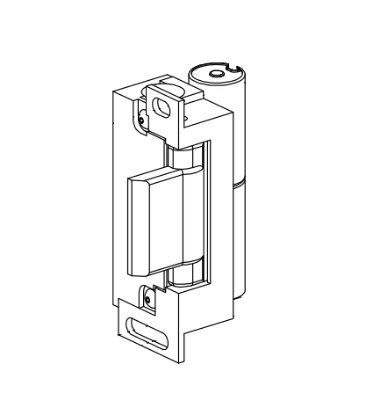
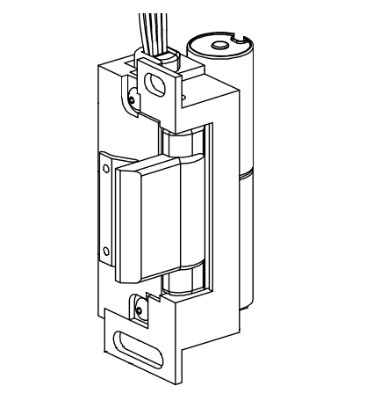
Von Duprin electric strike box assembly fail secure electrically unlocked 12VDC at SecurityParts.com

Von Duprin electric strike box assembly, fail-secure (electrically unlocked, 12VDC). Fail-secure strikes stay locked when power is removed, making them the correct choice for fire-rated openings and secure-perimeter applications. OEM replacement assemblies at SecurityParts.com.


The fire door rule is non-negotiable. Only fail-secure electric strikes can be installed on fire-rated door assemblies. NFPA 80 and local fire codes are consistent on this point. A fail-safe strike on a fire door creates a code violation because a power outage during a fire would unlock the door, which is the exact opposite of what a fire door is supposed to do. If you are unsure whether a door is fire-rated, check the label on the hinge edge of the door before selecting any strike. For a full reference on fire-rated door hardware requirements including electric strike compliance, see the commercial door fire rating guide.

Specifying fail-secure on an egress stairwell door is a code violation that can sit undetected for years. Until it matters.

Entry buzzer compatibility is another practical difference. Entry buzzers, which allow momentary visitor-initiated unlock, are only compatible with fail-secure strikes. Fail-safe strikes cannot be used with this feature.


UL Listings for Electric Strikes: UL 1034 vs UL 10C

Electric strikes carry two distinct UL listings that address different performance requirements. Understanding which listing applies to a given opening prevents specification errors.

UL 1034 is the burglary-resistant standard for electrically operated door locks and strike devices. A UL 1034 listing confirms the strike meets defined tests for resistance to forced entry. This listing applies regardless of whether the door is fire-rated.

UL 10C is the fire door listing that certifies a strike for use on positive-pressure fire-rated door assemblies. Only fail-secure electric strikes can carry a UL 10C listing, because a fire door must remain closed and latched when power is lost. The Von Duprin 6300 and 6400 series both carry UL 10C listings for use on 3-hour fire-rated assemblies. If a strike is being installed on a fire-rated opening, the UL 10C listing is the required certification, UL 1034 alone is not sufficient. For the full fire rating compliance framework, see the commercial door fire rating guide.


How to Convert Between Fail Safe and Fail Secure

Many Von Duprin electric strike models allow field conversion between fail-safe and fail-secure modes without replacing the entire unit. The conversion process differs by series.

On the Von Duprin 4200 series, conversion is a field adjustment performed with the enclosed S1.5 hex key. Loosening the M3 set screw and rotating the blocking mechanism post with a flathead screwdriver switches the mode. The process does not require removing the strike from the frame.

On the Von Duprin 6000 series, conversion uses a replacement slider component. The fail-secure slider (part 970387) and fail-safe slider (part 970388) are specific to models 6211WF, 6212WF, 6221, and 6223. The conversion requires removing the strike box cover, removing the existing slider, inserting the new slider, and reassembling. Note: converting a 6000 series strike between fail-safe and fail-secure modes invalidates the UL fire listings and requires removal of the UL fire label. If fire-rating compliance is required, a new fire-rated unit must be specified rather than converting an existing one.

Before converting any electric strike's operating mode, confirm that the new mode complies with the application's fire, life safety, and building code requirements. Consult the Authority Having Jurisdiction (AHJ) for any fail-secure installation that affects egress compliance. For help selecting the correct configuration for your application, call 845-935-0301.


What Breaks First: A Realistic Failure Ranking

Electric strikes fail in predictable patterns. The components under the most mechanical and electrical stress in normal operation wear fastest. Here is an honest ranking based on actual field replacement frequency.

Solenoid failure. This is the most common electric strike failure by a significant margin. Solenoids accumulate wear through both electrical and thermal stress. On high-traffic doors that are buzzed open dozens of times per day, coil fatigue develops over months. The symptom is that the strike does not release when signaled, or releases only intermittently. On most configurations, solenoid failure means full unit replacement. On Von Duprin 6200 series units, you swap the external solenoid canister and the job is done. SecurityParts.com has stocked Von Duprin solenoid canisters and electric strike components since 2001, for solenoid canister part numbers and availability, visit the Von Duprin electric strike parts page at SecurityParts.com.

Keeper wear. Every time the door closes, the beveled latch bolt rides across the keeper face. Heavy doors, fast-closing doors, or exterior doors in windy locations accelerate this wear significantly. Signs of keeper wear include a latch bolt that does not seat cleanly, a door that rattles when closed, or a keeper that feels sloppy under manual pressure. Keepers are replaceable on most models and worth addressing before secondary damage develops.

Return spring fatigue. The spring resets the keeper to its locked position after every release cycle. On buildings where a door is buzzed open hundreds of times per day, spring fatigue is a real and predictable failure mode. The symptom is a keeper that releases correctly but does not fully return to the locked position after the door closes. This is a security issue, not just a nuisance. The door appears shut but is not truly latched.

Monitor switch failure. When the monitoring switch fails, the access control panel displays persistent door-open or door-ajar alarms even with the door properly closed and latched. Facility managers often spend weeks troubleshooting these phantom alarms before anyone thinks to check the monitor switch. It is a small, inexpensive component that causes disproportionately large operational headaches when it fails undetected.

Faceplate damage. Physical impact, forced entry attempts, and harsh cleaning chemicals all degrade faceplates. This is usually cosmetic unless the damage extends to the keeper channel, which then interferes with keeper travel and causes secondary mechanical failures. Faceplates are separately available on most strike models.


Von Duprin commercial door hardware parts including electric strike solenoid and keeper components at SecurityParts.com

Von Duprin commercial door hardware at SecurityParts.com. OEM electric strike parts for the 4200, 6100, 6200, 6300, and 6400 series including solenoid canisters, keepers, faceplates, and monitor switches. Same-day shipping on stocked components.


How to Diagnose an Electric Strike Problem in the Field

Run through this sequence before pulling anything from the frame. Half the time the problem is upstream of the strike, and this sequence surfaces that quickly. For a comprehensive troubleshooting framework covering all commercial door hardware, see the commercial door hardware troubleshooting guide.

Step 1: Verify power at the strike terminals. Use a multimeter and confirm that voltage is reaching the strike during an access grant signal. If voltage is not present at the strike, the problem is upstream: the power supply, the wiring run, or the access control panel's output relay. No hardware replacement fixes a wiring issue. For a labeled schematic of electric strike wiring connections and circuit diagrams, see the electric strike schematic diagram.

Step 2: Confirm voltage matches the strike configuration. A 12VDC strike receiving 24VDC burns the solenoid immediately. Multi-voltage models are field-selectable, but confirm the selector position before assuming the solenoid failed on its own. This is especially important when replacing a strike in a system someone else originally configured. If only AC power is available, verify whether an SO12 or SO24 rectifier kit is installed inline at the solenoid connection.

Step 3: Test the keeper manually. With the door open, depress the keeper by hand. It should move freely and spring back decisively. Resistance, binding, or incomplete return points to mechanical wear rather than an electrical failure.

Step 4: Test the solenoid directly. Apply the correct rated voltage directly at the strike terminals, bypassing the access control panel entirely, and watch the keeper. If the keeper releases, the solenoid is functional and the problem is in the panel output relay, the reader, or the wiring run. If the keeper does not move with the correct voltage applied, the solenoid has failed.

Step 5: Check latchbolt alignment. A misaligned latchbolt that hits the face of the keeper rather than riding smoothly over it puts excessive side-load stress on the entire mechanism. This accelerates wear on every internal component. Alignment problems come from door sag, frame settling, or incorrect strike positioning at installation. Always address alignment before replacing parts, or the new parts will wear at the same accelerated rate.

A useful time-saving tip: if the strike releases correctly under direct voltage but not under panel signal, check the access panel's output relay before doing anything else. Relays are mechanical devices that fail over time just like any other part. Swapping a perfectly functional strike because the relay is the actual problem costs time and money with no result.


Replace One Part or the Whole Unit

The answer is direct once you know what to look for.

Replace the part when the failure is isolated to a single component and the housing, keeper channel, and electrical connections are all in solid condition. Solenoid canister on a Von Duprin 6200 series, keeper on any model with a field-replaceable keeper, monitor switch, faceplate. These are quick repairs that cost a fraction of full unit replacement and restore full functionality in minutes. For guidance on when OEM replacement parts are the correct choice versus full unit replacement, see the OEM vs aftermarket commercial door hardware guide.

Replace the entire unit when the housing is physically damaged or corroded, the failure has been present long enough to cause secondary wear across multiple components, the model is old enough that parts are no longer stocked, or the door application or security requirements have changed and the current strike type no longer fits the specification.

One important note on age and corrosion: an electric strike that has been running a failing solenoid for months often has secondary damage in the wiring harness and terminal connections inside the housing. On a unit that is ten or more years old in an exterior frame with weather exposure, full replacement is usually the smarter and more economical decision.

The scenario where part replacement almost always wins: a Von Duprin 6210 or 6211 with a burned solenoid canister. The canister is externally mounted and swaps in under five minutes without removing the strike from the frame. Full unit replacement on a heavy-duty stainless steel 6200-series strike in a well-maintained frame does not make sense when a solenoid canister solves the problem completely.


Von Duprin electric strike box assembly 12VDC fail safe with dual switch monitor at SecurityParts.com

Von Duprin electric strike box assembly, fail-safe with dual-switch (DS) monitoring, 12VDC. The dual-switch configuration monitors both the latch bolt tripper and the keeper position independently. OEM replacement box assemblies available at SecurityParts.com.


How to Order Electric Strike Parts Without a Return

Returns in commercial door hardware are expensive and slow. Confirm three things before placing any order.

First: the exact strike series and model number. This is stamped or printed on the faceplate or on the housing body. Von Duprin 4200, 6100, 6200, 6300, and 6400 series all use different part numbers for identically named components. A monitor switch for a 4200 series is a completely different part from the same-named component on a 6200 series.

Second: the voltage configuration of the installed unit. Order the replacement solenoid or replacement unit to match exactly. A 12V solenoid in a 24V system burns immediately. A 24V solenoid in a 12V system will not actuate. If the installed unit is a multi-voltage model, confirm which voltage it was configured for at installation before ordering. If AC power is present and no rectifier kit is installed, the strike will not function correctly regardless of which solenoid is ordered.

Third: fail-safe or fail-secure mode. Parts for fail-safe and fail-secure versions of the same series are not interchangeable. The solenoid wiring polarity differs between modes. Ordering the wrong mode means the part arrives, appears to fit, and then either fails to actuate correctly or triggers an access control system fault that takes hours to trace.

SecurityParts.com has supplied commercial door hardware parts since 2001, including Von Duprin replacement parts for the 4200, 6100, 6200, 6300, and 6400 series. Interactive parts diagrams on each model page let you confirm the exact component before ordering. That visual confirmation step takes about 90 seconds and eliminates most wrong-part orders. Browse the top electric strikes guide for selection guidance across the Von Duprin series, or call 845-935-0301 for pre-order parts identification support.

Browse electric strike replacement parts at SecurityParts.com, or shop the full Von Duprin parts catalog. Same-day shipping is available on stocked components from US warehouses. For exit device parts on the same facility, see the exit device parts guide.


Electric Strike Maintenance Schedule

Electric strikes require less maintenance than mechanical hardware, but they are not zero-maintenance. Including them in a structured facility inspection cycle prevents the kind of quiet failure that only surfaces when a credential is denied at 2am.

At minimum, electric strikes should be included in the annual fire door inspection cycle required under NFPA 80. During each inspection, verify the keeper moves freely and springs back fully under manual pressure, confirm that the correct voltage is present at the strike terminals during an access grant signal, test the release and re-latch cycle under normal operating conditions, and check for corrosion at the terminal block and wiring connections.

High-traffic openings benefit from semi-annual inspections. Exterior frames in wet or corrosive environments may need quarterly checks of the terminal connections and housing seals. For a complete commercial door hardware maintenance schedule covering electric strikes, door closers, and exit devices, see the commercial door hardware maintenance checklist.


About the Author

This guide is published by the commercial door hardware team at SecurityParts.com, a supplier of OEM Von Duprin, Schlage, LCN, Falcon, and Detex parts since 2001. The team provides pre-order parts identification support, technical guidance on fail-safe vs fail-secure configuration, and same-day shipping on stocked electric strike components for locksmiths, facility managers, and contractors across institutional, healthcare, government, and commercial facilities. For electric strike parts identification and ordering support, call 845-935-0301 or visit SecurityParts.com.


How to Adjust a Commercial Door Closer: Step-by-Step for LCN, Von Duprin, and Any Brand

Most door closer problems in commercial buildings are not part failures. They look like part failures. The door slams shut, or it drifts open two inches and won't latch, or it closes so slowly you could eat lunch waiting for it to seat. But nine times out of ten, the hardware itself is fine. Someone just needs to spend four minutes with a hex key.

This guide covers the full adjustment process for commercial hydraulic door closers, with specific guidance for the LCN 4040XP, 1461, and 4011 series, the three most commonly installed commercial door closers in North American commercial buildings. The same principles apply to virtually every surface-mounted hydraulic closer regardless of brand, because the underlying mechanism is the same across all of them. If you are shopping for a new closer or identifying the right series for a replacement, see the LCN commercial door closer selection guide first.

What this guide also covers: how to interpret ADA compliance requirements as a field-measurable standard, not just a vague code reference; what seasonal temperature change does to your valve settings and when to expect it; and the specific symptoms that tell you adjustment will not fix the problem and you are actually looking at a parts issue.


Tools Needed to Adjust a Commercial Door Closer

Before starting any adjustment on a commercial door closer, confirm you have the correct tools on hand. Using the wrong size hex key on brass valve seats strips them quickly.

  • 3/32-inch hex key (allen wrench): Used for sweep, latch, and backcheck valve adjustment on most LCN closers including the 4040XP, 4011, and 1461 series
  • 5/32-inch hex key: Used for spring power adjustment on the LCN 4040XP via the external adjustment dial on the spring tube
  • Small flathead screwdriver: Required on some older LCN models where valves are slotted rather than hex-socket
  • Stopwatch or phone timer: Required for ADA closing speed verification. Do not estimate this measurement
  • Door pressure gauge: Required if verifying ADA opening force compliance on accessible-route doors

Have both the 3/32-inch and flathead on hand before removing the cover. Some older units in service have no valve labeling, knowing your valve positions before opening the cover prevents incorrect adjustments.


What the Adjustment Valves Actually Control and What Most Guides Get Wrong

Before touching anything, understand what each valve does. Most guidance treats door closers as black boxes with four mystery screws. That is how you end up chasing your tail for an hour without solving anything.

A hydraulic door closer works by routing fluid between chambers through calibrated passages. The valves do not add or remove force the way a dimmer switch works. They restrict or open fluid flow pathways, which changes how quickly the door moves through different phases of its closing cycle. The spring does the actual work. The valves govern the pace.

Commercial door closer parts and adjustment valves at SecurityParts.com

Commercial door closer replacement parts including cylinder assemblies, arms, shoes, and covers for LCN and Von Duprin series at SecurityParts.com.


The Sweep Valve (S)

The sweep valve controls the main closing arc: from fully open down to roughly 10 to 15 degrees from the latch point. This is what most people mean when they say "the door is closing too fast" or "the door will not pull itself closed." Turning the S valve clockwise restricts flow and slows the door. Counterclockwise opens flow and speeds it up.

ADA requirements under ANSI A117.1 specify that the door must take a minimum of 5 seconds to travel from 90 degrees open to the point 3 inches from the latch. That timing is measured with the sweep valve. Use a stopwatch. Do not estimate this one. For a complete overview of ANSI/BHMA hardware standards as they apply to commercial door hardware, see the ANSI/BHMA door hardware standards guide.


The Latch Valve (L)

The latch valve takes over in the final few degrees before the door seats against the strike. It is the most commonly misadjusted valve on commercial doors because people confuse "the door will not latch" with a latch mechanism problem, when it is usually just the L valve set too slow or too restrictive.

If the door drifts to within an inch of the frame and stops, or bounces back open slightly, the latch speed is almost always the culprit. The latch valve should be set slightly faster than the sweep valve. The door needs a little momentum in that final zone to overcome weatherstripping compression, latch spring resistance, and frame-to-door air pressure differentials.


The Backcheck Valve (B)

The backcheck limits how aggressively the door can be swung open. It creates hydraulic resistance past a certain opening angle, typically around 70 to 75 degrees, which prevents the door from slamming into the wall or being caught by wind and yanked open violently.

On first installation, always close the backcheck valve completely before hanging the arm. Opening a door with backcheck fully open and no arm resistance can damage both the closer and the frame. Set it after the arm is connected and the basic closing speeds are established.


The Delayed Action Valve (D): LCN 4041 and ADA Applications

Not all closers have a D valve. On the 4041 delayed action model (an option on the 4040XP platform), the D valve introduces a pause in the closing cycle after the door reaches a set point, typically around 70 degrees. This gives people using mobility aids extra time to pass through before the door begins its sweep.

Delayed action is specifically required or recommended on ADA-accessible entrances where fully automatic door operators are not installed. If you are working on a door where someone has complained about it catching them before they are fully through, delayed action is what the specification calls for, and the D valve is where you set it.


Before You Touch a Valve: Three Things to Check First

Valve adjustment will not fix a door closer that has a mechanical problem. Before you open the cover, confirm three things.

One: The arm geometry is correct. The arm should be roughly perpendicular to both the door and the frame at 90 degrees open. If the geometry is off because a drop plate is missing or the closer was mounted in the wrong position, no valve setting will produce consistent closing behavior. The arm will bind through part of its travel and go slack through another.

Two: The hinges are tight and the door hangs level. A sagging door means the latch and strike are misaligned, which loads the latch valve asymmetrically. You can chase valve settings forever on a door that is hanging wrong. Check for sag by looking at the gap between door and frame along the latch edge. It should be consistent from top to bottom.

Three: There is no hydraulic fluid leakage. Oil on the door frame, on the cover plate, or pooled on the floor near the closer means the internal seals have failed. A leaking closer cannot hold valve settings. The fluid pressure that the valves regulate is draining out. Adjusting it is a temporary fix at best and masks a failing unit. Replace it. The "When Adjustment Is Not the Problem" section below covers which parts to order when you reach that point.

If all three checks pass, proceed to adjustment. For a complete maintenance framework covering all commercial door hardware in your facility, see the commercial door hardware maintenance checklist.


Step-by-Step: How to Adjust a Commercial Door Closer

You need a 3/32-inch hex key for most LCN closers. Some older models take a small flathead screwdriver. Have both on hand.


Step 1: Set All Valves to Baseline

Before dialing in anything, get a known starting point. Turn all valves fully clockwise until they seat gently. Do not overtighten. Hydraulic valve seats are brass and they strip. Finger-snug clockwise is the stop point.

From fully closed, open each valve 1.5 turns counterclockwise. This is the factory-approximate starting position for most LCN closers. The door will close, but it will not be optimized yet.


Step 2: Set Sweep Speed

Open the door to 90 degrees. Let go. Time the closing arc from 90 degrees to roughly 3 inches from the frame. If it is under 5 seconds, turn the S valve clockwise in 1/8-turn increments until it hits 5 to 7 seconds. If it takes more than 10 seconds or the door stalls mid-arc, open the S valve counterclockwise in 1/8-turn increments.

Always test two or three full cycles after each adjustment. Hydraulic response has a brief lag. The first cycle after a valve change often does not fully reflect the new setting.

Target range: 5 to 7 seconds for sweep on ADA-applicable openings. Four to 6 seconds is acceptable for non-ADA interior doors with lighter traffic. Exterior doors in windy locations may need a stiffer spring size rather than valve compensation. If you are fighting the elements, the valve is not the right tool.


Step 3: Set Latch Speed

With sweep speed set, watch the door through the final 10 to 15 degrees. It should accelerate slightly in that zone and seat against the strike with a clean, firm click. No bounce, no slam, no hesitation.

If it stops short or does not seat cleanly: open the L valve counterclockwise in 1/8-turn increments until the door latches reliably. If it hits the frame hard and bounces: close the L valve clockwise until the impact softens to a clean click.

A useful test for high-security or fire-rated doors: put a sheet of standard paper between the door and frame when closed. Pull it out. If it slides out with no resistance, the door is not truly latched, regardless of what it looks like from a distance. For fire door-specific adjustment guidance and NFPA 80 compliance requirements, see the how to adjust a fire door closer guide.


Step 4: Set Backcheck

With the door latching correctly, set the backcheck. Open the door slowly and feel for the resistance point. It should engage clearly at around 70 to 75 degrees of opening. If it is engaging too early and making the door hard to open fully, turn the B valve counterclockwise slightly. If there is no resistance and the door swings freely all the way open, close the B valve clockwise until you feel it engage in that 70 to 75 degree range.

Backcheck is often over-set in facilities where people want to stop doors from hitting walls. The correct solution is a door stop or a Cush arm, not an overly tight backcheck that resists users and puts stress on the closer body through the full opening arc.


Step 5: Adjust Spring Power (Closing Force)

Spring power adjustment is separate from valve adjustment. The valves control speed. The spring controls force. If the door closes at the right speed but does not latch reliably, or if users find the door too hard to push open, spring power is the variable to adjust, not the latch valve.

On the LCN 4040XP, spring power is adjusted via the external dial on the end of the spring tube using a 5/32-inch hex key. Turning clockwise increases spring power, which increases both closing force and the force required to open the door. Turning counterclockwise reduces closing force. The 4040XP covers spring sizes 1 through 6 with a single body, no spring swapping required.

On the LCN 4011 and 1461 series, spring tension is adjusted differently. Consult the specific installation guide for the model before making spring adjustments on these units, as the method varies between series.

Important: If the door does not latch consistently but the latch valve is correctly set, adjust spring power, not the latch valve. Increasing latch valve speed adds momentum but does not increase the force the spring delivers. If the latch mechanism is stiff or the weatherstripping is heavy, spring power is the correct adjustment.


Step 6: Test and Verify ADA Compliance

For doors in accessible paths under the Americans with Disabilities Act, confirm compliance directly.

Run the door through the sweep arc and time from 90 degrees to the 3-inch point from the latch with a stopwatch. The ANSI A117.1 standard requires a minimum of 5 seconds. This is a pass/fail measurement, not a guideline.

Also verify opening force. ADA requires interior hinged doors on accessible routes to require no more than 5 pounds of force to open. Use a door pressure gauge. If the door requires more than 5 pounds due to spring tension, reduce the spring size, not just the valve settings. Valves do not reduce opening force. Only spring size does.

Document your settings. Log the valve positions for each door in your facility's maintenance record. When the door drifts again in 6 months because of seasonal temperature change, you will know what you are returning to.


How to Adjust a Commercial Door Closer Hold-Open Feature

Some LCN closers are equipped with hold-open arms that allow the door to stay open at a fixed angle without a separate door stop. The hold-open position is set mechanically at the arm, not with a valve.

To adjust the hold-open position: loosen the hold-open nut on the arm assembly. Open the door to a few degrees before the desired hold-open angle. Tighten the hold-open nut securely at that position. The arm will now hold the door at that angle when opened to or past it.

Important restriction: Hold-open arms must not be installed on fire-rated doors. On any 88-F, fire-rated device, or fire-rated opening, the door must be free to close fully on a signal from the fire alarm system. A hold-open arm on a fire door is a code violation under NFPA 80. For fire door compliance guidance, see the commercial door fire rating guide.

The D valve on delayed-action closers is separate from the hold-open feature. The D valve creates a time delay in the closing cycle after the door returns to the delay zone. It does not hold the door physically open the way a hold-open arm does.


Brand-Specific Guidance: LCN 4040XP, 4011, and 1461

The valve access and adjustment mechanics vary slightly across the three most common LCN series.

LCN commercial door closer parts and adjustment guides at SecurityParts.com

LCN commercial door closer replacement parts at SecurityParts.com. OEM arms, shoes, cylinder assemblies, covers, and drop plates for the 4040XP, 4011, 4111, 1461, and 2030 series.


On the LCN 4040XP, the adjustment valves are on the front face of the closer body, with valve indicator labels showing S, L, B, and D positions. The dial on the spring tube handles spring power adjustment separately from the valves. The 4040XP is a non-handed, non-sized closer, with one body covering sizes 1 through 6. Spring power is set via the external power adjustment dial, not by swapping springs. For a complete breakdown of 4040XP parts and series-specific components, see the LCN 4000 Series door closer parts guide.

On the LCN 4011 series, the valves are on the bottom and end of the body and are accessed through the cover. This is an older design that many facilities still have in service. The adjustment mechanics are identical but the valve labeling on some older units may be absent. Know your valve positions before removing the cover. Browse LCN door closer parts including 4011 series components at SecurityParts.com.

On the LCN 1461 series, the valves are similarly positioned on the body. The 1461 is a lighter-duty closer suited for medium-traffic interiors. It has the same adjustment logic but a narrower spring range (sizes 1 through 4), which means it is not appropriate for heavy exterior doors regardless of how you tune it. For 1461 and related series parts, see the LCN 1000, 2030, and 3030 Series parts guide.


Adjusting Von Duprin and Other Brand Door Closers

Von Duprin surface-mounted door closers follow the same hydraulic valve logic as LCN units. Sweep (S), latch (L), and backcheck (B) valves control the same closing phases. The same clockwise-to-slow, counterclockwise-to-speed principle applies across all surface-mounted hydraulic brands.

The key difference when working on Von Duprin or other brand closers is valve location and labeling. On some models, valve positions differ from the LCN layout, and on older units the valves may be unlabeled. Before adjusting any unlabeled valve on a non-LCN closer, locate the installation instruction diagram for that specific model to confirm which valve is which. SecurityParts.com stocks Von Duprin parts including exit device and closer components for facilities managing mixed hardware inventories.


Seasonal Adjustment: Why Your Settings From Last Summer Are Wrong Now

Hydraulic door closers use fluid-filled chambers to dampen movement. That fluid is sensitive to temperature. In cold weather, hydraulic fluid thickens and flows more slowly through the valve passages. The door slows down. In summer heat, the fluid thins and flows faster. The door speeds up.

A closer that was perfectly tuned at 68 degrees Fahrenheit in September will slam in July when the lobby heats to 85 degrees, and will drag in January when the building runs cold on weekends.

This is not a failure. It is normal physics. The practical response is simple: schedule a valve check at the start of heating season and again at the start of cooling season. Budget for 15 minutes per door in a facility with significant temperature swings. Facilities in climates with mild year-round temperatures may only need an annual check.

The 4040XP uses LCN Liquid X hydraulic fluid, which is formulated for temperature stability. Even so, you will see drift at temperature extremes. The 4040XP provides a wider adjustment range than the older 4011 series for exactly this reason.

Keep a maintenance log. Record the as-left valve settings, the ambient temperature at adjustment time, and the season. When a door starts misbehaving six months later, you have a starting point rather than a blank slate. For a complete seasonal and annual maintenance schedule covering all commercial door hardware, see the commercial door hardware maintenance checklist.


When Adjustment Is Not the Problem: Identifying a Parts Issue

These symptoms tell you valve adjustment has hit its limit.

The S valve is fully open and the door still slams. The hydraulic fluid has leaked out. The damping action is gone. You are running a spring-only closer. Replace the closer body. It cannot be refilled in the field.


You have fully adjusted the L valve and the door still does not latch. Check the arm geometry first. Then check the strike plate alignment. If both are correct and the latch is still inconsistent, the latch bolt or the center mechanism may be worn. This is a parts replacement, not a valve problem.


The door closes but the arm feels loose or rattly. The spindle or the arm shoe is worn. Continued operation without addressing this accelerates damage to the closer body. The arm and shoe are the first external parts to fail on high-use commercial door closers, and both are available as individual replacement components. Browse the LCN 4011 cylinder assembly and related components at SecurityParts.com.


The cover will not stay on, or the cover plate is cracked. Purely cosmetic on most closers, but a cracked cover plate can allow debris into the valve area on exterior doors. Replace the cover.


The backcheck has no effect regardless of valve position. The backcheck mechanism may have failed internally, or the valve seat is damaged. This typically means closer replacement rather than a simple valve repair.


LCN 4011-3071 standard cylinder assembly replacement part at SecurityParts.com

LCN 4011-3071 Standard Cylinder Assembly, a common replacement when adjustment no longer resolves the closing issue. In stock at SecurityParts.com with same-day shipping on stocked parts.


SecurityParts.com has stocked LCN door closer components since 2001, including replacement arms, shoes, drop plates, and complete cylinder assemblies for the 4040XP, 4011, and 1461 series. For a full breakdown of what each internal LCN component does and the realistic failure sequence across series, see the LCN door closer parts guide. For troubleshooting across all commercial door hardware types in a facility, see the commercial door hardware troubleshooting guide.

If you are also maintaining exit devices in the same facility, the exit device parts guide covers the same diagnostic framework for Von Duprin and Falcon hardware. Browse the complete commercial door closer parts catalog at SecurityParts.com.


About the Author

This guide is published by the commercial door hardware team at SecurityParts.com, a supplier of OEM LCN, Von Duprin, Schlage, Falcon, and Detex parts since 2001. The team provides pre-order parts support and technical guidance for facilities managers, locksmiths, and contractors maintaining commercial door hardware across institutional, healthcare, government, and commercial buildings. For LCN door closer parts availability and same-day shipping, call 845-935-0301 or visit SecurityParts.com.


LCN Door Closer Parts: What Each Component Does and When to Replace It

If you manage a commercial building, a school, a hospital, or really any facility with more than a handful of doors, you've worked with LCN door closers whether you knew it or not. They're everywhere. The LCN brand, owned by Allegion, has been the default spec for architects and facility managers for decades. Walk into most government buildings or hospitals built after 1970 and there's a good chance an LCN closer is quietly doing its job on every single door.

The problem is that most people only notice a door closer when something goes wrong. The door doesn't latch. There's a grinding sound. Oil is dripping down the door frame. By the time you're searching for LCN door closer repair help, you're usually already behind schedule.

This guide breaks down every major component inside an LCN door closer, what it does, what failure looks like, and when it makes sense to replace a part versus replacing the whole unit. Browse the complete LCN door closer parts catalog at SecurityParts.com, or explore the full commercial door closer parts selection.


What LCN Makes and Why It Dominates Commercial Buildings

LCN's catalog is deep. The 4040XP series is probably their most widely installed line, you'll find it on doors in office buildings, schools, and retail. The 4011 and 4111 series handle lighter-duty applications. The 1461 is their economy unit. Their heavy-duty concealed closer, the 2030 series, shows up in high-traffic entrances where aesthetics matter.

LCN closers are sized by ANSI/BHMA grade and door size. Grade 1 is the commercial standard, it means the unit is tested to 2 million open/close cycles. Most LCN units sold into commercial specs are Grade 1. For a full explanation of how ANSI grades apply to commercial door hardware, see the ANSI/BHMA door hardware standards guide.

The reason LCN dominates: they've been consistently specified into construction projects for so long that facilities teams are already trained on them. Parts are stocked by distributors nationwide. When something needs fixing, the institutional knowledge to fix it exists. For guidance on choosing the right LCN series for a specific application, see the LCN

commercial door closer selection guide.


LCN door closer parts and replacement components at SecurityParts.com

LCN commercial door closer replacement parts at SecurityParts.com, OEM components for the 4040XP, 4011, 4111, 2030, and 1461 series. Same-day shipping on stocked parts.


The Core LCN Door Closer Parts: What Each Component Does

Most LCN closers share the same basic architecture. Understanding each part helps you diagnose problems quickly instead of guessing.


1. The Closer Body (Main Housing)

This is the cast iron or aluminum housing that contains everything else. It mounts to the door or the frame, depending on the installation type. The body itself rarely fails outright, what fails is what's inside it.

If the housing is cracked or dented from impact damage, replacement is the only real option. You can't repair cast iron in the field.


2. The Closing Spring

The spring is the engine. It stores energy when the door opens and releases it to pull the door shut. LCN sizes springs by tension number, typically 1 through 6, and the correct size depends on the door width, weight, and any wind pressure considerations.

Spring failure shows up in two ways. Either the door stops latching (spring has lost tension over time) or the closer slams shut violently even when speed valves are adjusted correctly (spring is too strong for the installation). Spring replacement is possible on some LCN models, but it requires disassembling the unit. Many facilities teams find it more cost-effective to replace the closer body entirely at that point.


3. Spindle and Pinion Assembly

The spindle is the shaft that connects the closer arm to the internal rack-and-pinion mechanism inside the housing. When the arm moves, the spindle turns. When the spindle turns, it drives the rack, which compresses or releases the spring.

Spindle wear causes slop or play in the arm. You'll feel it when you manually move the door, there's a loose, almost rattling quality to the action. A worn spindle should be addressed because it puts uneven stress on the arm and can eventually damage the housing threads.


4. The Cylinder Assembly

The cylinder assembly, also referred to as the main cylinder or hydraulic cylinder, is the heart of the closer's damping system. It houses the spring, the hydraulic fluid chamber, and the rack-and-pinion mechanism as a single integrated unit. On most LCN models, the cylinder assembly is sold as a complete replacement item rather than as individual internal components.

Key cylinder assembly part numbers by series: 4040XP-3071 (standard), 4041-3071DEL (with delayed action), 4011-3071 (standard for the 4011 series), 4011-3071DEL (delayed action), and 4111-3071 for the 4111 series. When ordering, always specify finish, size, and hand as required. For series-specific cylinder assembly and LCN door closer parts, see the LCN 4000 Series parts guide and the LCN 1000, 2010, 2030, and 3030 Series parts guide.

LCN 4011-3071 standard cylinder assembly replacement part at SecurityParts.com

LCN 4011-3071 Standard Cylinder Assembly, OEM replacement for the 4011 and 4016 series. In stock at SecurityParts.com.


5. The Arm Assembly

The arm is what you see. It connects the closer body to the door or frame (depending on mounting) and translates the spring's energy into door movement. LCN makes several arm configurations:

  • Standard parallel arm (e.g. 4040XP-3077): Mounts so the arm runs parallel to the door face when closed. Most common on commercial doors.
  • Top jamb mount: Used when the closer is on the pull side of the door, the arm mounts to the top of the frame.
  • Slide track arm (e.g. 4040XP-3077T): Instead of a pivot point, the arm rides in a metal track. Allows the door to be held open at any point along the track's range.
  • Cush N Stop arm: Includes a built-in hold-open feature using a friction shoe.
  • EDA (Extra Duty Arm): Heavy-duty arm for high-abuse openings. The 4040XP-3077EDA is the most commonly specified EDA arm for institutional environments.

Arm damage is common in high-traffic areas. Someone props the door open with a wedge, the arm gets stress-loaded in the wrong direction, and the casting cracks. Replacement arms are sold separately from the body, you don't need to replace the whole unit.


6. The Arm Shoe (Connecting Shoe)

The shoe is the part that attaches the free end of the arm to the door or frame. It's often overlooked, but it takes a lot of stress. If the shoe's threads strip or the casting cracks, the arm loses its connection point and the door won't close correctly.

Replacement shoes are model-specific. The 4040XP-62PA is the standard parallel arm shoe for the 4040XP series. Don't assume that because two LCN closers look identical their shoes are interchangeable, always cross-reference the model number on the body. Browse the LCN 4040XP-62PA parallel arm shoe at SecurityParts.com.


7. The Adjustment Valves

This is where most of the field tuning happens. LCN closers have between two and four valves, typically accessible from the end of the housing with a small hex wrench or flathead screwdriver:

  • S valve (Sweep speed): Controls how fast the door moves from fully open to about 10 degrees from the latch. This is the main speed you adjust for ADA compliance, the door can't close too fast or people using mobility aids can't get through safely.
  • L valve (Latch speed): Controls the final few degrees of closing, when the latch engages. You want this slightly faster than sweep to ensure positive latching, especially on fire doors.
  • B valve (Backcheck): Creates resistance when the door is pushed open hard past a certain point, usually 70 degrees or so. This is the valve that protects walls and the closer itself from damage when a door is thrown open.
  • D valve (Delayed action): Found on some LCN models. Creates a pause in the closing cycle, which is useful for ADA-accessible entrances where a person needs extra time to pass through.

Valves don't usually fail in isolation. But if you've adjusted them and can't get consistent performance, it often means there's a leak in the hydraulic fluid sealing around the valve, meaning the valve seat itself is damaged. At that point, a new closer is often more practical than trying to reseal an old one. For step-by-step valve adjustment procedures, see the how to adjust a commercial door closer guide.


8. Internal Hydraulic Fluid

LCN closers are hydraulic. The fluid inside the housing is what gives you adjustable, damped closing speed. When you see oil on the door frame or on the floor near a closer, that's hydraulic fluid leaking from a failed seal.

Hydraulic fluid doesn't get replaced in the field, LCN closers aren't designed to be refilled. A leaking closer is a closer that needs to be replaced. The fluid leak will get worse over time, and the closing action will become erratic as the fluid level drops.


9. Cover Plate, Screw Pack, and Mounting Hardware

Not glamorous, but important. The cover plate protects the internal components and is available in two configurations: standard cover (e.g. 4040XP-72, 4011-72) and metal cover (e.g. 4040XP-72MC, 4010-72MC). The metal cover is specified for high-abuse environments where the standard plastic cover is likely to be damaged.

Cover screws (e.g. 4040XP-31, 4010-31) and screw packs (e.g. 4040XP-SRT for wood applications, 4040XP-WMS for metal applications) are sold as separate line items. Mounting screws that are wrong-sized or stripped create play in the installation that accelerates wear on every other component. LCN specifies the correct fasteners for each application, wood door, metal door, metal frame. Using the wrong screw pack is a shortcut that creates problems.


LCN door closer cover plate and replacement parts at SecurityParts.com

LCN 4010-72 Standard Cover, OEM cover plate for the 4010 and 4011 series. Part of the LCN door closer parts range stocked at SecurityParts.com.


10. Drop Plates and Specialty Mounting Brackets

Some installations require the closer to be mounted offset from its standard position, to clear a window, to accommodate a non-standard door frame, or to adjust the arm geometry. LCN makes a range of drop plates (also called mounting plates or adaptor plates) that change the closer's mounting position without requiring custom fabrication.

If you're replacing an older closer and the geometry seems off, check whether a drop plate was used in the original installation. Missing that step is a common source of arm binding and accelerated wear.


How to Read an LCN Door Closer Part Number

One of the most common ordering errors for LCN door closer parts is misreading the part number format. Each LCN part number follows a specific structure that encodes the series, the component type, and configuration options.

The format is: [Series]-[Suffix][Options]

For example, 4040XP-3077 breaks down as: series 4040XP, suffix 3077 (standard arm). Adding /PA gives you 4040XP-3077/PA, the same standard arm configured for parallel arm mounting. Adding EDA gives 4040XP-3077EDA, the extra duty arm version.

When ordering, always specify:

  • Finish (F): The LCN finish code. AL = aluminum (689), DKBRZ = dark bronze (695), BRZ = bronze (690), BRNZ = brass (605). Many LCN door closer parts require finish specification before they can be ordered.
  • Size (S): The spring size, 1 through 6, or the body size for arm components.
  • Hand (H): Left hand (LH) or right hand (RH) where applicable, primarily relevant for track arms and specialty arm configurations.

For the manufacture date of your existing closer, check near the packing nut at the base of the pinion where the arm attaches. LCN stamps the month and year of manufacture on mechanical products. This date matters when ordering cylinder assemblies for older closers, as some earlier series have legacy component compatibility requirements.


LCN Door Closer Parts by Series: Where to Find Them

SecurityParts.com stocks LCN door closer parts for the most common commercial series. Each series has dedicated parts pages for cylinder assemblies, arms, shoes, covers, and hardware.


LCN 4040XP Series (Super Smoothee)

The 4040XP is LCN's flagship Grade 1 surface-mounted closer and the most widely specified commercial unit. Key replacement parts include the 4040XP-3071 cylinder assembly, 4040XP-3077 standard arm, 4040XP-3077/PA parallel arm, 4040XP-62PA parallel arm shoe, 4040XP-72 standard cover, and 4040XP-72MC metal cover. The 4040XPT variant adds a slide track arm system with its own track (4040XPT-3038) and track roller (4040XPT-3034) components.


LCN 4011 and 4111 Series (Smoothee)

The 4011 is the standard Grade 1 lighter-duty unit. The 4111 is the heavy-duty variant of the same platform. Key parts: 4011-3071 standard cylinder assembly, 4011-3071DEL delayed action assembly, 4011-3071TEL assembly with through-bolt mounting, 4010-72 standard cover, and 4010-72MC metal cover. The 4010-31 cover screw and 4010-SRT or 4010-WMS screw packs apply to both the 4011 and 4111 series.


LCN 1461 Series (Economy)

The 1461 is the economy closer in LCN's lineup, commonly installed on interior office doors and lower-traffic applications. It uses a simplified mechanism with fewer adjustment options than the 4040XP or 4011 series. For the 1461 parts catalog and related 1000, 2010, 2030, and 3030 series components, see the LCN 1000 Series, 2010, 2030, and 3030 Series door closer parts guide.


LCN 2030 Series (Concealed)

The 2030 is LCN's concealed door closer, it mounts inside the door frame rather than on the door face. It's specified in environments where visible hardware is architecturally unacceptable. The 2030 is mechanically similar to the surface-mounted series but requires different installation hardware and arm configurations. Parts are listed separately from the surface-mounted catalog. For the full 2030 series parts breakdown, see the LCN 2030 parts guide.

LCN 4000 series surface mounted door closer parts at SecurityParts.com

LCN surface-mounted door closer parts at SecurityParts.com, OEM components for the full LCN commercial series range. Browse by series at SecurityParts.com.


The Parts That Fail First: A Practical Ranking

Not all LCN door closer parts fail at the same rate. Based on typical commercial building usage, here's a realistic picture of what breaks first:

  • Most common: Hydraulic seals (leak), the leading cause of closer replacement
  • Second most common: Closer arm, bending, cracking, stripped threads in high-abuse locations
  • Third: Spring, loss of tension after 10 or more years of service
  • Fourth: Arm shoe, stripped threads, cracked casting from misuse
  • Less common but progressive: Spindle wear, presents as play and looseness before full failure
  • Often overlooked: Cover plate and mounting hardware, installation damage and wrong screw pack

The honest answer is that after about 8 to 12 years of heavy commercial use, a leaking or underperforming closer is usually better replaced than patched. The exception is the arm and arm shoe, those are external components that take abuse from misuse and can extend the life of a functioning body if replaced proactively. For OEM versus aftermarket guidance on door closer components, see the OEM vs aftermarket commercial door hardware guide.


How to Find the Right LCN Door Closer Parts

Getting the right part starts with getting the right model number. On most LCN closers, the model is stamped or printed on the body, usually on the top or side. It'll look something like "LCN 4040XP-REG" or "LCN 4011" followed by any mounting configuration code.

Once you have the model number, cross-referencing arm compatibility is direct. LCN's arm numbering system tells you the configuration: 4040XP-3077 is the standard parallel arm for the 4040XP series.

Where people get stuck is on older models where the stampings have worn off. In that case, measure the closer body length and the spindle diameter. LCN body sizes are relatively standardized, and a good distributor can help you narrow it down. Call 845-935-0301 for pre-order parts identification support at SecurityParts.com.

For all LCN door closer parts, browse the LCN door closer parts catalog or the complete commercial door closer parts section at SecurityParts.com.


Installing LCN Door Closer Parts: What to Know Before You Start

Arm replacement is the most common field repair, and it's pretty manageable. You'll need the correct replacement arm, a socket set, and a few minutes. The process: remove the arm from the closer body (usually a single fastener on the spindle), remove the arm from the door or frame connection, reverse the process with the new arm. For the complete step-by-step process, see the how to install a commercial door closer guide.

Spring tension adjustment on the body itself is different. Some LCN models have an external spring adjustment bolt, you can increase or decrease spring tension without disassembly. Others require removing the spring tension cap, which puts you in contact with a compressed spring. If you haven't done this before, it's worth reviewing LCN's installation documentation first. A spring under tension can cause injury if released suddenly.

Valve adjustment: Start with all valves fully closed (clockwise), then open them one turn at a time. Sweep speed first, then latch speed. Backcheck is usually set conservatively at the factory and rarely needs to be widened. For the complete valve adjustment procedure, see the how to adjust a commercial door closer guide.

For ADA compliance, the door should take at least 5 seconds to close from 90 degrees to a point 3 inches from the latch. Measure it, don't guess. ANSI A117.1 standard requires that door closing speed from 90 degrees to 3 inches from the latch takes a minimum of 5 seconds when set to the minimum opening force. Set your sweep valve first, then test with a stopwatch. This is the standard used in accessibility inspections.


LCN Door Closer Maintenance: Keeping Parts in Service Longer

Regular maintenance is the difference between a 10-year closer and a 20-year one. These practices apply across the LCN product line and are consistent with the recommendations in the commercial door hardware maintenance framework.


Monthly Checks

Inspect the closer body for oil stains on the door face or frame directly below the closer. A small oil stain that wasn't there last month is an early hydraulic seal failure, plan the replacement before the leak progresses and the closer fails completely. Check the arm for cracks at the casting points, particularly at the shoe connection and the spindle connection. Verify that the door latches positively every time without being slammed.


Annual Service

Verify all mounting screws are tight. Loose mounting hardware creates micro-movement at the closer body that accelerates internal wear faster than cycling does. Check valve settings with a timer, sweep speed from 90 degrees to the latch position should still meet your facility's ADA standard (minimum 5 seconds). Re-verify that the backcheck valve is engaging at the correct point. For a complete commercial door hardware maintenance schedule, see the commercial door hardware maintenance checklist.


Lubrication

The spindle and arm connection points are the primary lubrication points on a surface-mounted LCN closer. A light application of appropriate lubricant at the spindle reduces friction and slows wear at that pivot. Do not apply lubricant to the closer body itself, the housing is sealed, and external lubricant attracts dust and debris that abrade the spindle seal over time. For door closer adjustment and troubleshooting across the LCN line, see the commercial door hardware troubleshooting guide.


Why Choose SecurityParts.com for LCN Door Closer Parts

SecurityParts.com has supplied OEM commercial door hardware parts since 2001. The LCN catalog at SecurityParts.com covers the full surface-mounted and concealed closer range with genuine OEM replacement parts and same-day shipping from US warehouses on stocked components.

  • OEM parts only: Every LCN door closer part at SecurityParts.com is genuine OEM. Non-OEM cylinder assemblies and arms may not carry the ANSI/BHMA Grade 1 certification required for fire-rated openings.
  • Model-specific cross-referencing: The catalog is organized by LCN series, so you can identify the correct arm, shoe, cylinder assembly, and cover plate for your specific model without guessing.
  • Pre-order support: If your model label is worn or you're unsure whether a part is compatible, call 845-935-0301. The pre-order support team can confirm the correct part before the order ships.
  • Same-day shipping: Stocked LCN door closer parts ship same day from US warehouses. When a facility closer fails and the door is out of service, turnaround time matters.

Browse all LCN door closer replacement parts or explore the complete commercial door closers catalog at SecurityParts.com. For parts questions, call 845-935-0301 or visit the contact page.

About the Author

This guide is published by the commercial door hardware team at SecurityParts.com, a supplier of OEM LCN, Schlage, Von Duprin, Falcon, and Detex parts since 2001. The team supports facility managers, locksmiths, and contractors with parts identification, pre-order configuration support, and same-day shipping on stocked commercial door hardware components. For LCN door closer parts availability and ordering support, call 845-935-0301 or visit SecurityParts.com.

Commercial Exit Device Parts: A Complete Guide for Contractors and Facility Managers

Walk through any hospital, school, office complex, or retail building in America, and you will find exit devices on almost every fire-rated and high-traffic door. These are the horizontal push bars, touchpads, and crossbars that allow occupants to exit quickly under normal conditions and evacuate safely during emergencies. They are some of the most-used pieces of hardware in any commercial building, which is exactly why their parts wear out.

The problem most facility managers and contractors run into is not that commercial exit device parts are hard to find. It is that these parts are hard to identify. Without knowing the exact device type, series, and component name, ordering a replacement becomes guesswork. Order the wrong part and you lose days to a return and reorder. Leave a malfunctioning device in place and you create a liability.

This guide walks you through the main types of commercial exit devices, the key parts that make each one work, what wears out most often, and how to identify and order the right replacement components the first time. For a broader look at all exit device series in one place, see the Von Duprin exit device series comparison guide.


What Are Commercial Exit Devices and Why Do Parts Matter?

Commercial exit devices, also called panic bars or panic hardware (and their panic bar parts), are door hardware assemblies designed to allow fast, one-handed egress from a building. Building codes in the United States, including the International Building Code (IBC) and NFPA 80 fire door standards, require exit devices on most fire-rated commercial doors and assembly occupancies.

Unlike residential door hardware, commercial exit devices operate under continuous, high-frequency stress. A busy school hallway door may cycle through several hundred latching and unlatching operations every single day. Under that kind of use, internal components including springs, latch mechanisms, dogging assemblies, and end caps eventually wear down. When they do, the whole device suffers: doors fail to latch properly, panic bars go limp, and fire-rated openings fall out of compliance.

Replacing an entire exit device assembly can cost hundreds to over a thousand dollars depending on the model, function, and trim. Replacing a specific worn part costs a fraction of that. This is why knowing your exit device's parts and understanding which component is failing gives you a significant cost and time advantage. For guidance on why OEM parts matter on life-safety hardware, see the OEM vs aftermarket commercial door hardware parts guide.


The Three Main Types of Commercial Exit Devices

Exit devices come in three primary configurations. Each serves different door and frame situations, and each has a distinct parts layout. Selecting the correct replacement parts requires knowing which configuration is installed before any ordering begins.

1. Rim Exit Devices

Rim exit devices are the most common type in commercial buildings. The entire mechanism mounts directly to the surface of the door, and the latch extends horizontally to engage a rim strike installed on the door frame or mullion. They work on single doors and are typically the easiest to maintain.

Common rim exit device parts include the touchbar or crossbar assembly, the latch case (also called the mechanism case), the rim latch bolt, the rim strike, the dogging mechanism and dogging key, the end cap, the case cover and cover plate, and mounting screws and sex bolts.

Von Duprin's 98/99 Series, 22 Series, and 88 Series are among the most widely installed rim exit devices in North American commercial buildings. The 98/99 Series is particularly common in high-security and institutional applications. For a detailed look at 22 Series parts and applications, see the Von Duprin 22 Series parts and applications guide. For the 88 Series, see the Von Duprin 88 Series buyers guide.


Von Duprin 98/99 Series rim exit device commercial exit device parts at SecurityParts.com
Von Duprin 98/99 Series rim exit device: the institutional flagship exit device. Browse 98/99 Series commercial exit device parts at SecurityParts.com.
 

2. Surface Vertical Rod Exit Devices

Surface vertical rod (SVR) exit devices use exposed vertical rods that run along the face of the door. When the touchbar is depressed, both rods retract simultaneously: one into the top frame and one into the floor strike. This provides a more secure, multi-point latching system than rim devices and is preferred on double doors where no center mullion is present.

Key parts unique to SVR devices include the top and bottom vertical rods, the top and bottom rod strikes (overhead and floor), the latch case with rod connector hardware, and the rod adjustment hardware. The floor strike is a known wear point because it absorbs the impact of the bottom rod on every cycle.

Von Duprin's 33/35A Series and 94/95 Series are widely installed SVR exit devices. The 94/95 Series includes three-point latching and is common in higher-security commercial applications. For the full Von Duprin series parts breakdown including SVR models, see the Von Duprin 75, 78, 88, 94, 95 and 54 series parts guide.


Von Duprin 33/35A Series surface vertical rod exit device parts at SecurityParts.com
Von Duprin 33/35A Series surface vertical rod exit device: used on double doors without a center mullion. Browse 33/35A Series exit device parts at SecurityParts.com.
 

3. Concealed Vertical Rod Exit Devices

Concealed vertical rod (CVR) exit devices hide the vertical rods inside the door, connecting through channels routed during door fabrication. The result is a cleaner exterior appearance preferred by architects on glass and wood doors. CVR devices are common in office buildings, healthcare facilities, and corporate environments.

CVR devices tend to have more complex part structures because the rods and latches operate through the door thickness. Worn CVR parts are harder to access but just as critical to replace: the rod guide assemblies, internal latch bolts, and top and bottom strike hardware all require periodic attention.

The Von Duprin 78 Series and 75 Series are leading CVR exit devices. The 75 Series is particularly common in narrow-stile aluminum door applications.

The Von Duprin 75 Series and 78 Series are leading CVR exit devices. The 75 Series is particularly common in narrow-stile aluminum door applications. For a complete guide to the CVR configuration with specific part numbers, see the Von Duprin 9847 CVR exit device parts guide.


Von Duprin 75 Series concealed vertical rod exit device CVR parts at SecurityParts.com
Von Duprin 75 Series concealed vertical rod exit device: common in narrow-stile aluminum and glass door applications. Browse 75 Series CVR exit device parts at SecurityParts.com.
 

Key Exit Device Parts Explained

Regardless of the device type, a handful of components account for the vast majority of replacement part orders for commercial exit device parts. Understanding each one helps you diagnose problems accurately before placing an order.


Touchbar and Crossbar Assembly

The touchbar or crossbar is the horizontal push element that users engage to operate the device. It takes the most direct physical abuse of any component. Bars can loosen, warp, or lose their spring return over years of use. On high-traffic doors in schools and transit hubs, touchbar wear is often visible and easily identified without disassembly.


Latch Bolt and Latch Case

The latch bolt is the spring-loaded component that engages the strike and keeps the door latched. The latch case houses the mechanism that retracts the latch when the touchbar is depressed. A worn or damaged latch bolt often manifests as a door that will not stay closed, or one that requires significant force to latch. Replacing just the latch assembly is far more cost-effective than replacing the full device. For the full parts breakdown by latch type and series, see the exit devices parts guide.


Strike Plates and Floor Strikes

Strikes are the receptors that receive the latch bolt. Rim strikes mount on the frame or mullion, overhead strikes anchor in the top frame, and floor strikes are set into the floor. These parts absorb repeated mechanical impact and are common wear items. A damaged or misaligned strike is a frequent cause of latch failure that has nothing to do with the exit device itself. For related electric strike components used in access control applications, see the electric strike parts catalog.


Dogging Assembly

Dogging is the feature that allows the latch to be held in the retracted position, so the door can be pushed open without depressing the touchbar. It is typically engaged with a hex key and used in non-fire-rated openings during business hours. The dogging spring and dogging hook are the components most likely to fail in this assembly. A device that cannot dog, or one that will not release from the dogged position, almost always points to a worn dogging spring or adapter spring.


Dogging is not permitted on fire-rated exit hardware: NFPA 80 Section 4.7.1 prohibits any device that holds a fire door open in a manner not connected to the fire alarm system. Fire-rated exit devices carry an F suffix in the model number (for example, 99F or 9947-F). If a fire-rated device in your facility has a dogging mechanism installed, it is a fire code violation that will be cited on the next annual NFPA 80 fire door inspection.
 

End Cap and Case Cover

The end cap sits at the end of the exit device case and often contains the dogging mechanism. Case covers protect the internal mechanism from dust and debris. Both are relatively fragile and frequently broken during service calls or forced entry attempts. A missing end cap does not just look bad. It allows the dogging cover plate to fall out, and on some models exposes the internal spring to contamination.


Mounting Hardware

Sex bolts, case mounting screws, and strike mounting hardware are small components that are frequently lost or stripped during servicing. Having the correct hardware on hand before starting a repair prevents unnecessary delays. Always confirm the finish specification before ordering, as commercial hardware is available in multiple finishes including aluminum, bronze, brass, and stainless steel. For finish code guidance, see the commercial door hardware finish guide.


Electric Latch Retraction: QEL vs MEL on Von Duprin Exit Devices

Many Von Duprin exit devices are available with electric latch retraction (EL), which allows remote latch release as part of an access control system. Two versions are available: QEL and MEL. They look similar on installation but use different internal mechanisms, and their replacement parts are not interchangeable.


QEL: Quiet Electric Latch Retraction

QEL uses a motorized actuator that draws the latch slowly and quietly into the retracted position. The quiet operation makes QEL the preferred specification for healthcare, library, corporate office, and other environments where audible mechanical noise is undesirable. The QEL motor assembly, actuator arm, and latch retraction components are specific to the QEL configuration and differ from standard EL parts.


MEL: Motor Electric Latch Retraction

MEL is the standard motorized electric latch retraction version. It operates more quickly and audibly than QEL. MEL is appropriate for applications where quiet operation is not a requirement and faster latch retraction speed is preferred. The MEL solenoid and retraction mechanism parts differ from QEL and must be ordered by configuration.

For a complete breakdown of the QEL and MEL configurations, compatibility, and replacement parts, see the Von Duprin QEL vs MEL guide.

EL exit devices are available on panic versions only: Electric latch retraction, whether QEL or MEL, is only available on panic exit devices. It is not available on fire-rated (F-suffix) exit hardware. A fire door must positively latch on every close without any electrical hold-open function. Specifying EL on a fire-rated opening is a code violation. For guidance on selecting the right panic hardware for your opening, see the Von Duprin panic bar selection guide.
 

Exit Device Parts for Fire-Rated Door Assemblies

Fire-rated door assemblies have specific requirements that go beyond what applies to standard commercial hardware. Every exit device part replaced on a fire-rated opening must preserve the UL fire listing of the complete assembly. For a complete guide to fire-rated door hardware requirements, see the commercial door fire rating guide.


Fire vs Panic Exit Hardware: Parts Differences

Fire exit hardware (F-suffix models) and panic exit hardware are not interchangeable in their parts. The key differences that affect parts ordering:

  • Fire devices use more latch mounting brackets per latch than panic devices
  • Fire devices do not include or support dogging components
  • Center case cover kits differ between fire and panic configurations
  • Electric latch retraction is not available on fire devices

Always confirm whether the device is fire or panic before ordering any latch kit, case cover, or dogging component. The F suffix in the model number (99F, 9947-F, 22F) indicates fire exit hardware.


NFPA 80 Annual Inspection Requirements

NFPA 80 requires annual inspection of all fire door assemblies, including exit devices on fire-rated openings. Inspectors check that the device positively latches on every close, that no non-permitted hold-open devices are installed, and that all hardware is the correct OEM specification. Non-OEM parts installed on a fire-rated exit device void the UL listing and will be cited. For ANSI/BHMA standards that govern exit device Grade ratings and testing, see the ANSI/BHMA door hardware standards guide.


Von Duprin Exit Device Parts: Series Reference

Von Duprin invented the first exit device in 1908 and has remained the dominant brand in commercial exit hardware ever since. Today, as part of Allegion's family of brands, Von Duprin exit devices are installed in millions of commercial, institutional, and government buildings across the United States.

One important note about parts compatibility: Von Duprin parts are not universally interchangeable across series. A dogging spring from the 22 Series is not the same part as one from the 98/99. Always confirm the exact series and part number before ordering.

The widespread installation of Von Duprin devices means that locksmiths, facility managers, and contractors encounter this brand on a daily basis. Knowing how Von Duprin series differ from each other is practical knowledge for anyone working in commercial door maintenance. The 98/99 Series is the flagship rim device. The 22 Series is the go-to entry-level rim device for standard commercial applications. The 33/35A Series covers surface vertical rod. The 78 Series is the primary narrow-stile rim device. The 88 Series serves heavy-duty applications.

The interactive parts diagrams on SecurityParts.com are specifically designed to eliminate this confusion. For a full comparison of what each series covers and where it is used, see the Von Duprin series guide.


Series
Type and Primary Application
98/99 Series
Rim device. Flagship institutional series for high-security, healthcare, and government applications. Smooth (98) and grooved (99) case variants.
 
Rim device. Standard commercial application. Entry-level Von Duprin series for offices, schools, and retail facilities.
 
33/35A Series
Surface vertical rod. Double doors without center mullion. Three-point latching on 35A.
 
75 Series
Concealed vertical rod. Narrow-stile aluminum and glass door applications. CVR configuration.
 
78 Series
Narrow-stile rim device. Primary rim device for narrow aluminum stile doors.
 
Rim device. Heavy-duty applications. Higher abuse resistance than the 22 Series.
 
94/95 Series
Surface vertical rod. Higher-security SVR with three-point latching. Smooth (94) and grooved (95) case.

For a complete parts breakdown for the 98/99 Series including part numbers and compatibility notes, see the 98/99 Series exit device parts guide at SecurityParts.com.


How to Identify Which Exit Device Parts You Need

Before placing any replacement order, you need three pieces of information: the device brand and series, the specific part name or part number, and the door handing and finish if ordering trim or cosmetic parts.

  1. Find the brand name imprinted on the case or touchbar Start by finding the brand name imprinted on the case or touchbar. Von Duprin will say "Von Duprin" on the mechanism case. Then look for the model or series designation, which is typically stamped or molded into the case. The series designation (98, 99, 22, 78, etc.) tells you exactly which parts catalog applies to your device. Von Duprin will say "Von Duprin" on the mechanism case. Falcon will say "Falcon." The brand determines which parts catalog applies.
  2. Confirm the series designation Look for the model or series designation stamped or molded into the case. The series designation (98, 99, 22, 78, etc.) tells you exactly which parts catalog applies to your device.
  3. Use the physical configuration if the label is worn If you cannot find the model number, the device's physical configuration gives you clues. A single horizontal bar with a latch extending to the strike is a rim device. Visible rods running vertically on the face of the door indicate a surface vertical rod model. A completely smooth door face with no visible rods points to a concealed vertical rod device.
  4. Confirm fire or panic configuration Look for the F suffix in the model number. Fire devices (99F, 22F, etc.) and panic devices use different parts for latch kits and case covers. This step is required before ordering any latch or cover component.
  5. Confirm finish if ordering trim Commercial exit hardware is available in multiple finish codes. Sending back a 689 aluminum part when you needed 628 dark bronze costs real time and money. Confirm the finish before ordering any visible component.
  6. Check the manufacture date for older devices On older Von Duprin devices, the manufacture date affects which dogging parts apply. Devices manufactured before August 1997 use different dogging replacement kits from current-specification parts.

From there, using a parts diagram is the most reliable way to confirm the specific part you need before ordering. SecurityParts.com offers model-specific interactive diagrams for all supported Von Duprin and Falcon series, so you can visually confirm the component and add it to your cart with confidence.

Use interactive parts diagrams before ordering: SecurityParts.com offers model-specific interactive diagrams for all supported Von Duprin and Falcon series. Visually confirm the component and its part number directly from the diagram before adding to cart. This eliminates the most common cause of wrong-part orders. Call 845-935-0301 if you need pre-order parts identification support for an unfamiliar or older device.
 

Falcon Exit Device Parts

Falcon exit devices are found in commercial facilities across North America, particularly in retail, light commercial, and institutional applications. Falcon's 19 Series, 24 Series, and 25 Series are the primary exit device families available at SecurityParts.com. Browse all Falcon parts at the Falcon hardware parts page at SecurityParts.com.

Falcon parts are not interchangeable with Von Duprin parts even when the device configurations appear similar. Always confirm the Falcon series designation before ordering any latch assembly, dogging component, or end cap.


When to Replace vs When to Repair Exit Device Parts

The general rule in commercial door hardware is to replace the specific worn component rather than the entire device, unless the damage is structural or the device is so old that replacement parts are no longer available. Replacing one part also gives you the opportunity to inspect adjacent components. A worn latch spring often points to a dogging spring that is not far behind.

Replace the entire device when: the mechanism case is physically damaged or bent, the device is more than 20 years old and multiple components are failing together, you cannot source genuine replacement parts, or the device no longer meets current code requirements for the opening.

Repair by part replacement when: the touchbar is loose or does not return, the latch does not retract smoothly, the device will not dog or will not release from dogged position, an end cap is cracked or missing, or a strike plate shows heavy wear or misalignment.

For step-by-step guidance on diagnosing exit device failures before ordering parts, see the commercial door hardware troubleshooting guide.


How to Order the Right Parts the First Time

Exit devices are life safety hardware. When a component fails, it is not a cosmetic issue or a minor inconvenience. It is a compliance risk and, in a genuine emergency, a safety concern. The good news is that most exit device problems are fixable with a single, specific replacement part, and most repairs can be completed without pulling the entire assembly off the door.

Commercial door hardware returns are expensive and time-consuming. A few habits make a big difference in ordering accuracy. Always note the exact series designation before ordering, not just the brand. Confirm the finish, since sending back a 689 aluminum part when you needed 628 dark bronze costs real money. Use part numbers wherever possible rather than descriptions. And when using an online parts source, take advantage of any interactive diagrams or visual confirmation tools before checkout.

Knowing the device type, series, and component name is the difference between a repair completed in one visit and a job that drags on through returns and misorders. Use the parts diagrams at SecurityParts.com to identify your components visually, confirm part numbers before ordering, and take advantage of same-day shipping on stocked parts to get your doors back in service quickly.

SecurityParts.com stocks replacement parts for the full range of Von Duprin exit device series, including the 98/99, 78, 22, 94/95, 33/35A, 55, 75, and 88 Series, as well as Falcon's 19, 24, and 25 Series exit devices. Each model has a dedicated page with categorized parts, interactive diagrams, and direct add-to-cart functionality. Same-day shipping is available on stocked components from US warehouses, which matters when a door in a critical location goes down. For access control integration with exit devices, see the access control and commercial door hardware integration guide.

Browse the complete exit device parts catalog at securityparts.com/exit-devices to find exact replacement parts for Von Duprin and Falcon series devices. Contact the team at 845-935-0301 or the SecurityParts.com contact page for pre-order identification support.


Why Choose SecurityParts.com for Commercial Exit Device Parts

SecurityParts.com has stocked OEM commercial door hardware parts since 2001. The exit device catalog covers the complete Von Duprin and Falcon series range, with parts organized by series, component category, and part number for fast identification and ordering.

  • Interactive parts diagrams for every supported series: Confirm the exact component visually from the exploded diagram before ordering. Eliminates the most common cause of wrong-part returns.
  • OEM parts only: Every component maintains the ANSI/BHMA certification and UL fire listing of the installed device. Critical for fire-rated exit hardware and NFPA 80 compliance.
  • Parts for current and older series: The catalog covers both current production models and older series still in service. Call 845-935-0301 to confirm availability on older devices before ordering.
  • Pre-order identification support: Call 845-935-0301 to confirm the correct part for your specific device and configuration before the order ships.
  • Same day shipping on stocked OEM parts from US warehouses.

Browse Von Duprin exit device parts, Falcon exit device parts, and the complete commercial door hardware parts catalog at SecurityParts.com.


About the Author

This guide is published by the commercial door hardware team at SecurityParts.com, a supplier of OEM exit device parts and commercial door hardware since 2001. The team provides parts identification and pre-order compatibility support for Von Duprin and Falcon exit devices across commercial, institutional, healthcare, and government facilities. For exit device parts identification and same-day shipping support, call 845-935-0301.

Best Schlage Lock Parts for Commercial Door Hardware: A Complete Replacement Guide

Commercial doors are used daily. In facilities such as office buildings, hospitals, schools, retail stores, and industrial sites, doors open and close hundreds of times before the day ends. That daily use means lock components wear over time.

Most facility managers and locksmiths do not replace the entire lock assembly. Instead, they order individual Schlage lock parts to get the lock operational again. This saves money and gets the door back in service faster.

The most significant aspect of maintaining commercial door hardware is having the right replacement parts available. Components such as strike plates, chassis assemblies, levers, screws, and tailpieces keep a lock operating correctly. When one component fails, replacing just that part allows the rest of the assembly to continue performing.

This guide covers the most frequently requested Schlage lock parts used on commercial doors, what each part does, and which Schlage series each part belongs to.


What Are Schlage Lock Parts?

Schlage lock parts are replacement components made to repair or maintain Schlage commercial lock systems. Instead of replacing the entire lock, a technician installs a single part and restores the lock to working condition.

A commercial lock assembly has several parts that work together: latch assemblies, mounting hardware, cylinders, levers, and chassis assemblies. When any one of these wears or breaks, the lock stops functioning properly.

Using the right Schlage lock parts delivers:

  • Proper latch alignment
  • Reliable door security
  • Smooth locking and unlocking
  • Longer life from existing door hardware

These parts are used by locksmiths, maintenance teams, contractors, and facility managers to keep commercial doors in proper operation. For a broader look at the range of Schlage cylindrical lock parts and assemblies, see the cylindrical lock parts guide.


Schlage Commercial Lock Series: Quick Reference

Schlage manufactures several distinct lock series for commercial applications. Each series uses its own replacement parts, and ordering parts for the wrong series results in parts that will not fit. Identify the series on the lock body before ordering any replacement component.

L-Series Mortise Lock

Application: Heavy institutional and commercial

Lock type: Mortise

Common parts: Latch assembly, armor front, case cover screw, chassis, cylinder trim

Browse: mortise lock parts catalog and top mortise locks guide


ND Series Cylindrical Lock

Application: Standard commercial and institutional

Lock type: Cylindrical (tubular chassis)

Common parts: Chassis, lever, tailpiece, latch, strike

Browse: cylindrical locks catalog


ALX Series Cylindrical Lock

Application: Commercial and light institutional

Lock type: Cylindrical

Common parts: Lever, latch assembly, chassis, rose trim

Browse: ALX Series parts catalog and cylindrical locks guide


B-Series Deadbolt

Application: Commercial deadbolt, single and double cylinder

Lock type: Deadbolt

Common parts: Deadbolt cylinder, strike plate, tailpiece, rose

Browse: B-Series parts, deadbolts catalog, and B-Series guide


How to identify your Schlage lock series in the field: The series designation is stamped or printed on the lock chassis or product label. An L-Series mortise lock has a rectangular lock body mortised into the door edge. ND Series and ALX Series cylindrical locks have a round chassis that passes through the door. B-Series deadbolts have a separate deadbolt throw above or below the main lock. If the label is worn, search the part number at SecurityParts.com or call 845-935-0301 for identification support.
Schlage commercial door hardware replacement parts at SecurityParts.com
Schlage commercial door hardware: OEM replacement parts for L-Series, ND Series, ALX Series, B-Series, and MA Series locks. Browse the full Schlage parts catalog at SecurityParts.com.
 

Benefits of Using Schlage Lock Parts in Commercial Doors

Cost-Effective Hardware Maintenance

Replacing a worn-out part costs significantly less than purchasing an entire lock assembly. Because most commercial locks are designed to be durable, replacing specific components is the most cost-effective way to extend the life of installed hardware.


Faster Repairs

A maintenance team that replaces only one component gets the door back in service much faster than a full lock replacement. The building stays operational with minimal downtime.


Compatible With Existing Hardware

Genuine OEM replacement parts are made to fit existing lock assemblies exactly. Using the correct Schlage lock parts avoids compatibility issues and preserves the original hardware setup, including any existing access control or keying configuration.


Improved Security

A worn or broken lock part weakens door security. Installing a fresh OEM replacement restores the lock to full working condition and maintains the ANSI/BHMA certification of the original hardware. For fire-rated applications, OEM parts are required to preserve the UL listing. See the OEM vs aftermarket commercial door hardware parts guide for a full comparison.


Best Schlage Lock Parts for Commercial Door Hardware

Here are the most commonly ordered Schlage lock parts for commercial door repair and maintenance, with the part number, application, and what each component does.


L583-454 Case Cover Screw

The L583-454 Case Cover Screw holds the lock case cover in place on Schlage L-Series mortise assemblies. Without it, the inner lock mechanism lacks security and may become dislodged under normal use. These screws are frequently lost or stripped during servicing, which is why having a replacement available matters. Correct installation keeps the lock housing secure so internal parts stay protected under repeated door use.

  • Secures the lock case cover within the assembly
  • Helps protect internal lock components
  • Designed for compatibility with Schlage L-Series mortise locks
  • Ideal for commercial lock repair and maintenance


09-672 Latch, Auxiliary Latch, and Deadbolt Armor Front

The 09-672 Latch, Auxiliary Latch, and Deadbolt Armor Front is made for Schlage L-Series mortise locks used in commercial settings. It keeps the latch engaging properly and adds reinforcement to the faceplate area. High-traffic doors put significant stress on latch assemblies, and the armor front wears down over time. Replacing this component keeps the latch aligned and the mechanism moving smoothly. For the full range of L-Series components, browse the mortise locks vs cylindrical locks comparison guide.

  • Reinforces the latch and deadbolt area
  • Maintains smooth latch engagement
  • Designed for Schlage L-Series mortise lock assemblies
  • Suitable for commercial door installations


Schlage L-Series mortise lock replacement parts at SecurityParts.com
Schlage L-Series mortise lock: the institutional-grade lock used in hospitals, schools, and high-security commercial facilities. Browse L-Series replacement parts at SecurityParts.com.
 

03-230 RHO Rhodes Closed Lever

The 03-230 RHO Rhodes Closed Lever is made for commercial lock hardware that handles regular daily traffic. The lever is the component people grip every time they walk through a door, so it takes more use than almost any other part on the lock. Over time, levers work loose or stop returning to position cleanly. Replacing this component restores smooth operation and keeps the hardware presentable.

  • Designed for frequent commercial door use
  • Supports smooth door operation
  • Durable lever construction
  • Compatible with Schlage commercial hardware


47268754 Chassis Assembly Exterior 170

The 47268754 Exterior Chassis Assembly is one of the main structural parts in a Schlage cylindrical lock system. It holds the internal components that control latch movement, lever function, and the locking action. When the chassis wears or becomes damaged, the entire lock begins to fail. Installing authentic Schlage replacement components such as this chassis assembly ensures the replacement fits with the existing hardware without modification. For the full range of cylindrical lock chassis and parts, see the Schlage ALX Series guide.

  • Supports the core lock mechanism operation
  • Restores the structural integrity of the lock system
  • Designed for commercial door hardware
  • Helps extend the lifespan of installed locks


N523-127 Schlage FSIC Tailpiece

The FSIC (Full-Size Interchangeable Core) Tailpiece is used in interchangeable core lock systems. It links the cylinder to the internal lock mechanism and transmits the key's rotation to the latch or deadbolt. When the tailpiece fails, the key turns without engaging the lock. Replacing it restores full cylinder operation. FSIC systems allow the cylinder core to be changed without removing the lock from the door, which is a significant advantage in facilities with many doors on the same master system. Browse the Schlage key systems guide for more on interchangeable core configurations.

  • Connects cylinder rotation to the lock mechanism
  • Supports FSIC interchangeable core systems
  • Ensures proper key operation
  • Suitable for commercial locking systems


B302-041 Rose Turn

The B302-041 Rose Turn is part of the lock trim assembly and allows people to lock or unlock the door from the inside without a key. In offices and facilities, the rose turn gets used many times throughout the day. That regular use adds up and the part eventually needs replacing. A reliable replacement restores the manual locking function. Browse top Schlage deadbolt parts at SecurityParts.com for rose turn components and compatible trim assemblies.

  • Supports interior locking operation
  • Provides manual control of lock mechanism
  • Designed for commercial lock trim assemblies
  • Durable construction for frequent use


09-060 KIL Tailpiece

The 09-060 KIL Tailpiece is used in key-in-lever lock configurations. It transmits motion between the key cylinder and the internal lock components. When this component fails, turning the key does not engage the locking mechanism. Replacing the worn tailpiece with the correct component restores proper locking operation and ensures the cylinder works reliably.

  • Transfers key rotation to lock mechanism
  • Maintains reliable locking engagement
  • Compatible with key-in-lever systems
  • Essential for cylinder operation


10-025 ANSI Strike (4-7/8" x 1-1/4")

The ANSI Strike 10-025 is installed on the door frame and receives the latch every time the door closes. Repeated contact causes the strike plate to wear and sometimes become misaligned. When this happens, the door does not close properly and door security is affected. Replacing the ANSI strike restores proper latch engagement and keeps the door closing securely. The 10-025 meets the ANSI/BHMA A156.2 standard for cylindrical lock strikes and is one of the most commonly replaced components across all commercial Schlage lock installations. For full replacement guidance, see the mortise lock parts guide.

  • Reinforces the latch engagement area on the door frame
  • Maintains proper door alignment
  • Supports secure door closure
  • Suitable for commercial door frames


Schlage ND Series cylindrical lock replacement parts at SecurityParts.com
Schlage ND Series cylindrical lock: the standard commercial lock for offices, schools, and institutions. Browse ND Series replacement parts including chassis assemblies, levers, tailpieces, and strikes at SecurityParts.com.


How to Identify and Order the Correct Schlage Lock Parts

The first step to finding the correct Schlage lock parts is identifying the lock series and the specific part that needs replacement. Getting this right before ordering prevents delays and return shipping costs.

  1. Identify the Schlage lock series The series name appears on the lock chassis or product label. L-Series is a mortise lock (rectangular body in the door edge). ND Series and ALX Series are cylindrical locks (round chassis). B-Series is a deadbolt. If the label is worn, note the door thickness, lock function, and lever style and call SecurityParts.com at 845-935-0301.
  2. Confirm the lock function code Schlage assigns function codes to each lock (storeroom, office, classroom, entrance, etc.). The function code affects which latch, chassis, and cylinder components are compatible. The function code appears in the full model number on the product label.
  3. Get the exact part number Always confirm the exact part number before placing an order. Ordering by description alone risks receiving the wrong part. If the part number on the worn component is still legible, use that number directly. Otherwise, use the series parts diagram to identify the correct number.
  4. Check the installation environment High-traffic doors wear out faster. On doors with over 500 daily cycles, latch bolts, dogging components, and lever trim need more frequent replacement. Consider ordering a spare set of the most frequently replaced parts for high-use openings.
  5. Inspect the full assembly before ordering One failing part often signals that adjacent components are also near the end of their service life. Check the complete lock assembly before finalizing the order to avoid a second maintenance call in the same week.
Use parts diagrams to identify components quickly: SecurityParts.com provides detailed parts diagrams for each Schlage series. The Schlage L-Series parts diagrams (linked in the L-Series section above), the Schlage deadbolt diagram, and the Schlage tubular lock parts guide each show exactly which part number corresponds to which component in the assembly.
 

OEM vs Generic Schlage Lock Parts: Why It Matters

Not every Schlage lock part on the market is made by or to the standard of the original manufacturer. Generic parts may appear similar but are produced to lower tolerances without ANSI/BHMA certification testing.

On standard interior doors in low-security applications, a generic part may function adequately. But in commercial settings the cost of failure is higher. A generic latch bolt that fails on a hospital corridor door or a school entrance creates both a security problem and a liability issue. A generic ANSI strike that misaligns after three months means a repeat service call.

On fire-rated doors, generic parts are not acceptable. The UL listing on a fire-rated lock assembly is based on the specific tested combination of components. Substituting a non-OEM part voids that listing. If the door is inspected for NFPA 80 compliance and a non-OEM part is found on a fire-rated lock, the door fails the inspection.

OEM parts are required on fire-rated doors: NFPA 80 requires that fire door hardware be maintained using parts that preserve the original UL listing. Installing non-OEM replacement parts on a Schlage fire-rated lock assembly voids the UL listing and creates a compliance failure on the next fire door inspection. Always use OEM Schlage replacement parts on fire-rated applications.

SecurityParts.com stocks genuine OEM Schlage replacement parts. Every part in the catalog is made to the original specification. For a full explanation of the OEM vs generic decision in commercial hardware maintenance, see the OEM vs aftermarket commercial door hardware parts guide linked in the benefits section above.


Why Security Parts for Schlage Lock Parts

SecurityParts.com has supplied commercial door hardware parts since 2001. The Schlage catalog covers every major series, including L-Series mortise locks, ND Series cylindrical locks, ALX Series cylindrical locks, B-Series deadbolts, and MA Series mortise locks, with OEM replacement parts and same-day shipping from US warehouses.

  • Parts organized by series and part number: Find the exact component by model number without searching through unrelated inventory.
  • Pre-order identification support: Call 845-935-0301 to confirm the correct part for your specific lock before the order ships.
  • OEM parts only: Every Schlage part in the catalog is genuine OEM, maintaining ANSI/BHMA certification and UL listing integrity on fire-rated hardware.
  • Parts diagrams available: Diagrams for major Schlage series help identify exact part numbers from a visual reference.
  • Free shipping on orders $300 and over: Same-day shipping on stocked OEM parts.

Browse Schlage lock parts, cylindrical lock parts, mortise lock parts, and deadbolt parts listed in the catalogs above at SecurityParts.com. Contact the team at 845-935-0301 or the SecurityParts.com contact page.
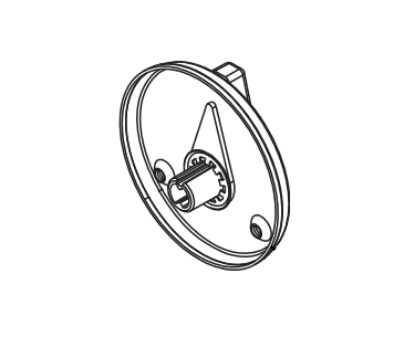
 

Conclusion

Keeping commercial doors secure means having the right replacement parts available when something wears out. Using genuine Schlage lock parts lets facilities get locks working again fast without spending money on full replacements.

Whether it is a strike plate, chassis assembly, tailpiece, or lever, the right OEM part keeps every door operating safely and reliably. For fire-rated doors, OEM parts are required to maintain the UL listing and pass NFPA 80 inspection.

SecurityParts.com makes it easy to find the exact Schlage lock parts needed for any commercial door hardware maintenance job. Parts are organized by series, part numbers are confirmed, and same-day shipping is available on stocked components. Call 845-935-0301 or browse the complete commercial door hardware parts catalog at SecurityParts.com.


About the Author

This guide is published by the commercial door hardware team at SecurityParts.com, a supplier of OEM commercial door hardware parts since 2001. The team provides parts identification and pre-order compatibility support for Schlage lock parts, Von Duprin exit devices, LCN door closers, and other commercial hardware across institutional, healthcare, and commercial facilities. For Schlage parts identification or same-day shipping support, call 845-935-0301.

Blog|Security Parts

Blog|Security Parts

Blog|Security Parts