 Trusted Since 2001





When a Von Duprin panic bar needs to open from the outside on an access control credential, two electrified options handle that function at the device level: QEL (Quiet Electric Latch Retraction) and MEL (Motorized Electric Latch Retraction). They both retract the latch bolt on a signal from the access control panel, but they work differently mechanically, draw power differently, and produce different acoustic signatures during operation. Choosing the wrong one does not create a safety problem, but it does create an operational or acoustic mismatch that is expensive to correct after installation. This guide explains how each works, which Von Duprin series support each, and exactly when to specify one over the other.
The Von Duprin panic bar electrified options discussed in this guide are available on the series stocked at SecurityParts.com. Browse the complete Von Duprin exit device and panic bar catalog and the full Von Duprin parts and series guide. For specification support before ordering, call 845-935-0301 or visit the SecurityParts.com contact page.

Von Duprin exit device electrified options : QEL and MEL for access control integration at the panic bar level
What QEL and MEL Do and Why They Exist
A standard mechanical Von Duprin panic bar allows egress from the inside by pressing the push bar. It does not allow entry from the outside unless the door is equipped with a separate outside trim function (lever, knob, or thumbturn) that retracts the latch from the exterior. On openings requiring controlled outside access, the most common solution historically was an electric strike in the frame that releases on an access grant signal. That is a frame-side solution.
QEL and MEL are device-side solutions. They retract the latch bolt inside the Von Duprin panic bar itself when an access grant signal is received, instead of releasing the keeper in the frame. The door swings open under push or pull without any secondary hardware in the frame. This matters for a few reasons: it works on hollow metal frames where installing an electric strike requires a cut that voids the frame's fire rating on rated assemblies, it preserves the full security engagement of the mechanical latch during normal locked conditions, and it simplifies the overall hardware schedule on a complex opening.
The Outside Trim Question
QEL and MEL retract the latch. They do not provide a pulling handle on the outside. A Von Duprin panic bar with QEL still requires an outside trim component for the user to physically pull the door open after the latch retracts. Outside trim options include levers, knobs, pulls, and thumbturns, available in a range of functions depending on the access control integration required. The trim function is specified separately from the QEL or MEL configuration and must be compatible with the outside trim options available for the specific series.
How QEL Works vs How MEL Works
QEL : Quiet Electric Latch Retraction
Mechanism: Electromagnetic solenoid pulls a plunger that retracts the latch bolt when energized. Operates on 12VDC or 24VDC.
Speed: Instantaneous retraction on signal. Latch retracts in milliseconds.
Sound: Produces a quiet solenoid click on activation. Noticeably quieter than a frame-side electric strike but audible in very quiet environments.
Current draw: 300 to 500 milliamperes during retraction. Higher inrush current at activation.
Field upgrade: Available as a modular conversion kit for existing mechanical Von Duprin devices. No device removal required.
Availability: 22, 33A/35A, 75, 78, and 98/99 Series.
MEL : Motorized Electric Latch Retraction
Mechanism: Small motor drives a gear assembly that retracts the latch bolt. Operates on 24VDC.
Speed: Slightly slower retraction than QEL. Typically 1 to 2 seconds from signal to full retraction.
Sound: Near-silent operation. The motor produces a low hum that is inaudible at normal ambient sound levels. Preferred for acoustically sensitive environments.
Current draw: Lower sustained current draw than QEL solenoid. More consistent current profile without inrush spike.
Field upgrade: Factory-configured option. Not available as a field conversion kit for existing mechanical devices.
Availability: 98/99, 33A/35A, and 75 Series only.
Which Von Duprin Series Support QEL and MEL
Not every Von Duprin panic bar series supports electric latch retraction. The 55 and 88 crossbar series are mechanical-only by design, with no electrified options at the device level. Every other active series in the Von Duprin lineup supports QEL. MEL is available on a narrower set of series.
- SeriesQELMELNotes
- 98/99 SeriesYes YesWidest electrified options catalog. QEL modular field conversion available. MEL factory-configured.
- 33A/35A SeriesYes YesNarrow-stile touchbar for aluminum storefronts. QEL modular field kit available. MEL factory-configured.
- 75 SeriesYes YesStandard commercial Grade 1. QEL modular field conversion available. MEL factory-configured.
- 22 SeriesYes NoMid-range commercial. QEL modular field conversion available. MEL not supported.
- 78 SeriesYes NoNarrow-stile push pad. QEL modular field conversion available. MEL not supported.
- 55 SeriesNo NoCrossbar, mechanical-only. No electrified options at device level.
- 88 SeriesNo NoCrossbar, mechanical-only. No electrified options at device level.
The QEL Modular Conversion Kit: Upgrading a Mechanical Von Duprin Panic Bar to Electric
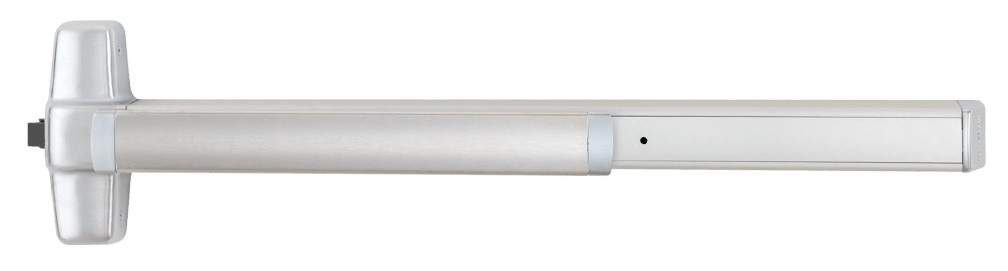
Von Duprin 98/99 Series panic bar : supports QEL modular field conversion without device removal
The QEL modular conversion kit is the feature that makes electric latch retraction practical as a retrofit on existing Von Duprin panic bars. The kit replaces the dogging cover plate on the mechanism case and integrates a solenoid assembly that connects to the latch retraction mechanism inside the existing case. The device does not come off the door. The frame does not get cut. The installation typically takes under an hour per opening.
The conversion kit requires a power supply connection to the device and a signal connection from the access control panel's lock output. Once wired, the panic bar operates identically to a factory-configured QEL unit: the latch is mechanically extended and the door is locked under normal conditions, and the latch retracts when the access control panel sends a signal.
What the QEL Modular Kit Includes
The kit includes the solenoid assembly, the modified dogging cover, the solenoid mounting hardware, and the wiring connections that integrate the solenoid with the existing mechanism case. Series-specific kits are required because the mechanism case dimensions and dogging cover geometry differ between the 22, 33A/35A, 75, 78, and 98/99 Series. Always order the kit designated for the exact series installed on the door.
The QEL conversion kit does not include outside trim. Outside trim must be specified separately based on the function required at the opening: entry control only (pull or blank escutcheon outside), keyed outside entry (cylinder outside), or lever/knob for two-direction traffic with credential control provided only by the QEL signal.
When to Specify QEL and When to Specify MEL
Specify QEL When
- The opening is a standard commercial corridor, stairwell, or employee entrance where solenoid click is not an acoustic concern
- A retrofit upgrade is being done on an existing mechanical Von Duprin device and MEL is not an option for the installed series
- 12VDC power is available and a 24VDC supply would require additional wiring or power supply changes
- The project is specifying the 22 or 78 Series where MEL is not supported
- Budget is a primary constraint and QEL is specified at a lower cost than MEL at the factory configuration level

Von Duprin 22 Series panic bar : supports QEL only, not MEL
Specify MEL When
- The opening is in an acoustically sensitive environment where solenoid click is audible and disruptive: intensive care units, operating suites, neonatal units, executive offices, recording studios, or libraries
- The project specification calls for silent hardware operation at all electrified openings
- The access control system cycles the lock output frequently (high-credential-volume openings) and solenoid noise accumulation across many daily activations is a concern
- The opening is on the 98/99, 33A/35A, or 75 Series where MEL is a supported factory option
- The project is new construction or a full hardware replacement where factory configuration is available
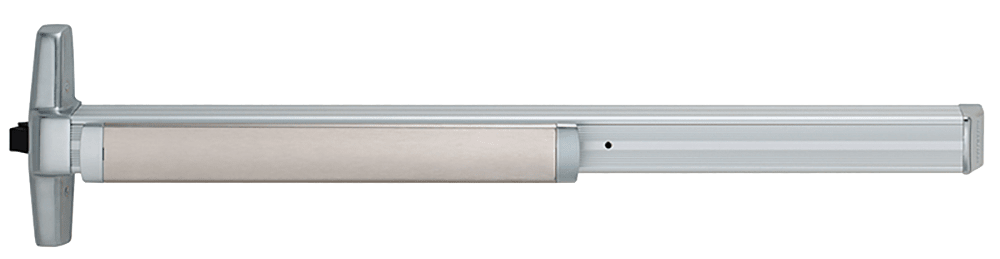
Von Duprin 33/35A Series touchbar panic bar : supports both QEL and MEL for aluminum storefront access control applications
QEL and MEL on Fire-Rated Von Duprin Panic Bars
Both QEL and MEL are fully compatible with fire-rated Von Duprin panic bar configurations. The fire rating is determined by the device model suffix ("-F") and the UL listing of the complete assembly, not by whether the device includes an electric option. A 98-F QEL or 98-F MEL device carries the same UL fire rating as a mechanical 98-F device.
The critical point on fire-rated openings: QEL and MEL operate fail secure. The latch is extended and the door is latched whenever power is absent. A power failure does not release the fire door. This is the correct and required configuration for fire-rated assemblies per NFPA 80. Fail safe operation, where power failure would cause the door to release, is not available on Von Duprin exit devices and is specifically prohibited by NFPA 80 on fire-rated doors.
Companion Electrified Options: Chexit and ALK
Chexit Delayed Egress
Chexit is a Von Duprin electrified option that holds the door latched for 15 seconds after the push bar is pressed, while sounding a local alarm during the delay. At the end of 15 seconds, the latch retracts and the door opens. Chexit is not an access control function and does not work from a credential at the outside. It is an egress deterrence function specified on secondary exits to reduce unauthorized egress without preventing emergency exit.
Chexit and QEL or MEL serve different functions and are not substitutes. A single opening may have both: QEL or MEL providing access-controlled entry from the outside, and Chexit providing egress deterrence from the inside on the same push bar. This configuration is common on pharmaceutical storage rooms, secured data areas, and behavioral health wings in healthcare facilities.
ALK Alarm Exit Kit
The Von Duprin ALK alarm exit kit converts the standard panic bar push bar to an alarmed exit device. When the push bar is pressed, an 85-decibel alarm sounds from a battery-powered alarm module. The alarm is controlled by a mortise cylinder: turning the cylinder to the locked position enables the alarm, turning it to the unlocked position silences it for authorized egress. The ALK kit does not require a power supply connection and does not integrate with the access control system.
ALK is a standalone deterrence tool, not an access control integration. It is specified on secondary exits where budget does not support a full QEL or MEL installation but where some deterrence against unauthorized door use is required. For openings requiring both alarm deterrence and access control integration, the RX signal switch on a QEL or MEL device provides the event logging function while a separate alarm system handles the audio deterrence.
Power Requirements and Wiring for QEL and MEL
Power Supply Requirements
Both QEL and MEL require DC power. QEL devices are available in 12VDC and 24VDC configurations. MEL devices operate on 24VDC only. A dedicated regulated DC power supply, separate from the access control panel's internal supply, is required. The QEL solenoid draws approximately 300 to 500 milliamperes during latch retraction with a higher inrush current at the moment of activation. The MEL motor draws lower sustained current than the QEL solenoid and does not have the same inrush spike.
RX Request to Exit Switch
The RX (Request to Exit) switch is a micro switch inside the push bar that signals the access control panel when someone presses the push bar from the inside for egress. On QEL and MEL configured devices, the RX switch prevents the access control panel from generating a door-forced alarm every time an authorized user exits through the push bar. Without the RX signal, the panel sees the door opening without receiving a credential input and flags it as an unauthorized event.
The RX function is available on the 98/99, 33A/35A, 22, and 75 Series. It is wired on a separate low-voltage signal circuit from the QEL or MEL power circuit. Always specify the RX option on any QEL or MEL configured opening where the access control system monitors door events.
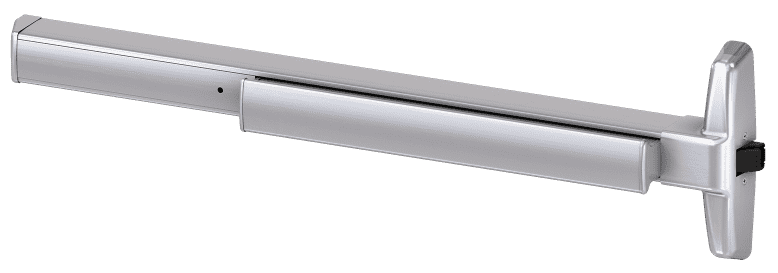
Von Duprin 75 Series panic bar : supports QEL and MEL, commonly specified for healthcare and standard commercial applications
QEL vs MEL vs Electric Strike: Choosing Between Device-Side and Frame-Side Solutions
For openings where outside access control is the requirement, facility teams sometimes choose between a QEL or MEL configured Von Duprin panic bar and a Von Duprin electric strike in the frame. Both achieve the same function: the door latches mechanically and unlocks on an access control signal. The choice depends on the door and frame conditions at the specific opening.
A frame-side electric strike is the simpler installation on existing openings where the frame can accept the strike cutout and the frame is not fire-rated in a way that prohibits the cutout. An electric strike does not require wiring to the door itself, which eliminates the need for a power transfer hinge or electrified door loop when the power must cross from the frame to the door-mounted device.
A device-side QEL or MEL configuration is preferred when the frame cutout for a strike would void the frame's fire rating, when the existing door and frame do not have the correct dimensions for an electric strike, or when the specification requires that all hardware maintain the full security engagement of the mechanical Von Duprin latch at the door edge rather than the frame-side keeper engagement of an electric strike.
For a detailed comparison of Schlage motorized latch retraction versus electric strike configurations, see the Schlage L9580 vs electric strike comparison guide at SecurityParts.com, which covers the same device-side vs frame-side decision for mortise lock applications.
Why Choose SecurityParts.com for Von Duprin Electrified Exit Device Parts
SecurityParts.com has supplied commercial door hardware since 2001. The Von Duprin catalog at SecurityParts.com covers the complete electrified exit device lineup including QEL modular conversion kits, MEL factory-configured devices, Chexit assemblies, ALK alarm kits, RX signal switches, and outside trim options for all supported series. Interactive parts diagrams on each model page show every component of the electrified assembly so you can confirm the correct kit before ordering.
For series selection guidance, see the Von Duprin panic bar series selection guide. For parts identification on an installed device, see the Von Duprin panic bar parts identification guide. For code requirements on when panic hardware is required, see the panic hardware code requirements guide. Browse the complete Von Duprin exit device and panic bar catalog, the full Von Duprin parts guide, and all SecurityParts.com commercial door hardware parts. Call 845-935-0301 for specification and same-day shipping support.
This Von Duprin panic bar QEL vs MEL guide is maintained by the commercial door hardware team at SecurityParts.com. For electrified exit device specification support, call 845-935-0301 or browse the Von Duprin exit device and panic bar catalog.