RSS

Blog posts of '2026' 'April'

Von Duprin Panic Bar Parts: How to Identify What You Need and Order It Right

The most common ordering mistake on von duprin panic bar parts is skipping the model identification step and searching by component name alone. A dogging assembly for the 22 Series is not the same as one for the 88 Series. A center case kit for the 98/99 rim device is a different part from the center case kit for the 98/9947 CVR configuration. Von Duprin's exit device catalog covers fourteen active series, each with its own parts tree. Before any component goes into a cart, the series and device configuration on the door need to be confirmed. This guide covers how to do that, what the high-turnover component categories are, and which specific parts apply to which device.

Why Von Duprin Panic Bar Parts Are Series-Specific, Not Universal

Von Duprin has manufactured panic exit hardware since 1908. That century-plus of production created a lineup covering institutional buildings, correctional facilities, glass storefronts, healthcare campuses, and standard commercial construction, each engineered to different dimensional standards. Component compatibility is tied to the series and configuration within the series, not to a general component category.

The 22 Series is the mid-range commercial Grade 1 specification for employee entrances and mid-traffic openings. The 98/99 Series is the institutional flagship with the deepest electrified options catalog, covering rim, SVR, CVR, WDC, and mortise configurations. The 88 Series is the heavy-duty mechanical-only device for correctional and behavioral health environments. The 78 Series is the narrow-stile unit for aluminum-frame and glass storefront doors. Every series was built to its own dimensional and mechanical standard. Parts do not cross between them.

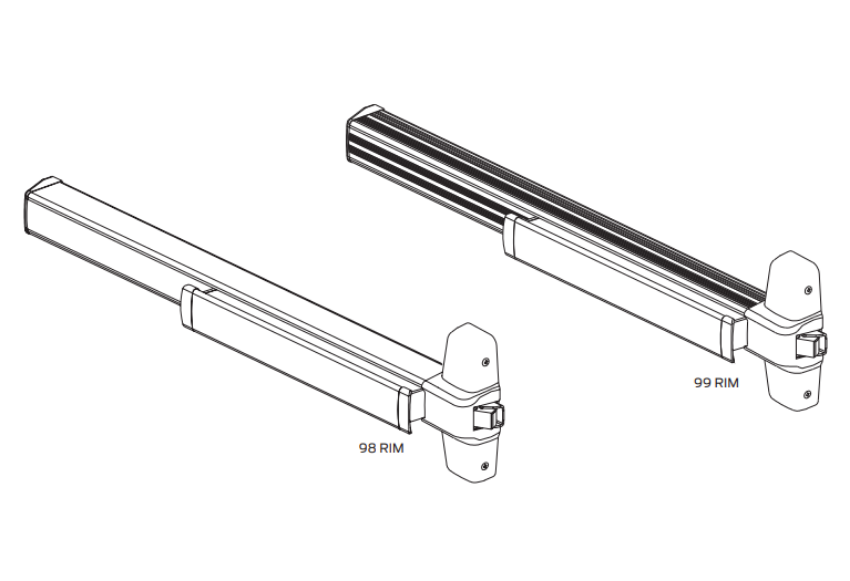
One important distinction that prevents ordering errors: the 98 Series has a smooth mechanism case and the 99 Series has a grooved case, but their internal components are fully interchangeable. A center case kit or dogging assembly that fits a 98 fits a 99 without modification.

The Five Component Categories That Cover Most Repairs

Dogging Assemblies

Dogging holds the push bar in the depressed position, keeping the latch bolt retracted. On push pad devices (22, 33A, 35A, 98, 99 series), dogging uses a 1/4-inch hex key. The crossbar devices in the 55 and 88 Series use a 5/32-inch hex key.

For 22/33/98/99 devices manufactured after July 1997, the relevant parts are:

  • 090040 dogging shaft: the piece the hex key inserts into. The shaft requires the long version of the hex key because the hole depth is only about 1/4 inch. Using a short key rounds out the hex over time, which is the most common dogging failure in the field.
  • 090042 dogging adapter spring: clips the shaft into the assembly
  • 090043 dogging adapter: the housing the shaft and spring fit through
  • 090044 dogging hook: grabs the push bar mechanism and holds the dogged position, used on 22, 33A, 35A, 98, and 99 devices made after 1997

For devices shipped before July 1997, the old-style dogging shaft has a different dimensional profile (approximately 1-1/2 inches long by 1/2 inch diameter). The 050709 dogging assembly is the retrofit kit that updates pre-1997 devices to current spec.

Center Case Kits and Mechanism Cases

The center case is the primary mechanical housing of the device. Center case specs differ by trim function within the same series, which is where most wrong-part orders originate.

On the 98/99 rim devices, the 050021 center case replaces all earlier versions of the 9827 and 9927 center cases. For the 98/9975 mortise configuration, the 050023 center case kit applies specifically to the 9875 and 9975 panic and fire-rated hardware. On the 88 Series rim device, the 050409 active case applies to EO, DT, and NL trim functions only. Lever, knob, and thumbpiece trim functions each use a different case.

Confirming the trim function before ordering the center case is mandatory. Ordering the wrong specification produces a part that physically fits the device body but does not engage the trim correctly.

Push Bar, Crossbar, and Latch Return Components
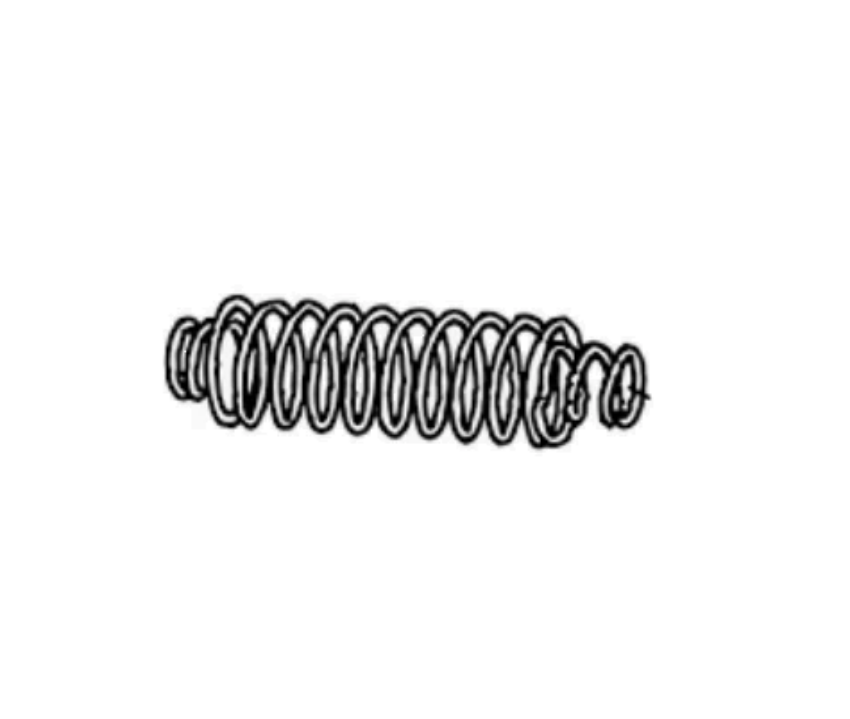
The 090039 baseplate latch return spring (2-1/4 inches long, 3/8-inch diameter) is used across 22, 33A, 35A, 98, and 99 devices and is one of the highest-turnover mechanical components on high-cycle commercial openings. It controls latch return after the push bar is released.

The 090049 push bar end guide fits the end of the push bar assembly on 33A and 98/99 devices, reducing noise and friction. It is frequently overlooked until noise or erratic bar movement appears.

On 88 Series crossbar devices, the crossbar ships at 42 inches and is cut to door width in the field. Crossbar tube attaching wedges (090020) and rings (090021) secure the crossbar to the device body. Wedgetite screws (090008) and dog screws (090004) are the highest-turnover fastener components on abuse-resistant institutional openings.

Vertical Rod and Latch Hardware

Surface vertical rod (SVR) configurations on the 9827, 9927, 8827, and 2227 models require door-height-specific rod kits. Top rod kits for 6'8" to 8'4" doors use the 050575 adjustable bottom rod on 9947 configurations. Confirm door height before ordering any rod kit because SVR rod kits do not cross between height ranges.

Strikes

Strike selection depends entirely on the device configuration and fire rating status. These are the specific strikes most commonly ordered:

  • 299: standard rim strike, ships with non-fire-rated rim devices, measures 1-1/4 inches wide by 2-7/8 inches high, slotted hole spacing of 2-1/8 inches
  • 299F: fire-rated rim strike for 22, 88, 98, and 99 fire-rated devices, same dimensions as the 299 with a roller projection of 13/16 inches
  • 304L: standard floor-mounted SVR bottom strike for 2227, 8827, 9827, and 9927 configurations, 1-7/8 by 1-7/8 inch outer dimension
  • 248L-4: panic-rated SVR bottom strike for 2227, 8827, 9827, and 9927, 9/16 inch wide by 2-1/2 inch high with 1-7/8-inch hole spacing

The 304L and 248L-4 are not interchangeable. The 248L-4 is the panic-rated version and is required on panic hardware applications.

How to Read a Von Duprin Model Number Before You Order

The model number is stamped on the mechanism case or baseplate, visible without disassembling the device. The first two or four digits identify the series. Numbers following the series designate the configuration and trim function. The "EO" suffix means exit only. "NL" means night latch. "L" means lever. "BE" means blank escutcheon. A fire-rated version adds "-F." Electrified options add "EL," "QEL," or "MEL."

Reading this correctly before opening the parts catalog is the single action that prevents the center case mismatch, the wrong strike, and the dogging assembly ordered for the wrong generation of device.

Parts Availability by Series at Security Parts

Security Parts organizes the complete Von Duprin lineup by series and model, with interactive diagrams on every model page:

  • 98/99 Series: center case kits, dogging assemblies, baseplate hardware, fire kits, electrified options
  • 22 Series: center case kits, dogging assemblies, SVR rod and latch hardware, QEL modular conversion
  • 88 Series: crossbar hardware, lever arm kits, axle security pins, dog screws, vertical rod kits
  • 33/35A Series: lever arm kits, cables, EL solenoid assemblies, fire latch hardware
  • 55 Series: 7500 mortise lock components, crossbars, soffit latch assemblies
  • 75 Series: center case kits, center case reinforcing brackets, dogging components
  • 78 Series: narrow-stile specific center case, baseplate, and cover plate hardware
  • 94/95 Series: latch retrofit kits, adjustable extension rod kits, ratchet release assemblies

The interactive diagram on each model page shows the full assembly. Clicking on a component in the diagram confirms the part number before anything goes to the cart. This is what prevents the wrong center case specification from shipping on a device where the trim function was not confirmed at order time.

Security Parts has been operating in commercial door hardware since 2001 and carries both current-generation and legacy parts. A device installed in 1991 may use old-style dogging components. A device installed in 2015 uses current-generation specifications. The catalog covers both without requiring a separate sourcing path. Pre-order compatibility support is available at 845-935-0301 or sales@securityparts.com.

Conclusion

Von Duprin panic bar parts are series-specific and in many cases generation-specific within the same series. The 1997 manufacturing cutoff matters for dogging assemblies. The trim function matters for center case kits. The device configuration and fire rating status determine which strike applies. Reading the model number stamped on the mechanism case before opening the catalog is the step that makes everything downstream accurate. Navigate to the correct series page at the Von Duprin parts catalog, use the interactive model diagram to confirm the component, and place the order from the model-specific parts list. Same-day shipping on stocked components from US warehouses. Pre-order support at 845-935-0301 when compatibility needs confirming before the order commits.

FAQs

Are Von Duprin panic bar parts interchangeable between the 98 and 99 Series?

 Yes. The 98 has a smooth mechanism case and the 99 has a grooved case, but all internal components including dogging assemblies, center case kits, and latch hardware are fully interchangeable between the two.

What hex key size does a Von Duprin 22 or 99 Series dogging assembly use?

 A 1/4-inch hex key for push pad dogging on 22, 33A, 35A, 98, and 99 series devices. The 55 and 88 Series crossbar devices use a 5/32-inch hex key. Always use the long version because short keys do not reach the full depth of the dogging shaft.

How do I know if my Von Duprin device uses old-style or current-style dogging parts?

 Devices manufactured before July 1997 use the old-style dogging shaft (approximately 1-1/2 inches long by 1/2-inch diameter). Post-1997 devices use current-spec parts including the 090040 dogging shaft and 090044 dogging hook. The 050709 retrofit assembly updates pre-1997 devices.

What is the difference between the Von Duprin 304L and 248L-4 strikes? 

Both are SVR bottom strikes for 2227, 8827, 9827, and 9927 configurations. The 304L is the standard version. The 248L-4 is the panic-rated version and is required on panic hardware applications.

What does the "-F" suffix mean in a Von Duprin model number? 

Fire-rated configuration. Fire-rated devices remove the dogging function because fire doors must latch automatically every time. These devices carry a UL fire resistance listing for use on rated fire door assemblies.

Where can I find Von Duprin panic bar parts with model-specific diagrams? 

Security Parts carries the complete Von Duprin parts catalog organized by series and model with interactive diagrams, same-day shipping on stocked components, and pre-order compatibility support at 845-935-0301.


Schlage L9580: The Storeroom Mortise Lock with Motorized Latch Retraction Explained

The Schlage L9580 is a Grade 1 mortise lock from Allegion's L Series running the storeroom function with motorized latch retraction (MLR), single outside cylinder, and 24V DC operation. Allegion released it to market in March 2025 for access-controlled commercial openings where the door has to release on signal without anyone touching the lever. Auto operators, card readers, push-button stations, infection-control corridors, K-12 visitor entries, accessible restrooms.

That's the role. What spec sheets skip is when this lock actually beats an electric strike or a mechanical L9080, and when it doesn't. Here's the working breakdown from a commercial hardware sourcing perspective.

What the Schlage L9580 Does

The L9580 runs the storeroom function: outside lever stays fixed (key-only entry from outside), inside lever is always free for egress. Standard institutional configuration for IT rooms, supply closets, mechanical rooms, and access-controlled service corridors.

Motorized latch retraction adds one capability on top of the mechanical storeroom: a 24V DC signal to the chassis tells an internal motor to retract the latchbolt. The door becomes pushable without anyone using the lever or key. When the signal stops, the latch springs back out. The lock secures itself the next time the door closes.

The unit also includes a deadlocking auxiliary latch, so the main latch can't be retracted by a credit-card shim once the door is closed. That's a Grade 1 physical security detail you don't get on lighter electrified hardware.

Where the L9580 Fits in the L Series Family

Allegion's MLR line splits into two groups. Latch-retraction-only: L9510 (passage), L9580 (storeroom), L9582 (institution). Latch-retraction-plus-lever-control: L9692EL/EU, L9695EL/EU, L9696EL/EU.

The L9580 sits in the first group. It retracts the latch on signal but doesn't electrify the lever itself. If your project needs the lever to lock or unlock electronically, you want the L9692/95/96 line instead.

The L9580 shares chassis dimensions with the broader Schlage L Series mortise lock platform, which means it retrofits the same mortise pocket as a mechanical L9080. Frame stays intact. Wiring runs through the door. That's the structural reason this lock often wins over an electric strike on renovation work.

Trim, finish, lever style, and keyway options carry across the entire L Series. Standard keyway is patented Everest 29 S123, with Primus available for upgraded geographic exclusivity. Cylinder formats include FSIC, SFIC, conventional, and less-cylinder. Twelve finishes cover 605, 612, 619, 622, 625, 626, 629, 630, and 643e among others.

Electrical Specifications That Determine Power Supply Sizing

24V DC only. Not 12V, not multi-voltage, not AC. A 12V panel won't actuate it. AC will damage the motor.

Peak current draws roughly 1.4 amps at the moment of latch retraction, then drops to around 0.1 amps holding current while the latch stays retracted. Sizing matters on multi-lock circuits: two L9580s firing simultaneously can pull close to 3 amps for a fraction of a second, even though average draw stays under one. UL 294 certified access control power supplies handle this if specified properly.

Critical install warning that most distributors skip: don't share a circuit with solenoid-based devices unless transient voltage is suppressed. Solenoids generate voltage spikes when they de-energize, and those spikes damage the L9580 motor. Schlage's installation document specifies a varistor rated at 35V (peak recurrent) installed at the equipment producing the transient. Leave it out, and the motor fails inside a year.

Fail-Safe vs Fail-Secure: Why the L9580 Operates Differently

Most electrified L Series locks have a field-selectable fail-safe / fail-secure switch in the chassis. The L9580, L9510, and L9582 do not. They're latch-retraction-only and operate in a single mode: powered means latch retracted, no power means latch extended.

Functionally that's similar to fail-secure (loss of power equals locked). But it's not switchable. If the application requires fail-safe behavior under code (some egress doors, certain stairwells, specific assembly occupancies), the L9580 is the wrong function. A lever-control variant from the same family covers that case.

The underlying L Series chassis is UL listed for 3-hour fire door assemblies, which makes the L9580 appropriate for fire-rated openings under NFPA 80 inspection requirements.

When the Schlage L9580 Beats an Electric Strike

Three reasons it usually wins on commercial buildings:

Frame integrity. An electric strike installation requires the frame to be cut and routed for the strike body. On older hollow metal frames, particularly fire-rated assemblies, that cut can be prohibited or compromise the rating. The L9580 retrofits the existing L9000 mortise pocket without touching the frame.

Security depth. An electric strike releases the keeper, but the latch on the lock stays extended. That works for most applications. On doors that face attempted forced entry, an L9580 with a one-piece mortise body and deadlocking auxiliary latch is structurally tougher than a strike plate cut into a frame.

Aesthetics. Electric strikes show a visible faceplate in the frame. The L9580 looks identical to a mechanical L9080 from the outside. Healthcare interiors, hospitality, and high-end commercial often spec mortise hardware specifically for the visual continuity.

Where electric strikes still make sense: simple retrofits where the existing mechanical lock is being kept and only access control is being added, and applications using cylindrical hardware on the door instead of mortise.

When a Mechanical L9080 Storeroom Wins Instead

Three scenarios point at L9080 over L9580:

No access control planned now or later. The MLR premium only pays back when something actually signals the lock. A storeroom that always operates by key doesn't need it.

No power available at the door. Running 24V DC to an opening that doesn't have it is a real install cost. If the electrical contractor isn't already on site, that wiring run can outweigh the savings of avoiding an electric strike.

Power instability. Older facilities or those without backup on access control circuits will see the L9580 cycle in and out of operability through the day. A mechanical L9080 is immune to that.

RX vs LX: Which Monitor Option Fits Your Access Control System

The L9580 takes two optional switches.

RX (request to exit) closes when the inside lever rotates, telling the access control panel that someone is exiting legitimately. Suppresses forced-entry alarms and logs valid exits. Most access control systems integrating with L9580 storerooms want RX.

LX (latchbolt monitor) signals whether the latchbolt is extended or retracted at any moment. Tells the panel whether the door is actually latched, not just closed. Specified for high-security openings where door position switch (DPS) data alone isn't enough.

Both can be ordered together. Security Parts stocks the L9580 motorized latch retraction chassis with RX as the primary configuration. Call for LX-only or RX-plus-LX availability.

Install Mistakes That Damage the Lock

Three field errors cause most L9580 failures inside the first year:

Sharing a circuit with solenoid hardware without a 35V varistor for transient voltage suppression. Already covered. This is the single biggest cause of premature motor failure.

Wrong voltage at the lock terminals. 24V DC, correct polarity, no AC component. Multi-voltage panels feeding 12V to the lock won't actuate it, and the unit gets returned as defective when nothing was wrong.

Improper coordination with panic hardware on the same door. UL listing requires the L9580 to be installed so it doesn't interfere with exit device operation. On openings with both, mount them so they operate independently. The commercial exit device parts guide covers panic hardware specification if both are being sourced together.

How to Source the Right L9580 Configuration

Every L9580 order needs five specs locked in: trim and lever style, cylinder option (P, L, B, BD, R, F, T), finish, door thickness if anything other than 1-3/4 inch, and monitor option (RX, LX, or both). Handing is field-reversible so it doesn't have to be specified at order.

For new spec, start at the L9580 motorized latch retraction chassis page and build the configuration up from there. For replacements, pull the model number and trim code off the existing lock face and match the same chassis variant. The Schlage L Series parts and diagrams guide covers component-level sourcing if a single part (lever, escutcheon, cylinder) is what failed instead of the full chassis.

For LX-only configurations, less common finishes, or extended door thickness, call 845-935-0301 to verify availability before placing the order.

Frequently Asked Questions

Is the Schlage L9580 fail-safe or fail-secure? 

Latch-retraction-only, not field-selectable. Powered equals latch retracted. No power equals latch extended and lock secured. Functionally similar to fail-secure but not the same as a switchable setting on a lever-control lock.

What voltage does the Schlage L9580 require?

 24V DC, single voltage, no AC component. Peak current is approximately 1.4 amps at retraction, holding current approximately 0.1 amps.

Can the L9580 retrofit an existing L9000 mortise pocket?

 Yes. Same chassis dimensions as the L9000 series. Drops in without frame modification. Wiring runs through the door.

Does the Schlage L9580 work with auto operators?

 Yes. Auto operator integration is one of the primary applications. The operator signals the lock to retract, then activates the door swing. Standard for accessible restrooms, infection-control entries, and hands-free corridors.

What's the difference between L9580 with RX and L9580 with LX?

 RX is a request-to-exit switch that signals when the inside lever rotates. LX is a latchbolt monitor that signals whether the latch is extended or retracted. RX integrates with most access control panels for valid-exit logging. LX verifies door secured status for higher-security applications.

Can multiple L9580 locks share one power supply?

Yes, with proper sizing. Peak current is roughly 1.4 amps per lock at retraction. Size the UL 294 power supply for simultaneous peak draw across all connected locks.

Is the Schlage L9580 UL fire rated?

 The underlying L Series chassis is UL listed for 3-hour fire door assemblies. Confirm fire rating compatibility against the specific opening's UL listing requirements before ordering.

Where can I source a replacement L9580 chassis? 

Security Parts stocks the L9580 motorized latch retraction chassis with RX with same-day shipping on stocked components.

Closing

The Schlage L9580 does one job well: it gives a Grade 1 mortise storeroom lock the ability to release on signal without compromising security or appearance. That's the right call on retrofits where the frame can't be cut, on healthcare and clean-room openings where quiet operation matters, and on access-controlled commercial buildings where commercial mortise hardware needs to last twenty years.

Source it as a complete configuration. Confirm chassis, trim, finish, monitor option, and door thickness before the order ships. Security Parts has stocked Schlage commercial hardware since 2001. The team is reachable for spec verification at 845-935-0301. Two minutes on the phone prevents the wrong-configuration return cycle on a project that probably doesn't have those days to spare.

Von Duprin 88 Series: How to Choose the Right Configuration for Your Commercial Opening

The Von Duprin 88 Series is a wide-stile crossbar exit device that has been in continuous institutional use since the 1950s. It carries ANSI/BHMA A156.3 Grade 1 certification, which means it is tested to 2 million open and close cycles at rated performance. Every configuration in the series is UL listed for accident hazard installations, and fire-rated versions carry a 3-hour UL fire resistance listing. It runs in four distinct configurations covering rim, surface vertical rod, concealed vertical rod, and mortise applications across single doors, paired doors, and openings where the rod hardware must be concealed inside the door. Choosing the wrong configuration is the most common ordering mistake on this device. This guide walks through exactly which configuration applies to which opening.

What Sets the 88 Series Apart Before You Pick a Configuration

The 88 Series is the wide-stile version of Von Duprin's crossbar line. Its counterpart, the 55 Series, handles narrow-stile applications. The practical distinction is stile width. The 88 Series fits door stiles requiring wide-stile mounting, while the 55 handles narrower stile profiles. Parts do not cross between them. If you're working on a wide-stile opening and your application calls for a crossbar device over a push pad, you are in the 88 Series catalog.

What makes this series specifically different from the push pad dominated 98/99 Series is its lever-arm mechanism. The crossbar drives a simple, heavy lever-arm action to operate the latch, rather than the sliding mechanism used on push pad devices. Fewer moving parts across a mechanically robust assembly is why the 88 Series gets specified in correctional facilities, behavioral health units, historic renovations, and oversized institutional openings where the hardware faces sustained physical force and electrified options are neither required nor desirable.

The device ships field reversible with a 42-inch crossbar that is field-sizeable, meaning it cuts to exact door width on site. It is not handed from the factory. One unit services either a left-hand or right-hand opening, which eliminates stocking two separate versions on projects with mixed door swings.

Matching the Right Configuration to Your Opening

Single door to a fixed frame: 88 Rim or 88-F Rim

The rim device is the most widely installed configuration in the 88 Series. It mounts on the egress surface of a single active door and latches at the frame-side rim strike. It ships with the 299 strike standard. Non-fire-rated devices use 5/32-inch hex key dogging. Fire-rated 88-F devices remove the dogging function because a fire-rated assembly must latch positively every time the door closes. Available finishes include US26, US26D, US3, US4, US10B, US10, and SPBLK.

If the application is a standard single door egress point and the opening is not a double door pair, this is the model.

Double door pair without a center post: 8827 or 8827-F Surface Vertical Rod

The 8827 Series is the surface vertical rod (SVR) configuration for double door openings without a center mullion. The top rod engages a strike at the frame header, the bottom rod engages the floor or threshold, providing three-point latching across the door height. It fits door stiles as narrow as 3-1/2 inches on the standard version. The fire-rated 8827-F fits stiles as narrow as 3-3/4 inches (95mm) and carries the 3-hour UL fire rating required for fire door assemblies. The 8827-F ships with the standard 304L strike and all mounting fasteners.

One installation point that affects parts ordering: the fire-rated and non-fire-rated SVR versions use different top latch assemblies. The 8827-F requires the plunger release bracket (107765) to function correctly. Ordering the non-fire-rated center case for a fire-rated SVR device is the most common wrong-part error on this configuration.

Double door pair with concealed rods: 8847-F Concealed Vertical Rod

The 8847-F is the fire-rated concealed vertical rod (CVR) configuration. The rod hardware routes inside the door rather than running on the surface. It is specified when surface-mounted rods are architecturally unacceptable but a wide-stile crossbar device is still required. Hotels, healthcare interiors, and high-end office applications where the egress hardware needs to disappear into the door profile are the typical specification points. It fits door stiles as narrow as 4-3/4 inches (121mm) and ships with the 301L strike. This configuration is available fire-rated only.

High-security single or double door with mortise lock body: 8875 or 8875-F Mortise

The 8875 is the mortise device configuration, integrating the Von Duprin 7500 mortise lock body into the 88 Series chassis. It is specified when the opening requires the security depth of a full mortise lock combined with code-compliant panic egress. The 7500 body has been the Von Duprin standard mortise body since approximately 1977 and measures 5-7/8 inches high by 4-1/2 inches deep by 1 inch thick. The same body is used in the 98/9975 mortise device, so if the facility is already maintaining 98/99 Series mortise devices, the lock body components are consistent across both series.

Trim and Outside Hardware: What Ships and What to Add

Every 88 Series device leaves the factory with device hardware and the standard strike for its configuration. Outside trim is specified separately unless the device is ordered as a complete unit with trim suffix included.

The 880 trim plate is the standard outside trim for 88 Series rim devices, measuring 3 inches wide by 14-3/16 inches long with a 1-5/8-inch bore for cylinder. Function designations:

  • EO — Exit only, no outside trim operation
  • NL — Night latch, key locks and unlocks from outside
  • TP — Thumbpiece outside trim
  • L / L-BE — Lever with or without cylinder
  • K / K-BE — Knob with or without cylinder (rarely specified now given ADA requirements on most commercial egress doors)
  • DT — Dummy trim, non-functional aesthetic match

The 373 Series Control handles outside trim for 8827 SVR and 8875 mortise configurations. The 606, 608, and 609 trims cover specialty outside hardware requirements.

If no cylinder operation is required, add the BE (blank escutcheon) suffix. The trim is always operable without a cylinder when BE is specified. Matching dummy trim uses the DT suffix. On wood doors without sex bolts, specify the WDA cover plate. When sex bolts are used, the 889 cover plate is required.

Why Security Parts Is the Right Place to Source the 88 Series

The 88 Series has been in production for over 70 years. Buildings running this device today have units installed in 1988, 2003, and 2019 side by side. Part numbers have evolved across those generations, and a replacement component ordered without knowing the device generation can produce a part that does not fit the specific unit in service.

Security Parts has been in commercial door hardware since 2001 and carries the complete Von Duprin 88 Series catalog organized by model within the series. Every model has its own dedicated page with an interactive diagram of the full assembly. A technician can navigate to the exact device configuration, open the diagram, confirm the failing component visually, and place the order without a cross-reference step or a compatibility guess. The 8827 non-fire-rated center case and the 8827-F fire-rated top latch are on different model pages, which is what prevents that specific wrong-part order from shipping.

The catalog covers both current-generation and legacy hardware. The full Von Duprin brand catalog extends this model-specific organization across every active series for facilities managing mixed Von Duprin hardware across different opening types and security requirements. Same-day shipping on stocked components. Pre-order compatibility support at 845-935-0301 or sales@securityparts.com.


Conclusion

The Von Duprin 88 Series covers every wide-stile crossbar exit device application from a standard single door egress point to a concealed vertical rod double door fire assembly. Four configurations, ten active models, ANSI/BHMA A156.3 Grade 1 certification, 2 million cycle testing, and 3-hour UL fire ratings on rated versions. The configuration decision, rim versus SVR versus CVR versus mortise, is what determines which model, which parts, and which outside trim applies to the opening. Getting that decision right before the order is placed is what keeps a commercial or institutional door installation on schedule and code-compliant from day one. Browse the full Von Duprin 88 Series catalog at Security Parts by model with interactive diagrams and same-day shipping on stocked parts.

FAQs

What is the Von Duprin 88 Series? 

A wide-stile crossbar exit device in production since the 1950s. ANSI/BHMA A156.3 Grade 1 certified, tested to 2 million cycles, UL listed for panic exit hardware and 3-hour fire resistance on rated configurations.

Which 88 Series configuration is right for my door? 

Rim for single doors to fixed frames. 8827 SVR for double door pairs without a center post. 8847-F CVR for double doors where concealed rods are required. 8875 mortise when mortise lock security depth is specified alongside panic egress.

What is the minimum stile width for the 88 Series?

 The 8827-F SVR fits stiles as narrow as 3-3/4 inches (95mm). The 8847-F CVR fits stiles as narrow as 4-3/4 inches (121mm). The rim device requires minimum stile for the 86 or 161 hollow metal door cutout.

Does the Von Duprin 88 Series have electrified options? 

No. The 88 Series is a mechanical-only device line. Electrified options including QEL, MEL, and Allegion Connect are available on the 98/99 and 33/35A Series.

Is the 88 Series field reversible?

 Yes. All configurations are non-handed from the factory and can be set for left-hand or right-hand swing on site without additional parts.

What fire rating does the Von Duprin 88 Series carry?

 Fire-rated configurations (8827-F, 8847-F, and 8875-F) carry a 3-hour UL fire resistance listing for use on rated fire door assemblies.

Where can I find Von Duprin 88 Series parts with model-specific diagrams?

 Security Parts carries the complete Von Duprin 88 Series catalog organized by model with interactive diagrams and same-day shipping on stocked components.


The Von Duprin 575-2: What It Is, When You Need It, and How to Order It Right

If you've ever stared at a hardware schedule wondering whether to order the 575 or the 575-2, you're in good company. Most catalog listings give you one line, "optional mortise strike for paired doors," and leave the rest to guesswork. The 575-2 mortise lock strike is an optional component for double door pair installations running the Von Duprin 7500 mortise lock body on 1-3/4 inch wood doors. It works across the 55, 88, 94/95, and 98/9975 series mortise exit device configurations. Knowing exactly when this part applies, and when it does not, is what keeps an installation from requiring a callback.

The Difference Between the 575 and the 575-2 That Most People Miss

This is where most ordering errors originate. The two part numbers look almost identical in a catalog and the difference is structural, not cosmetic.

The 575 serves a single active door leaf meeting a fixed frame. It is the standard optional mortise strike for single door applications.

The 575-2 serves double door pair installations where two active leaves meet at a center stile. The "-2" suffix designates the paired door configuration. On that type of opening, the active leaf needs a strike point at the door center, not at the frame. Without this component properly specified, the mortise latch bolt has nothing to engage correctly when the door closes.

This distinction is not about preference or upgrade. It is a functional requirement of the installation type. Getting it wrong means the mortise device does not latch at the center stile, which on a paired wood door opening is an immediate performance failure.

Which Devices and Door Types It Fits

The 575-2 is compatible with every Von Duprin exit device series that runs the same 7500 mortise lock body. That body has been the Von Duprin mortise standard since approximately 1977 and measures 5-7/8 inches high by 4-1/2 inches deep by 1 inch thick.

Compatible series:

  • 55 Series- 5575 and 5575-F mortise configurations
  • 88 Series- 8875 and 8875-F mortise configurations
  • 94/95 Series- 9475 and 9575 concealed vertical rod and mortise configurations
  • 98/99 Series- 98/9975 and 98/9975-F mortise exit device configurations

The application requirement is 1-3/4 inch wood doors. The strike is cut into the door edge at the center meeting stile, which requires wood door construction to support the mortise pocket correctly. Metal door pair applications require different hardware. This is not a universal strike.

Three Conditions That Must All Be True Before You Order

Before this component goes on an order, confirm all three apply to the opening. If any one of them is missing, a different specification is required.

Two active door leaves meeting at a center stile. The 575-2 is only correct for double door pair applications. A single active door meeting a fixed frame takes the 575.

A mortise exit device configuration from one of the compatible series. Rim devices, surface vertical rod devices, and CVR devices that do not use the 7500 mortise lock body do not use this strike.

1-3/4 inch wood door construction. The mortise pocket is cut into the wood door edge at the center meeting stile. Wood doors at this thickness support the correct pocket depth. Metal doors at the same thickness do not support this application.

All three confirmed? This component is the correct specification and it needs to be ordered separately from the exit device, since it does not ship with the device by default.

What Happens When You Get It Wrong

It is worth being specific about failure modes here, because the consequences of ordering the wrong strike on a double door pair installation are not subtle.

If the 575 single door version is ordered instead of the 575-2 for a paired installation, the geometry is wrong. The strike cannot align correctly to the center meeting stile because it was not designed for that configuration. The latch bolt either misses the pocket entirely or produces a partial engagement that does not meet the secure, consistent latching requirement for a fire-rated or commercial egress assembly. On a fire-rated door pair, this is a code compliance issue, not just a performance inconvenience.

If no mortise strike is specified at all on a double door pair, the latch bolt engagement at the center stile depends entirely on the door construction and the meeting stile geometry. In practice, this produces intermittent latching, added resistance on opening, and accelerated wear on the latch bolt itself over high-cycle use. The 575-2 is listed as optional in the Von Duprin catalog, but optional in this context means it is not a factory default shipment, not that it is unnecessary. On a properly specified paired wood door mortise installation, it belongs in the opening.

Ordering errors on this part also create project delays that are difficult to absorb. A commercial or institutional door opening with a paired mortise exit device is typically on a schedule with inspections and occupancy milestones attached to it. A wrong-strike return cycle on a component that ships separately from the device adds days to a timeline that usually has no room for them.

Why Security Parts Is the Right Source for Von Duprin Parts

Commercial door hardware sourcing has a specific and persistent problem that most platforms do not solve: parts are listed by name and part number, but the context that determines whether a part applies to your specific installation is buried in manufacturer documentation that most buyers do not have time to cross-reference on every order. The result is wrong-part orders, return cycles, and the kind of installation delays that damage a contractor's relationship with a general contractor or a facility manager's confidence in their own team.

Security Parts was built around a different approach, and after more than two decades in commercial door hardware, the difference is visible in how the catalog is organized. Every Von Duprin series has its own dedicated page. Every model within each series has its own parts breakdown, organized by component category and anchored by an interactive diagram of the full assembly. When you are sourcing a component for an 88 Series mortise device, you navigate to the 88 Series page, find the mortise device model, open the diagram, and click on the component you need. The part number is confirmed visually against the physical device before anything goes into a cart. That process eliminates the 575 versus 575-2 confusion because the diagram shows you exactly which strike belongs in a paired door assembly versus a single door assembly.

The platform carries this depth across every active Von Duprin series, including the 55, 88, 94/95, and 98/99 lines, plus the full LCN, Schlage, and Falcon catalogs for facilities managing mixed hardware across a building. The Von Duprin exit devices catalog and the broader Von Duprin brand page cover every series with the same model-first organization, interactive diagrams, and pre-order compatibility support.

Legacy hardware is not an afterthought here. Most commercial facilities are not running uniform current-generation hardware across all their openings. A hospital or government building with Von Duprin devices installed in 1988 still needs replacement components for those specific device generations, and the Security Parts catalog supports that depth. A 7500 mortise lock body installed in 1985 uses the same strike specification as one installed in 2022 because the body geometry has not changed. That consistency is part of why this strike has been in the catalog for as long as it has, and it is part of why Security Parts stocks it for both current and legacy applications.

The team is reachable at 845-935-0301 or sales@securityparts.com for compatibility questions before the order goes through. Same-day shipping applies to stocked components. For facility managers and contractors coordinating multi-door projects, that combination of catalog precision and shipping speed is the difference between a job that stays on schedule and one that does not.

Conclusion

The 575-2 is a small component that plays a specific and non-substitutable role in double door pair mortise exit device installations. It provides the center meeting stile engagement point that allows the active leaf's latch bolt to function correctly on a 1-3/4 inch wood door paired opening. It does not ship with the device, and it is not interchangeable with the single door 575. Confirm the three conditions, both active leaves present, mortise device configuration confirmed, wood door application verified, and this is the right part. Source it from the 575-2 mortise lock strike page at Security Parts with model-specific diagrams, same-day shipping on stocked components, and pre-order support when compatibility needs confirming.

FAQs

What is the Von Duprin 575-2 used for?

 It is the double door pair mortise strike for the 7500 lock body, providing the latch engagement point at the center meeting stile on 1-3/4 inch wood door paired installations.

What separates the 575 from the 575-2? 

The 575 is for single door applications. The 575-2 is for double door pairs with two active leaves meeting at a center stile. Functionally different, not interchangeable.

Does it ship with the Von Duprin mortise exit device?

 No. It is optional and must be specified and ordered separately when the installation is a double door pair application.

Which series is this component compatible with?

 55, 88, 94/95, and 98/99 Series mortise exit device configurations. All run the same 7500 mortise lock body, which this strike is designed to engage.

Does this component work on metal door pairs? 

No. The application is 1-3/4 inch wood doors only. Metal door paired applications require different strike hardware.

What happens if no mortise strike is specified on a paired door installation? 

Intermittent latching, accelerated latch bolt wear, and potential code compliance failure on fire-rated assemblies. On a paired wood door mortise installation, this component is functionally required.

How do I confirm compatibility before ordering? 

Security Parts carries this component within model-specific parts pages with interactive diagrams. Pre-order support is available at 845-935-0301 or sales@securityparts.com.

Door Closer Parts Diagram: Every Component, What It Does, and How to Order Right

A door closer parts diagram maps every component in the assembly to a specific part number. It sounds simple. The reason it matters is that LCN door closer components are model-specific in ways that are not obvious from the outside. Arms are machined to each series' spindle shape. A 1460 arm will not fit a 4040XP closer because the spindle profiles are different. Drop plates are series-specific. When a component is ordered without confirming the model, the mismatch gets discovered at installation. The diagram eliminates that problem by connecting the physical device to the correct part before the order is placed. LCN, owned by Allegion and manufacturing door control hardware since 1926, is the default institutional specification in commercial buildings across North America. Here is every component in the diagram, what it does, and what it takes to order it correctly.

How to Identify Your LCN Closer Before Reading the Diagram

This step comes before everything else. The model number is usually located under the cover, on a sticker on the cylinder body. For mechanical closers, the manufacturing date is stamped near the packing nut at the base of the pinion, which is where the arm attaches to the closer body. If the model number is not visible, remove the cover and photograph the internal components, particularly the spindle shape, before attempting to order any arm or internal component.

Security Parts organizes the complete door closer parts catalog by model across LCN 1000 Series, LCN 4000 Series, and LCN 3030/3130 closers. Every model page carries an interactive diagram so the component can be confirmed visually before ordering.

What Every Component in the Diagram Actually Does

Closer Body

The cast iron or aluminum housing that contains every other component. It mounts to the door face, frame, or soffit depending on installation type. ANSI/BHMA Grade 1, the commercial standard, requires the unit to complete 2 million open and close cycles. The body itself rarely fails from wear. When the housing is cracked or dented from physical impact, replacement of the full unit is the correct call because the internal geometry that holds every other component in alignment is compromised.

Spring

The spring stores energy when the door opens and releases it to close the door. Spring power is adjustable through an external screw and is sized to the door width and weight on a scale from 1 through 6. A spring that has weakened over high-cycle use produces a door that moves too slowly to latch reliably. Adjust through the external screw as the first diagnostic step before pursuing component replacement.

Arm

The arm is the most frequently replaced component in the diagram. It connects the closer body to the door or frame and translates spring energy into controlled door movement. LCN produces five arm configurations for different installation requirements:

  • Parallel arm runs parallel to the door face when closed, the most common commercial configuration
  • Top jamb mounts to the top of the frame when the closer is on the pull side
  • Slide track rides in a metal track rather than a fixed pivot, holding the door open at any position along the track
  • CUSH N Stop integrates a friction shoe for built-in hold-open function
  • Extra Duty Arm (EDA) is reinforced construction for high-use applications

Arm failure is almost always caused by the door being propped open with a wedge and stress-loading the casting in the wrong direction until it cracks at the pivot. Arms are sold separately from the body.

Spindle

The spindle is the shaft that connects the internal spring to the external arm. This is the component that makes arm compatibility non-negotiable by series. The 1000 Series spindle profile, covering the 1260 and 1460 models, is different from the 4010, 4020, and 4110 profiles, which are in turn different from the 4040 and 4040XP profiles. Confirm the model before ordering any arm.

Hydraulic Valves

Three valves control three closing phases. Sweep speed manages how fast the door moves from fully open to nearly closed. Latch speed manages the final controlled pull into the latched position. Backcheck provides hydraulic resistance against forceful opening that would otherwise slam the door against a wall or frame. All three are externally adjustable without opening the closer body.

Hydraulic Fluid

LCN closers are not field-refillable. The fluid is sealed inside the body at the factory. A closer that is leaking hydraulic fluid will produce increasingly erratic and unreliable closing behavior as the level drops. A leaking unit is at end of service life and requires full replacement rather than a parts order.

Drop Plates and Mounting Plates

Drop plates reposition the closer's mounting point when the standard geometry cannot be used due to a window, non-standard frame dimension, or arm geometry requirement. They are series-specific. A drop plate designed for the 4050 Series does not mount correctly on a 4030 Series closer.

Cover Plate and Fasteners

The cover protects internal components. Fasteners are application-specific across wood door, hollow metal door, and metal frame installations. LCN specifies the correct fastener for each application. Using incorrect fasteners creates play in the installation that accelerates wear on every internal component.

What You Need to Order Any LCN Door Closer Part Correctly

Every part order for an LCN door closer requires four specifications. Miss any one of them and the component ships wrong:

  • Finish (F) — aluminum, dark bronze, light bronze, or the applicable finish code
  • Size (S) — the spring power size matched to the door width and weight
  • Hand (H) — right hand (RH) or left hand (LH) based on the door swing direction
  • Voltage (V) — required for electrified components including electric hold-open arms and Sentronic models

Security Parts structures the door closer parts catalog to surface these requirements at the part level rather than leaving them for the buyer to discover after an incorrect order arrives. The interactive diagram on each model page shows the full assembly, letting you visually confirm the component before specifying finish, size, hand, and voltage.

Same-day shipping on stocked components. Pre-order compatibility support at 845-935-0301 or sales@securityparts.com.

Conclusion

An LCN door closer diagram is a precision sourcing tool. The arm spindle compatibility issue alone accounts for a significant portion of wrong-part returns on door closer components because the five active LCN spindle profiles look similar externally and are only distinguishable by model number. The hydraulic valve structure, the drop plate series-specificity, and the four-variable ordering requirement, finish, size, hand, voltage, are all details the diagram surfaces before the order is placed rather than after it arrives. The door closer parts diagram pages at Security Parts carry model-specific interactive diagrams across LCN 1000, 4000, and 3030/3130 Series closers, with same-day shipping and pre-order support when compatibility needs confirmation.

FAQs

Where is the model number on an LCN door closer?

 Usually under the cover, on a sticker on the cylinder body. The manufacturing date is stamped near the packing nut at the pinion base where the arm attaches.

Why won't a 1460 arm fit a 4040XP closer?

 LCN arms are machined to each series' spindle profile. The 1000 Series spindle shape is different from the 4040XP spindle. Arms are not interchangeable across series.

What are the three hydraulic adjustment valves on an LCN closer? 

Sweep speed (open to nearly closed), latch speed (final pull into latch position), and backcheck (resistance against forceful opening). All three adjust externally without opening the body.

Can you refill hydraulic fluid in an LCN door closer? 

No. LCN closers are sealed at the factory and are not field-refillable. A leaking closer has reached end of service life and needs full unit replacement.

What four specifications are required to order an LCN door closer part?

 Finish (F), Size (S), Hand (H), and Voltage (V) where applicable. All four must be specified for electrified components. Missing any one produces an incorrect order.

Where can I find LCN door closer parts diagrams organized by model? 

Security Parts carries interactive door closer parts diagrams for LCN 1000, 4000, and 3030/3130 Series with same-day shipping on stocked components.


Von Duprin 88 Series Catalog: What You Need to Know Before You Order a Single Part

If you've spent any time maintaining commercial doors, you've worked on a Von Duprin 88 Series device. It's been in continuous production since the 1950s and is probably the most recognizable crossbar exit device in North America. The Von Duprin 88 Series catalog covers rim, surface vertical rod, concealed vertical rod, and mortise configurations, all wide-stile, all carrying ANSI A156.3 Grade 1 certification and UL listing for panic exit hardware. It ships with a 42-inch field-sizeable crossbar and a 3/4-inch throw latch bolt. Knowing the model lineup and how the parts are structured is what keeps ordering accurate and returns to zero.

The Device That Put Von Duprin on the Map

That's not marketing copy. Contractors and locksmiths who have been in the field for decades will tell you the 88 Rim device was the product that established Von Duprin as the institutional standard. It's been on egress doors in schools, hospitals, government buildings, and correctional facilities for over 70 years because it solves a specific problem extremely well: it handles serious mechanical abuse without needing electronics to do it.

There are no electrified options in the 88 Series. No QEL, no MEL, no Allegion Connect integration. That's a design decision, not a gap. In correctional facilities and behavioral health units, you don't want electrified device components that can be targeted or defeated. You want a mechanical crossbar that's built heavy and stays functional under sustained physical force. That's what the 88 delivers, and it's why it still gets specified in environments where the 98/99 Series, with all its electronic integration options, simply isn't the right tool.

One thing worth knowing before we get into the models: the 88 is the wide-stile version of Von Duprin's crossbar line. The 55 Series is the narrow-stile version, commonly used in historic renovations and retro architecture. Both carry the same ANSI/BHMA A156.3 Grade 1 rating. If you're working on a wide-stile door, you're in the 88 catalog. If it's a narrow-stile, you're in the 55 catalog. Parts don't cross between them.

Every Model, Explained Like a Human Being

88 (Rim) and 88-F (Rim)

This is the original. Single-point latch bolt engagement at the frame-side rim strike. Field reversible, which means you can flip it to handle either hinge side without stocking two versions. It ships with the 299 rim strike and all mounting hardware. The non-fire-rated version uses hex key dogging with a 5/32-inch key. The fire-rated 88-F removes the dogging function because a fire door has to latch every single time it closes, no exceptions.

8827 Series (SVR) and 8827-F Series (SVR)

Surface vertical rod for double door openings without a center mullion. The top rod hits a strike at the door header, the bottom rod hits the floor or threshold. It ships with three strikes: the 299, the 304L standard vertical rod bottom strike, and the 248L-4 panic vertical rod bottom strike. Fits hollow metal doors with 86 or 161 cutouts, and works on door stiles as narrow as 3-1/2 inches.

There's one thing on the 8827 that trips people up. The center case for a non-fire-rated 8827 is part number 050415. The fire-rated 8827-F uses a completely different top latch assembly, and the fire-rated version also needs the plunger release bracket (107765) to work correctly. If you order the non-fire-rated center case for a fire-rated device, you'll know about it when the bottom latch starts dragging on the floor. Don't skip that detail.

8847-F Series (CVR)

Concealed vertical rod, fire-rated only. The rod hardware routes inside the door so you don't see it on the surface. Gets specified when surface rods aren't architecturally acceptable but the project still calls for a wide-stile crossbar device.

8875 (Mortise) and 8875-F (Mortise)

The mortise device version of the 88 Series integrates the 7500 mortise lock body, the same body used in the 9975 mortise device from the 98/99 Series. That body has been the Von Duprin mortise standard since around 1977 and measures 5-7/8 inches high by 4-1/2 inches deep by 1 inch thick. If you need no-cylinder operation on the 8875, you specify the BE (blank escutcheon) suffix. Dummy trim adds DT. Matching dummy trim for the knob version is 8875K-DT.

The Trim Suffix System, Explained Simply

This is where most ordering mistakes happen. The suffix at the end of the model number tells you the trim function, and getting it wrong means the outside hardware doesn't work the way the opening requires.

  • BE means blank escutcheon, no cylinder, trim is always operable
  • DT is dummy trim, non-functional, used for aesthetic matching on the inactive door leaf
  • NL is night latch, outside trim locks and unlocks with a key
  • TP is thumbpiece outside trim
  • L / L-BE is lever function, with or without cylinder
  • K / K-BE is knob function. Still available in the catalog but rarely specified anymore because knob hardware doesn't comply with ADA door hardware requirements on most commercial egress doors
  • T / T-BE is thumbturn function

One thing specifically about the 8827 SVR: you can't get the NL function just by specifying 88NL on an SVR device. On the 8827 and 8827-F, night latch is only available through the 370 Series trim configured for NL function during installation, or by ordering the TP-NL or K-NL designation at time of order. If you miss it during spec, you'll be back-ordering the right trim assembly on a job that should have shipped complete.

The Parts You Actually End Up Replacing

The Von Duprin 88 Series catalog at Security Parts organizes components by category within each model. Here's how each category breaks down and what sits inside it.

Crossbars and Crossbar Hardware

Ships at 42 inches standard, cut to door width in the field. The crossbar reinforcement kit (050459) adds structural support on high-use doors. Tube attaching wedges (090020) and rings (090021) secure the crossbar to the device body. Wedgetite screws (090008 and 090081) and dog screws (090004 and 090083) are the highest-turnover mechanical components on heavily used 88 Series devices.

Lever Arms, Axles, and Security Pins

Lever arm replacement is almost always caused by the dogging screw stripping out. The arm assembly includes the wedge, wedge ring, wedgetite screw, and dog screw. Right-hand lever arm kits are 050438 and 050440. Axles come in pairs (090006) or packs of 10 (090082). Axle security pins are available in a standard pack (090007) or a pack of 50 (033022), which makes more sense if you're servicing multiple 88 Series devices across a large facility.

Vertical Rods for the 8827

The top rod kit for standard 6'8" to 8' doors is 050457. Extension kits cover 8-to-10 foot doors (051705) and 10-to-12 foot doors (050634). Bottom rod kit is 050458. Know the door height before ordering any rod kit because these don't cross between sizes.

End Case and Center Case Components

End case kits come in multiple configurations: 050435 and 050437. End case springs are 090003 in pairs or 090080 in packs of 10. Spring stop kits are 050451 and 050452. For the rim device center case, the 050409 active case applies to EO, DT, and NL trim functions only. Lever, knob, and thumbpiece versions each use a different case specification.

Strikes

Rim strikes: 1609 and 1606. Vertical rod bottom strikes: 304L standard, 301L fire-rated, 248L-4 panic-rated. Strike selection depends on device configuration and fire rating status.

Mechanical Options

The HD suffix covers hex dogging. The WS suffix is the windstorm option for installations in hurricane-rated or high-wind-load door assemblies.

Why the Right Catalog Source Actually Matters for the 88 Series

Here's a real problem that happens all the time with the 88 Series. A facility manager searches for a center case kit under "88 Series" at a general distributor, orders it, and gets a part that doesn't fit the trim function on the device being serviced. That's because the 88 EO center case and the 88 TP center case are different parts. Most general catalogs don't surface that distinction clearly enough to prevent the mistake.

Security Parts is built around the model-first logic that actually reflects how the 88 Series catalog works. Every device configuration has its own page. Every parts category within that configuration is separated so you're not sorting through a flat list trying to figure out what applies to your specific device. The interactive diagram on each model page shows the full assembly so you can identify the failing component visually and confirm the part number before anything goes in the cart.

The catalog also covers legacy parts for devices that have been running since the 1980s and 1990s. Most commercial facilities aren't replacing 88 Series devices on a schedule. A device installed in 1988 might still be running the original mechanism and just needs a lever arm or an end case spring. That cross-generation depth is part of what Security Parts has built over 23 years in commercial door hardware.

Same-day shipping on stocked components from US warehouses. Free shipping on orders over $450. If you're not sure whether a specific part applies to the device generation you're working on, call 845-935-0301 or email sales@securityparts.com before the order goes through, not after. The full Von Duprin catalog covers every other active series through the same model-specific structure if you're managing a facility with mixed Von Duprin hardware.

Conclusion

The Von Duprin 88 Series has earned its place in commercial buildings since the 1950s by doing one thing consistently: holding up mechanically where other devices eventually fail. Wide-stile crossbar construction, ANSI A156.3 Grade 1 certification, and UL-listed panic exit hardware in four configurations from rim to mortise. No electrified complexity. No electronics to fail in an environment that punishes hardware daily. The catalog is deeper than most people realize, with model-specific trim functions, configuration-dependent center cases, and rod kits that vary by door height. Sourcing from the Von Duprin 88 Series catalog at Security Parts gives you model-specific diagrams, organized part categories, and same-day shipping so the right component gets there before the door goes out of service.

FAQs

What applications is the Von Duprin 88 Series designed for?

 Heavy-duty commercial and institutional environments including correctional facilities, behavioral health units, and government buildings where mechanical durability matters more than electronic integration.

What configurations does the 88 Series cover?

 Rim (88/88-F), surface vertical rod (8827/8827-F), concealed vertical rod (8847-F), and mortise (8875/8875-F). Fire-rated versions use the "-F" suffix and remove the dogging function.

Does the 88 Series have electrified options?

 No. It's a mechanical-only line by design. Electrified options like QEL, MEL, and Allegion Connect are available on the 98/99 Series, not the 88.

What's the difference between the 88 and 55 Series?

 Both are crossbar exit devices with Grade 1 certification. The 88 is wide-stile for standard commercial doors. The 55 is narrow-stile, commonly specified in historic or retro-architecture buildings.

What crossbar does the 88 Series ship with?

 A 42-inch standard crossbar that's cut to door width in the field during installation. Crossbar reinforcement kits are available for high-use applications.

Where do I find Von Duprin 88 Series parts with interactive diagrams?

 Security Parts carries the complete Von Duprin 88 Series catalog with model-specific diagrams, same-day shipping on stocked parts, and pre-order support at 845-935-0301.


Knowing Your Von Duprin Series Before You Spec or Service a Single Door

The Von Duprin series lineup is what most commercial door hardware conversations eventually come back to. The brand has been engineering panic exit devices since 1908, and today its products are installed on millions of commercial doors across hospitals, schools, correctional facilities, government buildings, hotels, and retail spaces. Fourteen active series cover everything from standard office entries to glass storefronts to abuse-resistant institutional openings. Each series has a distinct application, a distinct parts tree, and specific configurations that do not cross between lines. Knowing which series you are dealing with before you spec or order is the only way to get the right component the first time.

Why the Von Duprin Series Numbering System Actually Tells You Everything

Before diving into individual series, one thing worth understanding is that Von Duprin's numbering is not arbitrary. The number encodes the application tier, the device configuration, and in some cases the door material compatibility. A technician who knows how to read a Von Duprin model number can identify the series, the mounting type, the fire rating status, and the electrified options in seconds. That knowledge is what separates a confident parts order from a five-day return cycle.

The series also defines the parts catalog. Components from the 88 Series are not compatible with the 22 Series. A center case kit for the 98/99 rim configuration is a different part from the center case kit for the 98/9947 CVR device. Getting this right starts at the series level, not the part number level.

Here is every Von Duprin series currently available, what it was designed for, and what part categories sit inside it.

Every Active Von Duprin Series, Explained

98/99 Series

The 98/99 is the dominant commercial specification in North America. Walk into any major hospital, university, or government building built in the last 40 years and you will almost certainly find this device on the egress doors. The 98 uses a smooth mechanism case, the 99 a grooved case. Every internal component is identical and fully interchangeable between the two.

What makes this series the commercial standard is breadth. It covers five device configurations including rim, surface vertical rod (SVR), concealed vertical rod (CVR), wide door cable (WDC), and the 9875/9975 mortise exit device running the 7500 mortise lock body. Electrified options span quiet electric latch retraction (QEL), motorized electric latch retraction (MEL), Chexit delayed egress, Allegion Connect integration, signal switches, and electric power transfers. A building can spec a mechanical 98/99 device today and add electrified access control years later without replacing the device body. That long-term modularity is why it is the default institutional specification. Parts include center case kits, dogging assemblies, mechanism cases, baseplate hardware, push bar components, end cap kits, latch hardware, fire kits, vertical rod assemblies, and the full trim catalog by function.

22 Series

The 22 Series is the practical Grade 1 specification for mid-range commercial applications. Employee entrances, parking garage stairwells, multi-family corridors, back-of-house retail doors. It runs in rim and SVR configurations and carries ANSI A156.3 Grade 1 certification. Electrified options include ALK alarm kits, QEL modular conversion, MEL motorized latch retraction, and request-to-exit (RX) switch kits. One useful item specific to this series is the QM SVR Device Retrofit Kit, which updates older SVR configurations to current specs without a full device replacement.

33/35A Series

Where the 98/99 and 22 Series use a push pad, the 33/35A runs a continuous touchbar across the full door width. The release mechanism engages anywhere along the bar length, which matters in institutional settings where occupants may not know conventional hardware. The 35A variant adds an integral door position switch to the same chassis.

Configurations cover rim, SVR, CVR, WDC, and the 360/E360 control trim variants. The electrified options catalog is second only to the 98/99, including Chexit delayed egress, the E7500 electrified mortise lock, pneumatic options, Allegion Connect, and electric power transfers. Parts run deep into mechanism case assemblies, EL solenoid and plunger assemblies, SS housing components, cables, and fire latch hardware.

55 Series

The 55 Series integrates a full mortise lock body with panic egress hardware, which is why it appears on high-security perimeter doors where architects need mortise lock integrity without compromising IBC egress code compliance. The 7500 mortise lock body sits at the center of this series. Configurations include rim, CVR, and the 5575 mortise device. Parts go deep into mortise lock territory: latch bolt and axle assemblies, cam assemblies in left and right-hand configurations, lift members, lift member channels and levers, spring anchors, center case kits, crossbars, and soffit latch assemblies.

75 Series

The 75 Series is the clean Grade 1 specification for standard commercial buildings where the institutional depth of the 98/99 is not required. Healthcare facilities, retail, offices, light institutional openings. Available in rim, SVR, and CVR configurations. Electrified options include ALK, MEL, QEL modular conversion, and Allegion Connect. The center case reinforcing bracket is a 75 Series-specific component that adds structural support to high-use devices on busy corridors.

78 Series

The 78 Series exists for one application category: aluminum-frame and all-glass storefront doors where the stile is too narrow for any standard-width exit device body. Minimum stile clearance of 1-3/4 inches. Commercial lobbies, retail storefronts, glass office partitions. This is the narrowest form factor in the Von Duprin lineup and its parts are not interchangeable with any other series. Configurations run rim, SVR, CVR, and WDC. The full electrified options catalog applies including ALK, MEL, QEL modular conversion, and Allegion Connect.

88 Series

Built specifically for abuse-resistant, high-security environments. Correctional facilities, behavioral health units, secure government floors, any opening where hardware faces deliberate force or sustained misuse. Construction is heavier throughout. No electrified options exist at the device level by design because mechanical robustness is the specification priority. Configurations cover rim, SVR, CVR, and the 8875 mortise device.

The parts catalog is the most mechanically dense in the Von Duprin line: lever arm kits and axles, axle security pins (individual and 50-packs), dog screws, crossbar reinforcement kits, wedgetite screws, end case kits in multiple configurations, end case springs, vertical rod kits for standard doors plus extension kits for 8-to-10 foot and 10-to-12 foot door heights, soffit latch assemblies, release guide covers, plunger release brackets, and backplate conversion kits.

94/95 Series

The 94/95 Series runs the latch hardware inside the door rather than on the surface, which makes it the specification of choice when visible rods are architecturally unacceptable. Hotel corridors, premium healthcare interiors, high-end commercial spaces. Configurations cover the 94/9547 CVR device and the 9575 mortise device. Electrified options include the E7500 electrified mortise lock and QEL.

Parts are concentrated in latch, rod, and concealment hardware: latch retrofit kits, latch mounting bracket kits, ratchet release assemblies, adjustable extension rod kits from 8'4" to 10', auxiliary fire latch strike hole plugs, and latch linkage pin components. These are precise, configuration-specific components that do not cross to other series.

54 Series Mullions

Mullions are the center post components on double door openings where a vertical rod device on one leaf needs a strike point at the door center rather than the frame. The 54 Series covers fixed and removable configurations. Removable mullions allow the full double door width to open for large-format access, common on loading dock entries and large institutional openings. Parts include mounting hardware, locking assemblies, and strike components.

Electric Strikes: Four Series Covering Four Security Tiers

Von Duprin manufactures four electric strike lines, each engineered for a different access control requirement at the door frame.

The 5100 Series covers standard commercial cylindrical and mortise lock applications. The 6100 Series steps up to heavy-duty performance with broader lock compatibility. The 6200 Series delivers high-security fail-secure performance, maintaining the locked position during power failure rather than failing open. The 6300 Series carries the widest lock compatibility across cylindrical, mortise, and panic hardware in a single platform.

Parts across all four series include solenoid assemblies, strike plates, cover kits, and mounting hardware. Electric strike components are not cross-compatible between series.

Exit Alarm Guard-X

The Exit Alarm Guard-X is the alarmed exit device for secondary exits, stairwells, and storage room doors where a local alarm on door use is required but a full access control integration is not specified. The alarm is integrated directly into the panic bar hardware rather than added as a kit onto a standard device. Parts include alarm batteries, retainer nuts, and disarming labels.

What Makes Security Parts the Right Place to Source Every One of These Lines

Most hardware distributors list Von Duprin parts by product name or part number without the model-specific context that tells you whether that component applies to the device generation installed on your door. A dogging spring listed under "22 Series" without a diagram of the device assembly it fits is still a potential wrong-part order.

Security Parts organizes the complete Von Duprin series catalog model-first. Every series has a dedicated page. Every model within that series has its own parts breakdown organized by component category. The interactive diagram on each model page shows the full assembly so a technician or facilities manager can identify a failing component visually before placing the order.

The platform has been operating in commercial door hardware since 2001 and supports legacy models alongside current-generation devices because commercial buildings run mixed hardware generations across their openings. A facility manager sourcing a replacement mechanism case for a 98/99 device installed in 2004 needs to know whether the current part number applies to that generation. That cross-generation depth is built into how the catalog is organized, not something you have to figure out by calling a distributor and hoping someone knows the answer.

Common components ship same business day from US warehouses.  Pre-order compatibility confirmation available at 845-935-0301 or sales@securityparts.com.

Conclusion

Fourteen Von Duprin series cover the full spectrum of commercial egress hardware from standard office entries to correctional facility installations, glass storefronts, alarmed secondary exits, and electrified access-controlled openings. Each series has a distinct application logic, a distinct parts catalog, and specific configurations that do not cross between lines. Getting any repair or specification right starts at the series level. Browse the full Von Duprin series catalog at Security Parts, select your series, use the model-specific diagram to confirm the component, and order with same-day shipping on stocked parts from US warehouses.

FAQs

What is the Von Duprin series most commonly installed in commercial buildings?

The 98/99 Series. It covers the widest range of configurations including rim, SVR, CVR, WDC, and mortise, and carries the deepest electrified options catalog of any Von Duprin exit device line.

Which Von Duprin series fits narrow aluminum and glass storefront doors?

The 78 Series. It accommodates stile widths as narrow as 1-3/4 inches where standard-width Von Duprin devices will not fit. Its parts are not interchangeable with any other series.

Are Von Duprin 98 and 99 Series parts the same?

Yes. The 98 has a smooth mechanism case and the 99 has a grooved case, but every internal component including dogging assemblies, latch hardware, and mechanism cases is fully interchangeable between the two.

What Von Duprin series is specified for correctional facilities?

The 88 Series. It is built for abuse-resistant, high-security environments with heavier construction throughout and no electrified options at the device level by design.

What is the difference between Von Duprin electric strike series?

The 5100 covers standard commercial use, the 6100 is heavy-duty, the 6200 is fail-secure for high-security applications, and the 6300 covers the widest lock compatibility range. Parts are not cross-compatible between series.

Where can I find parts for every Von Duprin series in one place?

Security Parts carries the complete Von Duprin series catalog organized by series and model with interactive diagrams, same-day shipping on stocked components, and pre-order compatibility support at 845-935-0301.

Von Duprin Parts Guide: Every Series, Every Component You Need to Know

Von Duprin parts cover one of the most extensive commercial door hardware catalogs in North America. The brand's history starts in 1908 when Von Duprin developed the first panic exit device following the Iroquois Theatre fire in Chicago, which killed 602 people and directly triggered building code requirements for panic egress hardware. More than a century later, Von Duprin devices are still the dominant specification in hospitals, schools, government buildings, and correctional facilities across the country. Maintaining that hardware correctly requires knowing which series is installed, which component has failed, and which part number applies to your specific device generation.

This guide covers every active Von Duprin series with direct links to the parts pages, the component categories inside each series, and the facts that make ordering accurate the first time.

Why Part Number Precision Matters More Than Brand Recognition

Here's the thing most facility managers and contractors learn the hard way: Von Duprin part numbers are series-specific and in many cases configuration-specific within the same series. A dogging spring from the 22 Series won't fit a 75 Series device. A center case kit for the 98/99 rim configuration is a different part from the center case kit for the 98/9947 CVR device. ANSI A156.3 Grade 1 certification, which Von Duprin's top-tier devices carry, requires each component to survive 2 million operation cycles. That standard is built into the manufacturing tolerances. Getting a close-enough substitute wrong by one spec can undermine compliance on a fire-rated door and create real liability.

Always start with the model number stamped on the mechanism case or baseplate. That number drives every sourcing decision below.

Von Duprin 98/99 Series: The Flagship Exit Device

The 98/99 Series is the most widely specified panic bar hardware in commercial construction. The 98 carries a smooth mechanism case, the 99 a grooved case. Every internal component is interchangeable between the two, which means a 99 Series center case kit works on a 98 Series device without modification.

Configurations span rim, surface vertical rod (SVR), concealed vertical rod (CVR), wide door cable (WDC), and the 9875/9975 mortise exit device, which integrates the 7500 mortise lock body into a panic hardware chassis. This versatility is why the series appears in virtually every building type.

Key part categories include center case kits and mounting packages, dogging assemblies (hex dogging shafts, cylinder dogging kits, dogging conversion kits, dogging springs, dogging hooks and adaptors), mechanism cases, push bar guides, baseplate and cover plate hardware, end cap kits, latchbolt pins, control link pin kits, fire kits (LBR/LBL latch retrofit for fire-rated devices), vertical rod and latch assemblies, and the 7500 mortise lock component tree for mortise device configurations.

The electrified options catalog on the 98/99 is the deepest in the Von Duprin line: quiet electric latch retraction (QEL) modular conversion kits, motorized electric latch retraction (MEL), Chexit delayed egress assemblies, standard electric latch retraction (ELR) components, Allegion Connect integration modules, signal switch kits (RX/LX), and electric power transfer hardware. Trim covers lever, thumbturn, thumbpiece, night latch, and dummy trim functions across all configurations.

Von Duprin 22 Series: Grade 1 for Everyday Commercial Openings

The 22 Series carries ANSI A156.3 Grade 1 certification and handles medium to lower-traffic egress doors, employee entrances, parking stairwells, multi-family corridors, and back-of-house retail openings. Available in rim and SVR configurations.

Parts include center case kits, dogging assemblies, baseplate components, push bar kits, top and bottom latch kits, pullman latch kits, latch case cover kits, end cap kits, fire kits, vertical rod and latch hardware, and the alarm kit disarming label and retainer nut for ALK-equipped devices. Electrified options cover ALK alarm kits, QEL modular conversion kits, MEL motorized latch retraction, and request-to-exit (RX) switch kits including low-current variants. The 22 Series also includes the QM SVR Device Retrofit Kit, which converts older SVR configurations to current specifications without full device replacement.

Von Duprin 33/35A Series: Touchbar Exit Devices

The 33/35A Series replaces the push pad with a continuous touchbar running the full width of the door opening. The 35A adds an integral door position switch. Configurations run from rim and SVR through CVR, WDC, and the 360/E360 control trim variants.

This series carries the second-deepest electrified options catalog after the 98/99: Chexit delayed egress, the E7500 electrified mortise lock, pneumatic (PN) options, Allegion Connect, electric power transfers, and signal switches. Mechanical parts cover center case kits, mechanism case assemblies, dogging components (all variants including hex and cylinder conversion kits), lever arm kits, baseplate and cover plate hardware, cables, EL solenoid and plunger assemblies, EL receptacle connectors, SS housing components, fire latch kits, and push bar hardware. Trim covers lever, lever dummy, night latch, and thumbturn functions.

Von Duprin 55 Series: Mortise Exit Devices

The 55 Series integrates a full mortise lock body with panic egress hardware. It's specified on high-security perimeter doors where the architect or security consultant requires mortise lock integrity alongside code-compliant panic exit. Configurations include rim, CVR, and the 5575 mortise device.

The 7500 mortise lock body is the core of this series. Parts go deep into the mortise lock catalog: latch bolt with axle and spring assemblies, latch bolt axles, cam assemblies (right-hand and left-hand), axle retainers, spring anchors, lift members, lift member channels and levers, center case kits and mounting packages, crossbars, end case kits, lever arm kits, vertical rod components, and strikes. The soffit latch assembly and its mounting hardware are also carried in the 55 Series parts catalog.

Von Duprin 75 Series: Standard Commercial Grade 1

The 75 Series is the go-to specification for standard commercial applications: healthcare facilities, retail, offices, and light institutional openings that need Grade 1 reliability without the full institutional depth of the 98/99. Configurations cover rim, SVR, and CVR.

Parts include center case kits, mechanism case assemblies, center case reinforcing brackets, dogging components, baseplate hardware, lever arm kits, end cap kits, push bar components, vertical rod and latch hardware, and fire kits. Electrified options cover ALK alarm kits, MEL motorized latch retraction, QEL modular conversion kits, Allegion Connect, and RX switch kits. Trim covers lever and lever blank, and thumbturn functions.

Von Duprin 78 Series: Narrow-Stile Exit Devices

The 78 Series was engineered specifically for aluminum frame and all-glass storefront doors, where standard-width exit device bodies simply won't fit. The minimum stile width this series accommodates is 1-3/4 inches, which is exactly what commercial lobby glass doors typically require.

This is the one series where ordering a component from a different line creates a guaranteed misfit. The form factor is fundamentally different from every other Von Duprin device. Configurations run from rim and SVR through CVR and WDC. Parts cover center case kits and mounting packages, baseplate assemblies, cover plate hardware, dogging components (all variants), mechanism case parts, lever arm kits, push bar components, vertical rod and latch hardware, fire kits, end cap kits, and the full electrified options catalog including ALK, MEL, QEL modular conversion, Allegion Connect, and RX switch kits.

Von Duprin 88 Series: Heavy-Duty Abuse-Resistant Hardware

The 88 Series is specified wherever hardware faces deliberate force, misuse, or sustained abuse. Correctional facilities, behavioral health units, secure government floors. It's built heavier throughout, and by design there are no electrified options at the device level. Mechanical integrity is the priority.

Configurations include rim, SVR, CVR, and the 8875 mortise device. The parts catalog is the most mechanically detailed in the Von Duprin line: crossbar kits and reinforcement kits, lever arm kits and axles, axle security pins, dog screws (standard packs and 10-packs), crossbar tube attaching wedges and rings, wedgetite screws, end case kits (multiple configurations), end case springs and spring stop kits, vertical rod kits for standard door heights plus extension kits for 8 to 10 foot and 10 to 12 foot door applications, soffit latch assemblies and mounting packages, bottom guide packages, release guide covers, plunger release brackets, rod connector rivets, backplate conversion kits, and strikes including rim strikes, vertical rod top and bottom strikes, and fire-rated bottom strikes.

Von Duprin 94/95 Series: Concealed Vertical Rod and Mortise

The 94/95 Series handles openings where surface-mounted rods aren't acceptable for aesthetic or security reasons. Hotel corridors, premium healthcare interiors, high-end commercial spaces. The hardware is concealed inside the door. Configurations cover the 94/9547 CVR device and the 9575 mortise device.

Parts are concentrated in latch, rod, and concealment hardware: top and bottom latch kits, latch retrofit kits for non-EL applications, latch mounting bracket kits, latch linkage pin retaining rings, latch link pins and springs, bolt return springs, extension rod kits adjustable from 8 feet 4 inches to 10 feet, ratchet release kits, ratchet lever springs and release screws, rod connecting screws, baseplate link pins, fire latch components including the auxiliary fire latch strike hole plug, center cases, end cap packages, and wood door mounting packages. Electrified options include the E7500 electrified mortise lock and QEL.

Von Duprin Electric Strikes and Mullions

Von Duprin manufactures four electric strike series, each targeting a different security tier and lock compatibility range.

The 5100 Series covers standard commercial cylindrical and mortise lock applications. The 6100 Series is the heavy-duty option for higher-security openings requiring wider lock compatibility. The 6200 Series delivers high-security fail-secure performance, maintaining the locked state during power failure. The 6300 Series offers the widest compatibility range across cylindrical, mortise, and panic hardware applications in a single platform. Parts across all four series include solenoid assemblies, strike plates, cover kits, and mounting hardware, all organized by model on the electric strikes page.

The 54 Series Mullions are the center post components for double door openings where a vertical rod device needs a strike point at the door center rather than the frame. Available in fixed and removable configurations with dedicated parts covering mounting hardware, locking assemblies, and strike components.

Getting the Right Von Duprin Part Without the Guesswork

The size of the Von Duprin catalog is exactly why model-specific sourcing matters so much. Security Parts organizes the full Von Duprin parts catalog by series, then by model within each series, then by component category within each model. Interactive parts diagrams on every model page let you confirm a component visually against the actual device assembly before anything goes to cart.

The platform carries legacy models alongside current-generation hardware. Commercial buildings aren't running uniform recent-vintage hardware across all openings, and the cross-generation depth at Security Parts reflects that reality. Same-day shipping applies to stocked components from multiple US warehouses. Free shipping on orders over $450. Compatibility questions handled before the order ships at 845-935-0301 or sales@securityparts.com.

Conclusion

Von Duprin panic hardware has been protecting commercial egress since 1908. The parts catalog that supports it today is one of the deepest in commercial door hardware, spanning eleven active exit device series, four electric strike lines, and a full range of electrified upgrade options. Getting the right component starts with the model number on the device, then the correct series page, then the visual diagram that confirms the part before ordering. Start at the full Von Duprin parts catalog, select your series, and use the diagram to get it right the first time.

FAQs

What are Von Duprin parts used for?

 Von Duprin parts are replacement components for commercial panic exit devices, electric strikes, and egress hardware. They're used in maintenance, repair, and upgrade of exit devices across schools, hospitals, government buildings, and correctional facilities.

Are Von Duprin 98 and 99 Series parts interchangeable?

 Yes. The smooth-case 98 and grooved-case 99 use identical internal components. Center case kits, dogging assemblies, latch hardware, and mechanism cases all cross between the two without modification.

What series do I need for a glass storefront door?

The 78 Series. It's specifically built for narrow-stile aluminum frame and all-glass doors with stile widths as narrow as 1-3/4 inches. Parts from standard-width series are not compatible.

What makes the 88 Series different from other Von Duprin exit devices? 

The 88 Series is built for abuse-resistant, high-security applications including correctional facilities and behavioral health units. It has no electrified options by design, prioritizing heavy-duty mechanical construction throughout.

What is ANSI A156.3 Grade 1 and why does it matter for Von Duprin parts?

 ANSI A156.3 Grade 1 is the commercial-grade certification requiring exit devices to survive 2 million operation cycles. Most Von Duprin exit device series carry this certification, and replacement parts must maintain the same performance tolerance to keep the assembly compliant.

What electric strike series does Von Duprin make?

 Four series: 5100 for standard commercial applications, 6100 for heavy-duty cylindrical and mortise applications, 6200 for high-security fail-secure configurations, and 6300 for the widest lock compatibility range across cylindrical, mortise, and panic hardware.


Schlage L Series Parts and Diagrams: The Complete Sourcing Guide for Commercial Mortise Locks

The Schlage L Series is the most widely specified commercial mortise lock platform in North America. It runs in hospitals, government buildings, universities, schools, and high-security facilities where the opening needs to do more than just lock, including manage access by function, support electrified control, and hold up under daily high-cycle use. Maintaining these devices correctly requires knowing which component belongs to which model, which parts cross-reference across functions, and where to source them accurately. The Schlage L Series parts and diagrams catalog covers over sixty distinct model functions, making accurate component identification the first requirement of any successful repair or maintenance program.

What the Schlage L Series Actually Covers

The L Series is a heavy-duty mortise lock line built around a single chassis that accommodates dozens of locking functions. That modularity is why it dominates institutional specifications. The same lock body supports passage, storeroom, classroom, corridor, privacy, institutional, and electrified configurations, with trim and internal components varied per function rather than requiring a completely different unit for each application.

The model numbering tells you the function. Every number in the Schlage L Series parts and diagrams catalog maps to a specific locking behavior:

  • L9010 is passage latch, the simplest function, no locking from either side
  • L9025 and L9026 are exit and communicating functions for cross-corridor control
  • L9050 and L9056 are entrance and office functions with automatic unlocking options
  • L9070 and L9071 are classroom functions covering exterior-only lockdown and interior/exterior lockdown respectively, the distinction that matters most in K-12 and higher education specifications
  • L9080 and L9082 are storeroom and institutional functions where the outside lever is always fixed
  • L9460 through L9466 add a deadbolt to the mortise lock body for openings that require both a latch and a deadbolt in a single unit
  • L9090 through L9095 are the electrified EL/EU variants that allow electronic locking and unlocking of the outside lever or both levers, with cylinder options that vary per model

The LM Series extends this further into 2-point and 3-point latch configurations. LM9210 through LM9295 cover 2-point versions of the core functions, and LM9310 through LM9380 cover 3-point. Multi-point latching is specified on high-security openings, oversized doors, and applications where single-point engagement is insufficient for the door size or security requirement.

Understanding which model is installed before ordering any part is not optional. An L9070 and an L9071 differ internally in ways that affect which cam assembly, which lever chassis, and which cylinder configuration applies. Ordering by function description rather than confirmed model number is how wrong-part errors happen on these devices.

Reading Component Categories in the L Series Diagram Structure

The parts structure of the Schlage L Series parts and diagrams organizes into logical categories that correspond directly to how the lock body is assembled. Knowing these categories makes finding a specific replacement component significantly faster whether you are working from a physical device or a spec page.

Armor fronts and faceplates are the components visible on the door edge. Schlage produces separate armor fronts for latch-only, latch with auxiliary latch, deadbolt-only, and combined latch plus auxiliary latch plus deadbolt configurations. Ordering the wrong armor front creates a faceplate gap or misalignment at the door edge that compromises both appearance and function. The catalog lists part numbers 09-669 through 09-672 covering each of these four configurations.

Lock case and lock case assembly components form the internal mechanical heart of the device. The lock case houses the latch mechanism, the deadbolt where applicable, and the cam that transmits lever rotation into bolt movement. Case cover screws and case mounting screws sit in this category and are among the most frequently needed service items on high-use institutional openings.

Thumbturns and coin turns are the interior control elements. The L Series catalog carries standard thumbturns, ADA thumbturns, and large ADA thumbturns across multiple finishes. The emergency button and emergency key screwdriver tool for privacy indicators are also grouped here. Note that ADA thumbturns (the 09-544 series) are not interchangeable with standard thumbturns (the 09-509 series) even though they appear physically similar.

Strikes are the frame-side receptacles. The L Series uses T-square corner strikes, flat square corner strikes, rabbeted strikes, and the L9000 Series-specific deadbolt strikes (10-144 and 10-145 for SK1/SL1 trims). Strike selection depends on door prep, frame material, and whether the application includes a deadbolt function.

Rose, escutcheon, and trim assembly components cover the exterior and interior face hardware that supports the lever and protects the cylinder. These are finish-sensitive items, meaning the replacement must match the installed finish code exactly to maintain architectural consistency.

The Electrified L Series: EL/EU Functions and Their Parts Implications

The electrified variants of the L Series, the L9090 through L9095 range and the LM9290 through LM9295 multi-point equivalents, are where parts identification becomes most critical and most often done incorrectly.

EL/EU stands for Electrically Locking/Unlocking. These functions allow the outside lever, inside lever, or both to be controlled by an external signal, typically from an access control panel, a fire alarm interface, or a remote switch station. The cylinder configuration varies significantly across models:

  • L9090 has no cylinder on either side, relying entirely on electrical control
  • L9092 adds an outside cylinder while keeping electrical control of the outside lever
  • L9093 and L9095 involve both levers with cylinder options that include double cylinder configurations

The electrified chassis assembly, the electrical components inside the case, and the cylinder collar configurations all differ between these models. A replacement part for an L9090 is not the same as one for an L9092, even though the two models are externally similar. Confirming the exact model number stamped on the lock body before sourcing any electrified component is the only reliable approach.

Why Security Parts Is the Right Platform for Schlage L Series Parts

Sourcing L Series components through a general hardware distributor or a catalog not built around commercial mortise locks creates a specific and consistent problem: parts are listed by name without diagrams, compatibility is stated in general terms, and staff cannot confirm whether a specific strike, armor front, or chassis component applies to the exact model and function installed on the door.

Security Parts solves this at the catalog level. The Schlage L Series parts and diagrams page organizes every supported model with parts sorted by component category within each model, and interactive diagrams that show precisely where each component sits in the assembly. Before anything goes into the cart, the part can be confirmed visually against the device being serviced. On an institutional opening where a wrong-part order delays a fire door inspection or leaves a classroom lock non-functional during a school day, that confirmation step has real operational value.

This is not a convenience feature. It is what separates a sourcing process built for commercial hardware professionals from one built for general consumers.

The L Series sits within a broader Schlage brand catalog that includes the ND Series, ALX Series, and B Series, all organized with the same model-specific structure. A facility running Schlage hardware across multiple product lines can source from one platform without switching between catalogs or distributors for different lock types. If the building also runs non-Schlage mortise hardware, the mortise locks section covers Falcon MA Series alongside Schlage L Series with the same parts organization.

For facilities maintaining cylindrical locks or Schlage deadbolts alongside L Series mortise hardware, those catalogs are structured identically. Same-day shipping applies to stocked components from multiple US warehouses. For compatibility questions before placing an order, the team is reachable at 845-935-0301 and sales@securityparts.com.

Conclusion

The Schlage L Series is technically demanding to maintain correctly. Over sixty distinct model functions, multi-point variants, electrified configurations, ADA-specific components, and finish-sensitive trim items all require precise identification before any replacement is ordered. The Schlage L Series parts and diagrams page at Security Parts makes that process accurate and fast, connecting the model number on the physical device directly to the components that apply to it. Common parts ship same business day from US warehouses. Pre-order compatibility support is available by phone at 845-935-0301 and email at sales@securityparts.com. For any facility managing Schlage L Series hardware at scale, that sourcing infrastructure is what keeps doors operational and compliant across the full service life of the hardware.

FAQs

What is the Schlage L Series used for?

 The Schlage L Series is a heavy-duty commercial mortise lock line used in hospitals, schools, government buildings, and institutional facilities requiring high-cycle durability and multiple locking functions in a single chassis.

How do I identify which Schlage L Series model I have?

 The model number is stamped on the lock case, visible after removing the trim. It maps directly to the function, such as L9070 for classroom exterior lockdown or L9082 for institutional storeroom.

Are Schlage L Series parts interchangeable between models? 

Some components like strikes and screws cross multiple models. Function-specific parts like cam assemblies, chassis components, and armor fronts are model-dependent. Always confirm by model number before ordering.

What is the difference between L Series and LM Series Schlage locks? 

The LM Series adds 2-point or 3-point multi-point latch engagement to the same L Series functions. LM9210 is the 2-point version of L9010. Multi-point latching is specified for oversized or high-security openings.

What are EL/EU functions on the Schlage L Series?

 EL/EU stands for Electrically Locking/Unlocking. These variants allow electronic control of one or both levers via access control systems or fire alarm interfaces. Models range from L9090 to L9095.

Where can I find Schlage L Series parts and diagrams? 

Security Parts carries the full Schlage L Series parts and diagrams catalog with interactive diagrams, model-specific parts pages, and same-day shipping on stocked components.

How Do Cal Royal Panic Bars and Exit Devices Compare to Other Brands?

When a project calls for panic hardware, the choice between Cal Royal and the brands that dominate institutional specifications comes down to more than price. Cal Royal has been manufacturing exit devices since 1983, and their Grade 1 certified lines are legitimate commercial hardware. But performance on a spec sheet and performance over a 15-year service life in a high-traffic building are two different conversations. This guide puts Cal Royal panic bars and exit devices directly against Von Duprin, Sargent, and Yale, covering ANSI grading, fire ratings, retrofit compatibility, parts availability, and the factors that matter most to contractors, locksmiths, and facility managers making sourcing decisions that last.

Cal Royal's Real Position in the Exit Device Market

Cal Royal does not position itself against Von Duprin on institutional specification depth or against Sargent on premium commercial architecture. Their strategy is more precise than that, and it is genuinely useful when applied to the right project.

Their two strongest Grade 1 lines are the 7700 Series and the 9800 Series. Both carry ANSI A156.3 Grade 1 certification, both are UL listed for panic and fire exit hardware up to a 3-hour rating, and both meet ADA requirements at 5 lbs of opening force. The 7700 is built to retrofit Von Duprin 98/99 Series openings using the existing hole pattern. The 9800 does the same for Sargent 8800 Series installations. The 2200 Series retrofits Sargent 2828 hardware.

That retrofit compatibility is where Cal Royal earns its market position honestly. A building replacing aging Von Duprin or Sargent hardware at scale can use Cal Royal devices without additional door preparation, which reduces labor cost significantly on large projects. Their warehouses in California, Florida, and Texas support regional distribution, and their products have been installed in properties including Marriott and Hilton Hotels. These are not marginal credentials.

The 5000 Series drops to Grade 2, covering lighter commercial and institutional applications. The GLS7700 handles narrow-stile aluminum and glass storefront doors at Grade 1. Both expand the catalog into segments where full-spec pricing is harder to justify.

Brand by Brand: Where Cal Royal Leads, Where It Falls Short

Understanding the real differences requires looking at each comparison variable without the marketing language.

ANSI certification and fire rating is where Cal Royal holds its ground. The 7700 and 9800 both hit the same Grade 1 and 3-hour UL ceiling as Von Duprin and Sargent on their comparable lines. If a specification requires ANSI A156.3 Grade 1 with UL fire-exit hardware listing, Cal Royal qualifies. So does Von Duprin. So does Sargent. On paper, the compliance boxes are checked across all three.

Retrofit compatibility goes to Cal Royal cleanly. No other brand engineers their product lines as explicitly around fitting existing Von Duprin and Sargent hole patterns. If budget constraints are real and the opening is already prepped for a 98/99 device, the Cal Royal 7700 is a technically valid replacement path that does not require modifying the door.

Manufacturing depth and institutional track record is where Von Duprin creates meaningful separation. Von Duprin invented the first self-releasing fire exit device and has been refining that product family for over a century. That history translates into:

  • Field-tested performance data across millions of installations
  • Parts catalog depth that spans current and legacy generations
  • Service documentation thorough enough for facility managers to maintain hardware independently
  • Modular electrified options, including quiet electric latch retraction, Allegion Connect integration, and security indicators, that can be added or upgraded in the field

Cal Royal offers electric latch retraction and signal switches on their Grade 1 lines, but the customization depth, field upgradeability, and integration sophistication of Von Duprin's options platform is not matched. For access-controlled facilities or buildings planning electrified hardware upgrades, that gap matters at specification time.

Parts availability over the service life of the hardware is the comparison that most spec sheets do not capture and that most building operators feel most acutely. Von Duprin replacement components, from dogging assemblies and center case kits to latch bolts and end caps, are stocked nationally by commercial hardware distributors. If a 98/99 Series device develops a problem seven years into service, the replacement part is findable, diagrammed, and shippable within the same business day.

Cal Royal's parts ecosystem is thinner. Service documentation is less widely distributed across the distribution chain. A facility manager sourcing a specific Cal Royal component on a timeline tied to a fire door inspection will have fewer sourcing options than a counterpart maintaining Von Duprin devices. On a 15-unit installation, that is an inconvenience. On a 150-opening institutional facility, it is a maintenance liability.

Sargent and Yale both sit closer to Von Duprin than to Cal Royal on specification depth. Sargent's 8800 Series and Yale's exit hardware lines carry Grade 1 certifications with established parts ecosystems. Neither has built explicit retrofit compatibility into their product design the way Cal Royal has, but both offer longer service infrastructure support than Cal Royal at the top of their lines.

When the Von Duprin Parts Catalog at Security Parts Makes More Sense Than a Cal Royal Replacement

The retrofit argument for Cal Royal applies to full device replacement. It does not apply to component-level maintenance on a Von Duprin device that is otherwise functional.

When a 98/99 Series device develops a worn dogging spring, a cracked end cap, or a failing latch mechanism, the answer is not to replace the device with a Cal Royal unit. The answer is to replace the specific part, and the Von Duprin 98/99 series parts catalog at Security Parts makes that straightforward. Parts are organized by component type within the model page, diagrams show exactly where the component sits in the assembly, and you can confirm fit before placing the order.

The same structure applies across the full Von Duprin lineup. The 22 Series for medium-traffic openings, the 55 Series for standard commercial mortise applications, the 78 Series for narrow-stile aluminum doors, and the 88 Series for heavy-duty and high-security environments all have dedicated model pages with parts organized the same way. That consistency matters when you are maintaining mixed hardware across a large facility.

Why Security Parts Is the Right Source When Von Duprin Is the Specification

Sourcing Von Duprin components through a general hardware distributor means navigating catalogs that were not designed for model-first service work. Part numbers without diagrams, incomplete compatibility notes, and staff who cannot confirm cross-generation applicability are all common friction points that add time to every repair.

Security Parts was built differently. The platform has operated in commercial door hardware since 2001, which means it supports not just current-generation Von Duprin hardware but the legacy models still running in buildings that have not refreshed their inventory in a decade. Every supported series has its own model page. Every parts page includes an interactive diagram confirming visual fit before the order goes through.

When a service call on a panic device leads to discovering a failing door closer on the same leaf, or an electric strike downstream in the access control sequence that needs replacing, those components are in the same catalog, organized the same way, arriving on the same timeline. That continuity reduces vendor coordination on projects where multiple openings need simultaneous attention.

Common Von Duprin components ship same business day from US warehouses. Free shipping applies to orders over $450. For compatibility questions before placing an order, the team is reachable at 845-935-0301 and sales@securityparts.com. That pre-order conversation is available as standard support, not an upsell.

Browse the full exit devices catalog organized by brand and series, or go directly to the model page for the device being serviced.

Conclusion

Cal Royal panic bars and exit devices are legitimate Grade 1 hardware with a specific and genuine strength: retrofit compatibility with Von Duprin and Sargent installations that reduces replacement cost without compromising compliance. For budget-sensitive projects where full device replacement is the scope, that matters. Where Cal Royal loses ground is in the service life that follows installation, specifically in parts availability, electrified integration options, and the institutional depth of knowledge that keeps a large hardware fleet running predictably for twenty years. Von Duprin holds that advantage across every dimension that facility managers and contractors encounter after the initial installation. For component-level maintenance on Von Duprin devices, Security Parts offers the model-specific parts catalog, same-day shipping, and pre-order support that keeps commercial doors compliant and operational without delays.

FAQs

How do Cal Royal panic bars compare to Von Duprin on ANSI grade?

 Cal Royal 7700 and 9800 Series both carry ANSI A156.3 Grade 1 certification, the same standard as Von Duprin's comparable lines. On compliance alone, they are equivalent.

Can Cal Royal exit devices replace Von Duprin hardware without door modifications? 

Yes. The Cal Royal 7700 retrofits Von Duprin 98/99 Series openings using the existing hole pattern. No additional door preparation is required for a direct swap.

What is the main weakness of Cal Royal compared to Von Duprin? 

Parts availability and long-term serviceability. Von Duprin has a deeper parts ecosystem, broader distributor network, and more extensive service documentation than Cal Royal.

Does Cal Royal meet fire-rated door requirements?

 Yes. The 7700 and 9800 Series are UL listed for fire exit hardware up to a 3-hour rating, which meets the requirement for most commercial fire-rated door assemblies.

Which Cal Royal series retrofits Sargent hardware?

 The Cal Royal 9800 Series fits the same hole pattern as Sargent 8800 Series hardware. The 2200 Series retrofits Sargent 2828 installations.

Where can I find Von Duprin exit device replacement parts?

 Security Parts carries Von Duprin exit device parts for the 22, 55, 78, 88, and 98/99 series with model-specific diagrams and same-day shipping on stocked components.


Blog|Security Parts

Blog|Security Parts

Blog|Security Parts