 Trusted Since 2001





Walk through any hospital, school, office complex, or retail building in America, and you will find exit devices on almost every fire-rated and high-traffic door. These are the horizontal push bars, touchpads, and crossbars that allow occupants to exit quickly under normal conditions and evacuate safely during emergencies. They are some of the most-used pieces of hardware in any commercial building, which is exactly why their parts wear out.
The problem most facility managers and contractors run into is not that commercial exit device parts are hard to find. It is that these parts are hard to identify. Without knowing the exact device type, series, and component name, ordering a replacement becomes guesswork. Order the wrong part and you lose days to a return and reorder. Leave a malfunctioning device in place and you create a liability.
This guide walks you through the main types of commercial exit devices, the key parts that make each one work, what wears out most often, and how to identify and order the right replacement components the first time. For a broader look at all exit device series in one place, see the Von Duprin exit device series comparison guide.
What Are Commercial Exit Devices and Why Do Parts Matter?
Commercial exit devices, also called panic bars or panic hardware (and their panic bar parts), are door hardware assemblies designed to allow fast, one-handed egress from a building. Building codes in the United States, including the International Building Code (IBC) and NFPA 80 fire door standards, require exit devices on most fire-rated commercial doors and assembly occupancies.
Unlike residential door hardware, commercial exit devices operate under continuous, high-frequency stress. A busy school hallway door may cycle through several hundred latching and unlatching operations every single day. Under that kind of use, internal components including springs, latch mechanisms, dogging assemblies, and end caps eventually wear down. When they do, the whole device suffers: doors fail to latch properly, panic bars go limp, and fire-rated openings fall out of compliance.
Replacing an entire exit device assembly can cost hundreds to over a thousand dollars depending on the model, function, and trim. Replacing a specific worn part costs a fraction of that. This is why knowing your exit device's parts and understanding which component is failing gives you a significant cost and time advantage. For guidance on why OEM parts matter on life-safety hardware, see the OEM vs aftermarket commercial door hardware parts guide.
The Three Main Types of Commercial Exit Devices
Exit devices come in three primary configurations. Each serves different door and frame situations, and each has a distinct parts layout. Selecting the correct replacement parts requires knowing which configuration is installed before any ordering begins.
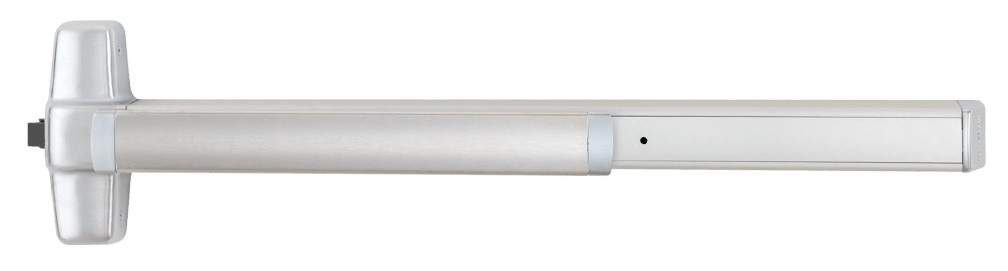
1. Rim Exit Devices
Rim exit devices are the most common type in commercial buildings. The entire mechanism mounts directly to the surface of the door, and the latch extends horizontally to engage a rim strike installed on the door frame or mullion. They work on single doors and are typically the easiest to maintain.
Common rim exit device parts include the touchbar or crossbar assembly, the latch case (also called the mechanism case), the rim latch bolt, the rim strike, the dogging mechanism and dogging key, the end cap, the case cover and cover plate, and mounting screws and sex bolts.
Von Duprin's 98/99 Series, 22 Series, and 88 Series are among the most widely installed rim exit devices in North American commercial buildings. The 98/99 Series is particularly common in high-security and institutional applications. For a detailed look at 22 Series parts and applications, see the Von Duprin 22 Series parts and applications guide. For the 88 Series, see the Von Duprin 88 Series buyers guide.
2. Surface Vertical Rod Exit Devices
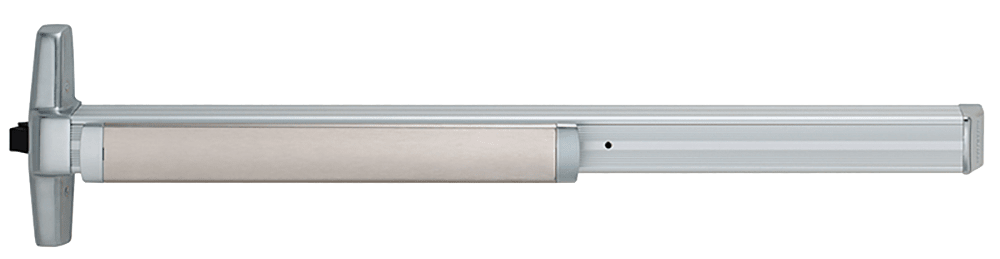
Surface vertical rod (SVR) exit devices use exposed vertical rods that run along the face of the door. When the touchbar is depressed, both rods retract simultaneously: one into the top frame and one into the floor strike. This provides a more secure, multi-point latching system than rim devices and is preferred on double doors where no center mullion is present.
Key parts unique to SVR devices include the top and bottom vertical rods, the top and bottom rod strikes (overhead and floor), the latch case with rod connector hardware, and the rod adjustment hardware. The floor strike is a known wear point because it absorbs the impact of the bottom rod on every cycle.
Von Duprin's 33/35A Series and 94/95 Series are widely installed SVR exit devices. The 94/95 Series includes three-point latching and is common in higher-security commercial applications. For the full Von Duprin series parts breakdown including SVR models, see the Von Duprin 75, 78, 88, 94, 95 and 54 series parts guide.
3. Concealed Vertical Rod Exit Devices
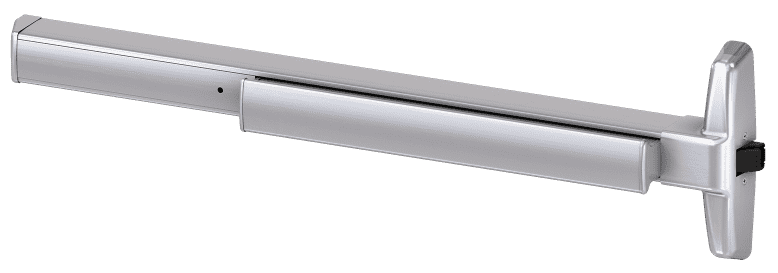
Concealed vertical rod (CVR) exit devices hide the vertical rods inside the door, connecting through channels routed during door fabrication. The result is a cleaner exterior appearance preferred by architects on glass and wood doors. CVR devices are common in office buildings, healthcare facilities, and corporate environments.
CVR devices tend to have more complex part structures because the rods and latches operate through the door thickness. Worn CVR parts are harder to access but just as critical to replace: the rod guide assemblies, internal latch bolts, and top and bottom strike hardware all require periodic attention.
The Von Duprin 78 Series and 75 Series are leading CVR exit devices. The 75 Series is particularly common in narrow-stile aluminum door applications.
The Von Duprin 75 Series and 78 Series are leading CVR exit devices. The 75 Series is particularly common in narrow-stile aluminum door applications. For a complete guide to the CVR configuration with specific part numbers, see the Von Duprin 9847 CVR exit device parts guide.
Key Exit Device Parts Explained
Regardless of the device type, a handful of components account for the vast majority of replacement part orders for commercial exit device parts. Understanding each one helps you diagnose problems accurately before placing an order.
Touchbar and Crossbar Assembly
The touchbar or crossbar is the horizontal push element that users engage to operate the device. It takes the most direct physical abuse of any component. Bars can loosen, warp, or lose their spring return over years of use. On high-traffic doors in schools and transit hubs, touchbar wear is often visible and easily identified without disassembly.
Latch Bolt and Latch Case
The latch bolt is the spring-loaded component that engages the strike and keeps the door latched. The latch case houses the mechanism that retracts the latch when the touchbar is depressed. A worn or damaged latch bolt often manifests as a door that will not stay closed, or one that requires significant force to latch. Replacing just the latch assembly is far more cost-effective than replacing the full device. For the full parts breakdown by latch type and series, see the exit devices parts guide.
Strike Plates and Floor Strikes
Strikes are the receptors that receive the latch bolt. Rim strikes mount on the frame or mullion, overhead strikes anchor in the top frame, and floor strikes are set into the floor. These parts absorb repeated mechanical impact and are common wear items. A damaged or misaligned strike is a frequent cause of latch failure that has nothing to do with the exit device itself. For related electric strike components used in access control applications, see the electric strike parts catalog.
Dogging Assembly
Dogging is the feature that allows the latch to be held in the retracted position, so the door can be pushed open without depressing the touchbar. It is typically engaged with a hex key and used in non-fire-rated openings during business hours. The dogging spring and dogging hook are the components most likely to fail in this assembly. A device that cannot dog, or one that will not release from the dogged position, almost always points to a worn dogging spring or adapter spring.
End Cap and Case Cover
The end cap sits at the end of the exit device case and often contains the dogging mechanism. Case covers protect the internal mechanism from dust and debris. Both are relatively fragile and frequently broken during service calls or forced entry attempts. A missing end cap does not just look bad. It allows the dogging cover plate to fall out, and on some models exposes the internal spring to contamination.
Mounting Hardware
Sex bolts, case mounting screws, and strike mounting hardware are small components that are frequently lost or stripped during servicing. Having the correct hardware on hand before starting a repair prevents unnecessary delays. Always confirm the finish specification before ordering, as commercial hardware is available in multiple finishes including aluminum, bronze, brass, and stainless steel. For finish code guidance, see the commercial door hardware finish guide.
Electric Latch Retraction: QEL vs MEL on Von Duprin Exit Devices
Many Von Duprin exit devices are available with electric latch retraction (EL), which allows remote latch release as part of an access control system. Two versions are available: QEL and MEL. They look similar on installation but use different internal mechanisms, and their replacement parts are not interchangeable.
QEL: Quiet Electric Latch Retraction
QEL uses a motorized actuator that draws the latch slowly and quietly into the retracted position. The quiet operation makes QEL the preferred specification for healthcare, library, corporate office, and other environments where audible mechanical noise is undesirable. The QEL motor assembly, actuator arm, and latch retraction components are specific to the QEL configuration and differ from standard EL parts.
MEL: Motor Electric Latch Retraction
MEL is the standard motorized electric latch retraction version. It operates more quickly and audibly than QEL. MEL is appropriate for applications where quiet operation is not a requirement and faster latch retraction speed is preferred. The MEL solenoid and retraction mechanism parts differ from QEL and must be ordered by configuration.
For a complete breakdown of the QEL and MEL configurations, compatibility, and replacement parts, see the Von Duprin QEL vs MEL guide.
Exit Device Parts for Fire-Rated Door Assemblies
Fire-rated door assemblies have specific requirements that go beyond what applies to standard commercial hardware. Every exit device part replaced on a fire-rated opening must preserve the UL fire listing of the complete assembly. For a complete guide to fire-rated door hardware requirements, see the commercial door fire rating guide.
Fire vs Panic Exit Hardware: Parts Differences
Fire exit hardware (F-suffix models) and panic exit hardware are not interchangeable in their parts. The key differences that affect parts ordering:
- Fire devices use more latch mounting brackets per latch than panic devices
- Fire devices do not include or support dogging components
- Center case cover kits differ between fire and panic configurations
- Electric latch retraction is not available on fire devices
Always confirm whether the device is fire or panic before ordering any latch kit, case cover, or dogging component. The F suffix in the model number (99F, 9947-F, 22F) indicates fire exit hardware.
NFPA 80 Annual Inspection Requirements
NFPA 80 requires annual inspection of all fire door assemblies, including exit devices on fire-rated openings. Inspectors check that the device positively latches on every close, that no non-permitted hold-open devices are installed, and that all hardware is the correct OEM specification. Non-OEM parts installed on a fire-rated exit device void the UL listing and will be cited. For ANSI/BHMA standards that govern exit device Grade ratings and testing, see the ANSI/BHMA door hardware standards guide.
Von Duprin Exit Device Parts: Series Reference
Von Duprin invented the first exit device in 1908 and has remained the dominant brand in commercial exit hardware ever since. Today, as part of Allegion's family of brands, Von Duprin exit devices are installed in millions of commercial, institutional, and government buildings across the United States.
One important note about parts compatibility: Von Duprin parts are not universally interchangeable across series. A dogging spring from the 22 Series is not the same part as one from the 98/99. Always confirm the exact series and part number before ordering.
The widespread installation of Von Duprin devices means that locksmiths, facility managers, and contractors encounter this brand on a daily basis. Knowing how Von Duprin series differ from each other is practical knowledge for anyone working in commercial door maintenance. The 98/99 Series is the flagship rim device. The 22 Series is the go-to entry-level rim device for standard commercial applications. The 33/35A Series covers surface vertical rod. The 78 Series is the primary narrow-stile rim device. The 88 Series serves heavy-duty applications.
The interactive parts diagrams on SecurityParts.com are specifically designed to eliminate this confusion. For a full comparison of what each series covers and where it is used, see the Von Duprin series guide.
For a complete parts breakdown for the 98/99 Series including part numbers and compatibility notes, see the 98/99 Series exit device parts guide at SecurityParts.com.
How to Identify Which Exit Device Parts You Need
Before placing any replacement order, you need three pieces of information: the device brand and series, the specific part name or part number, and the door handing and finish if ordering trim or cosmetic parts.
- Find the brand name imprinted on the case or touchbar Start by finding the brand name imprinted on the case or touchbar. Von Duprin will say "Von Duprin" on the mechanism case. Then look for the model or series designation, which is typically stamped or molded into the case. The series designation (98, 99, 22, 78, etc.) tells you exactly which parts catalog applies to your device. Von Duprin will say "Von Duprin" on the mechanism case. Falcon will say "Falcon." The brand determines which parts catalog applies.
- Confirm the series designation Look for the model or series designation stamped or molded into the case. The series designation (98, 99, 22, 78, etc.) tells you exactly which parts catalog applies to your device.
- Use the physical configuration if the label is worn If you cannot find the model number, the device's physical configuration gives you clues. A single horizontal bar with a latch extending to the strike is a rim device. Visible rods running vertically on the face of the door indicate a surface vertical rod model. A completely smooth door face with no visible rods points to a concealed vertical rod device.
- Confirm fire or panic configuration Look for the F suffix in the model number. Fire devices (99F, 22F, etc.) and panic devices use different parts for latch kits and case covers. This step is required before ordering any latch or cover component.
- Confirm finish if ordering trim Commercial exit hardware is available in multiple finish codes. Sending back a 689 aluminum part when you needed 628 dark bronze costs real time and money. Confirm the finish before ordering any visible component.
- Check the manufacture date for older devices On older Von Duprin devices, the manufacture date affects which dogging parts apply. Devices manufactured before August 1997 use different dogging replacement kits from current-specification parts.
From there, using a parts diagram is the most reliable way to confirm the specific part you need before ordering. SecurityParts.com offers model-specific interactive diagrams for all supported Von Duprin and Falcon series, so you can visually confirm the component and add it to your cart with confidence.
Falcon Exit Device Parts
Falcon exit devices are found in commercial facilities across North America, particularly in retail, light commercial, and institutional applications. Falcon's 19 Series, 24 Series, and 25 Series are the primary exit device families available at SecurityParts.com. Browse all Falcon parts at the Falcon hardware parts page at SecurityParts.com.
Falcon parts are not interchangeable with Von Duprin parts even when the device configurations appear similar. Always confirm the Falcon series designation before ordering any latch assembly, dogging component, or end cap.
When to Replace vs When to Repair Exit Device Parts
The general rule in commercial door hardware is to replace the specific worn component rather than the entire device, unless the damage is structural or the device is so old that replacement parts are no longer available. Replacing one part also gives you the opportunity to inspect adjacent components. A worn latch spring often points to a dogging spring that is not far behind.
Replace the entire device when: the mechanism case is physically damaged or bent, the device is more than 20 years old and multiple components are failing together, you cannot source genuine replacement parts, or the device no longer meets current code requirements for the opening.
Repair by part replacement when: the touchbar is loose or does not return, the latch does not retract smoothly, the device will not dog or will not release from dogged position, an end cap is cracked or missing, or a strike plate shows heavy wear or misalignment.
For step-by-step guidance on diagnosing exit device failures before ordering parts, see the commercial door hardware troubleshooting guide.
How to Order the Right Parts the First Time
Exit devices are life safety hardware. When a component fails, it is not a cosmetic issue or a minor inconvenience. It is a compliance risk and, in a genuine emergency, a safety concern. The good news is that most exit device problems are fixable with a single, specific replacement part, and most repairs can be completed without pulling the entire assembly off the door.
Commercial door hardware returns are expensive and time-consuming. A few habits make a big difference in ordering accuracy. Always note the exact series designation before ordering, not just the brand. Confirm the finish, since sending back a 689 aluminum part when you needed 628 dark bronze costs real money. Use part numbers wherever possible rather than descriptions. And when using an online parts source, take advantage of any interactive diagrams or visual confirmation tools before checkout.
Knowing the device type, series, and component name is the difference between a repair completed in one visit and a job that drags on through returns and misorders. Use the parts diagrams at SecurityParts.com to identify your components visually, confirm part numbers before ordering, and take advantage of same-day shipping on stocked parts to get your doors back in service quickly.
SecurityParts.com stocks replacement parts for the full range of Von Duprin exit device series, including the 98/99, 78, 22, 94/95, 33/35A, 55, 75, and 88 Series, as well as Falcon's 19, 24, and 25 Series exit devices. Each model has a dedicated page with categorized parts, interactive diagrams, and direct add-to-cart functionality. Same-day shipping is available on stocked components from US warehouses, which matters when a door in a critical location goes down. For access control integration with exit devices, see the access control and commercial door hardware integration guide.
Browse the complete exit device parts catalog at securityparts.com/exit-devices to find exact replacement parts for Von Duprin and Falcon series devices. Contact the team at 845-935-0301 or the SecurityParts.com contact page for pre-order identification support.
Why Choose SecurityParts.com for Commercial Exit Device Parts
SecurityParts.com has stocked OEM commercial door hardware parts since 2001. The exit device catalog covers the complete Von Duprin and Falcon series range, with parts organized by series, component category, and part number for fast identification and ordering.
- Interactive parts diagrams for every supported series: Confirm the exact component visually from the exploded diagram before ordering. Eliminates the most common cause of wrong-part returns.
- OEM parts only: Every component maintains the ANSI/BHMA certification and UL fire listing of the installed device. Critical for fire-rated exit hardware and NFPA 80 compliance.
- Parts for current and older series: The catalog covers both current production models and older series still in service. Call 845-935-0301 to confirm availability on older devices before ordering.
- Pre-order identification support: Call 845-935-0301 to confirm the correct part for your specific device and configuration before the order ships.
- Same day shipping on stocked OEM parts from US warehouses.
Browse Von Duprin exit device parts, Falcon exit device parts, and the complete commercial door hardware parts catalog at SecurityParts.com.