 Trusted Since 2001





Quick Answer
A door closer parts diagram maps every component in the assembly to a specific part number for your exact model. Here is what you need to know before using one:
- Identify your model first. LCN parts are series-specific and not interchangeable across models.
- The arm is the most commonly replaced part. It must match the spindle profile of your exact series.
- Three hydraulic valves (sweep speed, latch speed, and backcheck) are all externally adjustable without opening the body.
- Every part order requires four specs: Finish (F), Size (S), Hand (H), and Voltage (V) for electrified components.
- Hydraulic fluid is factory-sealed. A leaking closer needs full replacement, not a fluid top-off.
- Security Parts carries interactive door closer parts diagrams by model for LCN 1000, 4000, and 3030/3130 Series closers.
Why a Door Closer Parts Diagram Matters Before You Order
A door closer parts diagram maps every component in the assembly to a specific part number. It sounds simple. The reason it matters is that LCN door closer components are model-specific in ways that are not obvious from the outside. Arms are machined to each series' spindle shape. A 1460 arm will not fit a 4040XP closer because the spindle profiles are different. Drop plates are series-specific. When a component is ordered without confirming the model, the mismatch gets discovered at installation.
The diagram eliminates that problem by connecting the physical device to the correct part before the order is placed. LCN, owned by Allegion and manufacturing door control hardware since 1926, is the default institutional specification in commercial buildings across North America. Here is every component in the diagram, what it does, and what it takes to order it correctly.
For a broader overview of how LCN door closer parts are organized across series, see the LCN door closer parts guide. For help choosing the right closer for a new installation, the LCN commercial door closer selection guide covers selection by door type, traffic level, and application.
How to Identify Your LCN Closer Before Reading the Diagram
This step comes before everything else. The model number is usually located under the cover, on a sticker on the cylinder body. For mechanical closers, the manufacturing date is stamped near the packing nut at the base of the pinion, which is where the arm attaches to the closer body. If the model number is not visible, remove the cover and photograph the internal components, particularly the spindle shape, before attempting to order any arm or internal component.
Security Parts organizes the complete door closer parts catalog by model across LCN 1000 Series, LCN 4000 Series, and LCN 3030/3130 closers. Every model page carries an interactive diagram so the component can be confirmed visually before ordering.
Door Closer Parts Diagram: What Every Component Actually Does
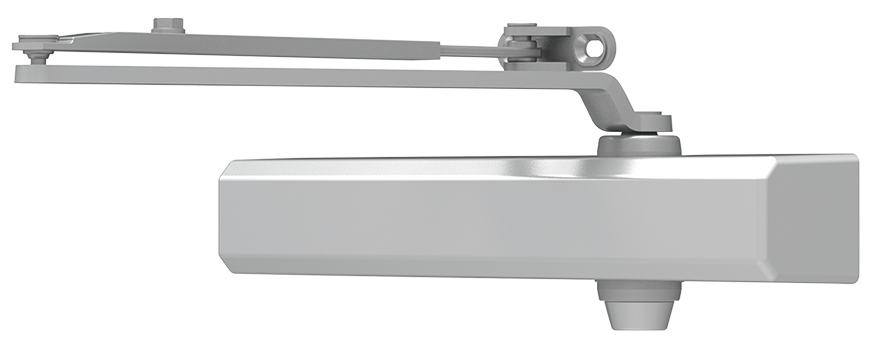
LCN 4000 Series surface mounted closer parts. Browse LCN 4000 Series parts.
Closer Body
The cast iron or aluminum housing that contains every other component. It mounts to the door face, frame, or soffit depending on installation type. ANSI/BHMA Grade 1, the commercial standard, requires the unit to complete 2 million open and close cycles. The body itself rarely fails from wear. When the housing is cracked or dented from physical impact, replacement of the full unit is the correct call because the internal geometry that holds every other component in alignment is compromised.
Spring
The spring stores energy when the door opens and releases it to close the door. Spring power is adjustable through an external screw and is sized to the door width and weight on a scale from 1 through 6. A spring that has weakened over high-cycle use produces a door that moves too slowly to latch reliably. Adjust through the external screw as the first diagnostic step before pursuing component replacement.
Arm
The arm is the most frequently replaced component in the diagram. It connects the closer body to the door or frame and translates spring energy into controlled door movement. LCN produces five arm configurations for different installation requirements:
- Parallel arm runs parallel to the door face when closed : the most common commercial configuration
- Top jamb mounts to the top of the frame when the closer is on the pull side
- Slide track rides in a metal track rather than a fixed pivot, holding the door open at any position along the track
- CUSH N Stop integrates a friction shoe for built-in hold-open function
- Extra Duty Arm (EDA) is reinforced construction for high-use applications
Arm failure is almost always caused by the door being propped open with a wedge and stress-loading the casting in the wrong direction until it cracks at the pivot. Arms are sold separately from the body. For the LCN 4040XP specifically, arm compatibility and template requirements are covered in the LCN 4040XP installation template guide.
Spindle
The spindle is the shaft that connects the internal spring to the external arm. This is the component that makes arm compatibility non-negotiable by series. The 1000 Series spindle profile, covering the 1260 and 1460 models, is different from the 4010, 4020, and 4110 profiles, which are in turn different from the 4040 and 4040XP profiles. Confirm the model before ordering any arm.
Hydraulic Valves
Three valves control three closing phases. Sweep speed manages how fast the door moves from fully open to nearly closed. Latch speed manages the final controlled pull into the latched position. Backcheck provides hydraulic resistance against forceful opening that would otherwise slam the door against a wall or frame. All three are externally adjustable without opening the closer body. For step-by-step valve adjustment procedures, see the commercial door closer adjustment guide.
Hydraulic Fluid
LCN closers are not field-refillable. The fluid is sealed inside the body at the factory. A closer that is leaking hydraulic fluid will produce increasingly erratic and unreliable closing behavior as the level drops. A leaking unit is at end of service life and requires full replacement rather than a parts order.
Drop Plates and Mounting Plates
Drop plates reposition the closer's mounting point when the standard geometry cannot be used due to a window, non-standard frame dimension, or arm geometry requirement. They are series-specific. A drop plate designed for the 4050 Series does not mount correctly on a 4030 Series closer.
Cover Plate and Fasteners
The cover protects internal components. Fasteners are application-specific across wood door, hollow metal door, and metal frame installations. LCN specifies the correct fastener for each application. Using incorrect fasteners creates play in the installation that accelerates wear on every internal component.
LCN Door Closer Series: Which Diagram Applies to Your Device
LCN produces several distinct closer families, each with its own parts diagram and model-specific components. Knowing which series you have determines which diagram to use and which part numbers apply.
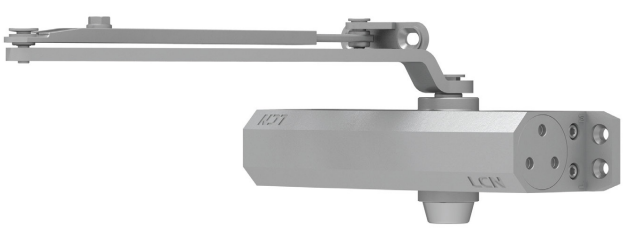
LCN 1000 Series surface mounted closer parts. Browse LCN 1000 Series parts.
| Series | Common Models | Mount Types | Parts Guide |
|---|---|---|---|
| 1000 Series | 1260, 1460 | Hinge, top jamb, parallel arm | 1000 Series guide |
| 4000 Series | 4010, 4020, 4030, 4040, 4040XP, 4110 | Hinge, top jamb, parallel arm, track | 4000 Series guide |
| 3030/3130 | 3030, 3130 | Concealed overhead | 3030/3130 guide |
| Sentronic (ME/HSA) | 2310ME, 4310ME, 4310HSA, 4410HSA | Fire/life safety, hold-open with release | Sentronic guide |
| Benchmark / Senior Swing | 9130, 9140, 9150 | Automatic operator | Benchmark/Senior Swing guide |
Electrified and Sentronic Closer Components
Electrified closers and Sentronic fire/life safety models add electrical components to the standard mechanical closer diagram. These require the Voltage (V) specification at the time of order and involve additional components not found on standard mechanical closers.
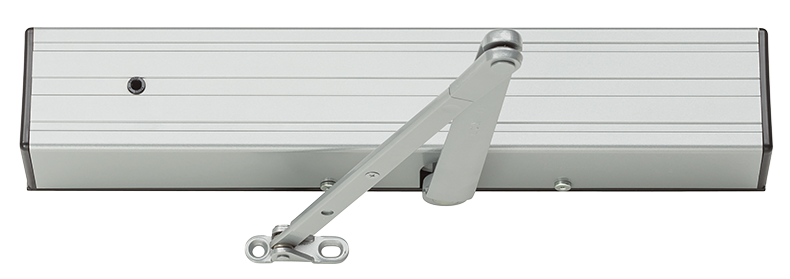
LCN Sentronic 2310ME, 4310ME, 4410ME closer parts. Browse Sentronic parts guide.
The Sentronic series uses a hold-open mechanism with magnetic or hydraulic release triggered by a fire alarm signal. The Voltage specification becomes required for the cylinder assembly, the on/off switch assembly, and the wiring harness. Sentronic components are not interchangeable with standard mechanical closer components even when mounted on the same door series.
The Smoothee and high security 2210/4210/4510 series carry their own parts diagrams with different cylinder assemblies and arm profiles. These are covered in the LCN Sentronic, SEH, Smoothee, and SEM7800 parts guide.
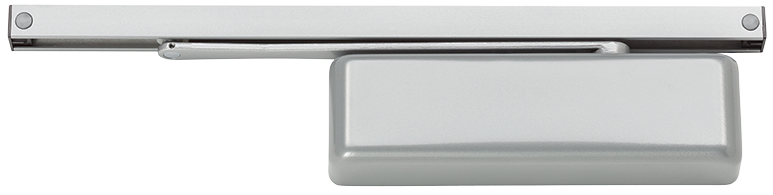
LCN 4210/4510 Smoothee high security closer parts. View Smoothee parts guide.
What You Need to Order Any LCN Door Closer Part Correctly
Every part order for an LCN door closer requires four specifications. Miss any one of them and the component ships wrong:
- Finish (F): aluminum, dark bronze, light bronze, or the applicable finish code
- Size (S): the spring power size matched to the door width and weight
- Hand (H): right hand (RH) or left hand (LH) based on the door swing direction
- Voltage (V): required for electrified components including electric hold-open arms and Sentronic models
Security Parts structures the door closer parts catalog to surface these requirements at the part level rather than leaving them for the buyer to discover after an incorrect order arrives. The interactive diagram on each model page shows the full assembly, letting you visually confirm the component before specifying finish, size, hand, and voltage.
Fire Door Closer Components and Compliance
Fire-rated doors require closers that are specifically listed for fire door use. The parts diagram for a fire-rated LCN closer differs from the standard version : fire-rated units do not support dogging or hold-open features because the door must latch on every closing cycle to maintain the fire barrier. Components pulled from a standard closer diagram will not satisfy a fire door installation.
ANSI/BHMA Grade 1 certification applies to both standard and fire-rated models. For a complete explanation of fire door rating requirements and how they affect closer selection and component ordering, see the fire door closer adjustment guide. For ongoing inspection and maintenance requirements, the commercial door hardware maintenance checklist covers closer inspection intervals and NFPA 80 requirements. For the full picture of how ANSI/BHMA grades apply to commercial door hardware selection, see the ANSI/BHMA door hardware standards guide.
How to Use the Interactive Door Closer Parts Diagram at Security Parts
Security Parts organizes every LCN closer model into an interactive parts diagram that mirrors the format of the LCN Illustrated Parts List : the manufacturer's own sourcing document : but is accessible online rather than requiring a PDF download.
Here is how to navigate it:
- Start with your model number. Go to the LCN parts hub and select your series.
- Open the diagram for your model. Each model page shows the assembly broken into component categories (cylinder assembly, arm assemblies, covers, mounting plates).
- Identify the failing component visually. Compare the failed part against the numbered diagram to confirm which assembly or individual part applies.
- Note the part suffix. LCN part numbers follow a series-plus-suffix format (for example, 1460-3077 for a 1460 Series regular arm). The suffix identifies the specific component.
- Specify finish, size, hand, and voltage. Confirm all four before adding to cart. If any is unclear, call 845-935-0301 before ordering.
For a walkthrough of how to install a replacement closer after ordering, see the commercial door closer installation guide. For an overview of all LCN closer types and which applications each serves, see the commercial door closers types guide.
About the Author
This guide was written by the Security Parts team, a commercial door hardware specialist serving locksmiths, facility managers, general contractors, and service technicians since 2001. Security Parts stocks OEM and aftermarket LCN door closer replacement parts across all active series, with same-day shipping on stocked items and pre-order parts identification support at 845-935-0301.