 Trusted Since 2001





Most door closer problems in commercial buildings are not part failures. They look like part failures. The door slams shut, or it drifts open two inches and won't latch, or it closes so slowly you could eat lunch waiting for it to seat. But nine times out of ten, the hardware itself is fine. Someone just needs to spend four minutes with a hex key.
This guide covers the full adjustment process for commercial hydraulic door closers, with specific guidance for the LCN 4040XP, 1461, and 4011 series, the three most commonly installed commercial door closers in North American commercial buildings. The same principles apply to virtually every surface-mounted hydraulic closer regardless of brand, because the underlying mechanism is the same across all of them. If you are shopping for a new closer or identifying the right series for a replacement, see the LCN commercial door closer selection guide first.
What this guide also covers: how to interpret ADA compliance requirements as a field-measurable standard, not just a vague code reference; what seasonal temperature change does to your valve settings and when to expect it; and the specific symptoms that tell you adjustment will not fix the problem and you are actually looking at a parts issue.
Tools Needed to Adjust a Commercial Door Closer
Before starting any adjustment on a commercial door closer, confirm you have the correct tools on hand. Using the wrong size hex key on brass valve seats strips them quickly.
- 3/32-inch hex key (allen wrench): Used for sweep, latch, and backcheck valve adjustment on most LCN closers including the 4040XP, 4011, and 1461 series
- 5/32-inch hex key: Used for spring power adjustment on the LCN 4040XP via the external adjustment dial on the spring tube
- Small flathead screwdriver: Required on some older LCN models where valves are slotted rather than hex-socket
- Stopwatch or phone timer: Required for ADA closing speed verification. Do not estimate this measurement
- Door pressure gauge: Required if verifying ADA opening force compliance on accessible-route doors
Have both the 3/32-inch and flathead on hand before removing the cover. Some older units in service have no valve labeling, knowing your valve positions before opening the cover prevents incorrect adjustments.
What the Adjustment Valves Actually Control and What Most Guides Get Wrong
Before touching anything, understand what each valve does. Most guidance treats door closers as black boxes with four mystery screws. That is how you end up chasing your tail for an hour without solving anything.
A hydraulic door closer works by routing fluid between chambers through calibrated passages. The valves do not add or remove force the way a dimmer switch works. They restrict or open fluid flow pathways, which changes how quickly the door moves through different phases of its closing cycle. The spring does the actual work. The valves govern the pace.

Commercial door closer replacement parts including cylinder assemblies, arms, shoes, and covers for LCN and Von Duprin series at SecurityParts.com.
The Sweep Valve (S)
The sweep valve controls the main closing arc: from fully open down to roughly 10 to 15 degrees from the latch point. This is what most people mean when they say "the door is closing too fast" or "the door will not pull itself closed." Turning the S valve clockwise restricts flow and slows the door. Counterclockwise opens flow and speeds it up.
ADA requirements under ANSI A117.1 specify that the door must take a minimum of 5 seconds to travel from 90 degrees open to the point 3 inches from the latch. That timing is measured with the sweep valve. Use a stopwatch. Do not estimate this one. For a complete overview of ANSI/BHMA hardware standards as they apply to commercial door hardware, see the ANSI/BHMA door hardware standards guide.
The Latch Valve (L)
The latch valve takes over in the final few degrees before the door seats against the strike. It is the most commonly misadjusted valve on commercial doors because people confuse "the door will not latch" with a latch mechanism problem, when it is usually just the L valve set too slow or too restrictive.
If the door drifts to within an inch of the frame and stops, or bounces back open slightly, the latch speed is almost always the culprit. The latch valve should be set slightly faster than the sweep valve. The door needs a little momentum in that final zone to overcome weatherstripping compression, latch spring resistance, and frame-to-door air pressure differentials.
The Backcheck Valve (B)
The backcheck limits how aggressively the door can be swung open. It creates hydraulic resistance past a certain opening angle, typically around 70 to 75 degrees, which prevents the door from slamming into the wall or being caught by wind and yanked open violently.
On first installation, always close the backcheck valve completely before hanging the arm. Opening a door with backcheck fully open and no arm resistance can damage both the closer and the frame. Set it after the arm is connected and the basic closing speeds are established.
The Delayed Action Valve (D): LCN 4041 and ADA Applications
Not all closers have a D valve. On the 4041 delayed action model (an option on the 4040XP platform), the D valve introduces a pause in the closing cycle after the door reaches a set point, typically around 70 degrees. This gives people using mobility aids extra time to pass through before the door begins its sweep.
Delayed action is specifically required or recommended on ADA-accessible entrances where fully automatic door operators are not installed. If you are working on a door where someone has complained about it catching them before they are fully through, delayed action is what the specification calls for, and the D valve is where you set it.
Before You Touch a Valve: Three Things to Check First
Valve adjustment will not fix a door closer that has a mechanical problem. Before you open the cover, confirm three things.
One: The arm geometry is correct. The arm should be roughly perpendicular to both the door and the frame at 90 degrees open. If the geometry is off because a drop plate is missing or the closer was mounted in the wrong position, no valve setting will produce consistent closing behavior. The arm will bind through part of its travel and go slack through another.
Two: The hinges are tight and the door hangs level. A sagging door means the latch and strike are misaligned, which loads the latch valve asymmetrically. You can chase valve settings forever on a door that is hanging wrong. Check for sag by looking at the gap between door and frame along the latch edge. It should be consistent from top to bottom.
Three: There is no hydraulic fluid leakage. Oil on the door frame, on the cover plate, or pooled on the floor near the closer means the internal seals have failed. A leaking closer cannot hold valve settings. The fluid pressure that the valves regulate is draining out. Adjusting it is a temporary fix at best and masks a failing unit. Replace it. The "When Adjustment Is Not the Problem" section below covers which parts to order when you reach that point.
If all three checks pass, proceed to adjustment. For a complete maintenance framework covering all commercial door hardware in your facility, see the commercial door hardware maintenance checklist.
Step-by-Step: How to Adjust a Commercial Door Closer
You need a 3/32-inch hex key for most LCN closers. Some older models take a small flathead screwdriver. Have both on hand.
Step 1: Set All Valves to Baseline
Before dialing in anything, get a known starting point. Turn all valves fully clockwise until they seat gently. Do not overtighten. Hydraulic valve seats are brass and they strip. Finger-snug clockwise is the stop point.
From fully closed, open each valve 1.5 turns counterclockwise. This is the factory-approximate starting position for most LCN closers. The door will close, but it will not be optimized yet.
Step 2: Set Sweep Speed
Open the door to 90 degrees. Let go. Time the closing arc from 90 degrees to roughly 3 inches from the frame. If it is under 5 seconds, turn the S valve clockwise in 1/8-turn increments until it hits 5 to 7 seconds. If it takes more than 10 seconds or the door stalls mid-arc, open the S valve counterclockwise in 1/8-turn increments.
Always test two or three full cycles after each adjustment. Hydraulic response has a brief lag. The first cycle after a valve change often does not fully reflect the new setting.
Target range: 5 to 7 seconds for sweep on ADA-applicable openings. Four to 6 seconds is acceptable for non-ADA interior doors with lighter traffic. Exterior doors in windy locations may need a stiffer spring size rather than valve compensation. If you are fighting the elements, the valve is not the right tool.
Step 3: Set Latch Speed
With sweep speed set, watch the door through the final 10 to 15 degrees. It should accelerate slightly in that zone and seat against the strike with a clean, firm click. No bounce, no slam, no hesitation.
If it stops short or does not seat cleanly: open the L valve counterclockwise in 1/8-turn increments until the door latches reliably. If it hits the frame hard and bounces: close the L valve clockwise until the impact softens to a clean click.
A useful test for high-security or fire-rated doors: put a sheet of standard paper between the door and frame when closed. Pull it out. If it slides out with no resistance, the door is not truly latched, regardless of what it looks like from a distance. For fire door-specific adjustment guidance and NFPA 80 compliance requirements, see the how to adjust a fire door closer guide.
Step 4: Set Backcheck
With the door latching correctly, set the backcheck. Open the door slowly and feel for the resistance point. It should engage clearly at around 70 to 75 degrees of opening. If it is engaging too early and making the door hard to open fully, turn the B valve counterclockwise slightly. If there is no resistance and the door swings freely all the way open, close the B valve clockwise until you feel it engage in that 70 to 75 degree range.
Backcheck is often over-set in facilities where people want to stop doors from hitting walls. The correct solution is a door stop or a Cush arm, not an overly tight backcheck that resists users and puts stress on the closer body through the full opening arc.
Step 5: Adjust Spring Power (Closing Force)
Spring power adjustment is separate from valve adjustment. The valves control speed. The spring controls force. If the door closes at the right speed but does not latch reliably, or if users find the door too hard to push open, spring power is the variable to adjust, not the latch valve.
On the LCN 4040XP, spring power is adjusted via the external dial on the end of the spring tube using a 5/32-inch hex key. Turning clockwise increases spring power, which increases both closing force and the force required to open the door. Turning counterclockwise reduces closing force. The 4040XP covers spring sizes 1 through 6 with a single body, no spring swapping required.
On the LCN 4011 and 1461 series, spring tension is adjusted differently. Consult the specific installation guide for the model before making spring adjustments on these units, as the method varies between series.
Important: If the door does not latch consistently but the latch valve is correctly set, adjust spring power, not the latch valve. Increasing latch valve speed adds momentum but does not increase the force the spring delivers. If the latch mechanism is stiff or the weatherstripping is heavy, spring power is the correct adjustment.
Step 6: Test and Verify ADA Compliance
For doors in accessible paths under the Americans with Disabilities Act, confirm compliance directly.
Run the door through the sweep arc and time from 90 degrees to the 3-inch point from the latch with a stopwatch. The ANSI A117.1 standard requires a minimum of 5 seconds. This is a pass/fail measurement, not a guideline.
Also verify opening force. ADA requires interior hinged doors on accessible routes to require no more than 5 pounds of force to open. Use a door pressure gauge. If the door requires more than 5 pounds due to spring tension, reduce the spring size, not just the valve settings. Valves do not reduce opening force. Only spring size does.
Document your settings. Log the valve positions for each door in your facility's maintenance record. When the door drifts again in 6 months because of seasonal temperature change, you will know what you are returning to.
How to Adjust a Commercial Door Closer Hold-Open Feature
Some LCN closers are equipped with hold-open arms that allow the door to stay open at a fixed angle without a separate door stop. The hold-open position is set mechanically at the arm, not with a valve.
To adjust the hold-open position: loosen the hold-open nut on the arm assembly. Open the door to a few degrees before the desired hold-open angle. Tighten the hold-open nut securely at that position. The arm will now hold the door at that angle when opened to or past it.
Important restriction: Hold-open arms must not be installed on fire-rated doors. On any 88-F, fire-rated device, or fire-rated opening, the door must be free to close fully on a signal from the fire alarm system. A hold-open arm on a fire door is a code violation under NFPA 80. For fire door compliance guidance, see the commercial door fire rating guide.
The D valve on delayed-action closers is separate from the hold-open feature. The D valve creates a time delay in the closing cycle after the door returns to the delay zone. It does not hold the door physically open the way a hold-open arm does.
Brand-Specific Guidance: LCN 4040XP, 4011, and 1461
The valve access and adjustment mechanics vary slightly across the three most common LCN series.

LCN commercial door closer replacement parts at SecurityParts.com. OEM arms, shoes, cylinder assemblies, covers, and drop plates for the 4040XP, 4011, 4111, 1461, and 2030 series.
On the LCN 4040XP, the adjustment valves are on the front face of the closer body, with valve indicator labels showing S, L, B, and D positions. The dial on the spring tube handles spring power adjustment separately from the valves. The 4040XP is a non-handed, non-sized closer, with one body covering sizes 1 through 6. Spring power is set via the external power adjustment dial, not by swapping springs. For a complete breakdown of 4040XP parts and series-specific components, see the LCN 4000 Series door closer parts guide.
On the LCN 4011 series, the valves are on the bottom and end of the body and are accessed through the cover. This is an older design that many facilities still have in service. The adjustment mechanics are identical but the valve labeling on some older units may be absent. Know your valve positions before removing the cover. Browse LCN door closer parts including 4011 series components at SecurityParts.com.
On the LCN 1461 series, the valves are similarly positioned on the body. The 1461 is a lighter-duty closer suited for medium-traffic interiors. It has the same adjustment logic but a narrower spring range (sizes 1 through 4), which means it is not appropriate for heavy exterior doors regardless of how you tune it. For 1461 and related series parts, see the LCN 1000, 2030, and 3030 Series parts guide.
Adjusting Von Duprin and Other Brand Door Closers
Von Duprin surface-mounted door closers follow the same hydraulic valve logic as LCN units. Sweep (S), latch (L), and backcheck (B) valves control the same closing phases. The same clockwise-to-slow, counterclockwise-to-speed principle applies across all surface-mounted hydraulic brands.
The key difference when working on Von Duprin or other brand closers is valve location and labeling. On some models, valve positions differ from the LCN layout, and on older units the valves may be unlabeled. Before adjusting any unlabeled valve on a non-LCN closer, locate the installation instruction diagram for that specific model to confirm which valve is which. SecurityParts.com stocks Von Duprin parts including exit device and closer components for facilities managing mixed hardware inventories.
Seasonal Adjustment: Why Your Settings From Last Summer Are Wrong Now
Hydraulic door closers use fluid-filled chambers to dampen movement. That fluid is sensitive to temperature. In cold weather, hydraulic fluid thickens and flows more slowly through the valve passages. The door slows down. In summer heat, the fluid thins and flows faster. The door speeds up.
A closer that was perfectly tuned at 68 degrees Fahrenheit in September will slam in July when the lobby heats to 85 degrees, and will drag in January when the building runs cold on weekends.
This is not a failure. It is normal physics. The practical response is simple: schedule a valve check at the start of heating season and again at the start of cooling season. Budget for 15 minutes per door in a facility with significant temperature swings. Facilities in climates with mild year-round temperatures may only need an annual check.
The 4040XP uses LCN Liquid X hydraulic fluid, which is formulated for temperature stability. Even so, you will see drift at temperature extremes. The 4040XP provides a wider adjustment range than the older 4011 series for exactly this reason.
Keep a maintenance log. Record the as-left valve settings, the ambient temperature at adjustment time, and the season. When a door starts misbehaving six months later, you have a starting point rather than a blank slate. For a complete seasonal and annual maintenance schedule covering all commercial door hardware, see the commercial door hardware maintenance checklist.
When Adjustment Is Not the Problem: Identifying a Parts Issue
These symptoms tell you valve adjustment has hit its limit.
The S valve is fully open and the door still slams. The hydraulic fluid has leaked out. The damping action is gone. You are running a spring-only closer. Replace the closer body. It cannot be refilled in the field.
You have fully adjusted the L valve and the door still does not latch. Check the arm geometry first. Then check the strike plate alignment. If both are correct and the latch is still inconsistent, the latch bolt or the center mechanism may be worn. This is a parts replacement, not a valve problem.
The door closes but the arm feels loose or rattly. The spindle or the arm shoe is worn. Continued operation without addressing this accelerates damage to the closer body. The arm and shoe are the first external parts to fail on high-use commercial door closers, and both are available as individual replacement components. Browse the LCN 4011 cylinder assembly and related components at SecurityParts.com.
The cover will not stay on, or the cover plate is cracked. Purely cosmetic on most closers, but a cracked cover plate can allow debris into the valve area on exterior doors. Replace the cover.
The backcheck has no effect regardless of valve position. The backcheck mechanism may have failed internally, or the valve seat is damaged. This typically means closer replacement rather than a simple valve repair.
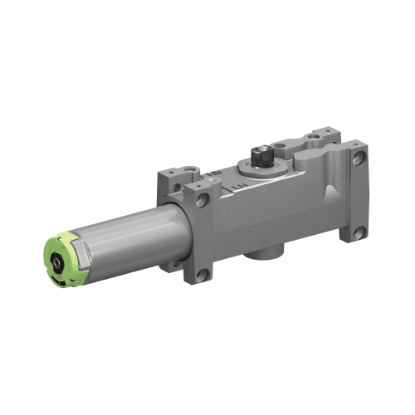
LCN 4011-3071 Standard Cylinder Assembly, a common replacement when adjustment no longer resolves the closing issue. In stock at SecurityParts.com with same-day shipping on stocked parts.
SecurityParts.com has stocked LCN door closer components since 2001, including replacement arms, shoes, drop plates, and complete cylinder assemblies for the 4040XP, 4011, and 1461 series. For a full breakdown of what each internal LCN component does and the realistic failure sequence across series, see the LCN door closer parts guide. For troubleshooting across all commercial door hardware types in a facility, see the commercial door hardware troubleshooting guide.
If you are also maintaining exit devices in the same facility, the exit device parts guide covers the same diagnostic framework for Von Duprin and Falcon hardware. Browse the complete commercial door closer parts catalog at SecurityParts.com.
About the Author
This guide is published by the commercial door hardware team at SecurityParts.com, a supplier of OEM LCN, Von Duprin, Schlage, Falcon, and Detex parts since 2001. The team provides pre-order parts support and technical guidance for facilities managers, locksmiths, and contractors maintaining commercial door hardware across institutional, healthcare, government, and commercial buildings. For LCN door closer parts availability and same-day shipping, call 845-935-0301 or visit SecurityParts.com.