 Trusted Since 2001





Commercial door hardware finishes use two parallel designation systems under ANSI/BHMA A156.18: legacy US codes (US3, US26D, US32D) and current BHMA three-digit codes (605, 626, 630). Both systems describe the same finishes. The most important technical distinction is between US26D/626 (satin chrome plated: corrosion resistance from a surface coating) and US32D/630 (satin stainless steel: corrosion resistance from the base material itself).
Finish codes appear on every hardware schedule and every product order. They determine whether replacement hardware matches existing hardware, whether the finish is appropriate for the environment, and whether the warranty is valid after installation. Ordering the wrong finish code produces a visible mismatch on the opening. Installing an interior-rated finish on an exterior application voids the manufacturer warranty. Getting finish selection right at the order stage prevents both problems.
Browse SecurityParts.com hardware by finish: Von Duprin exit devices in US32D, US26D, US28, and US10B; Schlage ND Series cylindrical locks in all standard finishes; Schlage L Series mortise locks by finish; LCN 4040XP closers in painted finish codes; and the complete Allegion hardware catalog. Call 845-935-0301 or visit the SecurityParts.com contact page for finish matching and 316-grade availability support.
How the US Finish Code and BHMA Code Systems Work Together
The ANSI/BHMA A156.18 standard governs materials and finishes for all commercial door hardware. It establishes finish code numbers, descriptions, base materials, and corrosion resistance test requirements. The standard maintains both the legacy US finish code system and the current BHMA three-digit system because both remain in active use throughout the industry.
Hardware schedules written by architects often use US codes because they are more descriptive and recognized by facility managers. Product catalogs from manufacturers typically list the BHMA three-digit code because it is the current ANSI-designated system. When a hardware schedule specifies US32D and a product catalog lists 630, they describe the same finish. Confirm which code system the manufacturer uses for that product line before ordering to avoid receiving the wrong finish. For a deeper look at how ANSI/BHMA standards govern all commercial hardware categories, see the ANSI/BHMA door hardware standards guide.
The Dual System Cross-Reference
Most major commercial finish codes map directly between the two systems. US26D equals BHMA 626. US32D equals BHMA 630. US3 equals BHMA 605. US10B equals BHMA 613. The letter suffix D in a US code indicates a satin (dull, brushed) texture. A code without a D suffix (US26, US32) indicates a bright (polished, mirror) texture. BHMA codes use separate code numbers for satin and bright versions rather than a letter suffix.
US32D vs US26D: The Most Important Finish Decision in Commercial Hardware
This comparison drives more finish specification errors and more warranty denials than any other finish decision in commercial hardware. The two finishes appear visually similar at installation: both are brushed, silver-toned, and non-reflective. The operational difference is fundamental and determines whether the hardware lasts its full service life or fails early.
Complete Commercial Finish Reference: Every Major US and BHMA Code
Bright mirror-polished brass on a brass base metal. The polished surface shows every fingerprint and surface scratch, requiring frequent cleaning to maintain appearance. Specified in high-end hospitality, historic renovation, and upscale multifamily lobby areas. Rarely used in standard institutional or commercial applications due to maintenance demands.
Brushed satin finish on brass base metal. The satin texture hides fingerprints better than polished brass. Sometimes called brushed brass or satin antique brass. More common in hospitality and warm-toned multifamily environments than in institutional settings.
Chemically darkened bronze or brass base metal to produce an intentionally aged appearance. Oil-rubbed bronze is the most commonly specified living finish in commercial hardware. High-contact surfaces like lever grips wear through the darkened treatment over time, exposing lighter bronze or brass beneath. This wear-through is intentional and expected: it is the defining characteristic of a living finish. Most manufacturers explicitly exclude living finish wear from their product warranties.
Electroplated chrome layer over a brass or steel base metal, brushed to produce a satin (non-reflective) surface. The chrome plating is the source of both the finish appearance and the corrosion resistance. When the plating is scratched through, worn, or penetrated by harsh cleaning chemicals, the underlying base metal is exposed and begins to corrode. This is why US26D is rated for interior, dry, climate-controlled environments only. It is the best-selling commercial hardware finish overall due to its clean contemporary appearance and lower cost compared to US32D.
Anodized aluminum with a clear coat over the anodized surface. The anodizing process converts the aluminum surface to aluminum oxide, a hard layer integral to the metal itself, not a coating applied on top. Standard on Von Duprin exit devices in aluminum storefront door systems and on push-pull bars in aluminum frame applications. Suitable for exterior applications in most environments but not for coastal high-salt locations where anodized aluminum can develop white oxidation spots over extended exposure.
Mirror-polished surface on stainless steel base metal. Corrosion resistance is identical to US32D because the base material is the same 304 stainless. The polished surface shows fingerprints and surface scratches readily in high-touch applications. Specified for architectural applications where mirror-stainless aesthetics are required. Less common in standard commercial construction than US32D due to maintenance requirements.
Directionally brushed satin surface on 304 stainless steel base metal. No plating: the base material itself is stainless steel throughout. Corrosion resistance comes from the chromium content of the steel, not from a surface coating. Even when scratched, the underlying material is still stainless.
US32D is the most widely specified finish for exterior hardware, hospital and healthcare corridors, food service and kitchen environments, laboratories, and any application involving frequent cleaning with bleach, quaternary ammonium compounds, or other agents that degrade chrome plating. The satin texture hides fingerprints and minor surface scratches well. It is also the easiest finish to match across manufacturers because stainless steel appearance is inherent to the base material, not dependent on coating color matching.
Flat black powder coat or paint over various base metals. Availability varies by manufacturer and product series. Used in modern architectural and hospitality applications. Interior applications only in standard configurations. Powder coat durability exceeds paint but both are surface coatings subject to chipping in high-impact areas.
Dark bronze plated over steel base, satin texture. Sometimes called duranodic bronze or architectural bronze depending on the manufacturer. Common on Von Duprin exit device trim in bronze-dominant building aesthetics. Duranodic (US711) is an anodized aluminum version often specified for aluminum door applications.
304 vs 316 Stainless Steel: When Standard US32D Is Not Enough
Both 304 and 316 stainless steel carry the US32D/630 finish designation under ANSI A156.18 because both produce an identical satin stainless appearance. The designation does not specify the grade. For most inland commercial applications, 304 stainless provides completely adequate corrosion resistance. In coastal and marine environments, the grade distinction becomes critical.
The Chloride Ion Problem
304 stainless steel is susceptible to pitting corrosion when exposed to chloride ions in concentrations found in salt air near coastlines. The chromium oxide passive layer that gives stainless steel its corrosion resistance breaks down locally under sustained chloride exposure, producing small, dark pitting marks on the surface.
316 stainless steel adds 2 to 3 percent molybdenum to the alloy, which dramatically increases resistance to chloride-ion pitting. Molybdenum stabilizes the passive layer against chloride attack. This makes 316 the correct specification for coastal and marine environments.
When to Specify 316-Grade Stainless
Specify 316-grade stainless explicitly, as a separate notation in the hardware schedule beyond just US32D, for any of the following:
- Any opening within approximately three miles of saltwater shoreline, including ocean, bay, tidal river, or inlet
- Marine and waterfront environments regardless of the exact distance measurement
- Buildings with indoor swimming pools where chlorinated water vapor is present in the air
- Food-processing environments using salt brine or other chloride-containing processing fluids
Environment-Specific Finish Recommendations
Coastal and Marine
Specify: US32D/630, 316-grade stainless explicitly. Do not accept 304 substitution on coastal projects.
Avoid: US26D (chrome plating fails rapidly in salt air), US3/US4 (brass corrodes and discolors), US10B (patina accelerates in salt air), US28/628 (aluminum develops white oxidation in high-salt locations over time).
Door closers: LCN and other closer manufacturers typically do not offer 316 stainless closer bodies. Use a painted powder coat finish and expect more frequent maintenance cycles than inland installations.
Healthcare and Hospital
Specify: US32D/630 satin stainless for all patient-contact and high-clean areas. Stainless steel resists bleach, quaternary ammonium disinfectants, and hydrogen peroxide products standard in healthcare cleaning protocols.
Antimicrobial option: Some Allegion product lines offer US26D-AM (antimicrobial satin chrome) and US32D-AM (antimicrobial satin stainless). Availability is product-specific. Call 845-935-0301 to confirm before specifying.
Food Service and Commercial Kitchen
Specify: US32D/630 satin stainless throughout. Food service environments use strong chlorinated sanitizers, degreasers, and acid-based cleaners that degrade chrome plating rapidly.
Fastener note: Also specify stainless steel fasteners for all hardware mounting. Standard zinc-coated or black oxide screws will rust in high-moisture kitchen environments, compromising appearance and hardware security.
Standard Commercial Interior
Specify: US26D/626 satin chrome for interior non-wet, non-chemical-exposure corridors and offices. Best-selling commercial interior finish with clean contemporary appearance at lower cost than US32D and adequate durability in climate-controlled environments.
Upgrade to US32D when: The opening is in a wet area, subject to frequent harsh chemical cleaning, or on a long-term project where finish uniformity matters. US32D maintains consistent appearance longer as chrome plating gradually dulls over years of service.
How to Match Finishes Across a Complete Door Opening
A complete commercial door opening includes multiple hardware components from potentially different manufacturers: a lockset or exit device, a door closer, hinges, and possibly a kickplate, push plate, pull bar, or door viewer. All visible hardware in a single opening should match in finish tone. Mismatches are visible and are typically cited as non-conformance during punch list inspections.
LCN Door Closer Painted Finish Codes
Door closers present a unique matching challenge. The complex body geometry of a door closer makes uniform plating impractical and expensive. Industry convention specifies door closers in painted finishes that complement the lockset and exit device finish rather than exactly matching the plated finish.
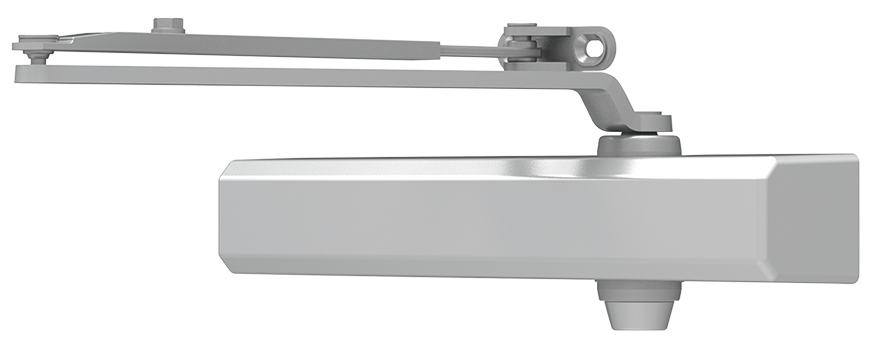
LCN 4040XP Series painted finish codes: 689 is painted aluminum (silver-toned, pairs with US26D and US28 hardware); 690 is painted dark bronze (pairs with US10B and US10 trim); 691 is painted light bronze (pairs with US10B and similar bronze-toned trim). When specifying a complete opening, list the closer finish as 689, 690, or 691 depending on the lockset finish, not as a US code.
Von Duprin Exit Device Finish Codes
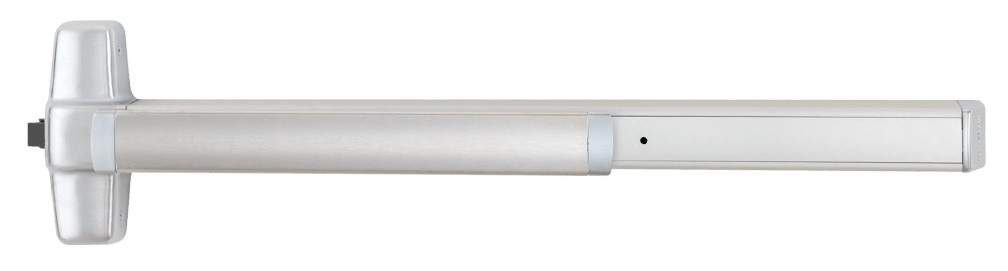
Von Duprin uses a combined finish designation on exit device orders. Common codes: US32D or 630 for satin stainless; US26D or 626 for satin chrome; US28 or 628 for satin aluminum on aluminum exit device configurations; US10B or 613 for oil-rubbed bronze on trim components. The mechanism case of most Von Duprin rim devices ships in painted aluminum or steel regardless of the ordered finish code: the finish code applies primarily to the latch, strike, and trim components.
Browse Von Duprin exit device parts by series and Von Duprin electric strike parts in US32D and US26D at SecurityParts.com.
Schlage Hardware Finish Availability
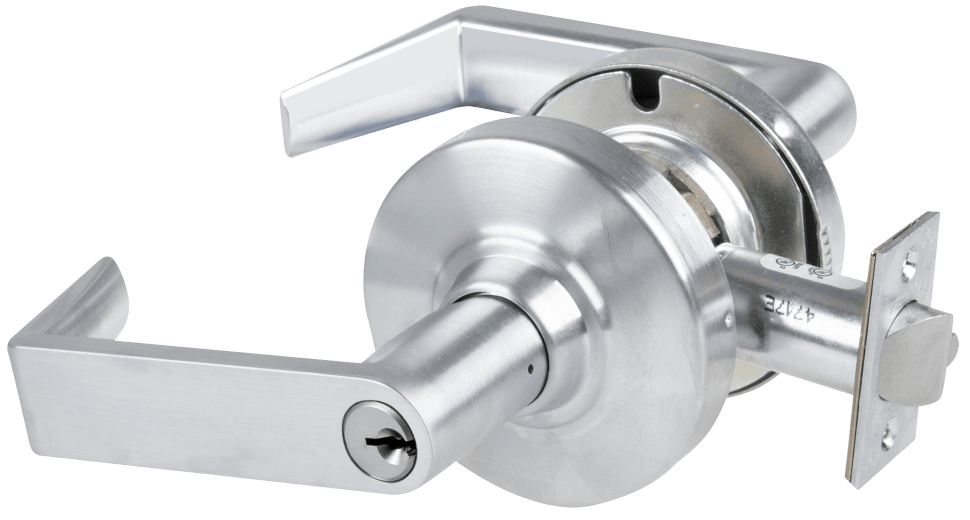
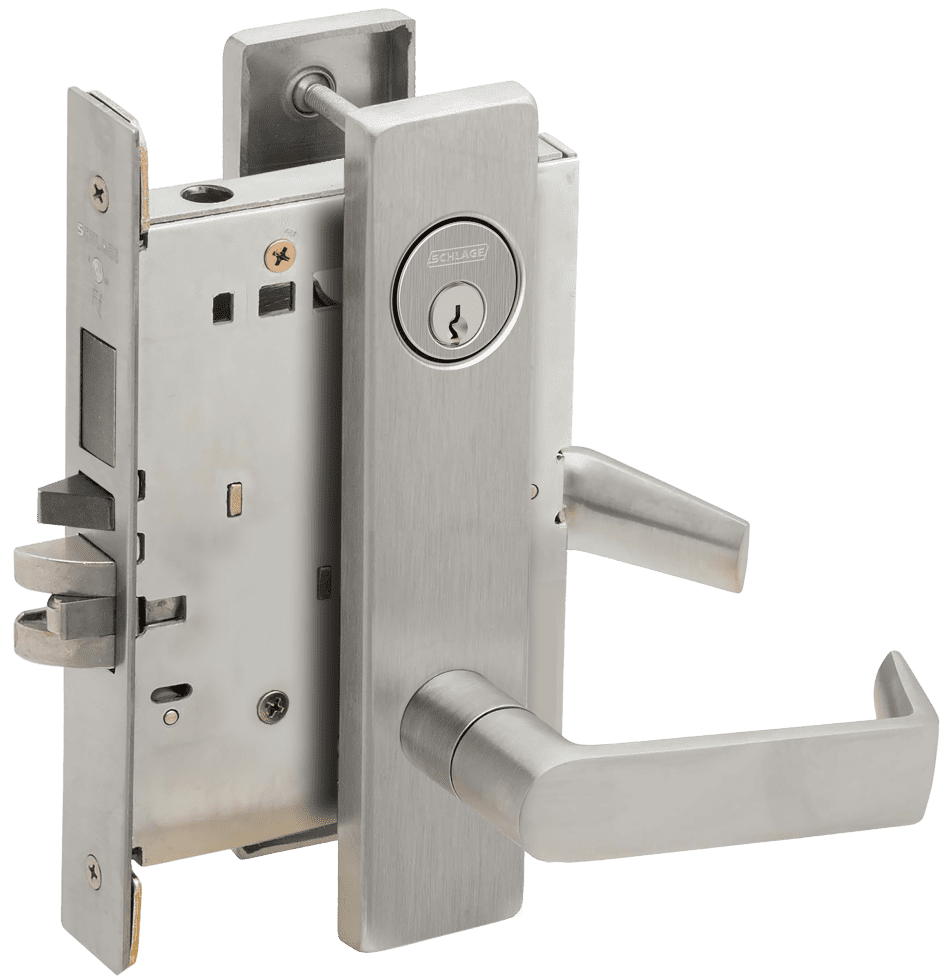
Schlage ND Series cylindrical locks and Schlage L Series mortise locks are available in all standard US and BHMA finish codes including US26D, US32D, US10B, and US28. Not every function code is available in every finish within every series. Confirm finish availability for the specific function code before finalizing a project hardware schedule.
How to Read Finish Codes on a Commercial Hardware Schedule
Hardware schedules list finish codes in a standardized column format. Reading this column correctly prevents ordering errors that cause finish mismatches and punch list delays.
- Identify which code system the schedule uses Some schedules use US codes (US26D), some use BHMA codes (626), and some use both. Identify the system in the schedule legend or general notes before reading individual line items.
- Cross-reference to the product catalog system If the schedule uses US codes and the manufacturer catalog uses BHMA codes, translate before ordering. US26D equals 626. US32D equals 630. Do not assume the codes transfer without verification.
- Check for 316-grade stainless callouts A schedule that lists US32D or 630 without an explicit 316-grade notation defaults to 304 stainless. If the project is in a coastal, pool, or high-chloride environment, look for supplementary spec language and clarify with the specifier before ordering if it is absent.
- Verify finish availability for each line item Not every hardware product is available in every finish. A schedule that specifies US32D for all hardware may have line items where the specified product is only available in US26D in that series. Identify exceptions before issuing purchase orders.
- Confirm closer finish separately Door closers are listed with painted finish codes (689, 690, 691) rather than US codes. If a US code appears in the closer line, contact the manufacturer to confirm the intended painted finish equivalent.
For a complete guide to commercial door hardware standards and ANSI/BHMA certification grades, refer to the ANSI/BHMA standards guide linked in the opening section of this blog. For hardware maintenance intervals by finish type, see the commercial door hardware maintenance checklist. For guidance on choosing between OEM and aftermarket replacement parts in any finish, see the OEM vs aftermarket commercial door hardware parts guide.
Why Choose SecurityParts.com for Finished OEM Hardware Parts
SecurityParts.com stocks Von Duprin exit devices, Schlage ND Series cylindrical locks, Schlage L Series mortise locks, and LCN closers in all standard finish codes with same-day OEM shipping from US warehouses.
- US26D exterior failure mechanism documented: We document the specific mechanism by which US26D fails on exterior applications so facility managers understand why environment specification is a decision made at ordering, not in the field.
- 316-grade specification language: We document that US32D/630 without a grade callout defaults to 304 stainless, and provide the exact specification language required to ensure 316 is supplied on coastal projects.
- Living finish warranty exclusion: We document that oil-rubbed bronze wear-through is intentional and excluded from most manufacturer warranties, so facility managers understand what they are specifying on high-traffic doors.
- BHMA 626 vs 652 distinction: We document when the same US26D appearance from two different base metals matters for fire listing compliance.
- 316-grade availability confirmation: Call 845-935-0301 to confirm 316-grade stainless availability by product series before finalizing coastal or pool project specifications.
Free shipping on orders over $450. Same-day shipping from US warehouses on stocked parts. Call 845-935-0301 for finish matching support.