 Trusted Since 2001


Quick Summary
Key points
- Replacing a Schlage lock cylinder is four decisions, not one: the cylinder type, the tailpiece or cam, the keyway and the finish. Get any one wrong and the part will not work even though it fits.
- Interchangeable core locks are the easy case. A control key removes the core in seconds and the housing stays in the door.
- Conventional cylinders need the lock partly dismantled, and the tailpiece is what decides whether the new cylinder actually turns anything.
- A cylinder that physically fits but will not retract the latch is almost always a tailpiece length or cam problem, not a faulty cylinder.
- Products described as less cylinder or less core are supplied deliberately empty so you can fit a cylinder keyed to your own system.
| Decision | What it controls | Where you find it |
|---|---|---|
| Cylinder type | Whether you need a core, a housing or a complete cylinder | The existing lock, and whether a control key exists |
| Tailpiece or cam | Whether turning the key moves the lock | The old cylinder, and the lock function |
| Keyway | Whether existing keys work | The site key system records |
| Finish | Whether it matches the rest of the opening | The hardware already on the door |
In This Guide
- What Does Replacing a Schlage Lock Cylinder Actually Involve?
- Which Type of Schlage Cylinder Is in Your Lock?
- What Is the Difference Between a Core and a Cylinder Housing?
- How Do You Remove an Interchangeable Core?
- Why Does the Tailpiece Decide Whether the Cylinder Works?
- Do You Need to Match the Keyway?
- What Does Less Cylinder or Less Core Mean on a Product?
- Which Finish Should You Order?
- What Goes Wrong When People Replace a Cylinder?
- What Do You Need to Confirm Before Ordering?
- About the Author
Most Schlage cylinder replacements go wrong in the same way. The new cylinder arrives, it drops into the hole, the key turns, and nothing happens. The cylinder is fine. What is missing is the piece between the cylinder and the lock.
This guide works through the whole decision in order, so you order a cylinder that turns, fits your keys and matches the door the first time.
What Does Replacing a Schlage Lock Cylinder Actually Involve?
It depends entirely on whether the lock uses an interchangeable core or a conventional cylinder, and those two jobs are not comparable.
On an interchangeable core lock the cylinder is a plug that drops out when a control key is turned. No tools, no dismantling, under a minute. On a conventional cylinder the lock usually has to be partly taken apart, the cylinder unscrewed or released, and the tailpiece transferred or replaced.
So the first question is never which cylinder to buy. It is which system you are standing in front of.
How can you tell at a glance?
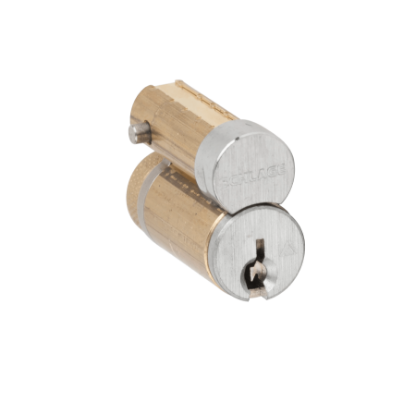
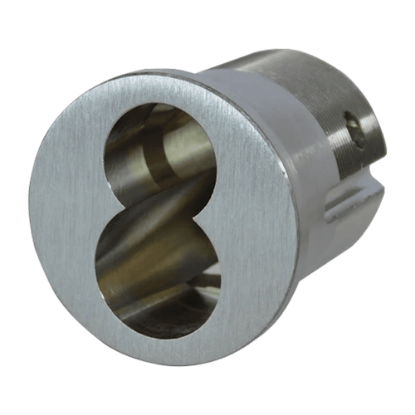
Look at the face of the cylinder. An interchangeable core has a distinctive figure of eight or keyhole shaped profile, with the core sitting inside a surrounding housing and a visible seam between them. A conventional cylinder is a single round or shaped face with no seam.
Which Type of Schlage Cylinder Is in Your Lock?
Three families cover almost everything in service, and they are not interchangeable with each other.
| Family | How it is removed | What you order |
|---|---|---|
| Conventional cylinder | Lock partly dismantled, cylinder unscrewed or released | A complete cylinder plus the correct tailpiece |
| Full size interchangeable core | Control key removes the core | A core, or a housing if that is damaged |
| Small format interchangeable core | Control key removes the core | A core, or an SFIC housing |
Why does the distinction matter so much?
Because it decides whether a replacement is a one minute job for a caretaker or a service call. Buildings that expect to rekey often are built around interchangeable cores for exactly that reason.
What Is the Difference Between a Core and a Cylinder Housing?
The core carries the pins and the keyway. The housing is the fixed part that stays in the lock and accepts the core.
Replace the core when keys are lost, when the keying changes, or when the plug itself is worn or damaged. Replace the housing only when the housing is damaged, which is rare, or when the lock is being converted to accept cores for the first time.
Where you are weighing cylinder types across a whole site rather than fixing one door, our mortise cylinder and rim cylinder guide covers which type belongs in which lock.
How Do You Remove an Interchangeable Core?
With the control key, and only with the control key. It is a separate key from the operating key and it does one job.
Insert the control key, turn it a small amount, and the core lifts out on the key. The operating key will not do this, no matter how it is turned, because the control key engages a different shear line inside the core.
What if nobody can find the control key?
Then the core has to be removed destructively or the lock dismantled, and it becomes a locksmith job rather than a maintenance one. This is the single most common reason an interchangeable core site loses the advantage it paid for, so it is worth knowing where the control keys are before you need them.
Our Schlage key systems guide covers control keys and how they sit in a keying hierarchy, and the master key system design guide covers the structure above them.
Why Does the Tailpiece Decide Whether the Cylinder Works?
Because the cylinder does not touch the latch. Turning the key turns the plug, the plug turns the tailpiece, and the tailpiece reaches back into the lock to move the mechanism. If that connection is the wrong length or the wrong shape, the key turns and nothing moves.
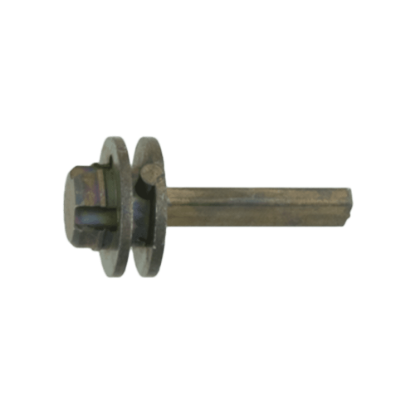
Three things vary: length, which has to suit the door thickness and the lock depth, profile, which has to match the slot in the lock, and orientation, which on some locks is handed.
Cam or tailpiece: which does your lock use?
Mortise cylinders drive a cam, a flat plate on the back of the cylinder that sweeps round and operates the lock case. Rim cylinders and most cylindrical locks use a tailpiece, a flat bar that projects backwards. Both do the same job in different shapes, and neither substitutes for the other.
Do You Need to Match the Keyway?
If you want existing keys to work, yes, and this is where cylinder orders most often fail silently.
The keyway is the shaped slot the key slides into. Keys cut on one keyway will not enter a cylinder of another, even when both are Schlage and both look similar. A site that has standardised on one keyway needs every new cylinder on that keyway or the key stops being a master key in any useful sense.
If you do not know the keyway, do not guess. The site key records hold it, and so does the stamping on the key itself in many systems.
| Mismatch | Symptom |
|---|---|
| Wrong keyway | Existing key will not enter the cylinder at all |
| Wrong tailpiece length | Key turns freely, latch does not move |
| Wrong cam | Key turns, bolt moves partially or not at all |
| Wrong cylinder type | Cylinder will not seat in the lock |
| Wrong finish | Works correctly, looks wrong on the door |
What Does Less Cylinder or Less Core Mean on a Product?
It means the item is supplied deliberately without a cylinder, so you can fit one keyed to your own system.
This catches people out when a lever or trim arrives and appears to be missing a part. It is not missing. A building with an established key system almost always wants hardware supplied this way, because a factory fitted cylinder on the wrong keyway is worse than no cylinder at all.
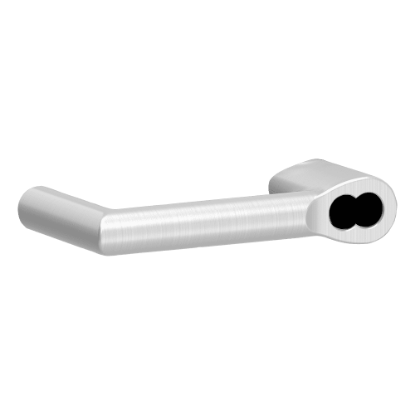
When ordering less cylinder hardware, order the core or cylinder at the same time, and confirm the keyway with whoever holds the key records.
Should you rekey the existing cylinder instead of replacing it?
Often, yes. If the cylinder is mechanically sound and the only problem is that a key has gone missing, rekeying the existing cylinder to a new combination is cheaper and keeps the keyway and the tailpiece exactly as they were.
Replacement earns its place when the plug is worn so that the key sticks or turns loosely, when the cylinder has been attacked, when the keyway itself has to change, or when the lock is being brought into a key system it was never part of. On an interchangeable core site the question rarely arises, because swapping a core is already the cheap option.
Which Finish Should You Order?
Match what is already on the opening rather than what looks right in a photograph. Finishes are coded, the codes are consistent across manufacturers, and the code is what you order by.
The practical risk is a cylinder that works perfectly and looks obviously newer or a different shade than the trim around it. On a single back door that may not matter. Across a reception area it does.
Our commercial door hardware finish guide lists the codes and what they correspond to.
What Goes Wrong When People Replace a Cylinder?
| Problem | Usual cause | Fix |
|---|---|---|
| Key turns, nothing happens | Tailpiece wrong length or missing | Measure the original and order the matching tailpiece |
| Existing keys will not enter | Wrong keyway | Order on the site keyway, confirm from key records |
| Cylinder will not seat | Wrong cylinder family for the lock | Confirm conventional against interchangeable core first |
| Core will not come out | Operating key used instead of control key | Locate the control key |
| Bolt throws part way | Wrong cam for the lock function | Match the cam to the function, not the cylinder |
| Key stiff after fitting | Cylinder not fully seated, or retaining screw over tightened | Reseat and tighten evenly |
What Do You Need to Confirm Before Ordering?
Five things, all readable at the door or from the records. Collect them and the order is straightforward.
The lock series and function. The cylinder family, conventional or interchangeable core. The tailpiece or cam the old cylinder used. The keyway. The finish code on the existing hardware.
If the old cylinder is still in hand, keep it. Nothing confirms a tailpiece faster than putting the two side by side. For the wider parts picture, browse Schlage replacement parts, the Schlage lock parts overview or the thumbturn cylinder guide if the inside of the door has a turn rather than a key.
About the Author
Security Parts has supplied repair parts for commercial door hardware since 2001, covering Von Duprin, LCN, Schlage, Falcon, Detex and Adams Rite at the component level. Our diagram based lookup exists so a technician can confirm a part before ordering it. This guide was written by the Security Parts team from supplier documentation and the questions our customers bring us.
If you have the old cylinder but no part number, contact us with a photograph of the back of it including the tailpiece or cam, and we will identify what you need.