 Trusted Since 2001


Quick Summary
Key points
- A Schlage knob is not one part. The outside assembly, the inside assembly, the rose and the spindle are separate items and they fail separately.
- Inside and outside assemblies are not the same thing and rarely interchange, because the outside one usually carries the cylinder preparation and the inside one does not.
- The rose is the plate behind the knob. It is ordered on its own, which means a damaged rose never justifies a new lockset.
- Changing a knob to a lever on the same lock body is usually possible and is the most common reason buildings order these parts at all.
- Series, function, handing and finish decide the part number. Design name alone is not enough to order from.
| Part | What it does | Ordered separately |
|---|---|---|
| Outside knob assembly | The knob on the secure side, usually prepared for a cylinder | Yes |
| Inside knob assembly | The knob on the free egress side | Yes |
| Rose | The plate that covers the hole and supports the knob | Yes |
| Spindle | The bar that carries the turn through to the lock | Sometimes, depending on series |
In This Guide
- What Counts as a Schlage Door Knob Part?
- Which Schlage Series Is on Your Door?
- What Is the Difference Between the Inside and Outside Knob Assembly?
- What Does the Rose Do, and Why Is It Ordered Separately?
- What Is a Spindle and Does It Come With the Knob?
- Can You Change a Schlage Knob to a Lever?
- How Do Knob Designs and Finishes Affect the Part Number?
- What Fails on a Schlage Knob?
- Can You Replace Just the Knob, or Does the Whole Lock Go?
- How Do You Order the Right Schlage Knob Part?
- About the Author
A knob comes loose, a rose starts spinning, a knob snaps off in someone's hand, and the question is always the same: can we just replace that bit, or does the whole lock have to come out?
Almost always you can just replace that bit. This guide covers which parts exist, how they relate to each other, and the four things that decide the part number.
What Counts as a Schlage Door Knob Part?
Everything from the face of the door outwards, plus the spindle that connects through to the lock. The lock case or chassis is a separate conversation, and in most knob failures it is untouched.
That is the useful insight, because the chassis is the expensive part. A knob that has worn, loosened or been snapped off is trim damage, and trim is stocked at component level.
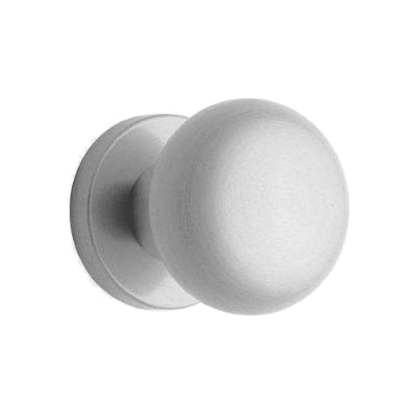
Is a door knob part the same as a door handle part?
In the catalogue, broadly yes. Knob and lever trim sit in the same families and share roses, spindles and mounting arrangements on most series. The practical difference is the shape you grip, and on many locks the two are directly interchangeable.
Which Schlage Series Is on Your Door?
The series decides everything downstream, so establish it before looking at any part.
| What you see | Likely family | Where the parts live |
|---|---|---|
| Lock case set into the edge of the door, escutcheon or rose trim | Mortise, L Series | Mortise lock trim and case parts |
| Chassis through a bored hole in the door face | Cylindrical, ND and ALX families | Cylindrical lock trim and chassis parts |
| Two bored holes with a deadbolt above the knob | Interconnected lock | Interconnected lock parts |
| Small bore, lighter chassis | Tubular | Tubular lock parts |
If you have established the lock is mortise, our Schlage L Series mortise lock parts guide covers it at component level. If it is cylindrical, the cylindrical lock parts section is the place to start.
What Is the Difference Between the Inside and Outside Knob Assembly?
They are built for different jobs and they are usually different part numbers.
The outside assembly sits on the secure side. On most functions it carries the cylinder preparation, and whether the knob turns at all depends on the lock function and the state of the lock.
The inside assembly sits on the egress side. It almost always turns freely, because free egress is a requirement, not an option, on the great majority of commercial doors.
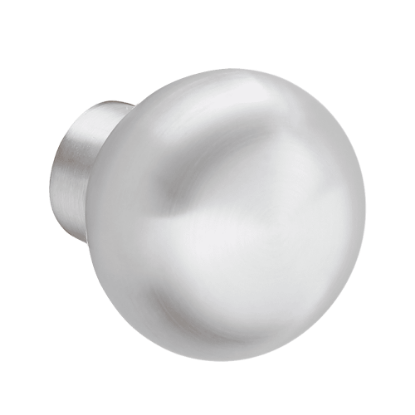
Can you fit an outside assembly on the inside?
Usually not, and it is not worth trying. Even where it physically mounts, you can end up with a keyed knob on the escape side of a door, which is the wrong outcome for the building and potentially a code problem.
What Does the Rose Do, and Why Is It Ordered Separately?
The rose is the plate between the knob and the door face. It covers the preparation in the door, carries the fixings and, on many designs, provides the bearing surface the knob turns against.
It gets ordered separately because it fails separately. A rose that has started to spin, worked loose, or been scratched through by years of keys does not mean anything is wrong with the knob or the lock.
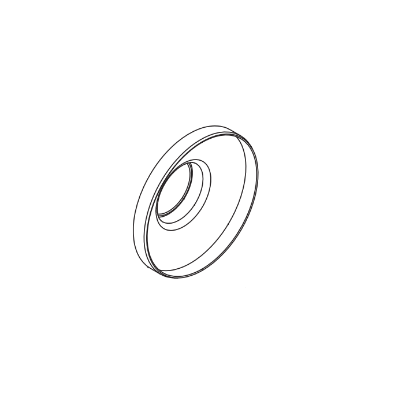
Why do roses work loose?
Because they take the side load every time someone leans on the knob or pulls the door closed by it. On a high traffic door that is thousands of cycles a year. Retightening often works for a while, but a rose that keeps loosening usually has worn fixings or a worn seat in the door face.
What Is a Spindle and Does It Come With the Knob?
The spindle is the square or shaped bar that passes through the lock and carries the turning motion from one knob to the mechanism.
Whether it comes with the knob assembly depends on the series. Some assemblies include it, some expect you to reuse the one already in the door, and some list it separately. That is worth checking at the point of order rather than discovering on site.
A spindle that has rounded off produces a knob that turns a few degrees then spins freely. It is a cheap part and a common one on old doors.
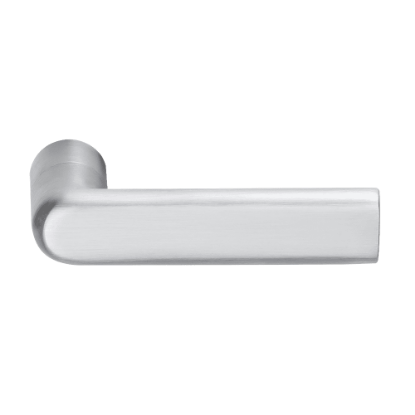
Can You Change a Schlage Knob to a Lever?
On most series, yes, and this is the single most common reason these parts get ordered.
Accessibility requirements mean hardware on an accessible route has to be operable with one hand without tight grasping or twisting of the wrist. A round knob cannot meet that, and no adjustment changes it. A lever can.
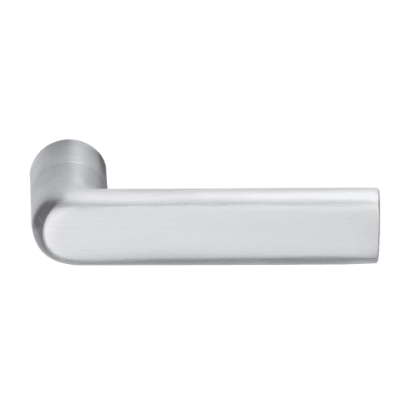
Because the lock body stays in the door, a knob to lever conversion is a trim order rather than a lock order. The function, the keying and the strike all stay as they are. Our ADA door clearance guide covers the operable parts requirement that drives these conversions.
Does the handing change when you fit a lever?
It can matter where a knob did not. A knob is symmetrical and a lever is not, so a lever has to point the correct way for the door. Confirm the handing from outside the door before ordering.
Are the knobs on a pair of doors always the same part?
Not necessarily. On a pair, the active leaf usually carries a working lock and the inactive leaf often carries dummy trim that operates nothing. Both can look identical from a distance, so measuring and checking behaviour beats assuming.
The same applies to a run of doors along a corridor. They were often fitted at the same time in the same finish and design, but the functions vary by room, and the function is what decides whether the outside knob is keyed, fixed or free.
How Do Knob Designs and Finishes Affect the Part Number?
Both are carried in the number, and both are easy to get wrong because they are the parts of the code people skip.
Design names identify the shape of the knob or lever. Two assemblies that are identical in function and series can have completely different numbers purely because of the design, and they will not look alike on the door.
Finish is a coded suffix. Matching it to the rest of the opening matters more than matching it to a photograph, because photographs of metal finishes are unreliable. Our finish guide lists what the codes mean.
What Fails on a Schlage Knob?
| Symptom | Likely cause | Part |
|---|---|---|
| Knob turns but the latch does not move | Spindle rounded, or the chassis | Spindle first, then chassis |
| Knob wobbles on the door | Rose fixings loose or worn | Rose |
| Rose spins on the door face | Worn seat or missing retaining feature | Rose |
| Knob snapped off | Impact or metal fatigue | Knob assembly, that side only |
| Key turns outside but the knob stays locked | Cylinder, tailpiece or lock function | Cylinder and tailpiece before trim |
| Knob stiff in cold weather | Lubrication, or a binding latch | Latch and strike before trim |
Where the key is involved, check the cylinder before the trim. Our Schlage lock cylinder replacement guide covers the tailpiece question that explains most of those cases.
Can You Replace Just the Knob, or Does the Whole Lock Go?
Just the knob, in almost every case. The exception is when the chassis itself has failed, which shows up as a knob that turns the full travel without retracting the latch even with a sound spindle.
There is one more reason to replace rather than repair, and it is worth being straight about: if a lock has already had two or three trim parts replaced and the door is heavily used, the economics shift. At that point a new lockset of the same function is often the better call.
What about knobs on fire rated doors?
Trim on a fire rated opening has to suit the rating of the assembly, and the door still has to latch positively every time it closes. That rules out dummy trim on an active leaf and makes the latch and strike condition as important as the knob itself.
If a fire door has a knob that is hard to turn, resist the temptation to solve it by loosening anything. A stiff knob on a fire door is usually telling you the latch is binding against a misaligned strike, and that same misalignment is what will stop the door latching when it matters.
How Do You Order the Right Schlage Knob Part?
| Information | Where to get it | What it decides |
|---|---|---|
| Series | Lock type and any stamping | Which parts family applies |
| Inside or outside | Which side of the door failed | Different assemblies |
| Function | How the lock behaves | Whether the outside knob is keyed or fixed |
| Design | Shape of the existing knob or lever | Appearance match |
| Finish | Code on existing hardware | Appearance match |
| Handing | Hinge side viewed from outside | Matters for levers, not for knobs |
Our commercial lock function codes guide explains how to read the function, and the Schlage lock parts overview covers the wider range. For the lever specific parts on L Series, see the 09-506 outside lever guide.
About the Author
Security Parts has supplied repair parts for commercial door hardware since 2001, covering Von Duprin, LCN, Schlage, Falcon, Detex and Adams Rite at the component level. Our diagram based lookup exists so a technician can confirm a part before ordering it. This guide was written by the Security Parts team from supplier documentation and the questions our customers bring us.
If the knob design is unfamiliar and there is no stamping to read, send a photograph of the door and the trim through our contact page, or browse Schlage replacement parts and mortise lock parts.