 Trusted Since 2001





Walk through any access-controlled commercial building and you are passing dozens of electric strikes without noticing them. They sit flush inside the door frame, they are quiet, and when they work, they are completely invisible. That invisibility is also why they are easy to ignore until something breaks.
Understanding the individual electric strike parts, the solenoid, keeper, return spring, monitor switch, and housing assembly, is the difference between a five-minute field repair and an unnecessary full-unit replacement. When an electric strike fails, access control systems either lock people out entirely or hold doors open when they should be secured, depending on the configuration. In a hospital corridor, a school entrance, or a government building, that kind of failure has real consequences. The frustrating part is that most electric strike problems trace back to a single component, not the whole unit.
Facility managers and locksmiths who understand the individual parts can diagnose these failures in minutes rather than scheduling a full hardware replacement that might not even be necessary. That is what this guide covers: the components, the failure patterns, the diagnostic sequence, and exactly how to order replacement parts without a return. Browse the complete electric strike parts catalog at SecurityParts.com.
An electric strike replaces the standard fixed strike plate on a door frame. Its movable keeper releases electrically, allowing the door to open without retracting the latchbolt. The lock on the door stays mechanical and unchanged. The strike releases, not the lock.
How an Electric Strike Actually Works
A standard strike plate is fixed metal. The latch bolt clicks into it and stays there. An electric strike replaces that fixed plate with a mechanism containing a movable keeper, sometimes called the lip or gate. When the door is closed and locked, the keeper is rigid. When the strike receives an electrical signal, the keeper pivots or retracts, letting the latch bolt pass through freely so the door opens.
The person opening the door does not interact with the lock at all. Push or pull, the door opens. That is the design advantage over fully electrified locksets. You can retrofit access control onto a door with an existing mechanical lock without replacing the lock itself. It is significantly cheaper and far less invasive.
The most common thing facility maintenance staff reports is that the lock stopped working. It is almost never the lock. The lock is mechanical and completely unaffected by the electrical system. When access control fails on a door with an electric strike, start at the strike, the power supply, and the wiring, not the lockset. For a detailed look at how electric strikes integrate with the broader access control system, see the access control and commercial door hardware integration guide.
Electric strikes work with three main lock types: cylindrical locksets, mortise locksets, and rim exit devices such as panic bars. Each requires a specific strike model because the latch geometry differs between them. That compatibility point matters when ordering replacement parts. A component designed for cylindrical lock applications will not work on a mortise setup even if the two strikes look nearly identical from the outside.
Every Electric Strike Part Inside the Housing
The engineering inside these housings is more compact than most people expect. A small number of components working in tight coordination, which is exactly why individual part replacement is practical when you understand each one.
Solenoid Assembly. The electromagnetic coil that converts electrical current into mechanical movement. It powers the keeper's release motion and is the single most frequently replaced component on electric strikes. When the solenoid fails, electric strike solenoid replacement is the first repair to consider before replacing the entire unit. On Von Duprin 6210 and 6211 units, the solenoid is an externally replaceable cartridge, see the Von Duprin electric strike parts guide for solenoid canister part numbers and service details.
Keeper (Lip or Gate). The movable piece that holds the latch bolt when locked and releases when the strike is energized. It takes physical impact on every door close and wears over time, especially on high-traffic openings.
Faceplate. The visible mounting plate that recesses into or mounts on the door frame. It protects internal components and provides a clean finished appearance. Replaceable independently on most models.
Return Spring. Resets the keeper to its locked position after each release cycle. Spring fatigue is a legitimate failure mode on doors that are released frequently throughout the day, such as building entrances during business hours.
Box Assembly (Housing). The metal body mounted in the frame cutout that contains everything else. It is rarely replaced independently unless the housing itself is physically damaged or corroded beyond serviceability. On the Von Duprin 6200 series, the strike box is adjustable to compensate for door or frame misalignment without removing the unit from the frame.
Monitor Switch (Latchbolt Monitor). Optional on most models. Sends door status signals, open, closed, or ajar, back to the access control panel. When it fails, the panel shows persistent door-open alarms that have nothing to do with the actual door position. The Von Duprin 6200 series offers both single-switch and dual-switch monitoring (DS and DS-LC configurations). The DS configuration provides two SPDT contacts: one monitors the tripper (depressed when the latch bolt enters the strike pocket) and one monitors the keeper position (open or closed).
Solenoid Canister (Von Duprin 6200 Series). On Von Duprin 6210 and 6211 units, the solenoid is an externally replaceable cartridge. You can swap it in under five minutes without removing the strike from the frame. On most other configurations, a solenoid failure means replacing the entire unit. That distinction matters when specifying hardware for a facility with hundreds of doors.
Voltage Selector. Allows field configuration for 12V or 24V DC operation on multi-voltage models. Not a wear item, but selecting the wrong voltage at installation causes immediate solenoid damage and is a common mistake on retrofit projects. The Von Duprin 4200 series uses a 12/24 dual-voltage solenoid that is field-selectable without disassembly. The 6200 series ships standard at 24VDC with 12VDC optional.
Entry Buzzer (EB). An optional accessory available on fail-secure electric strikes. The entry buzzer installs in the frame parallel to the strike circuit and sounds when the strike is unlocked, signaling to an outside visitor that access is granted. Entry buzzers are compatible only with fail-secure strikes. They are not compatible with fail-safe configurations.
Rectifier Kits (SO12 / SO24). Field-installable AC-to-DC conversion kits for installations where only AC power is available at the frame. The SO12 converts 12VAC to 12VDC; the SO24 converts 24VAC to 24VDC. These kits plug inline to the solenoid connection and are used when an AC power supply must run a DC solenoid. If an installed strike is receiving AC power but was configured for DC, a rectifier kit is required, not a new strike.
Electric Strike Selection: Cylindrical, Mortise, and Rim Applications
Selecting the correct electric strike begins with identifying the lock type on the door. The three main categories of commercial lock use different latch geometries, which means the strike must be matched to the specific application. Installing the wrong strike type results in either a latch that does not engage the keeper correctly or a keeper that binds under the latch bolt load.
Cylindrical Lock Applications
Cylindrical locksets use a standard latch bolt that extends from the edge of the door. The Von Duprin 4200 series is designed and tested for use with cylindrical devices from Schlage, Falcon, and many other manufacturers. The 4200 uses a square faceplate as standard to accommodate hollow metal frames, with rounded corner faceplates available for aluminum frames. It accepts a 3/4-inch throw latch bolt.
Mortise Lock Applications
Mortise locksets use a more complex latch and deadbolt mechanism housed inside the door. The Von Duprin 6200 series is designed for mortise and cylindrical lock applications and accepts a 3/4-inch throw latch bolt. The 6200 series features a two-piece Allegion Connect plug connector for ease of installation and removal during servicing. For the full parts breakdown of Von Duprin electric strike series including the 6200, see the Von Duprin electric strike parts guide.
Rim Exit Device (Panic Bar) Applications
Rim exit devices use a rim latch that engages a surface-mounted or frame-recessed strike on the door frame face, not the latch edge. The Von Duprin 6300 series is designed specifically for use with rim exit devices. It interfaces with the latch mechanism of the exit device and provides remote release (the keeper releases so the door opens even when the latch bolt is extended). The 6300 is fail-secure only to achieve UL 10C compliance for fire-rated openings. For a broad overview of exit device types, see the exit device parts guide.
High-Traffic and Heavy-Duty Applications
The Von Duprin 6400 series is a heavy-duty stainless steel strike rated for over 2,000,000 endurance cycles and listed to Grade 1 certification. It is designed for high-traffic openings where a standard-duty strike would require frequent replacement. The 6400 ships with prewired plug-in connectors for 12 or 24VDC and is fail-secure only for fire-rated applications. It includes 1/8-inch horizontal adjustment for installations where frame or door misalignment is a factor. Browse the complete electric strike catalog at SecurityParts.com for the full Von Duprin series lineup.
Fail Safe vs. Fail Secure: This Decision Has Real Consequences
Every electric strike operates in one of two modes. This is not a preference setting. It is a fundamental design choice that determines how the door behaves when power is cut, whether from a power outage, a tripped breaker, or a severed wire.
Fail Safe unlocks when power is removed. During normal operation, the strike is continuously energized to stay locked. This mode is required on doors that must allow free egress during emergencies, including stairwell doors, hospital corridor doors, and other life-safety openings. Because the unit draws power continuously to maintain the locked state, fail-safe strikes have a higher energy draw than fail-secure units.
Fail Secure stays locked when power is removed. The strike is energized only momentarily to unlock. This is the correct choice for server rooms, secure offices, exterior building entries, and any location where security must be maintained even during a power failure.
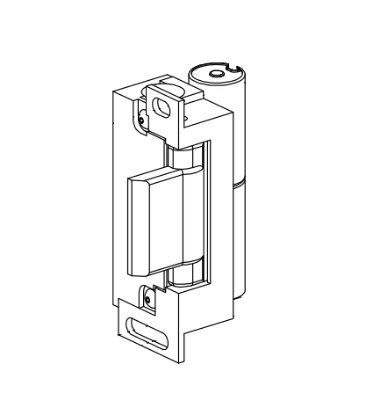
Von Duprin electric strike box assembly, fail-secure (electrically unlocked, 12VDC). Fail-secure strikes stay locked when power is removed, making them the correct choice for fire-rated openings and secure-perimeter applications. OEM replacement assemblies at SecurityParts.com.
The fire door rule is non-negotiable. Only fail-secure electric strikes can be installed on fire-rated door assemblies. NFPA 80 and local fire codes are consistent on this point. A fail-safe strike on a fire door creates a code violation because a power outage during a fire would unlock the door, which is the exact opposite of what a fire door is supposed to do. If you are unsure whether a door is fire-rated, check the label on the hinge edge of the door before selecting any strike. For a full reference on fire-rated door hardware requirements including electric strike compliance, see the commercial door fire rating guide.
Specifying fail-secure on an egress stairwell door is a code violation that can sit undetected for years. Until it matters.
Entry buzzer compatibility is another practical difference. Entry buzzers, which allow momentary visitor-initiated unlock, are only compatible with fail-secure strikes. Fail-safe strikes cannot be used with this feature.
UL Listings for Electric Strikes: UL 1034 vs UL 10C
Electric strikes carry two distinct UL listings that address different performance requirements. Understanding which listing applies to a given opening prevents specification errors.
UL 1034 is the burglary-resistant standard for electrically operated door locks and strike devices. A UL 1034 listing confirms the strike meets defined tests for resistance to forced entry. This listing applies regardless of whether the door is fire-rated.
UL 10C is the fire door listing that certifies a strike for use on positive-pressure fire-rated door assemblies. Only fail-secure electric strikes can carry a UL 10C listing, because a fire door must remain closed and latched when power is lost. The Von Duprin 6300 and 6400 series both carry UL 10C listings for use on 3-hour fire-rated assemblies. If a strike is being installed on a fire-rated opening, the UL 10C listing is the required certification, UL 1034 alone is not sufficient. For the full fire rating compliance framework, see the commercial door fire rating guide.
How to Convert Between Fail Safe and Fail Secure
Many Von Duprin electric strike models allow field conversion between fail-safe and fail-secure modes without replacing the entire unit. The conversion process differs by series.
On the Von Duprin 4200 series, conversion is a field adjustment performed with the enclosed S1.5 hex key. Loosening the M3 set screw and rotating the blocking mechanism post with a flathead screwdriver switches the mode. The process does not require removing the strike from the frame.
On the Von Duprin 6000 series, conversion uses a replacement slider component. The fail-secure slider (part 970387) and fail-safe slider (part 970388) are specific to models 6211WF, 6212WF, 6221, and 6223. The conversion requires removing the strike box cover, removing the existing slider, inserting the new slider, and reassembling. Note: converting a 6000 series strike between fail-safe and fail-secure modes invalidates the UL fire listings and requires removal of the UL fire label. If fire-rating compliance is required, a new fire-rated unit must be specified rather than converting an existing one.
Before converting any electric strike's operating mode, confirm that the new mode complies with the application's fire, life safety, and building code requirements. Consult the Authority Having Jurisdiction (AHJ) for any fail-secure installation that affects egress compliance. For help selecting the correct configuration for your application, call 845-935-0301.
What Breaks First: A Realistic Failure Ranking
Electric strikes fail in predictable patterns. The components under the most mechanical and electrical stress in normal operation wear fastest. Here is an honest ranking based on actual field replacement frequency.
Solenoid failure. This is the most common electric strike failure by a significant margin. Solenoids accumulate wear through both electrical and thermal stress. On high-traffic doors that are buzzed open dozens of times per day, coil fatigue develops over months. The symptom is that the strike does not release when signaled, or releases only intermittently. On most configurations, solenoid failure means full unit replacement. On Von Duprin 6200 series units, you swap the external solenoid canister and the job is done. SecurityParts.com has stocked Von Duprin solenoid canisters and electric strike components since 2001, for solenoid canister part numbers and availability, visit the Von Duprin electric strike parts page at SecurityParts.com.
Keeper wear. Every time the door closes, the beveled latch bolt rides across the keeper face. Heavy doors, fast-closing doors, or exterior doors in windy locations accelerate this wear significantly. Signs of keeper wear include a latch bolt that does not seat cleanly, a door that rattles when closed, or a keeper that feels sloppy under manual pressure. Keepers are replaceable on most models and worth addressing before secondary damage develops.
Return spring fatigue. The spring resets the keeper to its locked position after every release cycle. On buildings where a door is buzzed open hundreds of times per day, spring fatigue is a real and predictable failure mode. The symptom is a keeper that releases correctly but does not fully return to the locked position after the door closes. This is a security issue, not just a nuisance. The door appears shut but is not truly latched.
Monitor switch failure. When the monitoring switch fails, the access control panel displays persistent door-open or door-ajar alarms even with the door properly closed and latched. Facility managers often spend weeks troubleshooting these phantom alarms before anyone thinks to check the monitor switch. It is a small, inexpensive component that causes disproportionately large operational headaches when it fails undetected.
Faceplate damage. Physical impact, forced entry attempts, and harsh cleaning chemicals all degrade faceplates. This is usually cosmetic unless the damage extends to the keeper channel, which then interferes with keeper travel and causes secondary mechanical failures. Faceplates are separately available on most strike models.

Von Duprin commercial door hardware at SecurityParts.com. OEM electric strike parts for the 4200, 6100, 6200, 6300, and 6400 series including solenoid canisters, keepers, faceplates, and monitor switches. Same-day shipping on stocked components.
How to Diagnose an Electric Strike Problem in the Field
Run through this sequence before pulling anything from the frame. Half the time the problem is upstream of the strike, and this sequence surfaces that quickly. For a comprehensive troubleshooting framework covering all commercial door hardware, see the commercial door hardware troubleshooting guide.
Step 1: Verify power at the strike terminals. Use a multimeter and confirm that voltage is reaching the strike during an access grant signal. If voltage is not present at the strike, the problem is upstream: the power supply, the wiring run, or the access control panel's output relay. No hardware replacement fixes a wiring issue. For a labeled schematic of electric strike wiring connections and circuit diagrams, see the electric strike schematic diagram.
Step 2: Confirm voltage matches the strike configuration. A 12VDC strike receiving 24VDC burns the solenoid immediately. Multi-voltage models are field-selectable, but confirm the selector position before assuming the solenoid failed on its own. This is especially important when replacing a strike in a system someone else originally configured. If only AC power is available, verify whether an SO12 or SO24 rectifier kit is installed inline at the solenoid connection.
Step 3: Test the keeper manually. With the door open, depress the keeper by hand. It should move freely and spring back decisively. Resistance, binding, or incomplete return points to mechanical wear rather than an electrical failure.
Step 4: Test the solenoid directly. Apply the correct rated voltage directly at the strike terminals, bypassing the access control panel entirely, and watch the keeper. If the keeper releases, the solenoid is functional and the problem is in the panel output relay, the reader, or the wiring run. If the keeper does not move with the correct voltage applied, the solenoid has failed.
Step 5: Check latchbolt alignment. A misaligned latchbolt that hits the face of the keeper rather than riding smoothly over it puts excessive side-load stress on the entire mechanism. This accelerates wear on every internal component. Alignment problems come from door sag, frame settling, or incorrect strike positioning at installation. Always address alignment before replacing parts, or the new parts will wear at the same accelerated rate.
A useful time-saving tip: if the strike releases correctly under direct voltage but not under panel signal, check the access panel's output relay before doing anything else. Relays are mechanical devices that fail over time just like any other part. Swapping a perfectly functional strike because the relay is the actual problem costs time and money with no result.
Replace One Part or the Whole Unit
The answer is direct once you know what to look for.
Replace the part when the failure is isolated to a single component and the housing, keeper channel, and electrical connections are all in solid condition. Solenoid canister on a Von Duprin 6200 series, keeper on any model with a field-replaceable keeper, monitor switch, faceplate. These are quick repairs that cost a fraction of full unit replacement and restore full functionality in minutes. For guidance on when OEM replacement parts are the correct choice versus full unit replacement, see the OEM vs aftermarket commercial door hardware guide.
Replace the entire unit when the housing is physically damaged or corroded, the failure has been present long enough to cause secondary wear across multiple components, the model is old enough that parts are no longer stocked, or the door application or security requirements have changed and the current strike type no longer fits the specification.
One important note on age and corrosion: an electric strike that has been running a failing solenoid for months often has secondary damage in the wiring harness and terminal connections inside the housing. On a unit that is ten or more years old in an exterior frame with weather exposure, full replacement is usually the smarter and more economical decision.
The scenario where part replacement almost always wins: a Von Duprin 6210 or 6211 with a burned solenoid canister. The canister is externally mounted and swaps in under five minutes without removing the strike from the frame. Full unit replacement on a heavy-duty stainless steel 6200-series strike in a well-maintained frame does not make sense when a solenoid canister solves the problem completely.
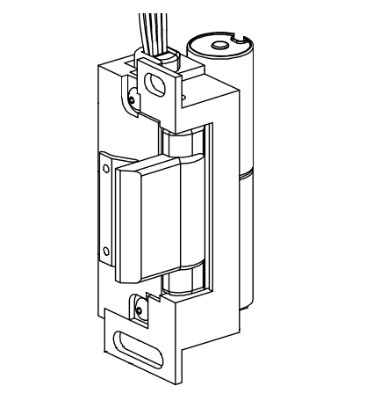
Von Duprin electric strike box assembly, fail-safe with dual-switch (DS) monitoring, 12VDC. The dual-switch configuration monitors both the latch bolt tripper and the keeper position independently. OEM replacement box assemblies available at SecurityParts.com.
How to Order Electric Strike Parts Without a Return
Returns in commercial door hardware are expensive and slow. Confirm three things before placing any order.
First: the exact strike series and model number. This is stamped or printed on the faceplate or on the housing body. Von Duprin 4200, 6100, 6200, 6300, and 6400 series all use different part numbers for identically named components. A monitor switch for a 4200 series is a completely different part from the same-named component on a 6200 series.
Second: the voltage configuration of the installed unit. Order the replacement solenoid or replacement unit to match exactly. A 12V solenoid in a 24V system burns immediately. A 24V solenoid in a 12V system will not actuate. If the installed unit is a multi-voltage model, confirm which voltage it was configured for at installation before ordering. If AC power is present and no rectifier kit is installed, the strike will not function correctly regardless of which solenoid is ordered.
Third: fail-safe or fail-secure mode. Parts for fail-safe and fail-secure versions of the same series are not interchangeable. The solenoid wiring polarity differs between modes. Ordering the wrong mode means the part arrives, appears to fit, and then either fails to actuate correctly or triggers an access control system fault that takes hours to trace.
SecurityParts.com has supplied commercial door hardware parts since 2001, including Von Duprin replacement parts for the 4200, 6100, 6200, 6300, and 6400 series. Interactive parts diagrams on each model page let you confirm the exact component before ordering. That visual confirmation step takes about 90 seconds and eliminates most wrong-part orders. Browse the top electric strikes guide for selection guidance across the Von Duprin series, or call 845-935-0301 for pre-order parts identification support.
Browse electric strike replacement parts at SecurityParts.com, or shop the full Von Duprin parts catalog. Same-day shipping is available on stocked components from US warehouses. For exit device parts on the same facility, see the exit device parts guide.
Electric Strike Maintenance Schedule
Electric strikes require less maintenance than mechanical hardware, but they are not zero-maintenance. Including them in a structured facility inspection cycle prevents the kind of quiet failure that only surfaces when a credential is denied at 2am.
At minimum, electric strikes should be included in the annual fire door inspection cycle required under NFPA 80. During each inspection, verify the keeper moves freely and springs back fully under manual pressure, confirm that the correct voltage is present at the strike terminals during an access grant signal, test the release and re-latch cycle under normal operating conditions, and check for corrosion at the terminal block and wiring connections.
High-traffic openings benefit from semi-annual inspections. Exterior frames in wet or corrosive environments may need quarterly checks of the terminal connections and housing seals. For a complete commercial door hardware maintenance schedule covering electric strikes, door closers, and exit devices, see the commercial door hardware maintenance checklist.
About the Author
This guide is published by the commercial door hardware team at SecurityParts.com, a supplier of OEM Von Duprin, Schlage, LCN, Falcon, and Detex parts since 2001. The team provides pre-order parts identification support, technical guidance on fail-safe vs fail-secure configuration, and same-day shipping on stocked electric strike components for locksmiths, facility managers, and contractors across institutional, healthcare, government, and commercial facilities. For electric strike parts identification and ordering support, call 845-935-0301 or visit SecurityParts.com.