 Trusted Since 2001





Most people only think about their deadbolt when something goes wrong. The key is stiff, the bolt is not throwing all the way, or the lock is suddenly wobbly. At that point, you have two choices: call a locksmith or figure out which specific deadbolt part has failed and fix it yourself.
The second option is usually faster and cheaper, but only if you know what you are looking at. This deadbolt parts guide breaks down every major component inside a residential and commercial deadbolt, explains what each part does, tells you how to recognize when it is failing, and walks you through how to find and order the right replacement. Whether you are a facility manager maintaining dozens of commercial doors or a homeowner dealing with a sticky lock, this is the reference you need. For a labeled visual reference, see the Schlage deadbolt diagram at SecurityParts.com.
What Makes a Deadbolt Different From Other Locks
Before getting into the parts, it helps to understand what separates a deadbolt from a spring latch lock. A spring latch closes automatically when the door shuts and can be pushed back with a credit card or shim. A deadbolt does not use a spring to engage. It requires a deliberate rotation of a key or thumb turn to throw the bolt into the strike plate. That rotation is what makes it significantly harder to force open.
The bolt on a deadbolt is square-shaped and rigid, and it extends a full inch into the door frame when locked. That single design choice is why deadbolts are the standard security hardware on nearly every exterior door in commercial and residential buildings.
Deadbolt Types: Single Cylinder, Double Cylinder, and Mortise
Understanding which type of deadbolt is installed is the first step before ordering any replacement part. Parts are not interchangeable across types.
Single Cylinder Deadbolt
The most common configuration. Keyed entry from outside, thumb turn on the inside. Standard on residential exterior doors and most commercial interior doors that require key control. One cylinder to service, one set of parts to maintain.
Double Cylinder Deadbolt
Both sides require a key. There is no thumb turn on the interior side. Used where the door has a glass panel adjacent to the lock that could otherwise allow an intruder to reach through, break the glass, and operate the thumb turn. Double cylinder deadbolts carry fire safety implications and are restricted or prohibited on some egress doors under local codes. Confirm compliance with local building requirements before specifying a double cylinder on any egress door.
Mortise Deadbolt
A mortise deadbolt is part of a mortise lock chassis that mounts inside a pocket cut into the door edge. The deadbolt and the latchbolt are housed in the same chassis. Common on high-security commercial openings, hotel corridor doors, and older institutional buildings. Mortise components are not interchangeable with cylindrical deadbolt components. For mortise lock parts and specifications, see the mortise lock parts guide and the mortise locks vs cylindrical locks guide at SecurityParts.com.
The Complete Deadbolt Parts Breakdown

Schlage commercial deadbolt replacement parts at SecurityParts.com. OEM components for B-Series and L-Series deadbolts including cylinders, bolts, rose plates, strike plates, and connecting hardware.
1. The Deadbolt Itself (The Bolt)
The deadbolt, also called the bolt or throw bolt, is the solid metal bar that slides horizontally into the strike plate when you lock the door. It is typically made from case-hardened steel, which resists sawing and cutting.
A standard residential bolt extends one inch. Commercial-grade bolts, such as those in the Schlage B-Series, are tested to ANSI Grade 1 standards for bolt strength and resistance to forced entry. When you see a Grade 1 rating on a deadbolt, one of the things it is testing is bolt strength.
What failure looks like: The bolt refuses to extend fully, or it extends but does not retract cleanly. This usually happens because the bolt housing is misaligned with the strike plate, or because the bolt itself has been damaged from a forced entry attempt. In rare cases, the bolt can corrode in humid environments and stop moving freely.
When to replace it: If the bolt is visibly bent, chipped, or corroded, replace it. A bolt that is simply stiff can often be fixed by lubricating it with a graphite-based lubricant, not oil-based products, which attract dirt and gum up the mechanism over time.
2. The Lock Cylinder (Key Cylinder)
The cylinder is the round metal housing that accepts your key. Inside it is a series of pin tumblers that align when the correct key is inserted, allowing the plug to rotate and throw the bolt. Most residential deadbolts use a 5-pin tumbler system. Higher-security deadbolts use 6 or 7 pins, which increases the number of possible key combinations and makes the lock significantly harder to pick.
What failure looks like: The key is difficult to insert or turn, or it works inconsistently depending on temperature or time of day. Cylinders also wear after years of use, especially in high-traffic commercial doors. You may notice the key wobbles more than it used to, or the lock requires noticeably more force to operate.
When to replace it: If the cylinder has been forcibly drilled, shows signs of picking attempts such as scratch marks around the keyway, or has simply worn out after years of use, replace the cylinder. Many deadbolts allow you to swap just the cylinder without replacing the entire lock body, which saves considerable time and cost on commercial doors. For Schlage deadbolt cylinder options including conventional, Primus, and interchangeable core formats, see the Schlage key systems guide.
3. The Plug and Pin Tumbler Assembly
The plug is the cylindrical piece inside the cylinder that actually rotates when the correct key is inserted. The pin tumbler assembly sits above the plug and consists of key pins, driver pins, and springs.
When no key is in the lock, the driver pins sit across the shear line, the gap between the plug and the outer cylinder housing. This prevents the plug from rotating. When you insert the correct key, the unique cuts on the blade push the key pins up to precise heights, lifting each driver pin just enough to clear the shear line and allowing the plug to turn.
The cam is a metal piece attached to the back of the plug. When the plug rotates, the cam drives the tailpiece, which in turn throws or retracts the bolt. A broken cam means the plug rotates freely but the bolt does not move.
What failure looks like: A single worn or broken driver pin will cause the lock to sometimes work and sometimes not, depending on the exact position of the key. Broken springs cause very similar symptoms.
When to replace it: Individual pins and springs can be replaced with a pinning kit, which is exactly what a locksmith does during rekeying. If you are comfortable with fine mechanical work, you can repin a cylinder yourself using a follower tool and plug follower kit.
4. The Thumb Turn (Thumb Latch)
On a single-cylinder deadbolt, the thumb turn is the knob or lever on the interior side of the door that you rotate to lock and unlock the deadbolt without a key. It connects directly to the bolt mechanism through the tailpiece. For a detailed breakdown of thumb turn types and configurations, see the thumbturn cylinder guide.
What failure looks like: The thumb turn spins freely without engaging the bolt, or it feels stiff and requires significant force to turn. A freely spinning thumb turn almost always means the cam or connecting piece inside has broken away from the bolt mechanism.
When to replace it: Thumb turn assemblies are usually sold as part of the interior trim set. On most deadbolts you can replace just the thumb turn side without replacing the full lock.
5. The Strike Plate
The strike plate is the metal plate installed in the door frame that receives the bolt when the door is locked. It has a hole precisely sized for the bolt to enter.
This is one of the most overlooked parts in door security and also one of the most important. A deadbolt is only as strong as the strike plate and the screws holding it to the frame. Builder-grade strike plates commonly ship with short screws that only reach the door frame casing, not the structural framing behind it. A properly installed strike plate uses longer screws that anchor into the framing behind the jamb.
Reinforced strike plates, sometimes called security strike plates, have longer plates that spread the force across more of the door frame.
What failure looks like: The bolt does not catch cleanly, or the door rattles even when locked. Scrape marks on the strike plate where the bolt is hitting the edge instead of entering the hole cleanly indicate the door has settled and the strike plate needs to be repositioned or replaced.
When to replace it: Replace the strike plate if it is bent, if the hole has deformed from repeated impact, or any time you upgrade to a higher-security deadbolt.
6. The Faceplate (Door Edge Plate)
The faceplate is the small rectangular metal plate visible on the edge of the door. It sits flush with the door edge and has a hole the bolt passes through when extended. On a deadbolt, the faceplate is sometimes called the mortise plate or door edge plate.
What failure looks like: The faceplate is bent or pulling away from the door edge. This can happen from a forced entry attempt or from years of door slamming. A damaged faceplate can misalign the bolt path and make locking difficult.
When to replace it: Faceplates on most deadbolts are held in by the lock body itself and come out when you remove the lock. They are inexpensive to replace and should be swapped out if visibly damaged.
7. The Connecting Screws and Tailpiece
The connecting screws are the long screws that pass through the interior rose plate, through the door, and thread into the exterior cylinder housing, holding the entire lock assembly together through the door. Most deadbolts use two connecting screws.
The tailpiece is the metal bar that connects the cylinder plug to the bolt mechanism. It transmits the rotation of the key or thumb turn into the throw or retraction of the bolt. A broken tailpiece means the key turns but the bolt does not move.
What failure looks like: A wobbly lock that moves when you press on it is almost always caused by loose or stripped connecting screws. This is one of the most common maintenance issues on high-traffic commercial doors and one of the easiest to fix.
When to replace it: If the screws are stripped, replace them with the correct size. Using improper screws creates exactly the kind of wobble that accelerates wear on every other component.
8. The Rose Plates (Escutcheon Plates)
The rose plates are the circular or rectangular plates on both sides of the door that cover the drill hole and support the cylinder on the exterior and the thumb turn on the interior. They distribute the load of the lock across a larger area of the door surface.
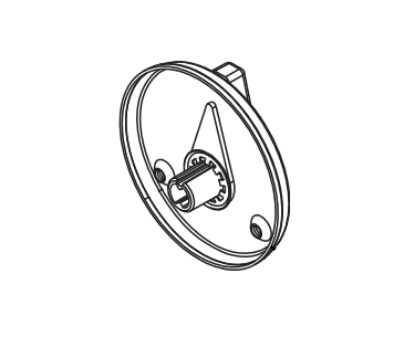
Schlage B-Series rose and turn assembly. The rose plate and thumb turn are sold as trim components for the B-Series deadbolt line. OEM replacement parts available through the Schlage B-Series parts catalog at SecurityParts.com.
What failure looks like: Cracked rose plates or plates that no longer sit flush against the door. This is usually a cosmetic issue but can expose the connecting screws to tampering.
When to replace it: Rose plates are sold as trim sets and can usually be replaced without touching the lock mechanism itself.
9. The Cylinder Collar
The cylinder collar is the hardened steel ring that surrounds the cylinder on the exterior side of the door. Its function is entirely security-focused: it prevents someone from gripping the cylinder with pliers or a pipe wrench and twisting it off the door. The collar rotates freely against the door surface, so there is nothing to grip.
Not all residential deadbolts include a reinforced cylinder collar. This is one of the features that separates ANSI Grade 1 hardware from lower-grade products.
What failure looks like: A missing, cracked, or loose collar. If the collar is missing in a higher-risk environment, consider upgrading to a deadbolt with a hardened steel rotating collar.
10. The Lock Body and Backset
The backset is the distance from the edge of the door to the center of the deadbolt hole. Standard residential backsets are 2-3/8 inches or 2-3/4 inches. Getting this measurement wrong when ordering a replacement lock means the lock will not fit correctly. The Schlage B-Series adjusts between both standard backsets without requiring a separate part.
The lock body is the housing that contains the bolt mechanism, springs, and cam. It mounts inside the drilled hole in the door and is the structural heart of the entire assembly.
ANSI Grading: What It Means for Each Component
When you see Grade 1, Grade 2, or Grade 3 on a deadbolt, those grades tell you how every component inside has been tested to perform. For a full breakdown of ANSI and BHMA grading standards across commercial door hardware, see the ANSI/BHMA door hardware standards guide.
ANSI Grade 1 is the commercial standard and the highest level of protection available for door locks. The bolt and the entire lock assembly are tested at defined force thresholds for forced entry resistance. The cylinder is tested to resist picking, drilling, and pulling. This is the grade you want on any exterior door in a commercial facility. Schlage commercial hardware, including the B-Series and L-Series deadbolt lines, is built to Grade 1 across their commercial product range.
ANSI Grade 2 is the residential standard. Adequate for most home applications where the threat level is moderate.
ANSI Grade 3 is the minimum grade. Fine for interior doors and light-duty applications only, and not appropriate for any exterior entry point.
Schlage Deadbolt Parts: B-Series and L-Series
SecurityParts.com specializes in OEM replacement parts for commercial door hardware. For deadbolts, the two primary Schlage lines in commercial use are the B-Series (cylindrical deadbolts) and the L-Series (mortise locks with integrated deadbolt function).
Schlage B-Series Deadbolt Parts
The Schlage B-Series is the most widely installed Grade 1 deadbolt in North American commercial buildings. The B-Series includes the B60N (single cylinder), B62N (double cylinder), B663 (classroom deadbolt with ANSI function E0171), and related configurations. All share a common bolt and backset adjustment mechanism but differ in center case configuration, cylinder housing, and trim options.
OEM replacement parts for the full B-Series range are available at SecurityParts.com. Interactive parts diagrams on each model page allow you to visually identify the exact component before ordering. Browse the complete Schlage B-Series deadbolt parts guide or the Schlage B-Series parts catalog. For the classroom deadbolt configuration specifically, see the Schlage B663 classroom deadbolt guide.
Schlage L-Series Mortise Deadbolt Parts
The Schlage L-Series is a mortise lock chassis that integrates the deadbolt function directly into the lock body. It is the standard for high-security commercial openings, institutional buildings, and any application requiring multiple functions from a single lock. L-Series parts are not interchangeable with B-Series parts. For L-Series component diagrams and part numbers, see the Schlage L-Series parts diagrams.
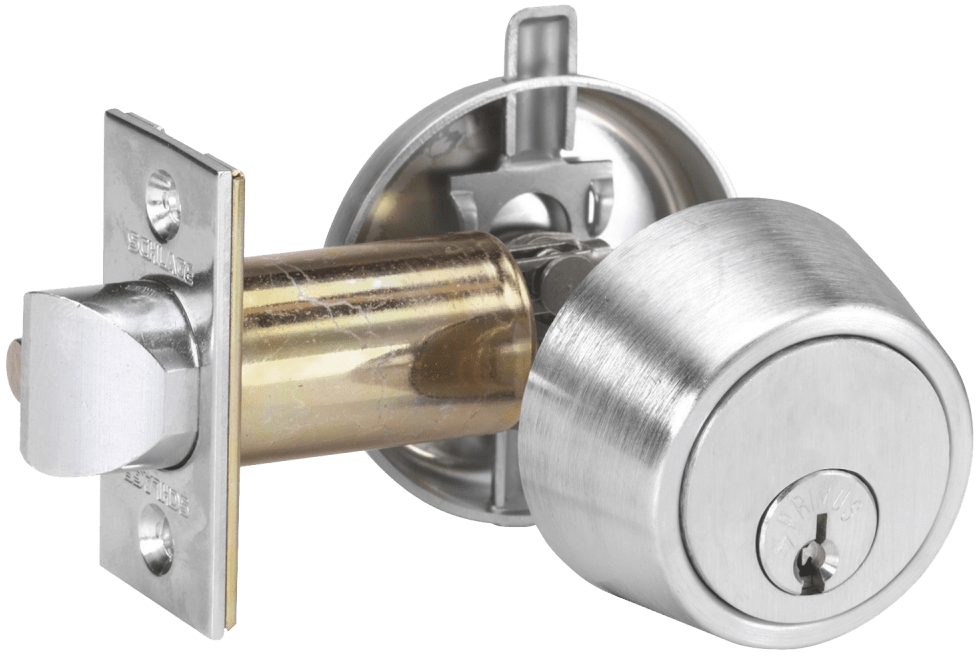
Schlage B-Series commercial deadbolt replacement parts at SecurityParts.com. OEM parts for the full B-Series range including B60N, B62N, B663, and related configurations. Same-day shipping on stocked components.
Cylinder Formats: What Changes When You Replace a Cylinder
Not all deadbolt cylinders are the same format, and the format determines which replacement cylinder will fit your lock. Getting the format wrong is the most common cause of a returned cylinder order.
Standard 6-Pin Conventional Cylinder
The most common format in commercial deadbolts. Accepts a conventional key and supports master keying, construction keying, and standard key control. The Schlage B-Series ships with a conventional cylinder as standard.
Primus and Primus XP High-Security Cylinders
Schlage Primus cylinders add a secondary locking bar to the cylinder body that resists picking and manipulation. Key control is restricted, meaning Primus keys cannot be duplicated at standard hardware stores. The Primus XP adds additional security attributes. Both are available for the B-Series and L-Series platforms.
Interchangeable Core (IC) Formats
Full Size Interchangeable Core (FSIC) and Small Format Interchangeable Core (SFIC) cylinders can be removed and rekeyed without disassembling the lock body, using a specialized control key. This is the standard in institutional and hospitality environments where rapid rekeying across hundreds of doors is required. SFIC requires a different door preparation and has specific door thickness requirements compared to conventional cylinders.
For guidance on Schlage key systems and cylinder options, see the Schlage key systems guide.
How to Replace a Deadbolt Cylinder
Replacing only the cylinder is the most cost-effective repair on a worn or compromised deadbolt. On the Schlage B-Series and most commercial deadbolts, the cylinder is an independently replaceable component.
Step 1: Identify the cylinder format. Confirm whether the installed cylinder is conventional, Primus, FSIC, or SFIC. Check the cylinder face for a manufacturer marking and confirm the keyway. Order the replacement cylinder to match the exact format and keyway.
Step 2: Remove the interior trim. On the B-Series, remove the two connecting screws from the interior rose plate. Pull the interior trim and thumb turn assembly away from the door.
Step 3: Remove the cylinder retainer screw. The cylinder is held in the exterior housing by a single retainer screw, usually accessible from the interior after the trim is removed. Remove this screw and pull the cylinder straight out from the exterior.
Step 4: Insert the replacement cylinder. Align the cam at the back of the new cylinder with the cam follower in the lock body. Push the cylinder in from the exterior until it seats fully. Reinstall the retainer screw.
Step 5: Reinstall the interior trim and test. Reconnect the interior trim with the connecting screws. Test the key and the thumb turn through a full lock and unlock cycle before returning the door to service.
If the replacement cylinder will be on a door in a master key system, confirm the cylinder has been pinned to the correct master key level before installation. For a full overview of cylinder ordering and key system considerations, see the Schlage key systems guide.
Which Parts Fail First: A Realistic Breakdown
Based on actual field patterns from commercial hardware maintenance, here is a realistic failure sequence.
First to fail: Connecting screws loosen. This happens within the first few years on any high-use door and is fixed with a screwdriver in two minutes. Tighten them as part of your annual maintenance round.
Second most common: Cylinder wear. After several years of daily use, key pins and driver pins wear down, leading to sticky operation or a key that works only at certain angles or with extra force.
Third: Strike plate misalignment. Doors settle, frames shift, and the bolt no longer aligns cleanly with the strike hole. This is especially common in older buildings and in climates with significant temperature and humidity swings.
Fourth: Bolt mechanism failure. The least common internal failure, but when it happens, usually from a forced entry attempt, the entire lock body needs replacement.
Least common: Thumb turn failure and rose plate damage, which are more likely to result from physical abuse than normal wear and use.
How to Identify the Right Deadbolt Replacement Part
Before ordering any replacement, you need three pieces of information.
The brand and series. Look for a name stamped on the cylinder face or on the bolt faceplate. Parts are not cross-compatible across brands, and in many cases not across different series within the same brand. Always order by part number, not by description alone.
The backset. Measure from the door edge to the center of the bolt hole. Standard backsets are 2-3/8 inches and 2-3/4 inches. Getting this wrong means the replacement will not fit.
The ANSI grade. If replacing a commercial lock, confirm the grade of the original to ensure the replacement meets the same standard. Downgrading the grade in a commercial installation can create liability and code compliance issues.
SecurityParts.com carries OEM replacement deadbolt parts for Schlage, Von Duprin, LCN, and Falcon. Interactive parts diagrams on each model page let you confirm the exact component before ordering. Browse the complete Schlage lock replacement parts guide and the full commercial door hardware parts catalog at SecurityParts.com.
Commercial Deadbolt Parts vs Residential Deadbolt Parts
The components inside a commercial and residential deadbolt are conceptually the same, but the specifications differ in ways that matter for replacement ordering.
Commercial deadbolts, including the Schlage B-Series Grade 1, are manufactured to tighter tolerances, tested to higher force thresholds, and built for thousands of operations per day. Cylinders use 6-pin formats with restricted keyways. Strike plates are heavier gauge steel with more robust anchoring. The lock body itself is made from heavier materials and the bolt is manufactured from case-hardened steel rather than standard zinc alloy.
Residential deadbolts are less expensive, built for moderate-frequency use, and often use 5-pin cylinders with common keyways.
When maintaining commercial facilities, always replace commercial deadbolt components with OEM commercial-grade parts. Substituting residential components into a commercial installation reduces the security rating of the opening and may affect insurance coverage and code compliance. For guidance on OEM vs aftermarket parts in commercial hardware, see the OEM vs aftermarket commercial door hardware guide.
Deadbolts and the Wider Door Hardware System
A deadbolt does not work in isolation. It is one component in a door assembly that also includes cylindrical locksets, mortise locks, door closers, and in commercial applications, electric strikes and access control hardware.
If you manage a commercial facility, you may also be maintaining cylindrical lock parts on interior doors, mortise lock parts on high-security openings, and electric strikes on access-controlled entries. The same discipline of knowing individual component failure signs applies across all of them. For troubleshooting across all commercial door hardware, see the commercial door hardware troubleshooting guide.
How to Maintain Your Deadbolt So Parts Last Longer
A deadbolt that is properly maintained will last many years before any component needs replacement. Here is a practical maintenance routine. For a complete commercial facility maintenance schedule, see the commercial door hardware maintenance checklist.
Every six months: Apply a small amount of graphite powder or dry PTFE lubricant to the keyway. Do not use WD-40 or oil-based lubricants. They attract dust and gum up the pin tumblers over time.
Once a year: Check the connecting screws and tighten them if any movement is felt. Check the strike plate screws and confirm they are still seated in the door stud, not just the casing.
Any time the door settles or is rehung: Realign the strike plate to the bolt. A bolt that rubs the edge of the strike hole every time you lock the door will wear down both the bolt and the plate within a single year of use.
After any forced entry attempt: Inspect every component before reusing the lock. A bolt that has taken impact may look fine but have a micro-fracture that will fail under moderate force in the future.
Where to Find Deadbolt Replacement Parts
SecurityParts.com has supplied OEM commercial door hardware parts since 2001, with a focus on Schlage, Von Duprin, LCN, and Falcon, the brands professionals actually work with every day on commercial openings. Whether you need a Schlage B-Series deadbolt part, an L-Series component, or a part for any other hardware in a commercial facility, parts are organized by model with interactive diagrams so you can visually identify what you need and add it to your cart directly.
Same-day shipping is available on stocked components from US warehouses. For urgent orders or parts identification questions, call 845-935-0301 or email sales@securityparts.com. For related hardware on the same facility, see the LCN door closer parts guide and the electric strike parts guide. Browse the full commercial door hardware parts catalog at SecurityParts.com or contact the team for assistance.
About SecurityParts.com
SecurityParts.com has supplied OEM commercial door hardware parts since 2001. The catalog covers Schlage, Von Duprin, LCN, Falcon, and Detex, organized by model with interactive diagrams for accurate part identification before ordering. For deadbolt parts identification and same-day shipping on stocked components, call 845-935-0301 or visit the contact page.