 Trusted Since 2001


Quick Summary
Key points
- Most mortise lock faults are trim, spindle or strike problems rather than faults inside the lock case, and the three are easy to tell apart once the door is open.
- Test with the door open before anything else. A lock that works perfectly with the door open and fails when it is closed has a frame problem, not a lock problem.
- The lock case, the trim, the cylinder and the strike are all ordered separately, so a failure in one does not force a complete lockset.
- Rounded spindles are the single most common mechanical failure, because the spindle takes every turn of the lever and is softer than the hub it drives.
- A case that is genuinely worn out is worth replacing rather than repairing, and the function code on the existing lock decides which case to order.
| Symptom | Usual location | Case fault? |
|---|---|---|
| Lever droops or spins freely | Spindle or hub | Sometimes |
| Key turns but nothing moves | Cylinder or cam | Rarely |
| Latch sluggish returning | Case, or dirt in the case | Often |
| Will not latch when door closes | Strike alignment | No |
| Deadbolt throws but will not retract | Binding against the strike | Rarely |
In This Guide
- What Usually Fails Inside a Mortise Lock?
- How Do You Tell a Lock Fault From a Door Fault?
- Can a Mortise Lock Be Repaired, or Does It Need Replacing?
- How Do You Get the Lock Case Out Without Damaging the Door?
- What Does a Worn Spindle or Hub Do to the Lock?
- Why Does the Deadbolt Throw but Not Retract?
- What Parts Are Stocked Separately for Mortise Lock Repair?
- What Should You Confirm Before Ordering Repair Parts?
- About the Author
Mortise locks are built to be serviced. The case comes out of the door, the trim comes off the faces, the cylinder unscrews and the strike unscrews from the frame. Every one of those is a separate part, which is why a mortise lock repair is usually a component job rather than a replacement job.
What makes these calls go wrong is diagnosing from the symptom instead of from the door. This guide covers how to find the actual fault, what can be repaired, what cannot, and what to confirm before ordering.
What Usually Fails Inside a Mortise Lock?
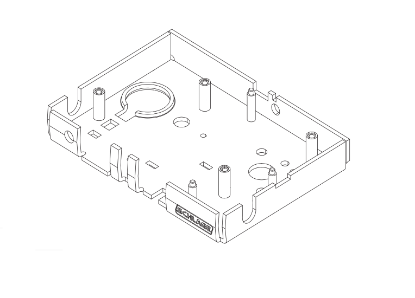
Less than people expect. The case is a steel box full of levers and springs, and on a normal opening it will outlast several sets of trim.
What fails first is whatever is softest and most used. The spindle, because it transmits every turn of the lever. The hub, because the spindle wears into it. Springs, because they cycle constantly. And the latch bolt face, because it rubs against the strike every time the door closes.
Does a mortise lock wear out from the outside in?
Usually, yes. Damage arrives through the trim, the lever and the key, and works inwards. That is why the parts closest to the user fail first and the parts deepest in the case last the longest, and why a lock that feels rough at the lever is more often a trim job than a case job.
How Do You Tell a Lock Fault From a Door Fault?
Open the door and work the lock in free air.
With the door open, operate the lever, throw and retract the deadbolt, and turn the key through its full travel. Everything the lock does with the door open is the lock. Anything that only goes wrong when the door is closed belongs to the frame, the strike or the door itself.
That single test resolves a large share of mortise lock calls before any tools come out, and it stops perfectly good locks being replaced because a door had dropped a few millimetres on its hinges.
| Door open | Door closed | Where the fault is |
|---|---|---|
| Works correctly | Fails | Strike, frame or door alignment |
| Rough or sticky | Also rough | Inside the lock, or the trim driving it |
| Lever free, latch still | Same | Spindle or hub |
| Key turns loosely | Same | Cylinder or cam |
| Deadbolt throws freely | Deadbolt jams | Strike cutout position |
What if the fault is intermittent?
Intermittent faults on an otherwise sound lock are usually environmental. A timber door that swells in humid weather, a frame that moves with temperature, or an exterior opening where debris is finding its way into the case. Note when it happens rather than only what happens, because the pattern is the diagnosis.
Can a Mortise Lock Be Repaired, or Does It Need Replacing?
Both are routine. The question is which part has failed and how much of the rest has aged alongside it.
Repair is the right route when a specific component has failed on a lock that is otherwise sound: a spindle, a spring, a trim plate, a cylinder, a strike. Replacement of the case makes sense when the mechanism itself is worn, when several parts have already been changed, or when the function needs to change.
When does the function decide the answer?
Whenever the room has changed use. A store that becomes an office, or a classroom that needs a different locking behaviour, is a function change rather than a repair. The lock case carries the function, so that is a case order, and the trim and cylinder may well carry over.
Our lock function codes guide covers how the function is expressed in the model number, which matters because two visually identical locks can behave completely differently.
How Do You Get the Lock Case Out Without Damaging the Door?
In order, and with the door supported.
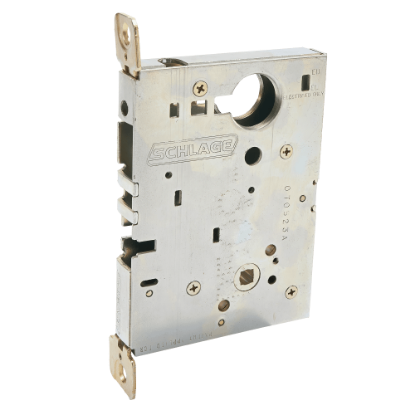
Take the trim off both faces first, then the cylinder, then the faceplate screws at the door edge. The case then withdraws from the mortise pocket. Forcing a case out before the cylinder is clear is how cams get bent and how pocket edges get torn.
On a heavy door, wedge the leaf before you start. A door that swings while you have the case half out will take the weight of the case on the pocket edge.
What should you check while the case is out?
Four things, because the pocket is only open once. The condition of the mortise pocket itself, the state of the wiring if the lock is electrified, whether the faceplate is flat and undamaged, and whether the cylinder threads are clean. Finding any of those later means taking the lock out again.
If the trim is also being changed, our trim parts guide covers what is supplied separately on the face of the door.
What Does a Worn Spindle or Hub Do to the Lock?
It produces the most recognisable fault on any mortise lock: the lever turns, and nothing happens.
The spindle is the shaped bar that carries the turn from the lever through the door into the lock hub. It is the part under the most direct load, and it rounds off at the corners over time. Once it has rounded enough, it spins inside the hub instead of driving it.
A lever that turns a few degrees and then goes slack, or one that works intermittently depending on how hard you turn, is almost always a spindle. Replacing the lock case for that symptom is a common and expensive mistake.
How do you check a spindle without stripping the door?
Take one lever off and look at the spindle end. Sharp, square corners mean the spindle is sound. Rounded or twisted corners mean it has been slipping, and the hub it drives needs looking at as well, because a worn spindle wears the hub it turns in.
Replacing a rounded spindle and leaving a worn hub gives you a repair that fails again quickly. If both are worn, the case goes on the order with the spindle.
Why Does the Deadbolt Throw but Not Retract?
Nearly always because it is under load from the strike rather than because the lock has failed.
When a door has dropped, or the frame has moved, the deadbolt enters its cutout at an angle and jams against the edge. The key then has to overcome that binding as well as turning the mechanism, and at some point it will not.
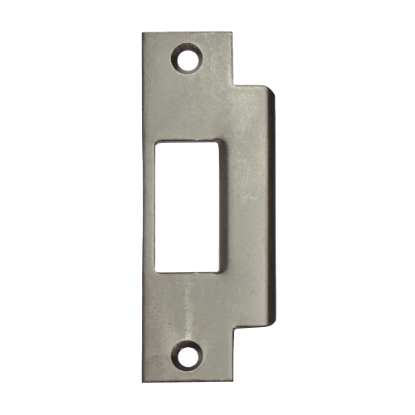
The test is simple. Open the door, throw the deadbolt and retract it. If it moves freely in free air, the lock is fine and the frame needs attention. Our mortise lock strike guide covers how the strike is dimensioned for the bolt it receives.
Can you force a jammed deadbolt?
You can, and it is how bolts get bent and keys snap in cylinders. Lift or push the door slightly to take the load off the bolt first, then turn the key. If it releases, you have both diagnosed and temporarily solved the problem in one movement.
What Parts Are Stocked Separately for Mortise Lock Repair?
Enough that a complete lockset is rarely the answer.
| Part | What it does | Typical reason to order it |
|---|---|---|
| Lock case | Carries the mechanism and the function | Worn mechanism or a function change |
| Spindle | Drives the hub from the lever | Rounded corners, lever spinning |
| Trim and lever | User facing hardware | Impact damage or accessibility change |
| Cylinder | Keying | Rekeying, lost keys, worn plug |
| Strike | Receives latch and bolt | Alignment, damage, frame change |
| Screw pack | Refitting | Worn or missing fixings after service |
Screw packs matter more than they look. Refitting a serviced lock with mixed fixings from the van is how the next technician finds a lock that has worked loose in its pocket.

Is the cylinder part of the lock?
No, and that is useful. The cylinder is a separate item with its own cam, which means rekeying an opening never touches the lock case. Our mortise cylinder and rim cylinder comparison covers how the two differ and why the cam matters.
What Should You Confirm Before Ordering Repair Parts?
Six things, and they come off the door rather than out of a catalogue.
The lock series, from the stamping on the case or faceplate. The function, because it decides the case. Which component has actually failed, established by the door open test. The handing, where the part is handed. The finish, because visible parts have to match the rest of the opening. And whether the lock is electrified, because that changes both the case and the wiring arrangement.
What if the lock is unmarked?
Measure and photograph. The backset, the case dimensions, the faceplate size and the arrangement of the latch and bolt together narrow the family quickly. A photograph of the case out of the door, with a tape measure across the faceplate, is usually enough to confirm the part.
For a wider view of the range, our mortise lock parts guide lists components by function, and the commercial mortise locks guide covers how these locks are specified in the first place. If you are still establishing which family of lock is on the door, start with mortise locks versus cylindrical locks.
About the Author
Security Parts has supplied repair parts for commercial door hardware since 2001, covering Von Duprin, LCN, Schlage, Falcon, Detex and Adams Rite at the component level. Our diagram based lookup exists so a technician can confirm a part before ordering it. This guide was written by the Security Parts team from supplier documentation and the questions our customers bring us.