RSS

Blog posts tagged with 'door position switch'

Maglock Installation: Mounting, Wiring and Release Rules

Quick Summary

Key points

  • A maglock installation is three jobs in one: mounting the magnet and armature, getting power to the opening, and giving people a way out that does not depend on the electronics.
  • The magnet mounts on the frame and the armature on the door, and the armature must be allowed to float slightly rather than being clamped rigid.
  • Through bolting the armature is the normal method, which is why sex nuts sized for the door thickness are part of the parts list rather than an afterthought.
  • Maglocks are fail safe by nature. Power holds them locked, so the design question is what else releases the door, not whether the lock releases.
  • Door position monitoring belongs in the same installation. Without it the system knows it energised the magnet but not whether the door ever closed.
The three parts of a maglock installation
StageWhat it coversMost common mistake
MechanicalMagnet, armature, brackets, fixingsArmature bolted rigid instead of floating
ElectricalSupply, voltage, routing into the door frameVoltage drop over a long run
Egress and monitoringRelease devices and door position sensingMonitoring left out entirely

Maglock installation looks like the simplest job in electrified hardware. There is no latch, no strike cutout, no mortise pocket, and the two halves simply have to meet. That is exactly why it gets rushed, and why so many of them end up holding at a fraction of their rating.

This guide covers the mechanical mounting, the power side, the egress arrangements that have to accompany it, and the faults that follow from getting any of the three wrong.

What Does a Maglock Installation Involve?

Three separate pieces of work that have to be planned together.

The mechanical part is mounting the magnet to the frame and the armature to the door so that the two meet flat and square. The electrical part is delivering the correct voltage to the magnet continuously, because a maglock is only locked while it is energised. The third part is everything that lets people out, because a lock that holds by power needs a defined way of letting go.

Treating any of the three as a follow up job is where maglock installations go wrong. The egress arrangement in particular dictates what else goes on the door, and that is easier to design in than to retrofit.

Is a maglock different from an electric strike in installation terms?

Completely. An electric strike goes into the frame and leaves the door untouched. A maglock puts hardware on both the door and the frame, carries its load across the joint between them, and needs power running the whole time the door is locked. Our electric strikes guide covers the alternative where the door preparation is the deciding factor.
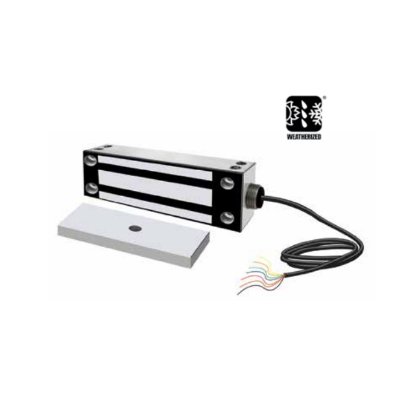
Detex ML-1549W weatherized 1200 lb magnetic lock for exterior maglock installation
A weatherized 1200 lb magnetic lock. The holding figure is only achieved when the armature meets the magnet face flat and clean, which makes the mounting the real variable.

Where Does the Magnet Go and Where Does the Armature Go?

The magnet mounts on the frame, usually at the head on the stop side, and the armature mounts on the door so that it arrives against the magnet face when the door closes.

The reason that way round is practical. The magnet is the half that needs wiring, and the frame is the half that does not move. Putting the powered half on a swinging leaf means running conductors across the hinge line for no reason.

How accurately do the two faces need to meet?

Flat and fully in contact. A magnetic lock holds by surface contact, and anything that keeps the two faces apart reduces the hold disproportionately. A small gap, a layer of paint, a build up of dirt or a slight twist in the armature all take holding force away.

This is the single biggest difference between a maglock that performs to its rating and one that can be pulled open by hand. The parts are not usually at fault. The alignment is.

How Is the Armature Fixed to the Door?

Through the door, with the fixings sized for the door thickness, and with the armature left able to move slightly.

That last point surprises people. The armature is not meant to be rigid. It needs a small amount of float so it can settle flat against the magnet face even when the door does not present it perfectly square. Clamping it solid removes that ability and guarantees partial contact.
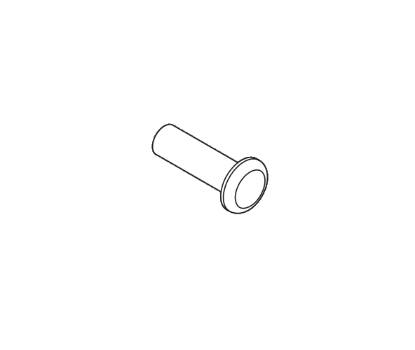
Schlage P390498 sex nuts for through bolting an armature to a 1-3/4 inch door
Sex nuts listed for a 1-3/4 inch door. Through bolting is the normal method, and the fixings are specified for the door thickness rather than cut to fit on site.

What holds the magnet to the frame?

A mounting pack sized for the installation, and on many openings a bracket. Not every frame presents a flat surface in the right place, and inward opening doors, glass doors and frameless arrangements all need brackets to put the magnet where it needs to be.

Mounting hardware is supplied as a kit for the same reason screw packs are supplied for locks. The fixings are part of the specification, not consumables from the van.

Schlage P23840283 mag mounting pack used during maglock installation
A mag mounting pack. Using the supplied fixings matters because they are sized to let the armature float by the intended amount.

What Power Does a Maglock Need?

Continuous power, at the voltage the unit is listed for, delivered at the lock rather than at the panel.

Because a maglock is energised the whole time it is locked, its supply sizing is different from a fail secure electric strike that draws nothing until released. Every maglock on a system contributes continuously to the load, which matters most when the building is running on battery backup.

Supply considerations specific to maglocks
ConsiderationWhy it matters
Continuous drawThe lock is energised whenever the door is secured
Voltage at the lockDrop over the cable run reduces holding force
Battery backup sizingStandby time is set by the total continuous load
Transfer into the doorOnly needed if anything on the door is powered

Does the installation need a power transfer?

Only if something on the moving leaf needs power. The magnet is on the frame, so a plain maglock does not. The moment an electrified lock, an exit device with latch retraction or a door mounted sensor joins the opening, conductors have to cross the hinge line, and that is a transfer job. Our power transfer guide covers the options.

What Else Has to Be on the Door Before a Maglock Is Used?

This is the part of a maglock installation that is not optional and not a hardware preference.

Codes treat electrically locked egress doors as a special case, because the lock has no mechanical release. The conditions typically attached include a manual release device on the egress side, release of the lock on loss of power, and release on activation of the fire alarm system. What is required on a specific opening is decided by the authority having jurisdiction.

The practical consequence for the installer is that a maglock is never a single product on a door. It arrives with a release arrangement, and the arrangement is as much part of the installation as the magnet.

Does a motion sensor count as the release?

Sometimes, within conditions, and never as the only element. A request to exit sensor above the door can form part of a designed release arrangement, but what is permitted varies and the sensor is one component of a solution rather than the solution itself. Our request to exit sensor guide covers how those units behave and where they are mounted.

Where a door needs to hold briefly before releasing, that is delayed egress, which is a separate function with its own conditions. Our delayed egress guide covers it.

How Do You Monitor a Maglock Once It Is Fitted?

With a door position switch, and ideally with bond monitoring from the lock itself where the unit offers it.

The distinction matters. The access control system knows it energised the magnet. It does not know whether the door actually closed, whether the armature made contact, or whether somebody has propped the leaf. A door position switch answers the first of those, and it is the component most often left out of a maglock installation. Our Wiegand 26 bit guide explains the format, wiring, limits and OSDP.
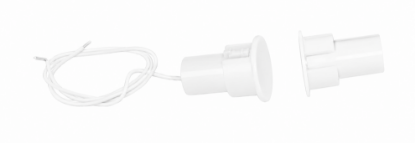
Detex MS-1039F flush magnetic switch monitoring a door after maglock installation
A flush mounted magnetic switch. Recessed into the door and frame, so there is nothing on the surface to be knocked out of alignment.

Flush or surface mounted switch?

Flush where the door and frame can be drilled and the opening is interior and protected. Surface mounted where drilling is not practical, where the opening is exterior, or where a heavier duty unit is wanted on a door that takes abuse.
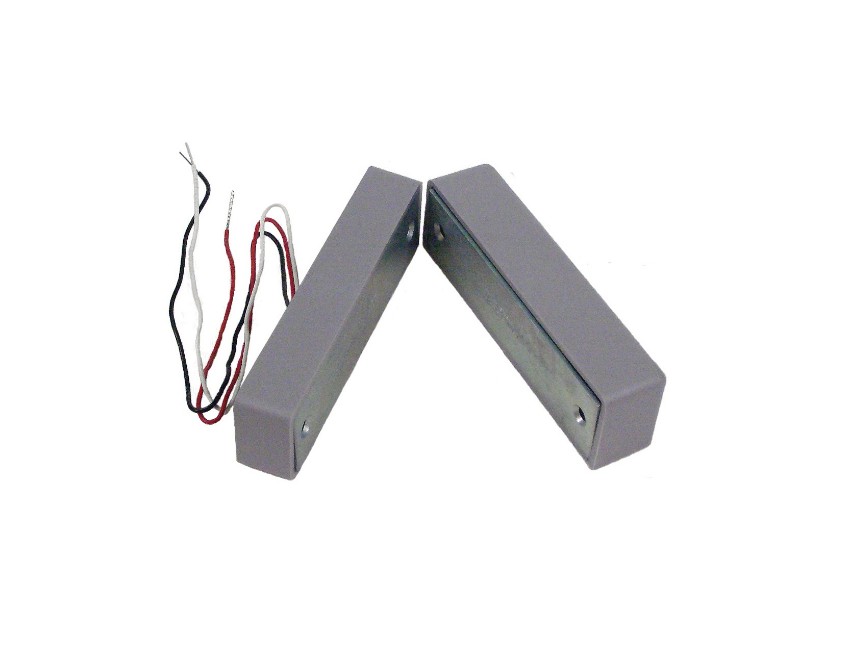
Detex MS-2049S heavy duty surface mount Form C magnetic switch for door monitoring
A heavy duty surface mount switch with Form C contacts. Form C gives the panel both a normally open and a normally closed path from one device.

Our door position switch guide covers how the switch and the request to exit signal work together on a monitored opening.

Why Does My Maglock Not Hold Properly?

Nine times out of ten the answer is contact rather than current.

Diagnosing a maglock that releases under load
CauseHow to confirm itFix
Armature not meeting flatMarker transfer across the magnet faceReset the armature float and alignment
Paint, dirt or corrosion on facesVisual check of both facesClean back to bare metal contact
Armature clamped rigidNo movement at all when pushed by handRefit with the intended float
Voltage low at the lockMeasure at the lock, not the panelLarger conductors or a closer supply
Door closing short of the magnetGap visible with the door shutCloser adjustment or packing the magnet

Working through that table in order resolves most complaints without replacing anything. A maglock is a simple device, and simple devices fail for mechanical reasons.

Can a maglock be mounted on a door with a closer?

It usually has to be, because the door needs to arrive at the magnet reliably. What matters is that the closer brings the leaf fully home. A door that stops a few millimetres short will energise the magnet with no contact at all, which looks like a lock failure and is a closer adjustment. Our door clearance guide covers the related measurements around the opening.

What Changes on an Exterior Opening?

Water, temperature and corrosion, all of which attack the contact surfaces that the lock depends on.

Weatherized units exist for exactly this reason. On an exterior door the magnet and armature faces are exposed to rain driven across them and to condensation forming on cold metal, and ordinary steel surfaces will discolour and eventually pit. That pitting reduces contact area, which reduces holding force.

Does an exterior maglock need different maintenance?

Yes, and it is simple. The faces want checking and cleaning periodically rather than after a complaint. A maglock on an exterior door that has not been looked at in three years is usually holding at well below its rating, and nobody will know until somebody pulls on it.

What Should You Confirm Before Ordering a Maglock?

Six things, and the first three come off the opening rather than the specification.

Whether the door is interior or exterior, because that decides weatherized or standard. The door thickness, because the through fixings are sized for it. Whether the door swings in or out, because that decides whether brackets are needed. The voltage available at the opening. Whether monitoring is required, and of what kind. And what the egress arrangement will be, because that is the part that has to be designed rather than ordered.

What if the opening already has an exit device?

Then the maglock may not be the right answer at all. A door that already latches mechanically and releases from the inside has most of what a maglock is being asked to provide, and adding one can complicate the egress picture rather than simplify it. For the full component breakdown of magnetic locks themselves, our electromagnetic lock parts guide covers what is supplied separately, and our fire rating guide covers what changes on a rated opening.

About the Author

Security Parts has supplied repair parts for commercial door hardware since 2001, covering Von Duprin, LCN, Schlage, Falcon, Detex and Adams Rite at the component level. Our diagram based lookup exists so a technician can confirm a part before ordering it. This guide was written by the Security Parts team from supplier documentation and the questions our customers bring us.
Request to Exit and Door Position Switches: What They Do and How to Wire Them

Quick Summary

Key points

  • A door position switch reports one thing only: whether the door leaf is open or closed. It knows nothing about the latch, the lock or the credential.
  • A request to exit switch reports that somebody on the inside pushed the bar or the lever, so the panel can tell a legitimate exit from a break-in.
  • The two are wired to different inputs on the panel and they do different jobs. Fitting one does not cover the other.
  • Most of these switches are SPDT, which gives you a normally open and a normally closed contact from the same device. Which pair you land on decides whether a cut wire raises an alarm or hides one.
  • On exit devices the monitoring is ordered as suffix codes. RX, LX and SS each watch a different thing, and picking the wrong one is the most common ordering mistake on a monitored opening.
The two switches at a glance
SwitchSensesPanel uses it to
Door position switch (DPS)Door leaf open or closedRaise forced open and held open alarms, relock on close
Request to exit switch (RX)Push bar, touch pad or lever being operatedSuppress the forced open alarm while somebody leaves
Latch monitor (LX)Latch bolt projected or retractedProve the opening is actually secured, not just shut

Two switches turn an ordinary opening into a monitored one, and they are constantly mixed up. A technician is told the door needs monitoring, fits one switch, and the panel still throws a forced door alarm every time somebody leaves. The hardware is fine. The wrong switch was fitted, or the right switch was wired to the wrong contact.

This guide covers both devices at component level: what each one senses, how the contacts behave, which part fits which door, and what the wiring actually has to do at the panel. For how these switches sit inside a wider electrified opening, see our access control and door hardware integration guide.

What Is a Door Position Switch and What Does It Actually Monitor?

A door position switch, usually shortened to DPS, monitors whether the door is open or closed, independent of the latch state. That last part is the bit people miss. The switch watches the gap between the leaf and the frame. It does not know whether the latch bolt has thrown, whether the lock is secure, or who opened the door.

Physically it is two pieces. A switch body goes in the frame and a magnet or actuator goes in the door edge opposite it, so closing the door brings them together and changes the state of the contacts. Pull the door open and the contacts change back.

That single piece of information drives most of what an access control system does after the door opens:

  • Door forced open. The door went open with no valid credential and no exit request. Without a DPS the panel cannot detect this at all.
  • Door held open. The door has been open longer than the allowed time, so something is propping it.
  • Relock on close. Fail secure hardware can be told to drop back to locked the moment the door closes, rather than waiting out a fixed timer.
  • Interlocks and operators. Automatic operators and mantraps need to know the leaf is closed before the next thing is allowed to happen.

Why the Latch State Is a Separate Question

A closed door is not a locked door. A door can sit closed against the stop with the latch bolt held back, and a DPS will happily report closed. If you need to know that the opening is actually secured, you need latch monitoring as well, which on an exit device is a different switch entirely.

What Is a Request to Exit Switch and Why Is It Required?

A request to exit switch, written RX or REX, generates a signal to the access control panel whenever the push bar or touch pad is actuated. It is how the panel tells a person leaving the building from a person forcing the door.

Without it the system has no way to interpret an opening from the inside. Somebody pushes the bar, the door swings, the DPS reports open, and because no credential was presented the panel calls it a forced door. Every legitimate exit becomes an alarm, and within a week nobody is reading the alarms any more.

On access controlled egress doors the request to exit signal is not optional. The egress side has to stay mechanically free, so the building relies on the RX signal to keep the monitoring honest rather than restricting the exit itself.

How the Shunt Window Works

When the RX contact changes state, the panel records an egress event and suppresses the door forced alarm for a set period, typically in the range of five to ten seconds. That window is called the shunt. The door is expected to open and close again inside it.

Two things go wrong with shunt timing. Set it too short and a slow closer or a person holding the door produces nuisance alarms. Set it too long and somebody can push the bar, prop the door and walk away with the alarm suppressed. The shunt is a security setting, not just a convenience setting.

Door Position Switch vs Request to Exit: What Is the Difference?

Put plainly: the DPS watches the door, the RX watches the hardware being operated. A monitored opening normally needs both, wired to two separate panel inputs.

Door position switch compared with request to exit
QuestionDoor position switchRequest to exit switch
What it sensesDoor leaf open or closedPush bar, touch pad or lever being operated
Where it mountsDoor edge and frame, or door face and frame faceInside the exit device or lock body
What the panel does with itRaises forced open and held open alarms, triggers relockSuppresses the forced open alarm for the shunt window
Does it know the latch is thrownNoNo, unless you also fit latch monitoring
Does it know who opened the doorNoNo
What happens if you omit itNo forced entry detection at allEvery normal exit reads as a forced door

What Do the Exit Device Switch Codes RX, LX, SS and LC Mean?

On exit devices the monitoring is not a separate box on the wall. It is a switch kit inside the device, ordered as a suffix on the part number. Four codes come up constantly and they are not interchangeable.

Exit device monitoring suffixes and what each one watches
CodeFull nameWhat it monitorsTypical use
RXRequest to exitSignals the panel when the device is actuatedAny access controlled egress door
LXLatch monitorWhether the latch bolt is projected or retractedProving the opening is actually secured
SSSignal switchBar depression, as a dry contact that closes when the push bar or touch pad is depressedSimple egress signalling where latch state is not needed
LCLow currentNot a sensing function. It is the low current switch configurationMatching the switch rating to low current panel inputs

Why LX and RX Are Not the Same Thing

This is the ordering mistake that costs the most. LX reports the latch bolt. RX reports the egress event. A door can give you a clean LX signal and still produce forced door alarms all day, because the panel was never told that somebody pushed the bar.

SS sits between them. It is simpler than RX because it monitors the bar being depressed rather than the latch retracting, which is enough for a basic egress signal but tells you nothing about whether the device actually released.

Kits are also length specific. A switch kit built for a 48 inch device will not serve a 36 inch device, so the device width has to be confirmed before the kit is ordered. Browse the exit device parts section for the switch kits that match your device.

Von Duprin 050291 LX-RX-LC switch kit for a 4 foot exit device, combining latch monitoring and request to exit
A combined kit carries more than one function. This one provides latch bolt monitoring and request to exit monitoring in a single assembly sized for a 48 inch device.

Which Door Position Switch Fits Which Door?

Door position switches are not generic. The two things that decide the part number are how it mounts and what the door and frame are made of. A switch bored into a hollow metal frame is a different part from the one that surface mounts on an aluminium storefront.

Door position switch selection by mounting and door material
PartMountingDoor and frameSwitch typeRating
Schlage 679-05ConcealedUsed in electronic access control applicationsSPDT0.3 A at 30 VDC
Schlage 679-05HMConcealedHollow metal doors and framesSPDT0.3 A at 30 VDC
Schlage 679-05WDConcealedWood doors and framesCheck the current data sheetCheck the current data sheet
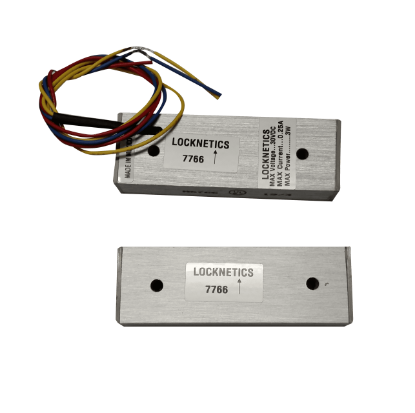
Schlage 7766Surface mount, magneticAluminium, wood and hollow metalSPDT0.25 A at 30 VDC
LCN 8310-805Surface mountUsed with automatic operatorsCheck the current data sheetCheck the current data sheet

Concealed switches disappear into the opening and cannot be tampered with from the occupied side, but they need a prep in both the door edge and the frame. That prep is straightforward on a new opening and a real job on an existing one. Surface mount magnetic switches need no prep at all, which is why they dominate retrofits, but they are visible and they sit where a trolley or a cart can hit them.

Schlage 679-05 concealed door position switch for electronic access control
A concealed door position switch mounts out of sight in the frame, with its actuator opposite in the door edge.

What Do SPDT, Form A, Form B and Form C Mean?

Nearly every spec sheet for these switches uses contact form language, and getting it wrong is how a monitored door ends up quietly unmonitored.

Contact forms in plain language
TermWhat it meansBehaviour
Form ASingle pole single throw, normally openOne pair of contacts. Open at rest, closed when actuated
Form BSingle pole single throw, normally closedOne pair of contacts. Closed at rest, open when actuated
Form CSingle pole double throw, also written SPDTA common terminal plus both a normally open and a normally closed contact. You choose which pair you use
Dry contactA contact that supplies no voltage of its ownIt simply makes or breaks a circuit the panel powers

Most of the door position switches on this site are SPDT, which is the same thing as Form C. The Schlage 679-05 provides normally open and normally closed contacts from the one device, and the Schlage 7766 is also SPDT. That gives you a choice at install time, and the choice matters more than it looks.

Normally Closed Is Usually the Safer Default

Wire a DPS on the normally closed contact and the circuit sits closed while the door is shut. Open the door and the circuit breaks, so the panel sees a change. Cut the wire, pull the switch off the frame, or lose a connection in the loop and the panel also sees a break. The failure looks like an alarm.

Wire the same switch normally open and a cut wire looks exactly like a door that is sitting quietly closed. Nothing is reported. On a door that matters, supervise the loop or use the normally closed contact so that a fault announces itself.

How Do You Wire a Door Position Switch?

The electrical side is simple. The complications are mechanical and they are all about the gap.

The switch is a dry contact into a monitor input on the panel or controller. Two conductors run from the switch to that input, and the panel supplies whatever small voltage it needs to sense the state.

The ratings are modest for the same reason. The Schlage 679-05 and 679-05HM are rated 0.3 amps at 30 VDC, and the 7766 is rated 0.25 amps at 30 VDC. These are signalling contacts, not switching contacts. Never run lock current through them.

What actually causes trouble on site:

  • Alignment. Magnetic switches have a working gap. Push past it and the contacts stop changing reliably, so a door that looks shut reports open. A sagging door, a worn hinge or a closer that is not pulling the leaf fully home all show up here first.
  • Which leaf it goes on. On a pair, the switch belongs on the active leaf unless both leaves need monitoring, in which case you need two switches and the panel has to treat them sensibly.
  • Getting the wires across. If the switch sits in the door rather than the frame, the conductors have to cross the hinge line, which means a power transfer or an electrified hinge. Our electric power transfer guide covers how to do that without creasing a conductor.
  • Keeping signal away from power. Run the monitoring pair separately from lock power. Shared conduit with a switching load is a reliable way to manufacture phantom door events.

How Do You Wire a Request to Exit Switch?

An RX switch is also a dry contact, but it can be used in two completely different ways, and conflating them is the root of most REX confusion.

Shunting Versus Unlocking

Shunting is the normal case. The RX contact goes to the panel's request to exit input. Somebody pushes the bar, the panel opens the shunt window, the DPS reports the door opening, and no alarm is raised. The lock itself does nothing, because an exit device already releases mechanically.

Unlocking applies where the egress side is not mechanically free, for example a fail secure electric strike on a door with a lever that is locked from the inside. Here the request to exit device, often a sensor or a button rather than a bar switch, has to actually release the lock. That is a different circuit with life safety consequences, and it is the case where a failed switch traps people rather than just producing a nuisance alarm.

Know which of the two you are building before you pick the part. For the broader comparison of what releases a door and when, see our guide to an electrified mortise lock versus an electric strike and our electromagnetic lock parts guide, since a maglock opening handles egress differently again.

Switch Kits Are Device Specific

A request to exit switch for an exit device is ordered against the device family and the device width. A Von Duprin 050251-CON request to exit switch with connector installed, for example, is listed as fitting 22, 33A, 35A, 98 and 99 style devices. Confirm both the series and the rail length before ordering, and check the Von Duprin 98/99 series parts manual if you are working on those devices.

What Do Electronic Locks Use Instead of a Separate Switch?

Standalone and networked electronic locks often carry their own monitoring rather than relying on a switch in the frame. The request to exit function is built into the lever, because turning the inside lever is itself the egress event, and the lock reports it over its own connection.

Door position is the part that still needs hardware. On Schlage NDE series locks the door position function is supplied as a DPS wiring kit containing a magnet, a switch and a wiring harness. The same part is listed for LE series mortise deadbolt locks as an external DPS kit. If the lock was ordered without it, the function is simply absent until the kit is fitted.

Schlage L483-055 door position switch DPS wiring kit with magnet, switch and harness for NDE and LE series locks
Electronic locks take door position as a kit rather than a frame mounted switch. This one covers NDE series and LE series mortise deadbolt locks.

Mortise locks can also carry signalling internally. A signal switch mortise lock reports hardware operation from inside the lock case, which keeps the monitoring hidden and removes a separate device from the frame. For the mechanical side of those lock bodies, see our Schlage L series mortise lock component guide.

How Does Door Position Monitoring Work on an Automatic Operator?

On an automatic door operator the switch is doing something different again. It is not feeding an alarm panel, it is feeding the operator's own safety logic.

The LCN 8310-805 is a surface mount door position switch that disables the approach side sensor when the door is closed. It is applied with the 8310-804-1 or 8310-804-2 door mounted safety sensor and the 8310-845 relay module, working with an electrohydraulic, pneumatic or Benchmark automatic operator. A concealed version, the 8310-805C, covers installations where a surface device is unacceptable.

The reason this exists is that a door mounted sensor sweeps a different area as the leaf swings. Leaving the approach side sensor active through the whole cycle produces false detections and a door that will not settle. The position switch tells the operator which part of the cycle it is in.

Should You Use a Magnetic or a Mechanical Door Position Switch?

Both are in service everywhere and the choice is usually decided by the opening rather than by preference.

Magnetic switches use a reed contact in the switch body and a magnet in the door. Nothing touches, so there is nothing to wear out and nothing to bind when the door is slightly out of alignment, within the working gap. They are the practical choice for high cycle doors and for retrofits, since the surface mount versions need no door prep.

Mechanical plunger switches use a physical actuator that the door depresses as it closes. They are not fooled by an external magnet, which matters where tampering is a real concern, but the plunger is a moving part in the path of the door and it wears.

Where tamper resistance is the whole point, high security balanced magnetic switches exist as a separate class, built so that holding an external magnet against the frame does not defeat them.

Schlage 7766 surface mount magnetic door position switch for aluminium, wood and hollow metal doors
Surface mount magnetic switches need no door prep, which is why they dominate retrofit work on existing openings.

What Goes Wrong With These Switches and How Do You Find It?

Almost every fault on a monitored opening reduces to one of six things. Work down this list before replacing anything.

Monitored opening troubleshooting
SymptomLikely causeWhat to check first
Forced door alarm on every normal exitNo request to exit signal reaching the panelWhether an RX switch is fitted at all, then whether its contact lands on the correct panel input
Door reports open when it is visibly closedGap exceeded, or the leaf is not pulling fully homeHinge wear, door sag, closer final force, and the alignment of switch to magnet
Door reports closed when it is openContact welded, magnet relocated, or a short in the loopMeter the contact across the door swinging, not just at rest
Intermittent events with no patternMonitoring pair sharing a route with switching lock powerWhether the signal pair is separated from the lock supply
Nothing reported at all, no alarms everWired to the normally open contact with an open circuit faultContinuity end to end, then move to the normally closed contact
Works with the door open, fails as it closesConductor pinched or creased at the hinge lineWalk the door slowly through the full swing while watching the transfer point

For faults that are mechanical rather than electrical, our commercial door hardware troubleshooting guide covers the closer, latch and strike side of the same opening.

What Should You Confirm Before Ordering?

Six details decide whether the part that arrives is the part that fits.

  1. Which function you actually need. Door position, request to exit, latch monitoring, or more than one of them.
  2. Mounting. Concealed, which needs a prep, or surface mount, which does not.
  3. Door and frame material. Hollow metal, wood and aluminium take different parts.
  4. Contact form and rating. Confirm the switch gives you the contact you intend to wire, and that the panel input sits inside the switch rating.
  5. Device series and length, for anything that goes inside an exit device.
  6. Whether the conductors cross the hinge line, which decides if you also need a power transfer.

Everything in this guide is stocked at component level. Start from the full products and parts index if you already know the part number, or work from the diagram for your device.

About the Author

Security Parts has supplied repair parts for commercial door hardware since 2001, covering Von Duprin, LCN, Schlage, Falcon, Detex and Adams Rite at the component level. Our diagram based lookup exists so a technician can confirm a part before ordering it. This guide was written by the Security Parts team from supplier documentation and the questions our customers bring us.
For the rest of the electrified opening, see our electric strike schematic diagram, the Von Duprin QEL conversion kit guide, and our explanation of what delayed egress is and when code requires it.

Blog|Security Parts

Blog|Security Parts

Blog|Security Parts