 Trusted Since 2001


Quick Summary
Key points
- A maglock installation is three jobs in one: mounting the magnet and armature, getting power to the opening, and giving people a way out that does not depend on the electronics.
- The magnet mounts on the frame and the armature on the door, and the armature must be allowed to float slightly rather than being clamped rigid.
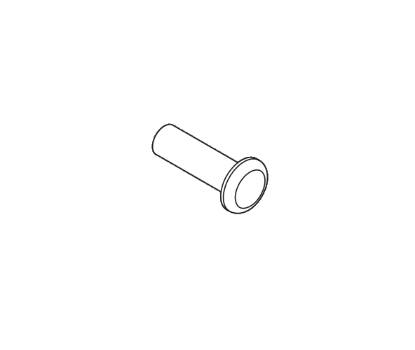
- Through bolting the armature is the normal method, which is why sex nuts sized for the door thickness are part of the parts list rather than an afterthought.
- Maglocks are fail safe by nature. Power holds them locked, so the design question is what else releases the door, not whether the lock releases.
- Door position monitoring belongs in the same installation. Without it the system knows it energised the magnet but not whether the door ever closed.
| Stage | What it covers | Most common mistake |
|---|---|---|
| Mechanical | Magnet, armature, brackets, fixings | Armature bolted rigid instead of floating |
| Electrical | Supply, voltage, routing into the door frame | Voltage drop over a long run |
| Egress and monitoring | Release devices and door position sensing | Monitoring left out entirely |
In This Guide
- What Does a Maglock Installation Involve?
- Where Does the Magnet Go and Where Does the Armature Go?
- How Is the Armature Fixed to the Door?
- What Power Does a Maglock Need?
- What Else Has to Be on the Door Before a Maglock Is Used?
- How Do You Monitor a Maglock Once It Is Fitted?
- Why Does My Maglock Not Hold Properly?
- What Changes on an Exterior Opening?
- What Should You Confirm Before Ordering a Maglock?
- About the Author
Maglock installation looks like the simplest job in electrified hardware. There is no latch, no strike cutout, no mortise pocket, and the two halves simply have to meet. That is exactly why it gets rushed, and why so many of them end up holding at a fraction of their rating.
This guide covers the mechanical mounting, the power side, the egress arrangements that have to accompany it, and the faults that follow from getting any of the three wrong.
What Does a Maglock Installation Involve?
Three separate pieces of work that have to be planned together.
The mechanical part is mounting the magnet to the frame and the armature to the door so that the two meet flat and square. The electrical part is delivering the correct voltage to the magnet continuously, because a maglock is only locked while it is energised. The third part is everything that lets people out, because a lock that holds by power needs a defined way of letting go.
Treating any of the three as a follow up job is where maglock installations go wrong. The egress arrangement in particular dictates what else goes on the door, and that is easier to design in than to retrofit.
Is a maglock different from an electric strike in installation terms?
Completely. An electric strike goes into the frame and leaves the door untouched. A maglock puts hardware on both the door and the frame, carries its load across the joint between them, and needs power running the whole time the door is locked. Our electric strikes guide covers the alternative where the door preparation is the deciding factor.
Where Does the Magnet Go and Where Does the Armature Go?
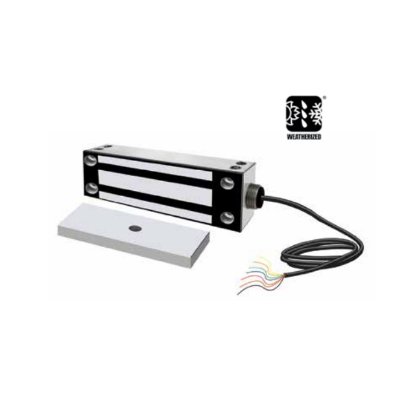
The magnet mounts on the frame, usually at the head on the stop side, and the armature mounts on the door so that it arrives against the magnet face when the door closes.
The reason that way round is practical. The magnet is the half that needs wiring, and the frame is the half that does not move. Putting the powered half on a swinging leaf means running conductors across the hinge line for no reason.
How accurately do the two faces need to meet?
Flat and fully in contact. A magnetic lock holds by surface contact, and anything that keeps the two faces apart reduces the hold disproportionately. A small gap, a layer of paint, a build up of dirt or a slight twist in the armature all take holding force away.
This is the single biggest difference between a maglock that performs to its rating and one that can be pulled open by hand. The parts are not usually at fault. The alignment is.
How Is the Armature Fixed to the Door?
Through the door, with the fixings sized for the door thickness, and with the armature left able to move slightly.
That last point surprises people. The armature is not meant to be rigid. It needs a small amount of float so it can settle flat against the magnet face even when the door does not present it perfectly square. Clamping it solid removes that ability and guarantees partial contact.
What holds the magnet to the frame?
A mounting pack sized for the installation, and on many openings a bracket. Not every frame presents a flat surface in the right place, and inward opening doors, glass doors and frameless arrangements all need brackets to put the magnet where it needs to be.
Mounting hardware is supplied as a kit for the same reason screw packs are supplied for locks. The fixings are part of the specification, not consumables from the van.

What Power Does a Maglock Need?
Continuous power, at the voltage the unit is listed for, delivered at the lock rather than at the panel.
Because a maglock is energised the whole time it is locked, its supply sizing is different from a fail secure electric strike that draws nothing until released. Every maglock on a system contributes continuously to the load, which matters most when the building is running on battery backup.
| Consideration | Why it matters |
|---|---|
| Continuous draw | The lock is energised whenever the door is secured |
| Voltage at the lock | Drop over the cable run reduces holding force |
| Battery backup sizing | Standby time is set by the total continuous load |
| Transfer into the door | Only needed if anything on the door is powered |
Does the installation need a power transfer?
Only if something on the moving leaf needs power. The magnet is on the frame, so a plain maglock does not. The moment an electrified lock, an exit device with latch retraction or a door mounted sensor joins the opening, conductors have to cross the hinge line, and that is a transfer job. Our power transfer guide covers the options.
What Else Has to Be on the Door Before a Maglock Is Used?
This is the part of a maglock installation that is not optional and not a hardware preference.
Codes treat electrically locked egress doors as a special case, because the lock has no mechanical release. The conditions typically attached include a manual release device on the egress side, release of the lock on loss of power, and release on activation of the fire alarm system. What is required on a specific opening is decided by the authority having jurisdiction.
The practical consequence for the installer is that a maglock is never a single product on a door. It arrives with a release arrangement, and the arrangement is as much part of the installation as the magnet.
Does a motion sensor count as the release?
Sometimes, within conditions, and never as the only element. A request to exit sensor above the door can form part of a designed release arrangement, but what is permitted varies and the sensor is one component of a solution rather than the solution itself. Our request to exit sensor guide covers how those units behave and where they are mounted.
Where a door needs to hold briefly before releasing, that is delayed egress, which is a separate function with its own conditions. Our delayed egress guide covers it.
How Do You Monitor a Maglock Once It Is Fitted?
With a door position switch, and ideally with bond monitoring from the lock itself where the unit offers it.
The distinction matters. The access control system knows it energised the magnet. It does not know whether the door actually closed, whether the armature made contact, or whether somebody has propped the leaf. A door position switch answers the first of those, and it is the component most often left out of a maglock installation. Our Wiegand 26 bit guide explains the format, wiring, limits and OSDP.
Flush or surface mounted switch?
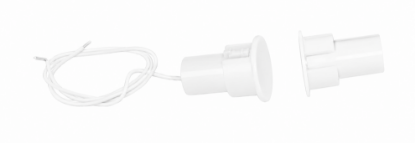
Flush where the door and frame can be drilled and the opening is interior and protected. Surface mounted where drilling is not practical, where the opening is exterior, or where a heavier duty unit is wanted on a door that takes abuse.
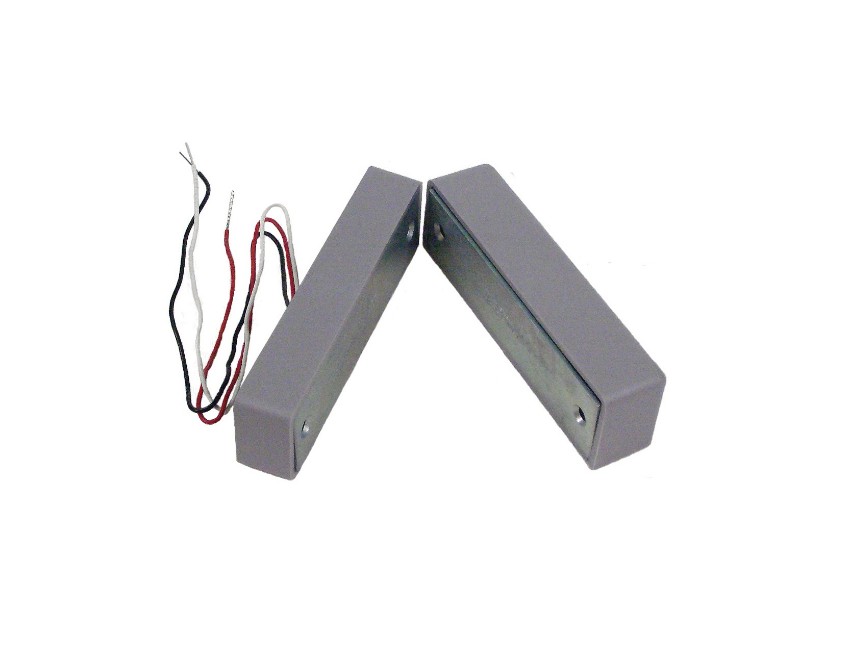
Our door position switch guide covers how the switch and the request to exit signal work together on a monitored opening.
Why Does My Maglock Not Hold Properly?
Nine times out of ten the answer is contact rather than current.
| Cause | How to confirm it | Fix |
|---|---|---|
| Armature not meeting flat | Marker transfer across the magnet face | Reset the armature float and alignment |
| Paint, dirt or corrosion on faces | Visual check of both faces | Clean back to bare metal contact |
| Armature clamped rigid | No movement at all when pushed by hand | Refit with the intended float |
| Voltage low at the lock | Measure at the lock, not the panel | Larger conductors or a closer supply |
| Door closing short of the magnet | Gap visible with the door shut | Closer adjustment or packing the magnet |
Working through that table in order resolves most complaints without replacing anything. A maglock is a simple device, and simple devices fail for mechanical reasons.
Can a maglock be mounted on a door with a closer?
It usually has to be, because the door needs to arrive at the magnet reliably. What matters is that the closer brings the leaf fully home. A door that stops a few millimetres short will energise the magnet with no contact at all, which looks like a lock failure and is a closer adjustment. Our door clearance guide covers the related measurements around the opening.
What Changes on an Exterior Opening?
Water, temperature and corrosion, all of which attack the contact surfaces that the lock depends on.
Weatherized units exist for exactly this reason. On an exterior door the magnet and armature faces are exposed to rain driven across them and to condensation forming on cold metal, and ordinary steel surfaces will discolour and eventually pit. That pitting reduces contact area, which reduces holding force.
Does an exterior maglock need different maintenance?
Yes, and it is simple. The faces want checking and cleaning periodically rather than after a complaint. A maglock on an exterior door that has not been looked at in three years is usually holding at well below its rating, and nobody will know until somebody pulls on it.
What Should You Confirm Before Ordering a Maglock?
Six things, and the first three come off the opening rather than the specification.
Whether the door is interior or exterior, because that decides weatherized or standard. The door thickness, because the through fixings are sized for it. Whether the door swings in or out, because that decides whether brackets are needed. The voltage available at the opening. Whether monitoring is required, and of what kind. And what the egress arrangement will be, because that is the part that has to be designed rather than ordered.
What if the opening already has an exit device?
Then the maglock may not be the right answer at all. A door that already latches mechanically and releases from the inside has most of what a maglock is being asked to provide, and adding one can complicate the egress picture rather than simplify it. For the full component breakdown of magnetic locks themselves, our electromagnetic lock parts guide covers what is supplied separately, and our fire rating guide covers what changes on a rated opening.
About the Author
Security Parts has supplied repair parts for commercial door hardware since 2001, covering Von Duprin, LCN, Schlage, Falcon, Detex and Adams Rite at the component level. Our diagram based lookup exists so a technician can confirm a part before ordering it. This guide was written by the Security Parts team from supplier documentation and the questions our customers bring us.