 Trusted Since 2001


Quick Summary
Key points
- Detex covers more ground than most people expect. Exit devices, exit alarms, delayed egress, exit control locks, power operators, power transfers and request to exit sensors all sit under the same brand.
- The family name is the thing to establish first. Value Series, Advantex and the exit control locks are different ranges with different parts, even where they do the same job on the door.
- A large part of the range is about controlling an exit rather than locking it. That is the thread connecting exit alarms, delayed egress and exit control locks.
- The electrified side, including operators, sensors and power transfers, is ordered as separate components, so a fault rarely means replacing the whole assembly.
- Part numbers are mostly numeric with a suffix, and the suffix routinely carries the configuration. Partial numbers are not enough to order from.
| Range | What it does | Typical opening |
|---|---|---|
| Value Series | Exit devices, exit alarms and delayed egress | Back of house and controlled exits |
| Advantex | Exit devices with integrated alarm and egress options | Openings needing device and alarm in one |
| Exit control locks | Surface mounted locks that alarm on use | Emergency only doors |
| Operators and activation | Low energy powered opening | Accessible entrances |
| Transfers and sensors | Power into the door, request to exit signalling | Any electrified opening |
In This Guide
- What Does Detex Make, and Where Does It Fit?
- Which Detex Family Is on Your Door?
- What Is the Value Series?
- What Is Advantex and How Does It Differ?
- What Are Exit Control Locks?
- What Detex Access and Egress Electronics Exist?
- Which Cylinders Do Detex Devices Take?
- How Do Detex Part Numbers Work?
- What Fails Most Often on Detex Hardware?
- How Do You Identify a Detex Part Before Ordering?
- About the Author
Detex parts enquiries usually arrive with a photograph and a number that does not quite match anything. The range is wide, the families overlap in what they do, and the same looking device can belong to two different series.
This guide is the map. It covers what each family is for, how to tell which one you are standing in front of, where the parts live, and what to confirm before ordering.
What Does Detex Make, and Where Does It Fit?
The common thread across the range is controlling an exit rather than simply locking a door.
Plenty of manufacturers make a device that lets people out. Detex is specified where the building also needs to know about it, delay it, alarm it or power it. That is why exit alarms, delayed egress and exit control locks sit alongside conventional exit devices in the same catalogue.
The second cluster is the electrified side of an opening: low energy operators, touchless activation, power transfers and request to exit sensors. Those turn up on accessible entrances and on access controlled doors regardless of what brand the lock is.
Does that affect how you order parts?
Yes, because it means a Detex part might be on a door with no other Detex hardware on it. A power transfer or a request to exit sensor is specified for the opening, not for the brand of the lock, so do not assume the family from the device next to it.
Which Detex Family Is on Your Door?
| What you see | Likely family | Next check |
|---|---|---|
| Exit device with an alarm module built into it | Advantex or Value Series | Series stamping under the cover |
| Surface mounted lock with an alarm on an emergency exit | Exit control lock | Whether it is two point or three point |
| Operator at the head of an accessible entrance | Powered operator range | Single, double or dual egress |
| Small sensor above the door inside | Request to exit sensor | Infrared or microwave |
| Unit in the door edge and frame carrying wires | Power transfer | Conductor count |
Where the device is an exit device rather than an alarm or an operator, the configuration still has to be settled: rim, surface vertical rod, concealed vertical rod or mortise. Our concealed vertical rod guide and rim exit device guide cover how to tell them apart.
What Is the Value Series?
The Value Series is a range covering exit devices and the alarm and egress functions built around them.
Within it you will find the V40 Series devices, an exit alarm range covering several model letters, and a delayed egress range. They share a design language and a parts approach, which is why identifying the series matters more than identifying the individual model at first.
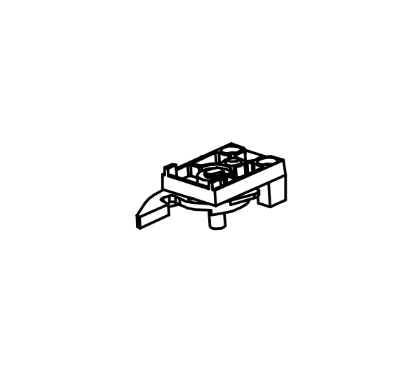
What does the exit alarm range do?
It sounds locally when the door is used. The door still opens immediately, which is the point: the alarm is there to tell the building the exit has been used, not to stop anyone leaving.
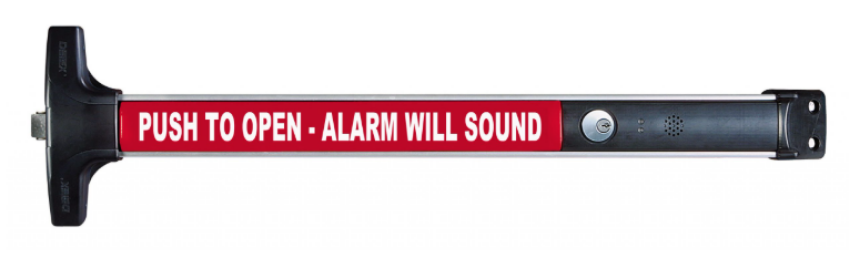
And the delayed egress range?
Delayed egress holds the door for a defined period after somebody pushes it, then releases. It is a code controlled function with conditions attached, including automatic release on alarm and on power loss, and it is not permitted on every door.
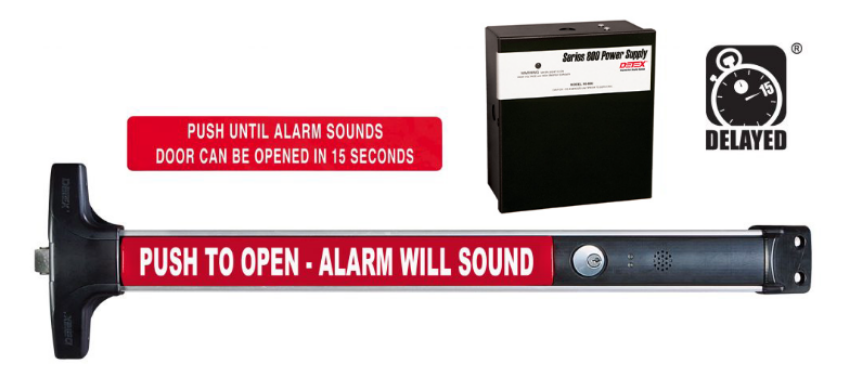
Our guide to delayed egress covers the rules, and what an exit alarm is covers the simpler case.
What Is Advantex and How Does It Differ?
Advantex is the range where the device and its electronics are designed together rather than bolted on, covering the 10 and 40 Series openings.
In parts terms that shows up as boards and dogging assemblies that are specific to the range and to the configuration. An Advantex dogging assembly for a mortise device is a different part from one for a surface vertical rod device, even on the same series.
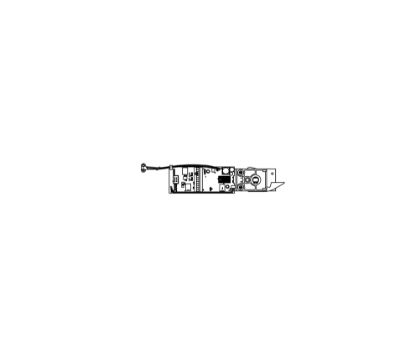
The electronic side is serviceable in its own right rather than being sealed into the device.
What Are Exit Control Locks?
Exit control locks are surface mounted units fitted to doors that exist for emergencies and should not be used routinely.
They secure the door and alarm when it is used, and the range includes two point and three point locking versions along with weatherized variants for exterior openings. The three point versions engage at more than one place on the door, which suits wider leaves and exposed positions.
The usual application is a fire exit at the back of a building that keeps being used as a shortcut. Our exit control lock parts guide covers the range at component level.
Do they stop people getting out?
No, and they must not. The door opens when it is pushed. What changes is that the building finds out, which is almost always the actual requirement behind the request.
What Detex Access and Egress Electronics Exist?
Four groups turn up repeatedly, and they are often specified on doors with no other Detex hardware.
Low energy powered operators for accessible entrances, in single, double and dual egress configurations. Touchless and wireless activation kits that go with them. Power transfers and energy transfer hinges that carry wiring from the frame into a moving leaf. And request to exit sensors, in both infrared and microwave versions.
Each of these is covered in its own guide: automatic door openers, electric hinges and power transfers, and request to exit sensors.
Which Cylinders Do Detex Devices Take?
Detex devices use cylinders like any other exit hardware, and the range includes its own mortise cylinders, rim cylinders and interchangeable core housings so a site can key the hardware into its existing system.
The decision is the same one you face on any device. A mortise cylinder drives a cam, a rim cylinder drives a tailpiece, and the device dictates which it takes. Interchangeable core housings are specified where the building wants to rotate keys without removing hardware from the door.
| Choice | Decided by | Why it matters |
|---|---|---|
| Mortise or rim cylinder | The device and where the cylinder sits | Cam against tailpiece, they do not interchange |
| Conventional or interchangeable core | The site key strategy | Decides how rekeying is done later |
| Keyway | The existing key system | Wrong keyway and existing keys will not enter |
| Keyed alike or keyed different | How many doors one key should open | Set at order time, awkward to change afterwards |
Should the device be keyed alike with the rest of the site?
Usually the answer depends on who holds the key rather than on the hardware. Emergency exits and plant doors are often deliberately on a restricted key that general staff do not carry, while a run of similar doors in one department is easier to manage keyed alike.
Our mortise cylinder and rim cylinder guide covers the mechanical side of that choice, and the keyed alike locks guide covers when to use one key across several doors.
How Do Detex Part Numbers Work?
Mostly numeric, often six digits, frequently with a suffix after a dash. The suffix is where the configuration lives, and it is the part people drop when writing a number down.
| Element | What it usually carries |
|---|---|
| Base number | The component family |
| Suffix after a dash | Configuration, variant or finish |
| Letter codes in model names | Function, such as alarm or delayed egress type |
| Series name in the description | Which range the part belongs to |
Two parts differing only in a suffix can be for completely different configurations, so copy the number in full including anything after the dash.
What Fails Most Often on Detex Hardware?
| Area | Typical failure | What to order |
|---|---|---|
| Exit device dogging | Worn mechanism or rounded hex socket | Dogging assembly for that series and configuration |
| Alarm and delayed egress | Board or battery | Board, supplied separately from the device |
| Vertical rod devices | Rod adjustment, worn latches, strike wear | Rods, latches or top and bottom strikes |
| Powered operators | Activation device before the operator | Prove the signal first, then the operator parts |
| Power transfers | Conductor fatigue in the moving route | Transfer unit, after confirming with the door open and closed |
| Request to exit sensors | Coverage drift or environmental triggering | Usually adjustment, not a new sensor |
The pattern across the electrified items is consistent: the device is usually fine and the thing feeding it is not. Prove power and signal before ordering electronics.
How Do You Identify a Detex Part Before Ordering?
Five pieces of information cover almost every order.
The range, from the stamping or the model plate. The configuration, read off the door rather than assumed. Whether the device includes alarm or delayed egress functions, because that changes the internal parts entirely. The handing, where it applies. And the finish, matched to the existing hardware.
On a device with electronics, add one more: whether the fault is mechanical or electronic, because that decides whether you are ordering a dogging assembly or a board.
Start from the Detex parts section, or the Detex exit alarm hardware parts guide if the device alarms. The exit alarm parts section and the parts by brand index cover the wider catalogue.
About the Author
Security Parts has supplied repair parts for commercial door hardware since 2001, covering Von Duprin, LCN, Schlage, Falcon, Detex and Adams Rite at the component level. Our diagram based lookup exists so a technician can confirm a part before ordering it. This guide was written by the Security Parts team from supplier documentation and the questions our customers bring us.
If the model plate has worn away and all you have is a shape, send a photograph of the device and the door through our contact page and we will narrow the range before you order.