 Trusted Since 2001





Quick Answer
Detex ECL parts cover the complete replacement component catalog for the ECL-230, ECL-230X, ECL-230D, and ECL-600 exit control lock family. Here is what you need to know before ordering:
- ECL-230X is the most common model. It accepts 2-point (TB) and 3-point (TDB) locking configurations and is the standard for most commercial installations.
- ECL-600 is the fire-rated variant. UL listed for fire door assemblies. Standard ECL-230 parts are not interchangeable with the ECL-600 on fire-rated doors.
- Weatherized (ECL-230X-W) is required for exterior applications. Standard ECL-230 devices are interior-rated only.
- The three most replaced internal components: ECL-1576-15 cam bridge assembly, ECL-306-1 bolt assembly, and ECL-243PH replacement mechanism assembly (complete internal kit).
- Delayed egress signs (ECL-395 series) are a code requirement, not an accessory. IBC Section 1010.2.9 and NFPA 101 Section 7.2.1.6 require posted signage at every delayed egress device.
- 59 ECL parts are stocked at Security Parts across all configurations, sign languages, and replacement categories.
Browse the complete exit alarms and exit control lock parts catalog at Security Parts. Call 845-935-0301 for pre-order compatibility support.
What the Detex ECL Family Covers
The Detex ECL is an exit control lock, not a standard exit device. It is specifically designed for delayed egress applications where an immediate free-egress device is not appropriate or code-permitted, but a completely locked door is also not allowed. The device holds the door latched for a timed delay (typically 15 seconds) when the bar is pushed, sounds a local alarm during the delay, and then releases automatically. It is not a panic device and is not a fire exit device in its standard configuration.
The ECL family is installed in commercial buildings across four primary application types: stairwells where wandering prevention is required (healthcare, memory care, behavioral health), parking structure pedestrian exits, utility corridors and mechanical room exits, and exterior building exits where egress control is needed without full lockdown.
For the broader code framework governing when delayed egress is permitted versus when free egress is required, see the panic hardware for commercial doors guide and the ANSI/BHMA door hardware standards guide.
ECL-230 Model Variants: Which One Do You Have?
Identifying the correct base model before ordering any Detex ECL replacement part is the critical first step. The ECL family has four models in active production, each with a different bar length, locking configuration, and application scope.
ECL-230X: Standard Commercial Exit Control Lock
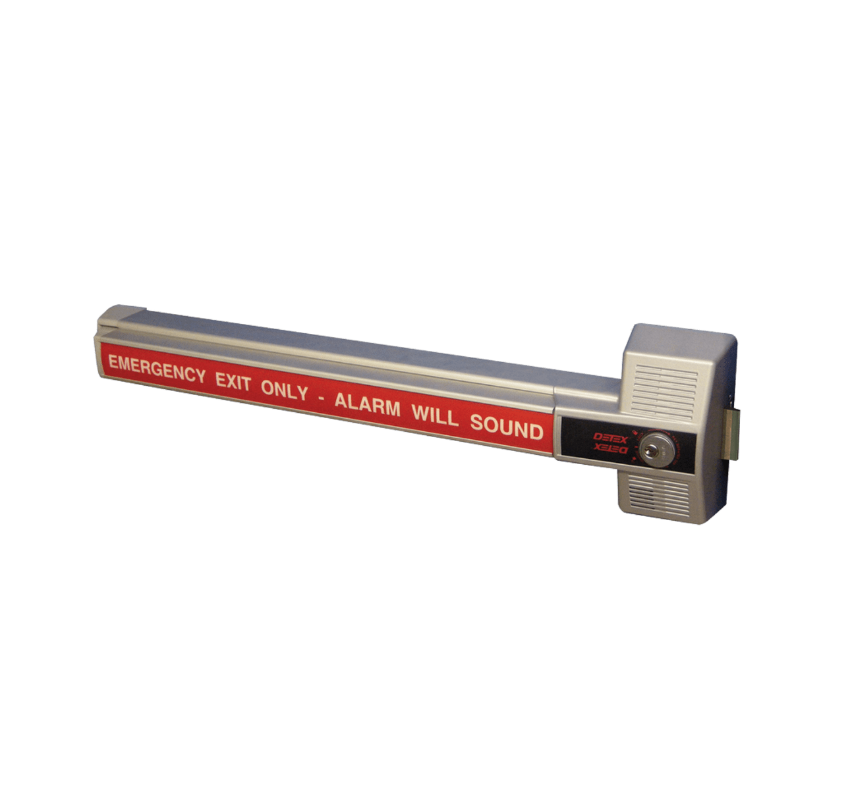
Detex ECL-230X exit control lock. View product page and order.
The ECL-230X is the most widely installed model in the ECL family. It accepts both 2-point locking (ECL-230X-TB) and 3-point locking (ECL-230X-TDB) configurations via top and bottom deadbolt engagement, and is available in weatherized versions (ECL-230X-W, ECL-230X-W-TB, ECL-230X-W-TDB) for exterior or moisture-exposed applications.
The suffix codes tell you the locking configuration:
- ECL-230X: Single-point locking (base model, interior)
- ECL-230X-TB: 2-point locking (top bolt only), interior
- ECL-230X-TDB: 3-point locking (top and bottom bolts), interior
- ECL-230X-W: Weatherized, single-point
- ECL-230X-W-TB: Weatherized, 2-point
- ECL-230X-W-TDB: Weatherized, 3-point
All ECL-230X configurations share the same core internal mechanism parts: the cam bridge assembly (ECL-1576-15), the bolt assembly (ECL-306-1), the detent lever (ECL-293A), and the detent spring (ECL-284). The replacement mechanism assembly (ECL-243PH) replaces all internal components as a complete kit.
ECL-230D: Double Door Exit Control Lock
The ECL-230D is the paired-door version, with a longer bar spanning both leaves of a double door opening. It uses the same internal mechanism as the ECL-230X but the bar assembly and strike hardware differ in length. The ECL-230D-PH is a variant with a long arm bar for wider double door applications.
ECL-600: Fire-Rated Exit Control Lock
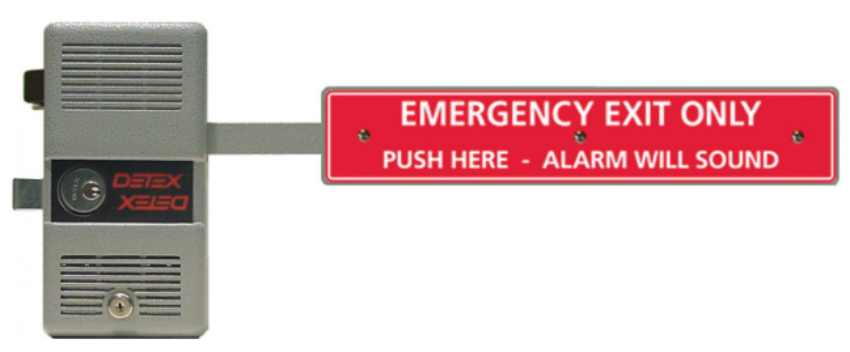
Detex ECL-600 fire-rated exit control lock. View product page and order.
The ECL-600 is UL listed for use on fire door assemblies under NFPA 80. It meets the positive latching requirement for fire doors while maintaining the delayed egress function. Standard ECL-230 parts are not interchangeable with the ECL-600 on fire-rated assemblies. If the ECL-600 requires service on a fire door, only fire-rated replacement parts sourced for that specific model should be used to maintain the UL listing. For fire door annual inspection requirements, see the NFPA 80 inspection guide and the commercial door fire rating guide.
Detex ECL Internal Mechanism Parts
The internal mechanism is where most field failures originate on high-cycle ECL installations. The cam bridge converts lever motion into bolt retraction. The bolt assembly is the primary locking element. On installations operating several hundred cycles per day (healthcare corridors, stairwell exits), both wear before other components.
Replacement Mechanism Assembly: ECL-243PH
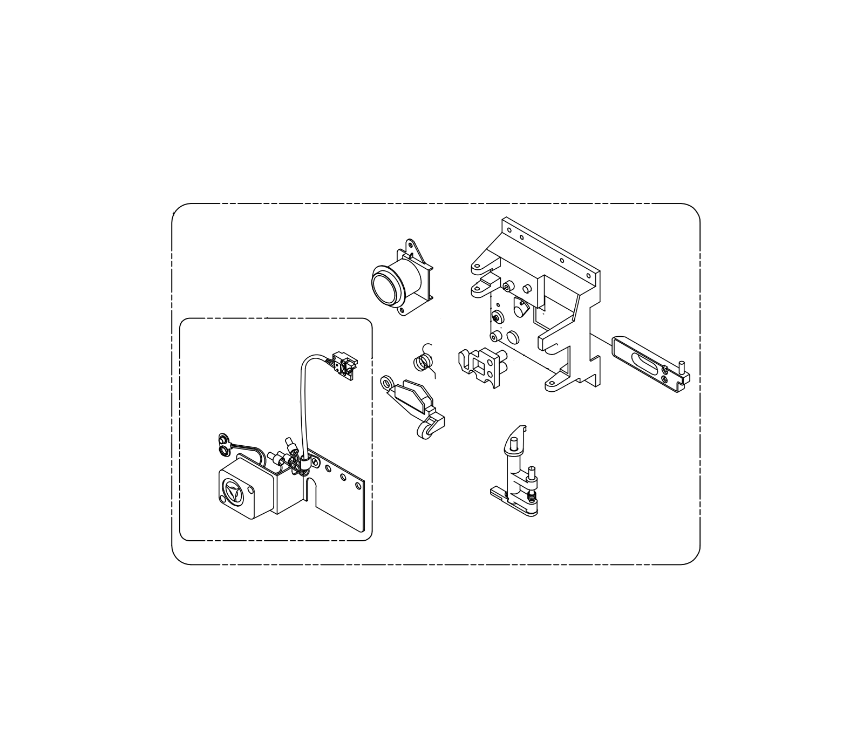
Detex ECL-243PH replacement mechanism assembly. View product page and order.
The ECL-243PH is the complete internal mechanism replacement for the ECL-230X and ECL-230D. It replaces the cam plate, cam bridge, detent assembly, and actuator components as a single kit. When a field diagnosis determines that multiple internal components have worn simultaneously, or when the failure mode is unclear, replacing the complete mechanism assembly is more cost-effective than sourcing individual components. This is the correct replacement for ECL-230X, ECL-230X-W, ECL-230X-TB, ECL-230X-TDB, and compatible ECL-230D configurations.
Individual Internal Components
When only one component has failed, individual replacement reduces cost and downtime. The most commonly replaced individual components are:
- ECL-1576-15 cam bridge assembly kit: The bridge that transmits lever depression to the bolt. Fails under high-cycle use when the cam surface wears. Replace when the lever depresses but the bolt does not fully retract.
- ECL-306-1 bolt assembly: The primary locking bolt. Replace when the bolt sticks in the engaged position or fails to return to the locked position after the delay cycle.
- ECL-293A detent lever: Holds the bolt in the locked position until the delay cycle completes. Replace when the device fails to hold the 15-second delay and releases immediately on bar depression.
- ECL-284 detent spring: Return spring for the detent lever. Replace when the detent lever returns sluggishly or not at all.
- ECL-285A cam plate (bottom): Bottom cam plate in the locking assembly. Replace in conjunction with the cam bridge on multi-component failures.
- ECL-1576-20 actuator and release lever kit: View the ECL-1576-20 product page. Replaces the actuator and release lever as a paired kit. Replace when the lever operates but the actuator does not engage the release mechanism correctly.
- ECL-204 switch assembly: View the ECL-204 product page. The electrical switch that triggers the alarm and initiates the delay timer. Replace when the alarm does not sound on bar depression.
Bar, Paddle, and Plate Components
The bar assembly is the highest-wear external component on ECL installations, particularly in applications with repeated unauthorized attempts or high foot traffic. Sixteen bar, paddle, and plate components are stocked across standard, long, and double-door configurations.
Paddle Bar Components
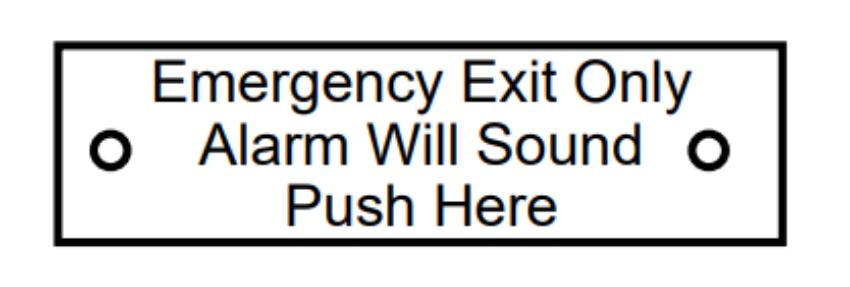
Detex ECL-2109-1 long paddle bar push plate. View product page and order.
- ECL-2109-1 long paddle bar push plate: The extended push plate for long-bar ECL configurations. Replace when the push surface is damaged, bent, or when the bar fails to engage the mechanism consistently.
- ECL-2109 exit bar plate: View the ECL-2109 product page. Standard exit bar plate for ECL-230X base configurations.
- ECL-2105 long arm bar: Extended arm bar for wide-door or double-door applications.
- ECL-332 short arm bar: Short arm bar for narrow-door or restricted-clearance applications.
- ECL-236 bar pin: The pivot pin for the bar assembly. Replace when the bar has excessive lateral play or wobble at the pivot point.
Exit Bar Plates by Language
The ECL-8220 series provides exit bar plates with multilingual "Push Until Alarm Sounds" instructions. Plates are stocked in English (ECL-8220-1), French-Canadian (ECL-8220-7), Spanish (ECL-8220-8), Chinese (ECL-8220-6 and ECL-8220-9). Replace when the instruction text has worn or when a building's occupant language profile requires a change from the installed plate.
Strike Kits and Hardware
Strike selection determines whether the bolt engages the frame correctly on each cycle. Incorrect or worn strikes are a common cause of incomplete bolt engagement on ECL installations.
- ECL-437K adjustable surface strike: The primary field-adjustable surface strike for ECL-230X and ECL-230D installations. Adjustable to accommodate minor frame misalignment without shimming.
- ECL-435K adjustable strike bracket: The mounting bracket for the ECL-437K strike. Replace when the bracket is bent or when frame clearance prevents correct strike positioning.
- ECL-439K mortise strike plate kit for ECL-230D: Mortise-style strike for ECL-230D double-door applications where a surface strike is not appropriate.
Cover, Shield, and Backplate Components
- ECL-355 cover: The protective cover over the ECL mechanism housing. Replace when damaged or when the cover no longer seats correctly after servicing.
- ECL-354AR back plate: The back plate that mounts the ECL to the door face. Replace when the back plate is bent or when the mounting holes are damaged.
- ECL-419 shield: Anti-vandalism shield for the bar and mechanism housing. Install on applications with documented vandalism risk.
- ECL-405-X cover lock key: The key for the cover lock that prevents unauthorized access to the mechanism housing. Order as the ECL-405-KIT for the complete cover lock key kit.
- ECL-354AR back plate: Rear mounting plate for ECL body-to-door attachment.
Outside Trim and Cylinder Components
- ECL-620 outside lever trim: The outside lever handle for ECL installations where outside entry is required. The ECL-620 provides lever-controlled outside entry without compromising the delayed egress function from inside.
- ECL-1595 standard cylinder collar: The cylinder collar for key cylinder integration. Replace when the collar is damaged or when a cylinder is being replaced on an existing installation.
- ECL-445K-7 keyed-alike rim cylinder: Seven-pack keyed-alike rim cylinders for installations where multiple ECL devices must be keyed to the same key.
Accessory Kits
- ECL-2111K siren/battery conversion kit: Converts an existing ECL installation to the current siren/battery configuration. Use when replacing the alarm module or upgrading an older device to current battery specifications.
- ECL-498K outside pull and warning sign kit: Combines an outside pull handle with a warning sign for applications where outside approach needs to communicate the delayed egress status to incoming users.
- ECL-475K decorative back plate kit: Trim kit for architectural applications where a finished appearance is required around the ECL body.
- ECL-2100K bar guard kit: Protective guard for the bar assembly. Install on applications with documented bar damage or vandalism risk.
- ECL-436K panic bar plate guard kit: Guard kit for the panic bar plate. Protects the push plate instruction text from wear and damage on high-cycle installations.
Delayed Egress Door Signs: Code Requirement, Not Accessory
The ECL-395 series of delayed egress door signs is a code requirement under IBC Section 1010.2.9 and NFPA 101 Section 7.2.1.6. Both codes require that a sign be posted on the door or the adjacent wall at delayed egress devices, informing occupants that the door will open in 15 seconds when the bar is pushed and the alarm is sounding.
Failure to post the required sign is a code violation independent of whether the device itself is functioning correctly. During NFPA 80 annual fire door inspections and local AHJ inspections, missing or damaged delayed egress signs are cited as a deficiency requiring immediate correction. For annual inspection requirements, see the NFPA 80 inspection guide.
Delayed egress signs are stocked in seven language versions:
| Part Number | Language | Format |
|---|---|---|
| ECL-395-1 | English | Standard delayed egress door sign |
| ECL-395 | English | Alternate format |
| ECL-395-2 / ECL-395-3 | French-Canadian | Two format options |
| ECL-395-4 | Spanish | Delayed egress door sign |
| ECL-395-6 / ECL-395-7 | French | Two format options |
| ECL-395-8 / ECL-395-9 | German | Two format options |
| ECL-395-10 / ECL-395-11 | Chinese | Two format options |
| ECL-395-12 / ECL-395-13 | English/European | Two format options |
When to Replace vs When to Replace the Complete Device
Most field failures on ECL-230X installations can be resolved with individual or mechanism assembly replacement rather than a full device swap. The decision depends on which components have failed and the age of the installation.
- Replace individual components when the failure is isolated to a single part (detent spring, bolt assembly, cam bridge, switch assembly) and the device is within its service life.
- Replace the mechanism assembly (ECL-243PH) when multiple internal components have worn simultaneously or when the failure mode is ambiguous after inspecting individual parts.
- Replace the complete device when the housing is damaged beyond cosmetic repair, when the device is more than 15 years old with no service history, when the locking configuration needs to change (single-point to 3-point), or when weatherized status is being added to a previously interior-rated installation.
For guidance on OEM versus aftermarket parts compatibility on exit control locks, see the OEM vs aftermarket commercial door hardware guide. For a broader maintenance and inspection schedule, see the commercial door hardware maintenance checklist.
Applications by Building Type
The Detex ECL is most commonly specified in the following building types. Each application has specific configuration requirements that determine which parts are needed:
| Building Type | Typical ECL Application | Configuration Note |
|---|---|---|
| Healthcare | Memory care and behavioral health stairwells, elopement prevention | Interior ECL-230X, high-cycle mechanism parts |
| Government buildings | Restricted stairwell access, utility exits | ECL-600 where fire-rated; ECL-445K-7 keyed-alike cylinders |
| Parking garages | Pedestrian exits from parking structure to street | Weatherized ECL-230X-W configurations required |
| Warehouses and industrial | Loading dock personnel exits, restricted access | Weatherized where exposed; bar guard kit for forklift proximity |
| Universities | Dormitory secondary exits, restricted building access | ECL-8220 exit bar plates in multilingual buildings |
Source Detex ECL Parts at Security Parts
Security Parts stocks all 59 Detex ECL parts across the ECL-230X, ECL-230D, ECL-600, and ECL-230X-W families. The catalog includes complete replacement devices, the ECL-243PH mechanism assembly kit, all individual internal components, bar and paddle assemblies, strike kits, delayed egress signs in seven languages, cylinder and trim options, and accessory kits for vandalism protection and alarm conversion.
For the full exit control lock and exit alarm parts catalog, see the exit alarms parts and diagrams guide. For broader exit device parts coverage, see the exit devices parts guide and the commercial exit device parts guide.
For life safety hardware guidance by building type, see the guides for healthcare, government buildings, parking garages, warehouses and industrial, and universities and colleges.
For access control integration with delayed egress devices, see the access control and commercial door hardware integration guide.
Same-day shipping on stocked components. Call 845-935-0301 for pre-order compatibility support on Detex ECL parts before your order is placed.
About the Author
This guide was written by the Security Parts team, a commercial door hardware specialist serving locksmiths, facilities managers, general contractors, and access control integrators since 2001. Security Parts stocks the complete Detex ECL parts catalog across all ECL-230X, ECL-230D, ECL-600, and weatherized configurations, with same-day shipping on stocked components and pre-order compatibility support at 845-935-0301.