 Trusted Since 2001


Quick Summary
Key points
- The LCN 1461 is a surface mounted door closer, and most of its service parts are listed under the 1460 family.
- The cylinder assembly is the part that carries the spring and the hydraulics, so it is what gets replaced when a closer fails.
- A delayed action version of the cylinder exists, and it is not interchangeable with the standard one in behaviour.
- Track arm versions carry their own cylinder part number, so the arm type has to be identified before ordering.
- Covers, brackets and arms are ordered separately, which makes the exact model stamp the most useful thing you can record.
| Symptom | Part involved | Confirm first |
|---|---|---|
| Oil on the door or the unit | Cylinder assembly | Standard, delayed or track version |
| Valves make no difference | Cylinder assembly | Fluid loss at the shaft |
| Door closes too fast or too slow | Valves on the cylinder | Whether the unit still responds |
| Unit loose on the door or frame | Mounting bracket or fixings | Mounting type and condition |
| Cover damaged or missing | Cover | Family and finish |
In This Guide
- What Is the LCN 1461?
- What Does the Cylinder Assembly Actually Do?
- What Does the Delayed Action Version Change?
- How Does the Track Arm Version Differ?
- Are Covers and Brackets Serviceable?
- Does the Replacement Have to Match the Size?
- How Do You Identify the Unit on Site?
- What Should Be Checked After Fitting a New Cylinder?
- What Keeps a 1461 Working Longer?
- About the Author
When an LCN 1461 needs attention, the question is almost always which part rather than whether the closer can be repaired. These units are built to be serviced, and the parts are listed at component level for exactly that reason.
This guide covers how the 1461 is put together, what the cylinder assembly does, how the delayed action and track arm versions change the part number, which pieces are ordered separately, and what to record before ordering.
What Is the LCN 1461?
A surface mounted hydraulic door closer, fitted to the face of the door or the frame rather than concealed inside either.
Surface mounting is what makes these units practical to maintain. The body is accessible, the valves are reachable once the cover is off, and the arm can be inspected without taking the door down. A concealed closer offers a cleaner appearance and almost none of that convenience.
The mechanism itself is the same principle used across surface closers: a spring stores the energy of the door being opened, and hydraulic fluid metered through valves controls how that energy is released. Our hydraulic door closer guide covers how that works in detail.
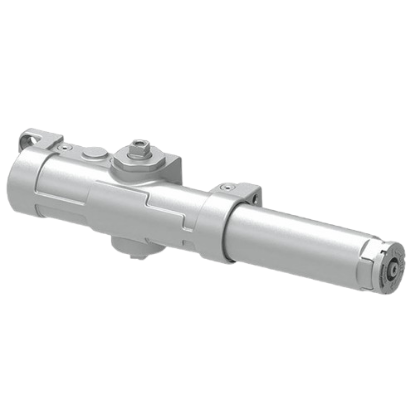
Why are parts listed under 1460 as well as 1461?
Because the 1461 sits within a wider family, and components shared across that family are listed to the family rather than to one model. Covers and brackets are the usual examples. The cylinder, which is specific to the unit, keeps its own number.
What Does the Cylinder Assembly Actually Do?
Everything that makes the closer a closer.
Inside the cylinder are the spring that drives the door shut and the hydraulic circuit that controls the speed of the swing. The valves you adjust from the end of the unit meter fluid inside that circuit. The arm, the cover and the bracket all attach to it, but none of them generate or control force.
This is why a closer that has lost fluid is not repairable in the field. The valves still turn, but there is nothing for them to meter, so adjusting them changes nothing. Our guide to a closer leaking oil covers how to confirm that diagnosis.
How do you tell a failed cylinder from a setup problem?
By whether the valves do anything. Turn the sweep valve a quarter turn and watch the door. A healthy unit responds immediately, even if the setting is wrong. A unit that does not respond at all has lost the fluid the valve depends on, and no setting will bring the behaviour back. Our closer adjustment guide covers what each valve controls.
What Does the Delayed Action Version Change?
It adds a hold back near the start of the closing cycle, so the door stays near open for a few seconds before it begins to close.
That delay matters on openings used by people who need more time to get through: doors into stores and stockrooms where somebody is carrying something, doors used with trolleys, and doors where the approach is awkward. It is a usability feature rather than a safety one.
The important ordering point is that it is built into the cylinder. A standard cylinder cannot be adjusted into a delayed one, and a delayed cylinder fitted where a standard was expected produces a door that appears to hang open and gets reported as a fault.
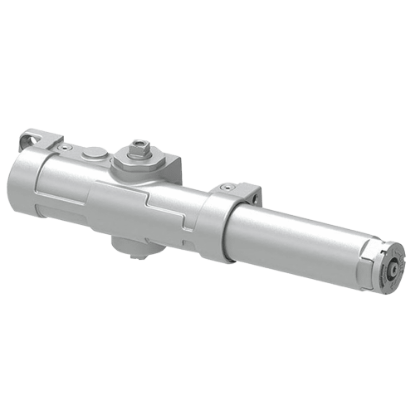
Can delayed action be added to an existing closer?
Only by changing the cylinder for the delayed version, because the function lives inside it. There is no external adjustment that produces the same behaviour, and winding the sweep valve down to imitate it simply makes the whole closing cycle slow, which is a different problem.
How Does the Track Arm Version Differ?
The arm runs in a track on the frame rather than folding at a knuckle, which changes both the look of the installation and the part numbers behind it.
Track arm closers present a much slimmer profile at the head of the door, which is why they appear on openings where appearance matters. The trade off is that the geometry is different, and the cylinder is listed separately because of it.
For ordering purposes, this means the arm type has to be identified before the cylinder is chosen. The two cylinders look similar in a listing and are not interchangeable in service.
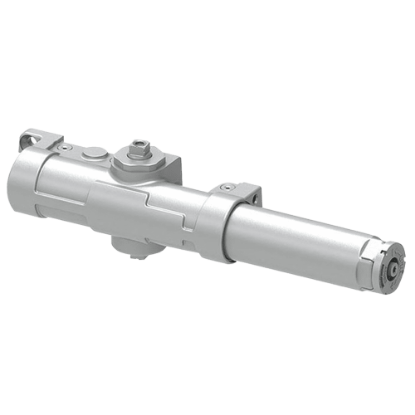
How do you tell which arm you have?
Look at the head of the door. A folding arm has two visible sections with a joint between them and projects away from the door when closed. A track arm runs into a channel fixed to the frame and sits almost flat. Our parallel arm guide covers the mounting arrangements the folding arm appears in.
Are Covers and Brackets Serviceable?
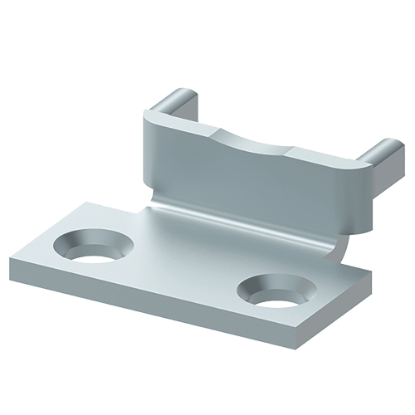
Yes, and they are among the most frequently ordered items because they are the parts that get knocked.
The cover protects the valves and keeps dust out of the mechanism. A missing cover does not stop the closer working but does shorten its life, and it exposes the adjusters to anybody who fancies a go at them, which is its own category of callout.
Brackets matter more than they look. They hold the geometry that determines how much force reaches the door, so a bracket that has worked loose produces a door that has lost closing authority without anything being wrong inside the cylinder.
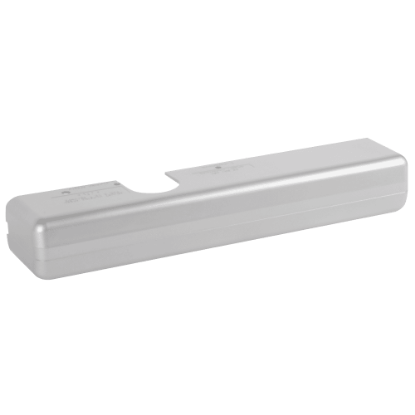
Does the cover affect the adjustment?
Not the setting, but it affects whether the setting stays. An exposed valve is an invitation, and a door that mysteriously changes behaviour every few weeks on a busy site usually has a missing cover and a helpful passer by.
Does the Replacement Have to Match the Size?
It has to suit the door, which is not always the same as matching what is currently fitted.
Closer size is matched to door width, weight and exposure. If the existing unit has been struggling for years, replacing it with the same thing reproduces the problem. If the door was changed for a heavier leaf at some point and the closer was reused, the current unit may always have been undersized.
Check whether the door latches reliably from a shallow angle before ordering a like for like replacement. Our closer sizing guide covers matching a unit to an opening, and our guide to a door not closing fully covers diagnosing the symptom first.
| Question | Why it matters |
|---|---|
| Did the door latch reliably before? | A no suggests the size was wrong |
| Has the leaf been changed? | A heavier door needs more force |
| Is the door exterior? | Wind pressure adds load |
| Is opening force a concern? | Accessible openings have limits |
| Is the spring adjustable? | Range may solve it without a swap |
What if opening force is already too high?
Then raising spring tension is the wrong answer even if it would cure the latching. Deal with friction on the opening first, because reducing what the closer has to overcome helps both problems at once. Our door clearance guide covers the limits that apply.
How Do You Identify the Unit on Site?
From the stamp on the body, which is usually visible once the cover is off.
Record the model, the arm type, the mounting position and the finish. Those four together narrow a parts lookup to one answer. Without them the lookup produces a shortlist and the shortlist produces a second visit.
Photograph the unit with the cover off, the arm at the head of the door, and the bracket where it meets the frame. Three pictures take a minute and answer most of the questions a parts lookup will raise. Our LCN closer parts guide covers how the components are listed.
| Detail | Where to find it |
|---|---|
| Model stamp | Closer body, under the cover |
| Arm type | Head of the door |
| Mounting position | Which face the unit sits on |
| Finish | Compare with adjacent hardware |
| Delayed action or not | Watch the door from full open |
What if the stamp is unreadable?
Measure and photograph. Body length, the shape of the cover, the arm type and the mounting position are usually enough to identify the family, and the family narrows the cylinder options to a small number.
What Should Be Checked After Fitting a New Cylinder?
The things that are easy to set and easy to forget.
Set the arm preload so the forearm sits correctly against the door when closed, then set sweep, then latch, then any backcheck the unit has. Test from full open, from ninety degrees and from thirty degrees, and check that the door latches unaided from all three.
Thirty degrees is the test that matters. A door that latches from wide open and not from a shallow angle has not been set correctly, whatever the other two tests suggested. Our closer installation guide covers the sequence.
Why does the arm preload get missed?
Because the door works without it. A closer with the arm set wrongly still opens and closes, just with less force arriving at the end of the swing, so the fault does not appear until somebody tests from a shallow angle or until the weather changes.
What Keeps a 1461 Working Longer?
Attention to the opening rather than to the closer.
Most closers that fail early were working against something: stiff seals, worn hinges, a leaf that catches the frame, a strike slightly out of line. Every one of those makes the unit work harder than it was sized for, and the cylinder pays for it.
Check the hinges, the seals, the strike alignment and the floor clearance when the closer is serviced rather than only when it fails. Our maintenance checklist covers the whole opening, and our closer parts diagram covers how the components relate.
How often should the valves be checked?
Once or twice a year on an ordinary opening, and more on an exterior door, because seasonal temperature change affects fluid viscosity and seal stiffness together. A closer set perfectly in August is often slightly out by January.
About the Author
Security Parts has supplied repair parts for commercial door hardware since 2001, covering Von Duprin, LCN, Schlage, Falcon, Detex and Adams Rite at the component level. Our diagram based lookup exists so a technician can confirm a part before ordering it. This guide was written by the Security Parts team from supplier documentation and the questions our customers bring us.