 Trusted Since 2001


Quick Summary
Key points
- A parallel arm door closer mounts on the push side of the door with the arm folded back against the face of the leaf, instead of projecting out into the opening.
- It is a mounting position, not a different closer. The same closer body is usually capable of regular arm, top jamb and parallel arm mounting with different arms and brackets.
- Parallel arm geometry is the least efficient of the three, so the same door normally needs a higher spring setting on parallel arm than it would on regular arm.
- The shoe is the part that defines a parallel arm installation, and it is also where the stop functions live on cush and stop arm variants.
- Most parallel arm complaints are the arm, the shoe or the mounting plate, not the closer body. Those are all separately stocked parts.
| Mounting | Closer body sits on | Side of the door | Arm position when closed |
|---|---|---|---|
| Regular arm | The door | Pull side | Projects out from the door |
| Top jamb | The frame | Push side | Projects out from the frame |
| Parallel arm | The door | Push side | Folded back flat against the door |
In This Guide
- What Is a Parallel Arm Door Closer?
- Parallel Arm, Regular Arm or Top Jamb: How Do the Three Mountings Differ?
- Why Does Parallel Arm Mounting Need More Spring Power?
- When Should You Choose Parallel Arm?
- What Is the Shoe and Why Does It Matter?
- What Are Cush-N-Stop and Stop Arms?
- What Is an Extra Duty Arm and When Do You Need One?
- Do You Need a Mounting Plate or Bracket?
- What Goes Wrong With Parallel Arm Installations?
- What Do You Need to Confirm Before Ordering an Arm?
- About the Author
Parallel arm is the mounting most people have seen the most and named the least. It is the flat looking arm tucked up against the door face in corridors, schools and hospitals, chosen because nothing sticks out into the space where people walk.
This guide covers how parallel arm mounting differs from the alternatives, why it changes the spring size you need, what the shoe is doing, and which parts to order when something on the arm side fails.
What Is a Parallel Arm Door Closer?
A parallel arm door closer is a surface closer mounted on the push side of the door, with the closer body fixed to the door leaf and the arm running back parallel to the face of the door to a shoe mounted on the underside of the frame head.
The name describes the arm, not the closer. When the door is closed, the arm lies flat along the door rather than standing out at an angle, which is the whole point of the arrangement.
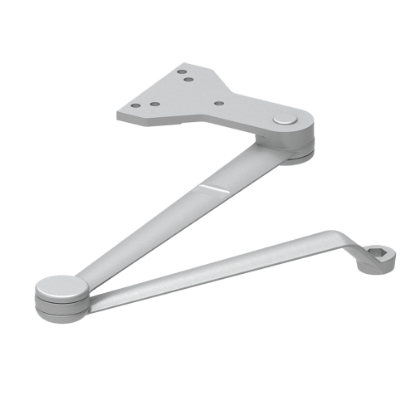
Almost every common surface closer can be mounted in all three positions. What changes is the arm, the shoe and sometimes a bracket or plate, so converting a door from one mounting to another rarely means a new closer.
Parallel Arm, Regular Arm or Top Jamb: How Do the Three Mountings Differ?
The differences come down to which side of the door the closer lives on and where the load is transferred.
Regular arm puts the closer on the pull side of the door, with the arm reaching up to the soffit of the frame. It is the most mechanically efficient arrangement, and it is the one where the arm is most exposed, because it projects out from the door.
Top jamb puts the closer on the frame rather than the door, on the push side. It is used where the door leaf cannot take the closer body, for example on a narrow stile aluminium door, or where the door is a pair of glazed leaves.
Parallel arm puts the closer on the door on the push side, with the arm folded back. It gives the cleanest result in a corridor and it protects the arm, at the cost of efficiency.
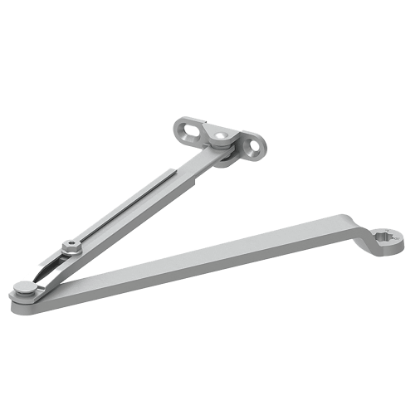
Why Does Parallel Arm Mounting Need More Spring Power?
This is the part that surprises people. A door that works perfectly on regular arm mounting can feel weak and fail to latch when the same closer is moved to parallel arm.
The reason is leverage. In parallel arm mounting the arm works at a less favourable angle through most of the swing, so less of the closer spring energy reaches the door as closing force. The closer has not changed. The geometry has.
In practical terms that means you plan for a higher spring setting on a parallel arm installation than you would on the same door with regular arm mounting, and you check that the door still latches under the conditions it actually sees.
| Factor | Effect of parallel arm mounting |
|---|---|
| Closing efficiency | Lowest of the three mountings |
| Spring setting needed | Typically higher than regular arm for the same door |
| Opening force felt by the user | Rises with the spring setting, which can conflict with accessibility limits |
| Arm exposure to damage | Lowest of the three mountings |
| Appearance in a corridor | Cleanest of the three mountings |
That third row is the tension to be aware of. Accessible openings cap the force needed to open an interior hinged door, and parallel arm mounting pushes the spring setting the other way. Where both requirements bite, the answer is usually a correctly sized closer rather than a compromise, and sometimes a power operator. Our closer sizing guide covers how the sizes map to door width and weight.
When Should You Choose Parallel Arm?
Four situations point strongly at parallel arm mounting.
The door opens into a circulation route. A projecting arm in a corridor is both a snag hazard and something people walk into, so folding it flat against the door removes the problem.
The opening sees abuse. Schools, hospitals, back of house areas and anywhere trolleys pass through all shorten the life of an exposed arm. A parallel arm sits out of the way.
The appearance matters. On a visible entrance the flat profile reads as tidier than an arm standing out at an angle.
A stop is needed and there is no room for a separate overhead stop. Parallel arm shoes are available with stop functions built in, which solves two problems with one part.
What Is the Shoe and Why Does It Matter?
The shoe is the bracket that fixes to the underside of the frame head and receives the forearm of the closer arm. On a parallel arm installation it is the part that makes the mounting what it is.
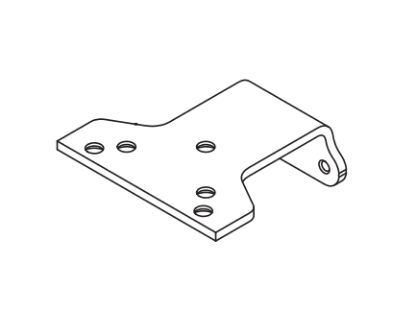
Two things follow from that. First, the shoe is a separate part, so a damaged shoe does not mean a new closer or even a new arm. Second, shoes are not universal, so the closer series has to be identified before ordering.
The shoe is also what carries the stop function on the variants that have one. The arm pushes against a built in stop inside the shoe at the end of the opening swing, so the shoe is doing structural work as well as locating the arm.
What Are Cush-N-Stop and Stop Arms?
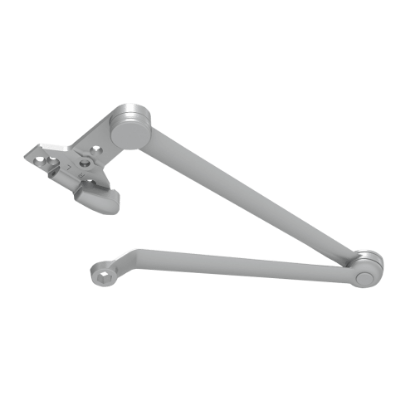
These are parallel arm variants with a stop built into the shoe, so the door is prevented from opening past a set angle without a separate overhead stop or a floor stop.
A plain stop arm provides a hard stop. A cush arm cushions the end of the swing rather than stopping it abruptly. A spring cush arm adds a spring to absorb the energy of a door that is thrown open, which is the version specified where abuse is expected.
| Variant | What it does | Where it suits |
|---|---|---|
| Plain parallel arm | No stop, needs a separate overhead or floor stop if one is required | Openings with an existing stop, or where the wall stops the door |
| Stop arm | Hard stop built into the shoe | Where the swing must be limited and traffic is moderate |
| Cush arm | Cushioned stop | Where a hard stop would jar the door and frame |
| Spring cush arm | Cushioned stop with a spring to absorb abuse | Schools, hospitals, high traffic and abusive openings |
One caution. A stop built into the arm transfers the force of a door being thrown open into the closer and into its fixings. On a genuinely abusive opening a separate overhead stop alongside a plain arm is often the longer lasting arrangement.
What Is an Extra Duty Arm and When Do You Need One?
An extra duty arm is a heavier parallel arm built for openings where a standard arm will not survive. It is the answer to doors that get kicked, propped, pulled and generally mistreated.
The clue that you need one is the failure history. If the same opening has had arms replaced more than once, the fix is not another standard arm, it is a heavier one, and probably a look at whether the door has a stop at all.
Extra duty arms and stop arm variants are often specified together on the worst openings, because an abused door usually has both an arm problem and a swing control problem.
Do You Need a Mounting Plate or Bracket?
Often, yes, and it is the part most frequently left off an order.
A parallel arm installation sometimes needs a mounting plate to give the closer body something to fix to, particularly where the door construction will not take the fixings directly, or where an existing fixing pattern does not match the new closer.
Drop plates and brackets solve the related problem of frames with a narrow soffit, or doors with glazing stops in the way. These are stocked separately and are series specific like the shoe.
The practical rule when replacing a closer on an existing door is to confirm what is currently fixed to the door and frame before ordering, because the old plate may not suit the new closer and discovering that on site costs a return visit.
What Goes Wrong With Parallel Arm Installations?
| Symptom | Likely cause | What to check |
|---|---|---|
| Door does not latch | Spring setting too low for parallel arm geometry | Spring power, then latch speed, then the strike |
| Arm bent or distorted | Door forced past its intended swing | Whether the opening has any stop at all |
| Shoe pulling away from the frame | Fixings into a weak substrate, or a stop arm taking abuse | Frame condition behind the shoe |
| Closer body loose on the door | Missing or incorrect mounting plate | What the closer is actually fixed to |
| Door opens too far and hits the wall | Plain arm with no stop, and no overhead stop fitted | Whether a stop arm variant is the right answer |
| Oil visible around the closer | Closer body failing, unrelated to the arm | The cylinder assembly rather than the arm parts |
The useful habit is to separate arm side problems from closer body problems before ordering anything. An arm, a shoe and a plate are inexpensive parts to change. Our LCN door closer parts guide breaks the assemblies down, and the guide to the four main types of commercial door closer covers where surface closers sit overall.
What Do You Need to Confirm Before Ordering an Arm?
| Information | Where you get it | What it decides |
|---|---|---|
| Closer series | Stamping on the closer body or under the cover | Arm, shoe and plate are all series specific |
| Mounting position | Which side of the door, and what the arm attaches to | Whether you need a parallel, regular or top jamb arm |
| Stop function needed | Whether a separate stop exists on the opening | Plain, stop, cush or spring cush arm |
| Degree of swing | What the opening physically allows | Stop arms are specified by swing angle |
| Finish | Existing hardware on the door | Carried in the part number |
If the closer is being replaced rather than repaired, confirm the size as well. Our LCN closer selection guide covers choosing the unit, installing a commercial door closer covers fitting it, and the door closer parts section covers the components.
About the Author
Security Parts has supplied repair parts for commercial door hardware since 2001, covering Von Duprin, LCN, Schlage, Falcon, Detex and Adams Rite at the component level. Our diagram based lookup exists so a technician can confirm a part before ordering it. This guide was written by the Security Parts team from supplier documentation and the questions our customers bring us.
To match an arm to the closer you already have, browse LCN parts or the door closer parts section, or contact us with the series stamping and we will confirm the arm, shoe and plate together.