 Trusted Since 2001


Quick Summary
Key points
- A door closer leaking oil is a sealed unit that has failed. The fluid is what provides the control, and once it is escaping the control goes with it.
- Topping a closer up is not an option. The body is not serviceable in the field, and there is no filling point on a commercial surface closer.
- The leak usually shows at the shaft, at the joint between body and cover, or as a film on the door face below the unit.
- Replace the cylinder or the whole closer. Arms, covers and fixings are separate parts, so a sound arm can often stay.
- On a fire rated door a leaking closer is urgent, because a door that no longer closes and latches reliably is not performing its function.
| Where you see it | Likely source | What it tells you |
|---|---|---|
| Film on the door face below the unit | Shaft or body seal | Leak has been running a while |
| Inside the cover when removed | Body or valve seals | Caught early, control may still be partly intact |
| Around the pinion shaft | Shaft seal | Classic wear failure on a high cycle door |
| At the arm end of the body | End seal or damage | Often follows an impact or a forced door |
| On the floor under the opening | Advanced loss | Closer is close to no control at all |
In This Guide
- What Is the Oil in a Door Closer Doing?
- Where Does a Door Closer Usually Leak From?
- What Does a Leaking Closer Feel Like Before You See It?
- Why Is a Leaking Closer Urgent on a Fire Door?
- Can a Leaking Closer Be Topped Up or Resealed?
- What Gets Replaced and What Can Stay?
- Why Did This Closer Fail Early?
- How Do You Deal With the Oil That Has Already Escaped?
- About the Author
A door closer leaking oil is one of the few hardware faults that announces itself before it stops the door working. There is a smear on the paintwork, then a film on the leaf, and then one day the door swings shut on its own momentum.
This guide covers why these units leak, what the oil is actually doing inside, why topping up is not possible, how to tell a leak from a stain, and what gets replaced.
What Is the Oil in a Door Closer Doing?
It is the control. Everything you feel in a well behaved door comes from fluid being pushed through small passages.
Inside the closer body a spring is compressed as the door opens. On the way shut that spring pushes a piston back, and the piston has to move fluid from one side of itself to the other. The route the fluid takes runs through valves, and the size of those openings is what sets how fast each part of the swing happens. Sweep speed, latch speed, backcheck and delayed action are all the same mechanism with different passages.
Take the fluid away and the spring is still there, but nothing is restraining it. The door closes at whatever speed the spring and the door weight produce, which is why a leaking closer eventually becomes a slamming door. Our hydraulic door closer guide covers how the internals are arranged.
Why can you not just top it up?
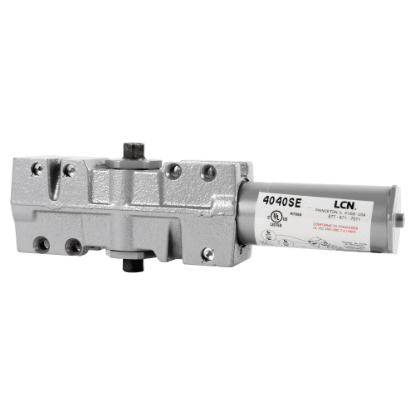
Because there is nowhere to put it and nothing holding it in. A commercial surface closer is assembled and filled at the factory and sealed. There is no filling plug, and the valves on the outside are adjusters, not access points. Even if fluid could be introduced, the seal that let the original escape would let the new fluid out as well.
Where Does a Door Closer Usually Leak From?
Three places, and each has a different story behind it.
The pinion shaft is the most common. It is the only part of the sealed body that has to rotate, and the seal around it works every cycle. On a high traffic door that is tens of thousands of movements a year, and seals wear.
The second is the body joint or end cap, where two parts of the housing meet. The third is damage: a struck closer, a door forced past its stop, or an arm levered against the body can crack a housing or distort a joint enough to let fluid past.
| Location | Typical cause | Is the closer recoverable? |
|---|---|---|
| Pinion shaft | Seal wear from cycles | No, but the arm and fixings usually are |
| Body joint | Age or distortion | No |
| End of body | Impact or forced door | No, and check the arm for damage too |
| Around a valve | Over travelled adjuster | No, the valve is not a serviceable seal |
| Nowhere, stain only | Old leak already replaced, or another source | Nothing to fix on the closer |
How do you confirm it is the closer and not something else?
Clean the area thoroughly, dry it, and look again after a day of normal use. Hinges, overhead stops and operators all sit near a closer and can leave their own stains. A genuine closer leak returns to the same spot and spreads downwards from it. A stain that never comes back was historic.
What Does a Leaking Closer Feel Like Before You See It?
The door changes behaviour, usually at one end of the swing first.
Early fluid loss often shows as a door that closes normally for most of its travel and then arrives too quickly in the last few inches, because the latch passage is the smallest and the first to lose its effect. Later the whole swing speeds up. On a door with backcheck, the resistance near full open fades, and the door starts hitting the wall or the stop.
Users describe it as the closer needing adjustment. Turning the valves at that point produces little or no change, which is itself a diagnostic: a closer that no longer responds to its own adjusters has usually lost the fluid those adjusters work on. Our closer adjustment guide covers what those valves should do on a healthy unit.
Could it be adjustment rather than a leak?
It can, and the test takes a minute. Make a small change to the sweep valve, no more than a quarter turn, and watch the door. A working closer responds visibly. A closer with no fluid behind the valve does nothing, or changes briefly and then reverts. If the adjusters have gone dead, stop adjusting and start looking for oil.
Why Is a Leaking Closer Urgent on a Fire Door?
Because the closer is what makes a fire door a fire door in daily use.
A fire rated assembly relies on the leaf closing from any position and latching positively, with nobody helping it. A closer that has lost its control may still close the door, but it does it at a speed nobody designed for, and a door that bounces off the frame does not latch. A closer with no fluid left may not generate enough controlled force to complete the last part of the swing at all.
Either outcome leaves an opening that looks normal and does not perform. Our fire rating guide covers what the rest of the assembly depends on, and on a rated opening a leaking closer is a replacement rather than a deferred item.
Does it matter on a non rated door?
Less urgently, but it still matters. A door closing uncontrolled is a finger injury risk, it damages the frame and the hardware, and it will eventually break the arm or the fixings. The cost of leaving it is rarely just the closer. Our guide to a door that slams covers the other causes worth ruling out.
Can a Leaking Closer Be Topped Up or Resealed?
Not in the field, and this is the question that comes up on nearly every one of these jobs.
The hydraulic circuit inside a closer is sealed at manufacture and is not built to be opened, refilled and closed again on site. There is no fill point, the fluid specification is not something to improvise, and any air left in the circuit changes how the valves behave. A unit that has leaked has also lost the seal that was holding the fluid in, so refilling it simply starts the leak again.
The practical answer is to replace the part that holds the fluid. On a serviceable range that may be the cylinder assembly rather than the whole closer, which keeps the arm, cover and bracket in place. Our LCN closer parts guide covers how those components are listed.
What about sealants or additives sold for leaks?
They do not address the problem. The leak is a failed seal under pressure, not a porous casting, and anything thick enough to block the path is also thick enough to interfere with the valves. On a rated opening it is worse than useless, because the door has to close and latch predictably and an improvised fix makes that unpredictable.
What Gets Replaced and What Can Stay?
The hydraulic body goes. Most of the rest of the opening usually does not.
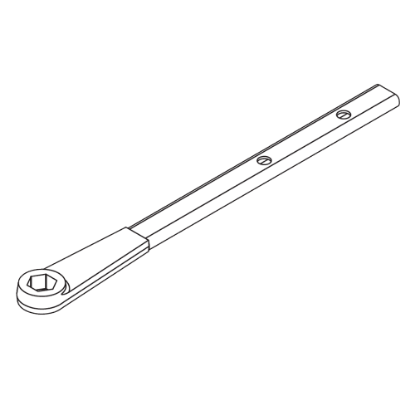
On ranges where the cylinder assembly is listed as a separate item, that assembly is the repair, because it is the sealed unit containing the fluid. On others the closer is replaced as a complete unit. Either way, arms, shoes, brackets, drop plates, covers and fixings are stocked separately and a sound one can be reused.
| Component | What to look for | Replace if |
|---|---|---|
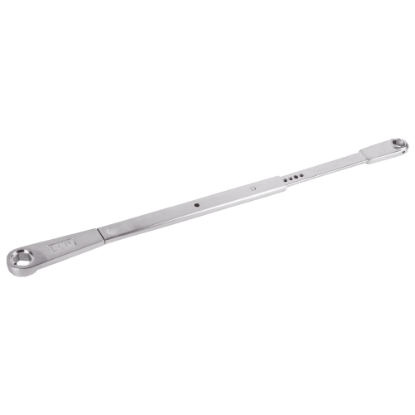
| Arm and forearm | Bends, play at the joints | Any visible distortion |
| Shoe or bracket | Elongated holes, movement | Fixings no longer pull tight |
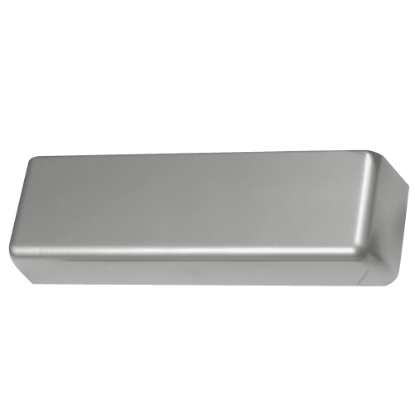
| Cover | Oil staining, cracks | Cracked, or you want a clean finish |
| Fixings | Thread condition in the door | Holes have opened out |
| Door and frame | Hinge wear, frame movement | Addressed before the new unit goes on |
Should you replace the arm at the same time?
Only if it needs it. An arm that is straight, with no play at the pivots, has nothing wrong with it and will outlast another closer body. An arm that has been bent, even slightly, loads the new closer unevenly from day one and shortens its life. Our LCN closer parts guide covers how those components are listed.
Why Did This Closer Fail Early?
Usually because something outside the closer made it work harder than it was sized for.
A closer sized too small for the leaf runs at higher internal pressure for every cycle. A door with a dragging seal or a worn hinge makes the closer fight the opening on the way shut. A door that gets pushed past its stop puts a shock load straight into the body through the arm. None of these show up as a closer fault until the closer is the thing that leaks.
If a replacement unit on the same opening fails again within a couple of years, the opening is the problem rather than the hardware. Our closer sizing guide covers matching the unit to the door.
Does an overhead stop help?
On a door that gets thrown open, yes, considerably. The alternative is that the arm and the closer body absorb the over travel, and they were not designed for it. Where a stop cannot be fitted, an arm designed to limit travel does part of the same job, which is covered in our parallel arm closer guide.
How Do You Deal With the Oil That Has Already Escaped?
Clean it properly, and check what it has run onto.
The fluid will have run down the door face and may have reached the floor. On a painted leaf it leaves a mark that will show through a fresh coat if it is not cleaned first. On a floor it is a slip risk, and in a corridor that matters more than the door does.
Check whether it has reached anything it should not have. Fluid on a strike face or on a latch will attract dust and turn into a paste that affects how the door latches, so those surfaces are worth cleaning even if they look fine.
What should you record before ordering a replacement?
The closer model from the body or the cover, the arm type fitted, how the unit is mounted, whether a drop plate or bracket is in use, the door width and weight, whether the opening is fire rated, and anything about the door that made the old unit work hard. Our closer parts diagram helps match what you are looking at to what you need to order.
About the Author
Security Parts has supplied repair parts for commercial door hardware since 2001, covering Von Duprin, LCN, Schlage, Falcon, Detex and Adams Rite at the component level. Our diagram based lookup exists so a technician can confirm a part before ordering it. This guide was written by the Security Parts team from supplier documentation and the questions our customers bring us.