 Trusted Since 2001


Quick Summary
Key points
- Most operator callouts are not operator faults. Activation devices, wiring and door hardware produce the same complaint and fail far more often than the operator itself.
- The first question is always whether a signal is reaching the operator. A unit that does nothing in the absence of a signal is behaving correctly.
- Operator faults split cleanly into electrical and mechanical. Electrical faults stop the door moving at all. Mechanical faults let it move but control it badly.
- The door still has to work as a door. A failed closer function on a low energy operator shows up as a leaf that slams or drifts, not as a door that will not open.
- Repairs on these units are component level. Arms, cable kits, activation switches and mounting hardware are all ordered separately from the operator.
| Symptom at the door | Most likely area | First thing to prove |
|---|---|---|
| Nothing happens on activation | Activation device or its wiring | That the device is sending a signal |
| Opens, then will not close properly | Operator hydraulics or arm | Whether it closes with power off |
| Opens too fast or too far | Operator adjustment | Current speed and backcheck settings |
| Works intermittently | Wiring, transfer or switch contacts | Continuity through the hinge side |
| Door binds during the cycle | Door, frame or hardware | How the leaf moves with the arm disconnected |
In This Guide
- What Is a Commercial Door Operator and How Is It Different From a Closer?
- How Do You Tell an Activation Fault From an Operator Fault?
- Why Does the Door Work Sometimes and Not Others?
- What Fails Mechanically on a Door Operator?
- What Changes When the Operator Is on a Pair of Doors?
- What Do You Have to Check Before Putting the Opening Back in Service?
- What Should You Check on an Operator Between Callouts?
- When Is It Worth Repairing Rather Than Replacing?
- About the Author
A commercial door operator is the unit that opens the door under power and then controls it closed again. When one is reported as broken, the fault is often somewhere else entirely on the opening.
This guide covers how to separate an activation fault from an operator fault, what actually fails on these units, which parts are ordered separately, and what has to be checked before the opening goes back into service.
What Is a Commercial Door Operator and How Is It Different From a Closer?
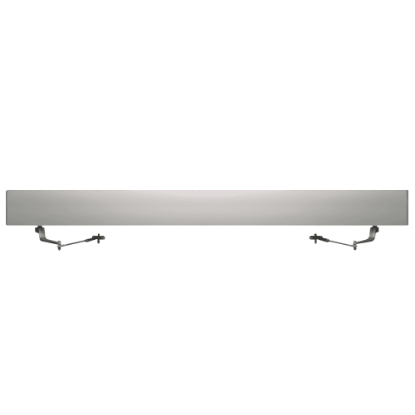
A closer only controls the door on the way shut. An operator does that and also opens the door under power.
That difference is the whole reason the part count is higher. An operator needs a control board, a power supply, activation inputs and usually a motor or a powered assist, none of which a closer has any equivalent for. It also takes over the closing function, which is why you rarely see an operator and a separate closer on the same leaf.
Low energy operators are the type most commonly found on commercial openings that are not full automatic entrances. They open slowly enough that the door does not need the guard rails and sensors a high energy automatic door requires, and they are activated deliberately, usually by a push plate or a touchless switch.
Does an operator remove the need for a door closer?
Yes, on that leaf. The operator controls the door closed, so there is no second closer fitted. The consequence is that a hydraulic fault inside the operator presents as a door that slams or drifts rather than as a door that will not open. Technicians who expect operator faults to be electrical can spend a long time on the wiring of a unit whose only problem is on the closing side.
How Do You Tell an Activation Fault From an Operator Fault?
Make the signal happen a different way and see whether the door moves.
This is the single most useful test on these units. If the push plate does nothing but a second activation device opens the door, the operator is fine and the plate or its wiring is not. If no activation method moves the door, the fault is in the operator, its supply or the common wiring both devices share.
| Step | What you do | What the result tells you |
|---|---|---|
| 1 | Confirm power is present at the unit | No power means supply or breaker, not operator |
| 2 | Trigger from a second activation device | Door moves means the first device is at fault |
| 3 | Trigger the input directly at the controller | Door moves means the fault is in the field wiring |
| 4 | Open the door by hand | Heavy or binding means a door fault, not electrical |
Why do activation devices fail so often?
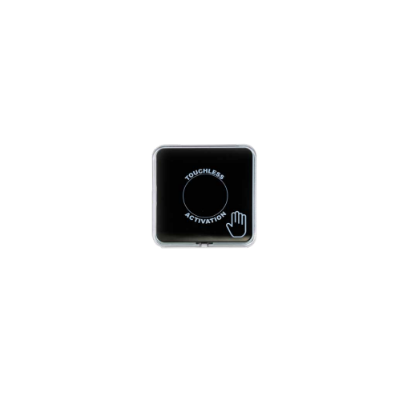
Because they are the part people touch. A push plate takes thousands of impacts, often from elbows, trolleys and wheelchair footplates rather than hands. Touchless switches avoid the impact but introduce a sensing range that can drift or be obstructed. Either way, these devices sit in the most abused position on the opening and their wiring runs through the busiest part of it.
Why Does the Door Work Sometimes and Not Others?
Intermittent operation almost always means a connection, not a component.
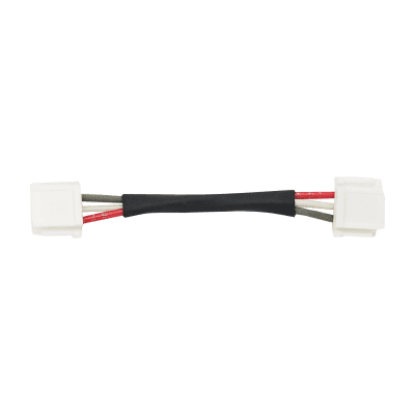
The hinge side of a powered door is where cabling has to cross from a static frame to a moving leaf, and that crossing flexes every single cycle. Over tens of thousands of cycles a conductor inside a transfer or a cable kit work hardens and breaks, often while the insulation looks perfect from outside. The door then works when the conductor happens to be touching and fails when it is not.
The giveaway is a fault that correlates with door position. If the unit behaves differently with the door open than closed, suspect the crossing before you suspect the board. Our power transfer guide covers how those crossings are built and what they are rated for.
Can you test a flexing conductor without stripping the opening?
Usually yes, by cycling the door slowly while watching for the fault to appear and disappear at a repeatable point in the swing. A conductor that is broken but touching will often restore when the leaf reaches a particular angle. That repeatability is what separates a cable fault from a board fault, because a failing board does not care where the door is.
What Fails Mechanically on a Door Operator?
The arm, the hydraulics and the mountings, in roughly that order of visibility.
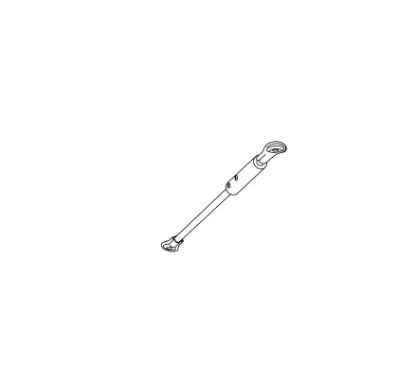
The arm is the link between the operator and the door, and it takes every bit of the load in both directions. On a door that gets pushed open faster than the operator drives it, the arm takes impact loading it was never intended to see. Bent arms, worn pivots and loose arm fixings all show up as a door that moves unevenly or makes noise through part of its travel.
Hydraulic faults inside the unit present on the closing side, because that is the part of the cycle the hydraulics control. A door that opens correctly under power and then slams, drifts or stops short has an operator problem even though the powered half of the cycle looks perfect.
| What the door does | Usual cause | Part affected |
|---|---|---|
| Judders through part of the swing | Bent or binding arm | Push arm assembly |
| Slams on the closing cycle | Loss of hydraulic control | Operator internals |
| Drifts and stops before latching | Insufficient closing force | Operator adjustment or internals |
| Unit moves on the frame | Loose or pulled fixings | Mounting hardware |
| Noise at full open | Backcheck or stop out of adjustment | Operator adjustment |
Can the arm be replaced on its own?
Yes, and it frequently is. Arms are supplied as separate parts precisely because they are the component most likely to be damaged by misuse while the operator itself is still sound. Replacing an arm is a far smaller job than replacing a unit, and on a door that has been forced open it is often the only thing needed.
What Changes When the Operator Is on a Pair of Doors?
Sequencing, and the fact that one fault can look like two.
On a pair, each leaf normally has its own operator, and the two have to open and close in the right order so the leaves do not collide and any astragal closes correctly. A sequencing fault therefore presents as two doors behaving oddly when only one unit is actually wrong.
Dual egress pairs add another wrinkle, because the leaves swing in opposite directions. The operators are configured for that arrangement rather than being interchangeable with a standard pair, so a replacement has to match how the opening actually swings, not just how many leaves it has.
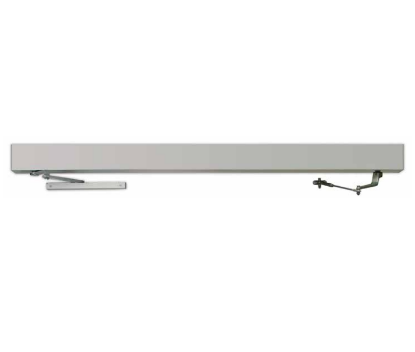
Which leaf should you work on first?
The one that is wrong on its own. Disconnect or disable the second leaf, prove the first behaves correctly in isolation, then do the same for the other. Trying to diagnose a sequencing problem with both leaves live is how a single bent arm turns into a two unit replacement quote.
What Do You Have to Check Before Putting the Opening Back in Service?
That the door still meets the requirements that apply to it, not just that it opens.
Low energy powered doors are governed by a standard covering how fast they may open, how fast they may close and how much force they may exert. The opening itself is separately governed by the usual accessible door requirements for clear width, manoeuvring clearance and hardware height. A repair that restores motion but leaves the unit opening faster than permitted has not finished the job.
| Check | Why it matters | What a failure looks like |
|---|---|---|
| Opening speed and force | Governed for low energy operation | Door opens faster than a person can react |
| Closing speed and latching | Door must close and latch reliably | Leaf drifts or stops short of the strike |
| Manual operation with power off | Egress must not depend on power | Door is heavy or will not move by hand |
| Activation range and position | Device must be reachable and clear | Plate out of reach or switch triggering on passers by |
| Fire rating, where applicable | Assembly listing covers the whole opening | Door no longer latches positively |
Does the door still have to open by hand?
Yes. On a low energy operator the leaf must remain operable manually, because the opening has to work in a power failure. If the repaired door is noticeably heavier by hand than it was, something in the arm or the operator is binding and the job is not finished. Our door clearance guide covers the accessibility side of what the finished opening has to achieve.
What Should You Check on an Operator Between Callouts?
The things that fail slowly, because those are the ones that turn into emergency visits.
Arm fixings work loose long before an arm bends, and a loose fixing is a two minute job that prevents a part replacement. Activation plates develop play in their mounting before the switch inside them fails. Closing speed creeps as hydraulics age, so a door that latches reliably in January can be stopping short of the strike by July without anybody changing a setting.
| Check | How often | What it prevents |
|---|---|---|
| Arm and mounting fixings | Each visit | Bent arms and pulled fixings |
| Full close and latch from rest | Each visit | Doors found standing open |
| Manual operation with power off | Periodically | Egress failures in a power cut |
| Activation device mounting and range | Each visit | Dead plates and nuisance triggering |
| Cable crossing at the hinge side | Periodically | Intermittent faults later |
Why does closing performance drift over time?
Because hydraulic control depends on fluid behaviour, seals and the condition of the whole opening, and all three change. Add a stiffening weatherseal or a hinge that has started to drag and the same closing force no longer finishes the job. The door has not suddenly broken; the margin it was set up with has been used up.
When Is It Worth Repairing Rather Than Replacing?
Whenever the failure is in a part that is supplied separately, which covers most of them.
Arms, cable kits, activation switches, mounting hardware and the fixings that hold everything on are all component level items. A unit whose arm is bent, whose activation plate is dead or whose cable has broken does not need replacing. A unit whose hydraulics have failed or whose internal control has failed is a different conversation, and on a door that has already needed several interventions the cumulative cost usually settles the argument.
The honest test is whether the next failure is likely to be the same one. One bent arm on a door that gets forced is a repair. The third bent arm on the same door is a sign that the opening needs a stop, a sign or a rethink rather than another arm.
What should you record before ordering parts?
The operator model from the unit itself, whether the opening is a single, a standard pair or a dual egress pair, whether the fault is electrical or mechanical, which activation devices are fitted and where, the arm type, and whether the door is fire rated. Our hardware troubleshooting guide covers working through the rest of the opening, and the request to exit sensor guide covers the sensing devices that often share wiring with an operator.
About the Author
Security Parts has supplied repair parts for commercial door hardware since 2001, covering Von Duprin, LCN, Schlage, Falcon, Detex and Adams Rite at the component level. Our diagram based lookup exists so a technician can confirm a part before ordering it. This guide was written by the Security Parts team from supplier documentation and the questions our customers bring us.