 Trusted Since 2001


Quick Summary
Key points
- An electric strike releases a latch that is already there. A magnetic lock supplies the holding force itself. That one difference drives every other comparison.
- An electric strike can be fail secure, so the door stays locked with no power. A magnetic lock cannot, because it has nothing to hold the door with once it is de-energised.
- The strike goes in the frame and leaves the door alone. A maglock puts hardware on both halves of the opening and carries load across the joint.
- Egress is the deciding factor on many openings. With a strike, people leave through the existing lock. With a maglock, egress has to be designed and built.
- Neither is better across the board. The door preparation, the power situation and the egress requirement decide it, usually in that order.
| Consideration | Electric strike | Magnetic lock |
|---|---|---|
| What holds the door | The existing latch | The lock itself |
| Location | Frame only | Frame and door |
| Power loss behaviour | Fail secure or fail safe | Always releases |
| Current draw at rest | None when fail secure | Continuous |
| Egress | Through the existing lock | Has to be provided |
| Door preparation | Frame cutout | Through fixings in the leaf |
In This Guide
- What Is the Basic Difference Between an Electric Strike and a Magnetic Lock?
- Which One Keeps the Door Locked in a Power Cut?
- Which Is Easier to Install?
- How Do the Two Compare on Egress?
- Which Draws More Power?
- Which Is More Secure?
- What Does Each One Need in Maintenance?
- Which One Suits Your Door?
- About the Author
Electric strike or magnetic lock is one of the first questions on any access control job, and it is often answered by habit rather than by the opening. Both put a door under the control of a reader or a panel. They go about it in completely different ways, and those ways suit different doors.
This guide compares the two on the points that actually decide the choice, and sets out which opening suits which.
What Is the Basic Difference Between an Electric Strike and a Magnetic Lock?
An electric strike does not lock anything. It releases something that is already locked.
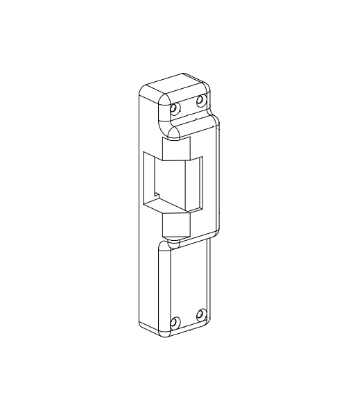
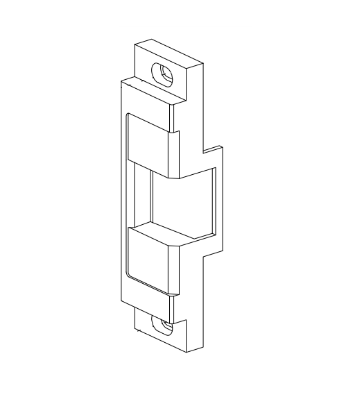
The door has a lock on it with a latch. The strike sits in the frame where that latch lands. Normally it holds the latch. When it is signalled, it lets go, and the door can be pushed open even though the lock is still locked.
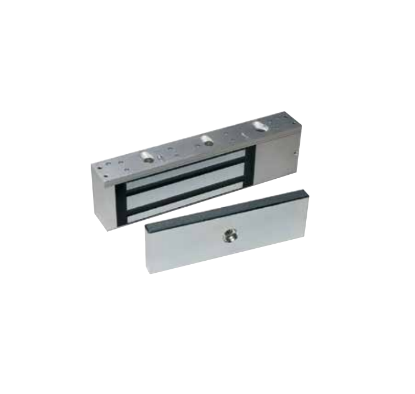
A magnetic lock is the opposite. There is no latch involved at all. An electromagnet on the frame and a steel armature on the door hold the two together by magnetic force, and the door is held shut by nothing else.
Why does that distinction matter so much?
Because it decides what happens when something goes wrong. A strike that loses power can still leave a locked door, because the mechanical lock is doing the work. A maglock that loses power has nothing left. Every other difference between the two is downstream of that.
Which One Keeps the Door Locked in a Power Cut?
The electric strike, provided it is specified fail secure.
A fail secure strike holds the latch when power is removed, so the door stays locked from outside exactly as the mechanical lock intended. A fail safe strike releases, by design, for openings that have to open in an emergency.
A magnetic lock has no fail secure option. Remove the power and it lets go, because the power is the lock. That is not a limitation to be worked around, it is how the product works, and on many openings it is the reason the maglock was chosen.
| Device | Door state | Why |
|---|---|---|
| Electric strike, fail secure | Locked | Latch is held mechanically |
| Electric strike, fail safe | Released | Specified to release |
| Magnetic lock | Released | No holding force without power |
Does that make a maglock less secure?
Not in normal operation. It makes it unsuitable for openings that must stay secure through an outage, which is a different statement. A store room, a plant room or an equipment cage is strike territory precisely because the requirement is to stay locked no matter what.
Which Is Easier to Install?
It depends entirely on the frame.
An electric strike needs a cutout in the frame deep enough for its backbox, plus a cable route to that point. On a new frame or a frame that already has a strike prep of the right size, that is straightforward. On a narrow aluminium stile or a frame with no room behind it, it can be impossible.
A magnetic lock needs no cutout at all. It bolts to the surface of the frame and the door, which is why it is the standard answer on glass doors, on frameless arrangements and on openings where cutting the frame is not an option.
What does each one do to the door?
The strike does nothing to the door. The door keeps its lock, its latch and its preparation, and the only change is in the frame. That is a genuine advantage on a door that is difficult or expensive to modify.
The maglock puts an armature on the leaf, through bolted, and that means fixings through the door at a defined height. Our maglock installation guide covers the mounting in detail, and the electric strike installation guide covers the other side.
How Do the Two Compare on Egress?
This is the comparison that decides more openings than any other, and it is the one most often left until last.
With an electric strike, egress is already solved. The lock on the door still works mechanically from the inside, so somebody leaving turns the lever and goes, whatever the strike or the access control system is doing. Nothing has to be added.
With a magnetic lock, there is no mechanical path at all. The door is held by magnetism, and the only way to open it is to take the power away. Codes treat electrically locked egress doors as a special case, with conditions that typically include a manual release device on the egress side, release on loss of power and release on fire alarm activation. What is required on a given opening is decided by the authority having jurisdiction.
So a maglock always needs more hardware?
In practical terms, yes. A maglock opening is a designed arrangement rather than a single product: the lock, the release device, the sensing and the interfaces to the alarm system. Our request to exit sensor guide covers one of the components that usually appears, and the delayed egress guide covers the case where the door has to hold briefly before releasing.
Which Draws More Power?
The magnetic lock, by a wide margin, and continuously.
A fail secure electric strike sits idle. It draws current only while it is being released, which on a normal door is a few seconds a day in total. A magnetic lock is energised every moment the door is secured, which on most doors is almost all the time.
That matters for two reasons. The supply has to carry the total continuous load of every maglock on the system, and the battery backup has to carry it for the required standby period. A building with twenty maglocks has a very different power design from a building with twenty fail secure strikes.
What about a fail safe strike?
A fail safe strike is also held by power, so its draw profile is closer to a maglock than to a fail secure strike. If the comparison is specifically fail safe strike against maglock, the power argument largely disappears and the decision moves back to the frame and the egress arrangement.
Which Is More Secure?
They fail in different directions, which makes a single answer misleading.
An electric strike relies on the latch and on the frame around it. Its weak points are mechanical: a worn keeper, a latch that is not fully engaging, a frame that has been attacked around the strike cutout.
A magnetic lock relies on surface contact and on continuous power. Its weak points are an armature that is not meeting the magnet flat, faces that have corroded or been painted, and anything that interrupts the supply.
| Device | Main weakness | What mitigates it |
|---|---|---|
| Electric strike | Latch engagement and frame condition | Correct alignment, frame reinforcement |
| Electric strike | Keeper and spring wear | Stocked spring kits and faceplates |
| Magnetic lock | Partial face contact | Armature float, clean faces, closer adjustment |
| Magnetic lock | Loss of supply | Battery backup and monitoring |
In practice the deciding factor is maintenance rather than design. A well aligned maglock outperforms a neglected strike, and a well maintained strike outperforms a maglock holding on half its face.
Does monitoring change the picture?
Considerably, and it applies to both. A door position switch tells the system whether the door actually closed rather than only whether it energised the lock. On a maglock that is close to essential, and on a strike it is still worth having. Our door position switch guide covers how the signals fit together.
What Does Each One Need in Maintenance?
Different things, on different intervals.
An electric strike wears mechanically. Springs lose tension, keepers develop a groove where the latch sits, and faceplates get bent by levering. Those parts are stocked individually, so service is a component swap rather than a replacement. Our electric strike parts guide lists what is available.
A magnetic lock has no moving parts, which sounds like no maintenance and is not. What it needs is clean, flat contact between two faces, and that degrades quietly. Paint, corrosion, grit and a drifting alignment all reduce holding force without producing any symptom until somebody pulls on the door.
Which one tells you when it is failing?
The strike, usually. A worn strike gets noisy, sticky or slow, and somebody reports it. A maglock holding at half strength behaves identically to one holding at full strength until the day it does not hold at all. That silent degradation is the strongest argument for scheduled checks on maglock openings.
Which One Suits Your Door?
Work through the opening in order and the answer usually appears before the end.
| Situation | Usually points to | Reason |
|---|---|---|
| Door must stay locked in an outage | Electric strike, fail secure | Maglock has no fail secure mode |
| Frame cannot be cut | Magnetic lock | Surface mounted, no cutout |
| Glass or frameless door | Magnetic lock | Nothing to mortise into |
| Existing lock and latch in good condition | Electric strike | Reuses what is already there |
| Door must release on alarm | Either, specified accordingly | Fail safe strike or maglock |
| Minimal continuous load wanted | Electric strike, fail secure | No draw at rest |
Can you use both on the same opening?
It happens, usually on high security doors where a maglock supplements a mechanical lock and electric strike. It doubles the power load and doubles the egress complexity, so it needs to be a deliberate decision rather than a belt and braces reflex.
Where the opening is fire rated, both options narrow. A rated assembly is tested as a set, and what can be added to it is constrained. Our fire rating guide covers that, and for the full detail on each technology see our complete electric strikes guide and electromagnetic lock parts guide.
About the Author
Security Parts has supplied repair parts for commercial door hardware since 2001, covering Von Duprin, LCN, Schlage, Falcon, Detex and Adams Rite at the component level. Our diagram based lookup exists so a technician can confirm a part before ordering it. This guide was written by the Security Parts team from supplier documentation and the questions our customers bring us.