 Trusted Since 2001


Quick Summary
Key points
- The Detex 10 Series is a rim exit device range, mounted on the face of the door with the latch engaging a strike on the frame.
- Most 10 Series service work is mounting plates, covers, end caps, strikes and trim rather than the whole device.
- Door stile width decides which mounting plate the device needs, and getting that wrong is the most common ordering mistake.
- Alarmed and access controlled variants add a power supply and controller to the parts list, not just the device.
- Confirm the series number stamped on the device before ordering, because parts do not carry across Detex families.
| Symptom | Usual part | Confirm first |
|---|---|---|
| Device loose on the door | Mounting plate or fasteners | Stile width and plate type |
| Latch not engaging cleanly | Strike or strike shims | Frame condition and gap |
| Damaged cover or end cap | Centercase cover | Series and finish |
| Alarm not sounding or not resetting | Controller or power supply | Voltage and current draw |
| Outside access gone | Outside trim | Function and handing |
In This Guide
- What Is the Detex 10 Series?
- Which Mounting Plate Does the Device Need?
- What Covers and Trim Pieces Are Serviceable?
- Why Does the Strike Cause So Many Faults?
- How Do the Alarmed Versions Change the Parts List?
- How Does the 10 Series Compare With the Other Detex Families?
- What Maintenance Keeps a 10 Series Working?
- What Changes on a Fire Rated Opening?
- What Should You Confirm Before Ordering 10 Series Parts?
- About the Author
The Detex 10 Series sits on openings that get used hard and get repaired rather than replaced. Knowing which parts are serviceable, and which details decide the part number, is what turns a site visit into a single order instead of three.
This guide covers what the 10 Series is, how it mounts, which components wear, how the alarmed and access controlled versions change the parts list, and what to confirm before ordering.
What Is the Detex 10 Series?
A rim exit device range, meaning the mechanism mounts on the face of the door and the latch reaches across to a strike fitted on the frame or on the mullion.
Rim mounting is the simplest exit device arrangement, and it is why the 10 Series appears so often on rear exits, stairwell doors, stockroom doors and service entrances. There is no rod to run up the leaf and no mortise pocket to cut, so the device can go on a door that was never prepared for one.
The function is the same as any exit device: push the bar, the latch retracts, the door opens. Everything else, including alarms, outside trim and access control, is built around that core action. Our rim exit device guide covers how rim mounting compares with the other arrangements.
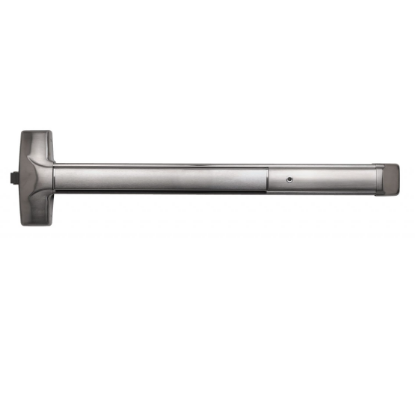
Why is rim mounting used so widely on exit doors?
Because it keeps the whole mechanism on one face of one leaf. Nothing passes through the door, nothing runs to the head or the threshold, and nothing depends on the second leaf of a pair unless a mullion is involved. That makes installation faster and, more importantly for most buildings, makes repair possible without taking the door off.
Which Mounting Plate Does the Device Need?
The one matched to the door stile, which is the single detail most often got wrong.
Exit devices are fixed through a mounting plate or backplate that spreads the load across the door face. A narrow stile aluminium door and a wide stile hollow metal door do not take the same plate, because the amount of flat material available behind the device is different.
Measure the stile before ordering. If the plate is too wide for the stile the fixings land on the glazing bead or the edge of the leaf, and the device will loosen under use no matter how carefully it was fitted.
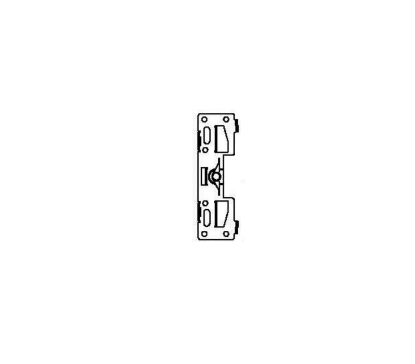
| Measurement | Why it matters |
|---|---|
| Stile width | Decides narrow or wide stile plate |
| Door material | Changes the fixing method |
| Existing hole pattern | A matching plate avoids new holes |
| Door thickness | Affects through fixings and trim |
| Glazing position | Limits where fixings can land |
Can a new device reuse the old holes?
Sometimes, and it is worth checking before you order. If the replacement uses the same plate pattern the job is a swap. If it does not, the door face needs new preparation and the old holes need filling, which turns a one hour visit into something longer. Our exit device installation guide covers the preparation involved.
What Covers and Trim Pieces Are Serviceable?
Most of the visible ones, which is useful because the visible ones are what get damaged.
Centercase covers, end caps and rail covers take the impact on a busy opening. They do not affect whether the device works, but a missing cover exposes the mechanism to dust and knocks, and that does shorten the life of the parts underneath.
Covers are listed by series and finish, and they do not interchange between families. A cover from one Detex range will not fit another even where the devices look similar from a distance. Our Detex parts guide covers the main Detex ranges, part numbers and what fails.
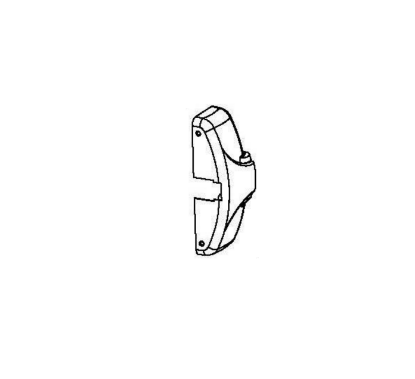
Does a damaged cover need replacing straight away?
It should be replaced, though it is rarely urgent on its own. The reason to do it promptly is contamination rather than appearance. Once the mechanism is open to dust and debris the wear moves to parts that cost more and take longer to fit.
Why Does the Strike Cause So Many Faults?
Because it is the one part of a rim device that depends on the frame rather than the door.
The latch has to meet the strike squarely to engage. Frames move, doors drop, and buildings settle, so a strike that was correct at installation can end up slightly out. The result is a device that works when the door is pushed and fails when it is allowed to close on its own.
Check alignment before you replace anything. Mark the latch with a pencil, close the door gently, and look at where the mark lands on the strike. Our strike alignment guide covers the full procedure, and our strike plate guide covers what each type does.
What if the door does not latch only in certain weather?
That points at the opening rather than the device. Seals stiffen in cold weather and frames move with temperature, both of which can take a correctly aligned latch slightly out of position. A device that misses in January and works in July has an alignment margin that is too small rather than a worn latch.
How Do the Alarmed Versions Change the Parts List?
They add electronics, and electronics add a power supply, wiring and a controller to a list that was previously mechanical.
An alarmed exit device announces that the door has been used. That is why these devices appear on fire exits that are not meant to be everyday routes, on stockroom doors and on emergency exits in retail. The alarm is part of the device, but the power behind it usually is not.
When one of these stops working, the fault is as likely to be upstream as in the device. Check the supply voltage at the device before condemning the unit, because a controller or power supply that has failed produces exactly the same symptom.
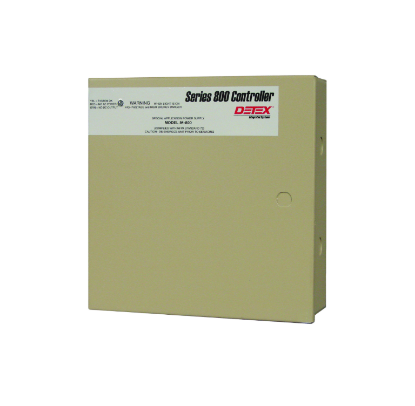
What about delayed egress openings?
Those add a timing function and a release sequence on top of the alarm, and they are subject to specific code requirements about how long the delay may be and how it must release. Our delayed egress guide covers how those openings are expected to behave.
How Does the 10 Series Compare With the Other Detex Families?
It is the straightforward rim device. The other families add features, different mounting or different door types, and their parts do not cross over.
That last point is the practical one. Two devices that both say Detex on the cover may share nothing at all in terms of serviceable parts. Covers, mounting plates, trim and strikes are all listed to a family, so the family has to be identified before the part is chosen.
| Where to look | What you are looking for |
|---|---|
| Centercase, under the cover | Series number and model stamp |
| End cap or rail end | Secondary markings on some units |
| Device length | Matched to the door width |
| Latch type | Rim latch against other arrangements |
| Trim on the outside face | Function and whether it is keyed |
What if the markings have worn off?
Measure and photograph instead. Device length, latch position, mounting hole pattern and cover shape together are usually enough to identify a family. Our exit device terminology guide covers the naming, which helps when the markings are gone and the description has to do the work.
What Maintenance Keeps a 10 Series Working?
Very little, and that is exactly why it gets skipped until something fails.
Check that the device is still tight to the door, that the latch projects fully and retracts cleanly, that the strike is still square to the latch, and that the door closes and latches on its own from a shallow angle. On an alarmed unit, test that the alarm sounds and resets as intended.
Four of those five checks take seconds and need no tools. Our hardware maintenance checklist covers the rest of the opening alongside the device.
How often should an exit device be checked?
More often on high traffic doors than the calendar suggests. A rear exit used dozens of times a day accumulates wear far faster than an emergency exit that opens twice a year, and the schedule should follow use rather than the date.
What Changes on a Fire Rated Opening?
Latching becomes mandatory and substitutions become restricted.
On a rated opening the device has to latch the door positively every time it closes, under its own closer, with nobody helping. A device that needs a push to latch has not met the requirement even though it opens normally.
Substitutions matter too. The assembly is listed as a whole, so a part swapped for something that looks similar can affect the listing. Our fire rating guide covers what else on the opening is tied to the same listing, and our panic hardware guide covers where these devices are required.
Does an alarm affect the fire rating?
The alarm itself does not change whether the door latches, which is what the rating depends on. What matters is that the device still allows free egress with a single motion and still latches on closing. Any arrangement that interferes with either of those is the problem, not the alarm.
What Should You Confirm Before Ordering 10 Series Parts?
Five things, and all five come from the door rather than from memory.
The series number stamped on the device, the device length, the stile width and door material, the finish, and whether the unit is alarmed or access controlled. For strikes, add the frame type and the current gap between door and frame.
With those recorded, a parts lookup gives one answer rather than a shortlist. Our hardware troubleshooting guide covers narrowing a fault down to the part before you order, which is the step that keeps a single visit single.
| Item | Where to get it | Why it is needed |
|---|---|---|
| Series number | Stamp under the cover | Parts are listed by family |
| Device length | Measure the rail | Matched to door width |
| Stile width | Measure the door | Decides the mounting plate |
| Finish | Compare with the existing unit | Visible parts have to match |
| Alarmed or not | Check for wiring at the device | Changes the whole parts list |
What is the most common ordering mistake?
Ordering by brand and appearance rather than by series. Two devices can look almost identical on the door and share no serviceable parts at all, which is why the stamp under the cover is worth the two minutes it takes to find.
About the Author
Security Parts has supplied repair parts for commercial door hardware since 2001, covering Von Duprin, LCN, Schlage, Falcon, Detex and Adams Rite at the component level. Our diagram based lookup exists so a technician can confirm a part before ordering it. This guide was written by the Security Parts team from supplier documentation and the questions our customers bring us.