 Trusted Since 2001


Quick Summary
Key points
- An RX switch is fitted inside a Von Duprin exit device and signals that the pushpad has been pressed.
- It reports the use of the device, which is different from reporting whether the door is open or closed.
- Kits differ by how many sets of contacts they carry and by the current they are intended to switch.
- A low current version exists for electronics that cannot tolerate the load of a standard switch.
- Choosing the kit means matching the device series first, then the contact arrangement the panel expects.
| Device | What it reports | When it changes state |
|---|---|---|
| RX switch | The pushpad was pressed | On the push, before the door moves |
| Door position switch | The door is open or closed | When the leaf leaves the frame |
| Latch monitor | The latch is projected or retracted | With latch movement |
| Motion sensor | Somebody is approaching | Before anyone touches the door |
In This Guide
- What Is a Von Duprin RX Switch?
- How Is It Different From a Door Position Switch?
- What Separates One RX Kit From Another?
- What Is the Low Current Version For?
- What Does an Auxiliary Switch Add?
- How Does the Wiring Reach the Device?
- What About Combined Switch Assemblies?
- Can an RX Switch Be Added to an Existing Device?
- What Should You Confirm Before Ordering?
- About the Author
The RX switch is a small part with a disproportionate effect on how an access controlled door behaves. Get it right and the system knows the difference between a legitimate exit and a forced door. Get it wrong and the alarm goes off every time someone leaves.
This guide covers what the RX switch does, how it differs from the other signals on an opening, what separates the available kits, and what to confirm before ordering one.
What Is a Von Duprin RX Switch?
A switch mounted inside the exit device that changes state when the pushpad is operated.
RX stands for request to exit. The switch sits in the device and is operated mechanically by the pushpad itself, so the signal is generated at the moment somebody pushes the bar. That is earlier than any signal based on the door moving, and it is the reason the arrangement works.
The access control panel uses that signal to recognise that the door is about to be used legitimately from the inside, so it can shunt the door alarm instead of treating the opening as a breach. Our 98 and 99 Series parts guide covers the devices these kits fit into.
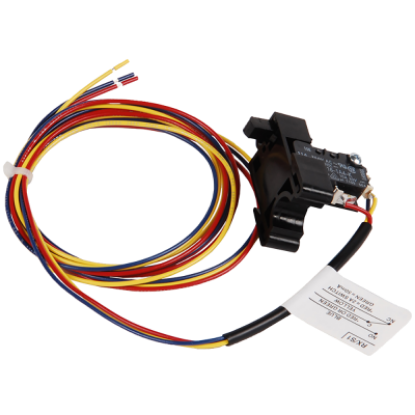
Why does the timing of the signal matter?
Because a shunt has to start before the door opens. If the system only learns about the exit when the leaf leaves the frame, the door contact has already reported an opening and the alarm has already been triggered. Signalling from the pushpad gives the panel the moment it needs.
How Is It Different From a Door Position Switch?
One reports intent, the other reports state, and a complete opening usually has both.
A door position switch tells the system whether the leaf is in the frame. It knows nothing about why. An RX switch tells the system that somebody operated the device, and knows nothing about whether the door actually opened afterwards.
Together they describe the event properly. Pushpad then door open is a normal exit. Door open with no pushpad signal is a door that was forced, propped or opened from outside. That distinction is the entire reason both are fitted. Our door position switch guide covers the other half of the pair.
| Pushpad signal | Door open | What the panel should conclude |
|---|---|---|
| Yes | Yes | Normal exit |
| Yes | No | Device used, door not opened |
| No | Yes | Forced or unauthorised opening |
| No | No | Door secure |
Is a motion sensor an alternative?
It serves a similar purpose from a different position. A sensor above the door detects someone approaching and can shunt on that basis, which suits doors without an exit device. On a door that has one, taking the signal from the pushpad is more precise because it reports an action rather than a presence. Our motion sensor guide covers where each suits.
What Separates One RX Kit From Another?
Mainly the number of contact sets and the electrical rating, because both are decided by what the kit is wired into.
A single switch gives one signal to one destination. Where two separate systems both need to know about the exit, a kit with two sets of contacts avoids wiring both to the same switch and avoids a second kit in the device.
The rating matters separately. Some kits are intended for conventional loads and some for low current electronics where a standard switch would be unsuitable. The panel documentation is what decides this, not the device.
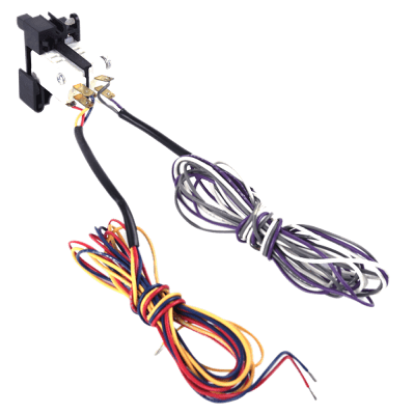
When do you need two sets of contacts?
Whenever two systems need the signal and should stay electrically separate. A common case is an access control panel that shunts the alarm and a separate building system that logs or releases something else. Splitting one switch between them creates problems that a two contact kit avoids.
What Is the Low Current Version For?
Electronics that cannot switch the load a standard contact is built for.
Switch contacts are rated for a range of current, and the range that suits a relay is not always the range that suits a solid state input on a modern panel. Too little current through a contact designed for more can give unreliable switching, and too much through a contact designed for less damages it.
The low current kit exists for the first case. If the panel documentation specifies a dry contact at low current, the standard kit may not be the right choice even though it fits the same device.
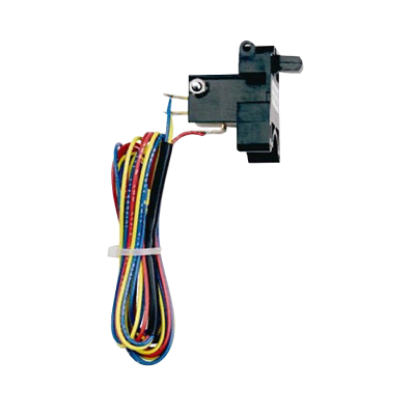
How do you know which rating the panel needs?
From the input specification in the panel documentation, which states what kind of contact it expects. Where that information is not available, record the panel make and model before ordering rather than guessing, because the two kits are not interchangeable in practice even though both will physically fit.
What Does an Auxiliary Switch Add?
Another independent signal from the same device, usually for a purpose unrelated to the access control shunt.
Auxiliary switch kits are used where something else on the opening needs to know the device was operated. Releasing a hold open, signalling a door operator, logging use on an exit that should not normally be used, or interlocking with another door are all typical.
The kit is still operated by the device, so the trigger is the same. What changes is where the wires go and what the signal is used for.
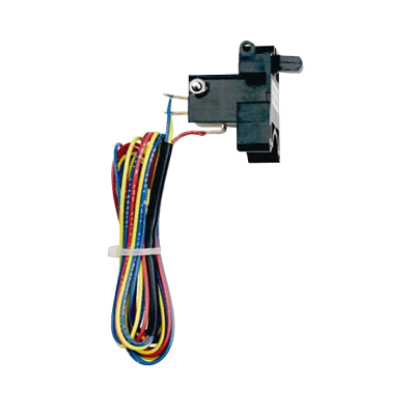
Can an auxiliary switch drive a door operator?
It can provide the signal, within the limits of what the switch is rated to carry, and the operator controller does the work. Our power transfer guide covers getting those wires from the frame into the moving leaf, which is the part of the job that is easy to underestimate.
How Does the Wiring Reach the Device?
Through the hinge edge, using an electric power transfer, because the device is on a leaf that moves.
Any switch inside an exit device needs a cable path from the frame to the door. That path is the most common source of problems on these installations, not the switch itself. Cables that are routed badly flex at the same point thousands of times and eventually break inside the insulation, which produces an intermittent fault that looks like a faulty switch.
When an RX signal becomes unreliable after years of working, check the transfer and the cable before replacing the kit. Our power transfer guide covers the options for crossing the hinge edge.
| Symptom | Likely cause | Check |
|---|---|---|
| Intermittent, worse over time | Cable fatigue at the transfer | Flex the loop and watch the signal |
| Never works since install | Wrong contact type or polarity | Panel input specification |
| Works, alarm still sounds | Shunt not configured | Panel programming |
| Signal stays made | Switch held by the mechanism | Pushpad return and device condition |
| Fails only on one leaf of a pair | Transfer or wiring on that leaf | Compare against the working leaf |
Should the switch be tested before the panel is blamed?
Always, because it is quicker. A continuity test at the device while somebody operates the pushpad tells you in seconds whether the switch and the cable are doing their job. Only when that passes is the panel worth opening.
What About Combined Switch Assemblies?
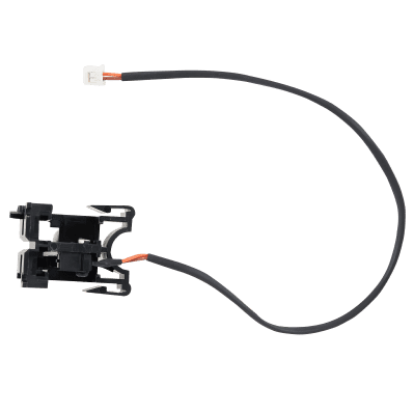
Some kits combine more than one monitoring function in a single assembly, which reduces the number of separate parts inside the device.
This is worth knowing because it changes what you order. If an opening needs both the exit signal and a second monitoring function, a combined assembly may cover both, where otherwise two kits would be fitted into the same device with the space constraints that implies.
Is there space for two kits in one device?
It depends on the device and on what else is already fitted inside it. Electrified latch retraction, monitoring and switching all compete for the same space, which is why confirming what is already in the device matters before a second kit is ordered. Our Von Duprin QEL conversion kit guide covers what else can occupy that space.
Can an RX Switch Be Added to an Existing Device?
Usually, provided the device is one the kit is listed for and there is a route for the cable.
The kits exist as kits precisely because retrofitting is normal. A door that was mechanical when the building opened often gains access control later, and the exit device is already there. What has to be confirmed is the series, because a kit listed for one device family will not necessarily fit another.
The cable route is the other half. If no power transfer exists at that opening, the retrofit includes fitting one, and that is usually the larger part of the work. Our Von Duprin series guide covers identifying the device you have.
Does adding a switch affect egress?
It should not. The switch is operated by the pushpad and does not change how the device releases, so the door opens on a single motion exactly as before. Any arrangement that makes egress depend on the switch working would be the problem, not the switch. Our panic hardware guide covers the egress requirement.
What Should You Confirm Before Ordering?
The device, the contacts and the cable path, in that order.
Confirm the device series and model from the markings under the cover, then how many sets of contacts the systems involved need, then the contact rating the panel expects, then whether a power transfer already exists at the opening and whether it has spare conductors.
That last point catches a lot of jobs out. A transfer fitted years ago for a single function may have no spare cores, and discovering that on site turns a switch kit into a cabling job. Our hardware troubleshooting guide covers confirming the fault before the order is placed.
What is the most common ordering mistake?
Ordering by the function rather than by the device. All of these kits do broadly the same thing, so the deciding details are the device family they fit and the electrical specification they meet. Both are recorded in minutes on site and cost a return visit when they are not.
About the Author
Security Parts has supplied repair parts for commercial door hardware since 2001, covering Von Duprin, LCN, Schlage, Falcon, Detex and Adams Rite at the component level. Our diagram based lookup exists so a technician can confirm a part before ordering it. This guide was written by the Security Parts team from supplier documentation and the questions our customers bring us.