 Trusted Since 2001





Quick Summary
Key points
- A surface mounted door closer is one whose body sits on the face of the door or the frame where you can see it, rather than being hidden inside either.
- Surface mounted is a statement about where the body lives. It is not the same question as which arm the closer uses, and the two get confused constantly.
- The model number is usually stamped on the body or printed under the cover. Finding it is the single fastest way to order the right part.
- Drop plates and brackets exist because the frame does not always give the closer somewhere flat to sit. Two plates for the same mounting can solve two completely different frame problems.
- A cover can be handed even when the closer body is not, which is a common and annoying ordering mistake.
| Question | Short answer |
|---|---|
| Where is the body | On the face of the door or the face of the frame, visible and reachable |
| Can you service it without pulling the door | Yes, which is the main reason it dominates repair work |
| Does it need a prep in the door | No pocket or mortise. It needs through bolts or screw fixings only |
| Can you identify it without removing anything | Usually yes, from the cover and the arm shape |
In This Guide
- What Makes a Door Closer Surface Mounted?
- Where Does the Body Sit on a Surface Mounted Closer?
- How Do You Identify the Surface Mounted Closer Already on Your Door?
- What Is a Drop Plate and Why Would a Surface Mounted Closer Need One?
- Why Do Surface Mounted Closers Have Covers, and Does It Matter Which One?
- Surface Mounted or Concealed: Which Belongs on Which Door?
- Is a Surface Mounted Door Closer Handed?
- What Changes on a Fire Rated Door?
- Why Do Surface Mounted Closers Dominate Retrofit Work?
- What Fails on a Surface Mounted Door Closer?
- What Should You Confirm Before Ordering Parts?
- About the Author
Most commercial closers you will ever touch are surface mounted, and most people never think about the term until they need a part. Then it matters, because the first thing a supplier needs to know is whether the unit is sitting on the door or buried in it.
This guide is about the surface mounted family specifically: what defines it, how to work out which one is on your door, and the parts that only exist because the closer is mounted on the outside. For the full taxonomy of closer types, see our guide to the four main types of commercial door closer.
What Makes a Door Closer Surface Mounted?
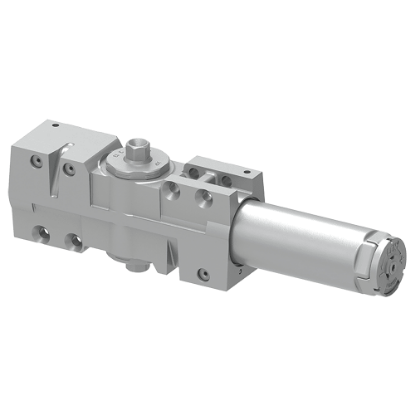
A surface mounted closer has its body fixed to the outside of the opening. You can see it, touch it, and unscrew it without taking the door off its hinges or opening up the frame.
That is the whole definition. It says nothing about the size, the arm, the brand or the application. It says where the hydraulic body lives.
The alternative is a concealed closer, where the body is hidden inside the door leaf, inside the frame head, or in the floor beneath the door. Those require the opening to be machined for them, usually at the factory, which is why they are mostly specified for new work and almost never retrofitted into an existing door.
The Three Parts You Can See
On any surface mounted closer there are three visible elements, and naming them correctly makes every conversation with a supplier faster:
- The body, or cylinder assembly. The metal casting that holds the spring and the hydraulic fluid. This is the part that does the work and the part that fails expensively.
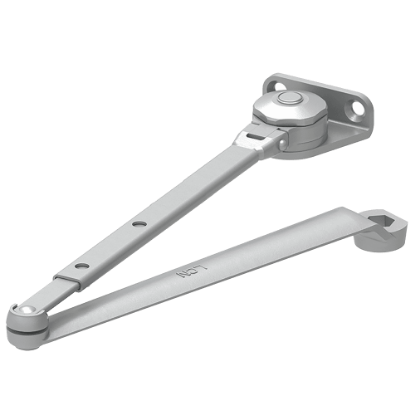
- The arm. The linkage from the body to whichever surface the body is not mounted on. Its shape is the quickest visual clue to how the closer is mounted.
- The cover. A shell that clips or screws over the body. Cosmetic, protective, and the thing most likely to be missing on a door that has been serviced badly.
The body carries a size. An adjustable cylinder assembly will state its range, for example a size 1 through 4 adjustable unit, which means one part covers several door widths rather than being fixed to a single spring strength.
Where Does the Body Sit on a Surface Mounted Closer?
Surface mounted closers go on in one of three positions, and the position decides what you are looking at when you stand in front of the door.
| Position | Body sits on | Arm reaches to | You are looking at it from |
|---|---|---|---|
| Regular arm | The pull side face of the door | The frame head | The side the door opens toward you |
| Parallel arm | The push side face of the door | A bracket on the frame soffit | The side the door swings away from you |
| Top jamb | The frame face above the opening | The push side face of the door | Either side, body is on the frame not the door |
Top jamb is the one people forget is still surface mounted. The body has moved off the door and onto the frame, but it is still bolted to the outside of the opening, still visible, and still serviceable from a ladder. Hidden inside the frame head is a different thing entirely and is not surface mounted.
The arm itself is a deeper subject than this page needs to cover. Our door closer selection guide works through regular, parallel and top jamb arms in detail, including which to pick for which opening.
How Do You Identify the Surface Mounted Closer Already on Your Door?
This is the question that actually blocks most repairs. The closer is leaking or slamming, somebody needs a part, and nobody knows what the unit is.
Work through it in this order.
Take the Cover Off First
The cover is usually held by one or two screws at the ends, sometimes by a clip. Under it, the body almost always carries a stamped or cast model number, and often a date. That number is the answer, and everything else below is for when the number has worn away.
Read the Arm Shape
If the number is gone, the arm narrows it down fast. A straight two piece arm running from the door up to the frame head is a regular arm installation. An arm that runs from the body out to a bracket on the underside of the frame head is a parallel arm. A single rigid arm running into a track rather than folding at an elbow means a track arm closer, which is a different parts family again.
What to Photograph Before You Order
Six photographs will let any supplier identify a closer without guesswork:
- The body with the cover removed, square on, so any stamping is readable.
- The full opening from the side the closer is on, far enough back to show which face it is mounted to.
- The arm, including where it lands on the frame or the door.
- Any bracket or plate between the closer and the surface it is bolted to.
- The adjustment valves on the end of the body.
- Any label on the door edge, for fire rated openings.
If the unit is coming off anyway, our walkthrough of how to install a door closer on a commercial door covers what the replacement will need in terms of fixings and prep.
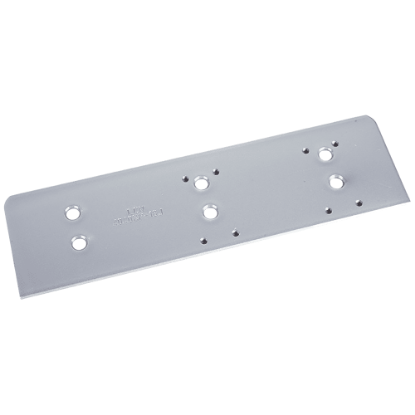
What Is a Drop Plate and Why Would a Surface Mounted Closer Need One?
A drop plate is a flat metal plate that goes between the closer and the surface it is mounting to. It exists for one reason: the surface is not giving the closer what it needs.
That sounds trivial. It is the single most common reason a closer that was ordered correctly cannot actually be fitted on the day.
The useful thing to understand is that two drop plates for the same mounting position can be solving two completely different problems. Two top jamb plates from the same family make the point:
| Plate | What it is for | The condition it solves |
|---|---|---|
| LCN 4040XP-18G | Locates a top jamb mounted closer flush with the top of the head frame face | A flush ceiling condition, where the closer cannot sit proud of the frame |
| LCN 4040XP-18TJ | Centers a top jamb mounted closer vertically on the head frame | A head frame whose face is less than 3-1/2 inches, so there is not enough flat metal for the standard pattern |
One is about the ceiling above the frame. The other is about the frame being too narrow. Ordering the wrong one gets you a plate that bolts to nothing useful.
Measure the frame face before you order, and look up at what is above the frame. Those two observations decide the plate.
Why Do Surface Mounted Closers Have Covers, and Does It Matter Which One?
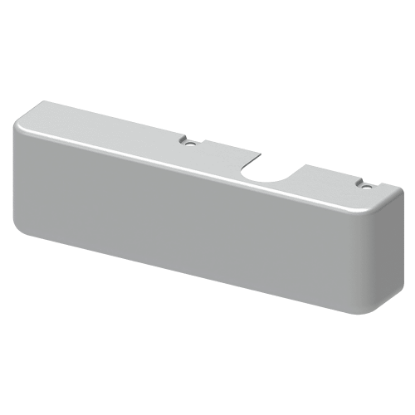
A concealed closer does not need a cover because nobody can see it. A surface mounted closer sits in plain view on a corridor door, so the cover does three jobs: it hides the body, it carries the finish that matches the rest of the hardware, and it keeps fingers and trolleys off the adjustment valves.
Two things about covers catch people out.
Covers come in the full finish range. The same metal cover will be listed in a long list of powder coat and plated finishes, from aluminium and dark bronze through to satin chrome and satin nickel. Ordering the right part number in the wrong finish gives you a working closer that looks wrong on the door. Our commercial door hardware finish guide explains how the finish codes map to each other.
A cover can be handed even when the body is not. This is the one that produces returns. A standard cylinder assembly is frequently non-handed, so one part serves both left and right hand doors.
The metal cover for that same closer can still be offered as a left hand or a right hand part. Non-handed body does not mean non-handed cover, and the handing has to be stated when you order.
Surface Mounted or Concealed: Which Belongs on Which Door?
This is a design decision on new work and almost never a real choice on an existing opening, because the door either has the pocket machined into it or it does not.
| Consideration | Surface mounted | Concealed |
|---|---|---|
| Visible on the opening | Yes, body and arm both | Little or nothing visible |
| Door or frame preparation | Through bolts or screws only | Machined pocket in the door, frame head or floor |
| Retrofit onto an existing door | Practical on most openings | Rarely practical without replacing the door |
| Access for adjustment | Valves reachable from a ladder | Often needs the door or a cover plate removed |
| Access for replacement | Unbolt and swap | Can mean lifting the door out |
| Exposure to damage and tampering | Higher, it is within reach | Lower, it is out of reach |
| Where it usually wins | Repair, retrofit, back of house, high traffic service doors | Lobbies and entrances where appearance is the priority |
Neither is better. They are answers to different questions. A facilities team maintaining a building full of existing doors will deal almost entirely with surface mounted units, because that is what is already fitted and what can be replaced without a carpenter.
Is a Surface Mounted Door Closer Handed?
The body usually is not. Many surface mounted closer bodies are explicitly non-handed, which is part of why they are stocked so widely: one unit covers both hands of door.
What is handed, or can be, is everything around the body. Covers are the obvious one. Some arms and hold open arms are non-handed and some are not, and the description on the part is the only thing that settles it. An arm described as non-handed, supplied with a long head and tube for top jamb mounting, is telling you both that it fits either hand and that it is intended for one specific mounting position.
So the practical rule is simple. Do not assume the whole assembly inherits the handing of the body. Check the handing on each part you are ordering.
What Changes on a Fire Rated Door?
A surface mounted closer on a fire rated opening is doing a life safety job, not a convenience job. It has to close and latch the door every time, not merely swing it most of the way shut.
Three things follow from that. The closer has to be a listed unit suited to the rating of the opening. Hold open, where it is used at all, has to release on alarm rather than being a mechanical catch that somebody leaves set. And the spring strength cannot simply be wound down to make the door easier to open, because the door still has to overcome the latch.
That last point is where well intentioned maintenance goes wrong most often. Our guide to adjusting a fire door closer covers the compliance side, and the commercial door fire rating guide explains what the rating on the opening actually requires.
Why Do Surface Mounted Closers Dominate Retrofit Work?
Four reasons, and they all come back to the body being on the outside.
- No machining. Fitting one means drilling and bolting, not routing a pocket into a door leaf that may be fire rated and cannot legally be cut on site.
- The door stays hung. A concealed unit in the door often means taking the leaf off. A surface unit is replaced with the door in place.
- Adjustment without disassembly. Sweep, latch and backcheck valves are on the end of the body, reachable with the cover off and the door hanging normally.
- Parts are available at component level. Arms, covers, plates, screws and cylinder assemblies are all separately replaceable, so a damaged arm does not mean a new closer.
That last point is worth taking seriously on a maintenance budget. A great many closers get replaced whole when a single part had failed. Our door closer component guide walks through what each part does and which ones are worth replacing on their own.
What Fails on a Surface Mounted Door Closer?
Being exposed is the advantage and the weakness. A surface mounted closer takes knocks that a concealed one never sees.
| Symptom | Likely cause | What to check first |
|---|---|---|
| Oil on the door face or the floor below | Seal failure in the body | Whether the leak is from the body or from the valve stems. A leaking body is a replacement, not an adjustment |
| Door slams at the end of its travel | Latch speed valve open too far, or a failing body | Latch valve first. If adjusting it changes nothing, the body is losing control |
| Door will not close the last few inches | Spring weakened, or the door is binding | Whether the door closes when pushed by hand. If it binds by hand it is a hinge or frame problem, not the closer |
| Arm bent or pulled away from its fixing | Door forced past its intended stop | Whether there is a working door stop. Without one this repeats |
| Fixings loose or pulling out of the door | Screws into a hollow door with no reinforcement | Whether through bolts should have been used instead of screws |
| Cover missing or rattling | Lost during earlier service work | The cover part number and the finish, both of which are ordered separately |
Why Winding the Valves Further Is Rarely the Answer
When a closer stops behaving, the instinct is to reach for the valves. Sometimes that is correct. But the valves control how the spring energy is released, not how much of it there is. If the body has lost fluid or the spring has weakened, more valve adjustment just moves the problem around and can empty the body faster.
The test is whether the adjustment holds. A valve that needs resetting every few weeks is telling you the body is finished. For faults elsewhere on the opening, our commercial door hardware troubleshooting guide covers latches, strikes and exit devices on the same door.
What Should You Confirm Before Ordering Parts?
Seven details, and the first one settles most of the rest.
- The model number from the body, read with the cover off.
- The mounting position, regular arm, parallel arm or top jamb.
- Whether the arm is a folding arm or runs in a track, because the parts families differ.
- The handing of the door, for any part whose description mentions hand.
- The finish, matched to the rest of the hardware on the opening.
- Whether a plate or bracket is already fitted, and if so what it is doing.
- Whether the opening is fire rated, which constrains what you are allowed to fit.
With the model number and the mounting in hand, everything else follows from the diagram. Start from the door closer parts section, or the full products and parts index if you already have the part number.
About the Author
Security Parts has supplied repair parts for commercial door hardware since 2001, covering Von Duprin, LCN, Schlage, Falcon, Detex and Adams Rite at the component level. Our diagram based lookup exists so a technician can confirm a part before ordering it. This guide was written by the Security Parts team from supplier documentation and the questions our customers bring us.
For the rest of the closer, see our commercial door closer sizing guide, the LCN door closer parts and service guide, and the full LCN parts range.