 Trusted Since 2001





Quick Summary
Key points
- Commercial door handles come in four main forms: lever handles, knobs, pulls and storefront handles. On most commercial doors today, the handle is a lever that is part of a lock or exit device trim.
- Levers are the default because they can be operated with one hand without tight grasping or twisting, which is what the ADA requires of hardware on accessible doors.
- A lever on a commercial lock is not a standalone part. It has to match the lock series, cylinder type, design and finish, and some lever kits are handed.
- Lever design names such as Rhodes, Sparta, Athens and Latitude matter when ordering, because roses and escutcheons are matched to the design.
- When a handle sags, wobbles or will not return, the problem is usually the spring cage, spindle or chassis behind it, not the handle itself.
| Handle type | Where it is used | Key point |
|---|---|---|
| Lever handle | Cylindrical and mortise locks, exit device trim | Default for accessible commercial doors |
| Knob | Older installations and some low use doors | Needs grasping and twisting to operate |
| Pull handle | Push and pull doors, hospital latches, storefronts | Often paired with a push plate or latch |
| Storefront handle | Aluminum and glass doors | Works with narrow deadlatches and deadlocks |
In This Guide
- What Types of Commercial Door Handles Are There?
- Why Do Commercial Doors Use Levers Instead of Knobs?
- Do Lever Designs and Finishes Matter When Ordering?
- How Do Commercial Door Handles Fit Different Lock Types?
- How Do You Replace a Commercial Door Lever?
- Are Commercial Door Handles Handed?
- What Goes Wrong With Commercial Door Handles?
- What Should You Confirm Before Ordering a Commercial Door Handle?
- About the Author
A commercial door handle takes more abuse than almost any other part of a building. It gets pulled, pushed, leaned on and kicked thousands of times, and it is the first thing people notice when it sags or sticks.
This guide explains the types of commercial door handles, why levers have replaced knobs on most commercial doors, how lever designs, finishes and handing affect ordering, and what to check when a handle needs replacing.
What Types of Commercial Door Handles Are There?
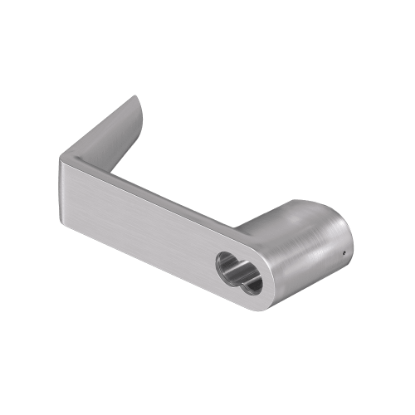
Lever handles
Lever handles are the standard on commercial locks and exit device trim. On a cylindrical or mortise lock, the lever is part of the lock: it turns a spindle that drives the latch, and on locking functions it may also hold the key cylinder, known as a key in lever design.
Knobs
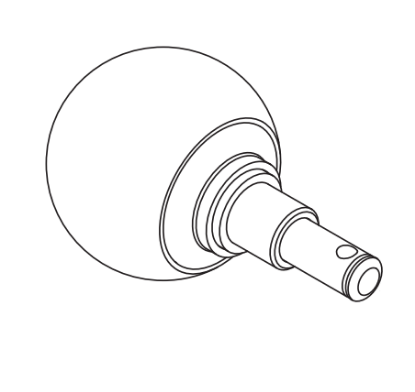
Knobs still appear on older buildings and some low use doors. They need a grasping and twisting motion, which is why they are not the preferred choice for accessible doors. Replacement knobs are still available for many locks, such as the Falcon 513K knob assembly.
For knob locks specifically, our Schlage door knob parts guide covers assemblies, roses and ordering.
Pull handles
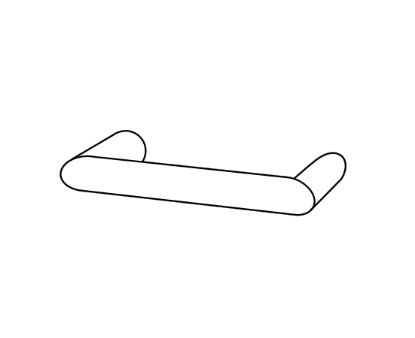
Pull handles are fixed grips used on doors that are pushed from one side and pulled from the other, often with a push plate on the opposite face. They also appear on specialist hardware such as hospital latches, where a paddle or pull operates the latch, and as cylinder pulls on aluminum doors. The Adams Rite 4024, 4025 and 4026 cylinder pulls, for example, are surface mounted five pin tumbler pulls with Schlage or Weiser keyway options.
Storefront handles
Aluminum storefront doors use narrow deadlatches and deadlocks, and their handles are designed for those stiles. Adams Rite 4600 Series heavy duty deadlatch handles, for example, accept designer lever kits such as the Aventura Series. Our Adams Rite parts guide covers the storefront range.
Exit device trim
On doors with a panic bar, the outside handle is exit device trim: a lever, pull or knob that may be keyed, locked or always free depending on its function. Our guide to Von Duprin 996L lever trim explains how exit device trim functions work.
Why Do Commercial Doors Use Levers Instead of Knobs?
Because levers can be operated without tight grasping, pinching or twisting of the wrist. Under the 2010 ADA Standards, operable parts on accessible doors must be usable with one hand and without those motions, and door hardware must be mounted between 34 and 48 inches above the finished floor.
A knob fails that test for many people, while a lever passes it. That is why levers are the default on new commercial work and why knobs are often replaced with levers during renovations. Local codes and the authority having jurisdiction have the final say on which doors must comply. Our ADA door clearance guide covers the space around the door itself.
| Question | Lever | Knob | Pull |
|---|---|---|---|
| Operable without grasping or twisting? | Yes | No | Yes, as a fixed grip |
| Usually part of the lock? | Yes | Yes | Often separate from the latch |
| Typical commercial use | Most locked and latched doors | Older and low use doors | Push and pull doors, storefronts |
| Common failure | Sagging from a worn spring cage | Loose or stripped spindle | Loose fixings |
Do Lever Designs and Finishes Matter When Ordering?
Yes. A replacement lever has to match the design already on the door, and the roses or escutcheons behind it are matched to that design.
Schlage commercial levers, for example, come in designs such as Athens, Boardwalk, Broadway, Latitude, Longitude, Rhodes and Sparta. The Schlage 03-042-RHO rose suits all of those designs on ALX, ND and CO Series locks, while the Omega lever uses its own rose. Ordering a lever without naming the design almost always leads to a mismatch.
Finish is the other half. Commercial finishes are given as codes, for example 626, also written US26D, for satin chrome, and 613, also written 10B, for oil rubbed bronze. Use the code on the existing hardware or the order rather than a color name.
What is a break away or vandal resistant lever?
Some commercial levers are designed to resist forcing on doors that see abuse. Break away versions of lever designs such as Rhodes are available, and Schlage Vandlgard lock functions, such as ND91, ND92, ND94, ND96 and ND97, are often specified on institutional doors. If the existing lever is one of these, order the same type so the protection is not lost.
How Do Commercial Door Handles Fit Different Lock Types?
The handle is shaped by the lock behind it, so the same lever design can come in several versions. Three set ups cover most commercial doors.
- Cylindrical locks. The lever slides onto the chassis spindle and sits on a round rose. Removing it usually means releasing a lever catch. On keyed functions, the outside lever often holds the cylinder.
- Mortise locks. The lever mounts on a spindle that passes through the lock case, with a rose or a full escutcheon plate behind it. The cylinder usually sits separately above the lever.
- Exit devices. The outside handle is trim mounted on the pull side, connected through the door to the device. Its function decides whether it is always free, locked or key controlled.
That is why a lever must be ordered for a specific lock series. A Rhodes lever for a cylindrical lock and a Rhodes lever for a mortise lock look alike but are not interchangeable.
Rose or escutcheon: what is the difference?
A rose is the round plate behind a lever. An escutcheon is a taller plate that usually covers both the lever and the cylinder. Roses suit most cylindrical locks, while mortise locks offer both. When replacing one, match the trim style already on the door, because the mounting holes differ.
How Do You Replace a Commercial Door Lever?
The exact steps depend on the series, but the sequence is similar on most commercial levers.
- Identify the lock. Note the brand, series, function, lever design and finish code before taking anything apart.
- Release the lever. Most commercial levers are held by a catch released through a small hole in the lever or rose. Use the correct tool so the catch is not damaged.
- Check what failed. If the lever was sagging, inspect the spring cage. If it turned without moving the latch, check the spindle and chassis.
- Fit the new lever and trim. Use the matching rose or escutcheon, and keep the existing cylinder or core if the new lever is supplied less cylinder.
- Test both sides. Confirm the lever returns level, the latch retracts fully and the function behaves as it should.
Are Commercial Door Handles Handed?
Many commercial levers are non-handed. The Schlage 03-280-RHO lever, for example, is listed as non-handed. Others are handed, including some storefront designer lever kits that are listed separately as right hand and left hand, and lever trim on exit devices, which is ordered as LHR or RHR.
Always read the door hand from the outside of the door and check the listing for the specific lever before ordering. A handed lever on the wrong door points its free end the wrong way.
What Goes Wrong With Commercial Door Handles?
Most handle complaints are really lock complaints.
- Sagging lever. The return spring or spring cage behind the lever has worn or broken. Replace the spring cage, not just the lever.
- Loose or wobbly handle. Through bolts or mounting screws have loosened, or the rose or escutcheon has cracked.
- Handle turns but the door does not open. The spindle, chassis or latch has failed, or the latch is binding in the strike. Check the strike alignment first.
- Handle will not turn from outside. It may be locked by design. Check the lock function before assuming it is broken.
- Damaged finish. Replace the lever and rose in the same finish code so they match.
If the lever itself has to come off, our Schlage lever removal tool guide explains the hidden catches and tools involved. For the parts behind the lever, see our cylindrical lock parts guide.
What Should You Confirm Before Ordering a Commercial Door Handle?
Six details settle most orders: the lock or exit device brand and series, the lever design, the finish code, the cylinder type if the lever is keyed, the hand if the lever is handed, and the door thickness if through bolts or spindles are involved.
Browse cylindrical lock parts and mortise lock parts for levers by series, exit device parts for trim, or Schlage parts if your doors use Schlage locks.
About the Author
Security Parts has supplied repair parts for commercial door hardware since 2001, covering Von Duprin, LCN, Schlage, Falcon, Detex and Adams Rite at the component level. Our diagram based lookup exists so a technician can confirm a part before ordering it. This guide was written by the Security Parts team from supplier documentation and the questions our customers bring us.
If you are not sure which lever or handle is on a door, contact us with a photograph of the handle, the rose and the edge of the door, and we will help you match it.