 Trusted Since 2001


Quick Summary
Key points
- The 6211 is a 6200 Series heavy duty electric strike for single doors, working with mortise locks without deadbolts and with cylindrical locksets that have a 3/4 inch latchbolt throw.
- Three variants share the same model number. The base 6211 and the 6211AL are listed for aluminium frames with a 1-11/16 inch backbox depth, and the 6211WF is built for wood frames with a 4-1/2 inch backbox depth.
- All three carry a 4-7/8 inch by 1-1/4 inch faceplate, take 24 VDC as standard with 12 and 16 VDC options, and ship fail secure with fail safe available.
- Mode is not soldered in. A slider sets fail safe on the WF, which is why a strike can behave differently from the one next to it on an identical opening.
- Most faults on these strikes are mechanical rather than electronic. Springs, keepers and faceplates are stocked separately, so a tired strike rarely needs replacing whole.
| Variant | Frame type listed | Backbox depth | Retrofit reference |
|---|---|---|---|
| 6211 | Aluminium frame | 1-11/16 in. | VD 3140 or FA 712 |
| 6211AL | Aluminium frame | 1-11/16 in. | FA 722 |
| 6211WF | Wood frame | 4-1/2 in. | FA 732 |
In This Guide
- What Is the Von Duprin 6211 Electric Strike?
- What Is the Difference Between 6211, 6211AL and 6211WF?
- Is the 6211 Fail Safe or Fail Secure?
- What Voltage Does a 6211 Need?
- Which Faceplate Does a 6211 Need?
- What Parts Fail on a 6211 Electric Strike?
- What Goes Wrong at Installation?
- What Do You Need to Confirm Before Ordering 6211 Parts?
- About the Author
A Von Duprin 6211 electric strike enquiry almost always starts the same way. Somebody has a strike in a frame, a number stamped on it that reads 6211, and a part that has stopped doing its job. Then it turns out there are three units sharing that number, and they are not interchangeable.
This guide sets out what the 6211 actually is, how the three variants differ, which parts are supplied separately, and what to establish before ordering anything.
What Is the Von Duprin 6211 Electric Strike?
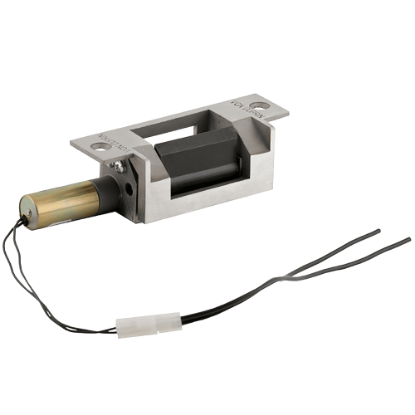
The 6211 is a heavy duty electric strike from the 6200 Series, designed for single door openings. It gives remote release of a locked door: the lock stays locked, and the strike lets the latch out of the frame when it is signalled.
That distinction matters more than it sounds. An electric strike does not unlock the lock. The lever or knob on the secure side behaves exactly as it did before, and the key still works as it did. What changes is the frame side of the opening, which can now be released from a button, a reader or an access control panel.
What locks does a 6211 accept?
Mortise locks without deadbolts, and cylindrical locksets, provided the latchbolt throw is 3/4 inch. That throw figure is the one to check first, because a latch that projects further will not sit correctly in the keeper and a shorter one may not be held at all.
If you are not certain which family of lock is on the door, our mortise locks versus cylindrical locks guide walks through the visible differences at the door edge.
What Is the Difference Between 6211, 6211AL and 6211WF?
The suffix carries the frame the strike was built for, and with it the depth of the hole the frame needs.
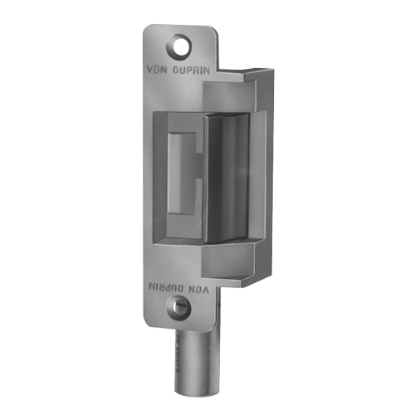
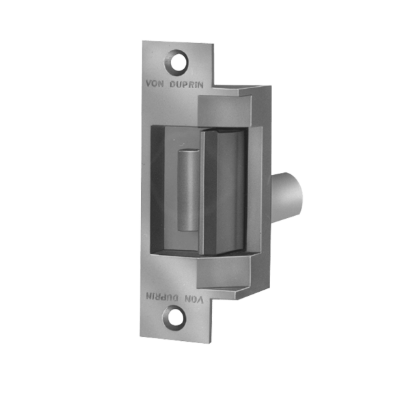
The base 6211 and the 6211AL are both listed for aluminium frames with a 1-11/16 inch backbox depth. The 6211WF is the wood frame unit, and its backbox depth is 4-1/2 inches. That is not a small difference. A WF will not go into a prep cut for an AL, and an AL dropped into a WF cutout will sit in a hole far deeper than it needs.
Do the three share any parts?
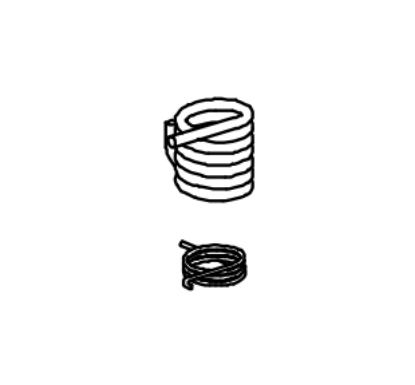
Some, and that is where part numbers earn their keep. A single stocked spring kit covers both the 6211 and the 6216, for example, while faceplates are listed per variant. Shared mechanical parts are the reason a strike that has lost its spring tension does not need a new body.
Is the 6211 Fail Safe or Fail Secure?
Fail secure as standard, with fail safe available as an option. In plain terms, remove the power from a fail secure strike and the door stays locked from outside. Remove it from a fail safe strike and the strike releases.
Neither setting affects getting out. Egress happens through the lock on the inside of the door, which is mechanical, so somebody inside can always leave whatever the strike is doing.
| Mode | On power loss | Current draw in normal state | Typical reason to choose it |
|---|---|---|---|
| Fail secure | Strike holds the latch, door stays locked from outside | None until released | Stores, plant rooms, anything that must stay secure in an outage |
| Fail safe | Strike releases, latch can leave the keeper | Continuous while locked | Doors that have to open on an alarm or outage |
How do you set the mode on a 6211WF?
With a slider. Von Duprin lists a fail safe slider as a separate stocked part for the 6211WF, which means the mode is set by a physical component rather than by a different model number.
Two consequences follow. A strike ordered in one mode can be moved to the other without replacing the unit, and a strike behaving unexpectedly on site may simply have been set the other way at some point in its life. Check the slider before condemning the strike.
What Voltage Does a 6211 Need?
The standard listing is 24 VDC, with 12 VDC and 16 VDC available as options. The figure on the strike has to match what the power supply actually delivers at the door, not what it says on the label in the cupboard.
Voltage drop over a long run is the usual culprit when a strike buzzes but does not release. A unit that works on the bench and fails in the frame is rarely faulty. Our electric strike schematic guide covers how the supply, the release device and the strike sit together on a circuit.
Does a fail safe strike draw more current?
In its normal state, yes, because it is held locked by power. A fail secure strike sits idle until somebody releases it. On a site with a battery backed supply, that difference decides how long the supply carries the opening in an outage, so it belongs in the calculation rather than being discovered later.
Which Faceplate Does a 6211 Need?
The listed faceplate for the 6211 family is 4-7/8 inches by 1-1/4 inches. Faceplates are supplied as separate parts, which is useful in two situations: a faceplate damaged by a strike plate removal, and a change of finish on an opening being refurbished.
Faceplates are not universal across the electric strike ranges. A faceplate listed for the 5100 is a 5100 part, not a 6200 part, and the same is true of the 6100. Our Von Duprin electric strike parts guide sets out which part families sit under which series.
What Parts Fail on a 6211 Electric Strike?
The electronics are the part people suspect first and the part that fails last.
A strike lives in a frame, takes the impact of a closing door several hundred times a day on a busy opening, and holds a latch under load whenever somebody leans on the door. The parts that give up reflect that: springs lose tension, keeper surfaces wear, faceplates get bent by levering, and fixings work loose in the frame.
| Symptom | Likely cause | What to check |
|---|---|---|
| Strike clicks but the door will not push open | Latch binding in the keeper | Door alignment and latch throw against the 3/4 inch figure |
| Keeper does not return cleanly | Spring tension lost | Spring kit for the 6211 and 6216 |
| No sound and no release | Supply, release device or wiring | Voltage at the strike while the release is pressed |
| Releases with no signal | Mode set to fail safe, or supply interrupted | Slider position on a WF, and the supply itself |
| Faceplate no longer sits flush | Frame damage or bent faceplate | Faceplate as a separate part before replacing the strike |
How do you diagnose a 6211 that will not release?
Work from the supply outwards, and measure rather than assume.
Prove the release device is sending a signal. Then measure the voltage at the strike terminals while the release is operated, not at the panel. Then take the load off the strike by pulling the door open slightly and operating the release again, because a latch under side load can hold a keeper that is actually working.
Only when all three have been checked does the strike itself become the suspect. That sequence saves a great many strikes that were never faulty. The same logic applies across the range, and our complete electric strikes guide covers it in more depth.
What Goes Wrong at Installation?
Three things, repeatedly.
The first is backbox depth. The 4-1/2 inch depth of a WF against the 1-11/16 inch depth of an AL is the single most common reason a replacement strike will not go in. Measure the existing cavity before ordering.
The second is latch alignment. The strike is cut into the frame in a fixed position, so the door has to present its latch at the right height. A door that has dropped on its hinges will push its latch against the edge of the keeper.
The third is the mode assumption. A strike fitted fail secure on a door the building expects to release in an alarm is a specification error that will not show up until the day it matters. Our electric strike installation guide covers the sequence in full.
Does the 6211 suit every single door opening?
No. It is listed for mortise locks without deadbolts and for cylindrical locks with a 3/4 inch throw, on a 1-3/4 inch door. A mortise lock with a deadbolt, a different throw, or a pair of doors without a mullion all take the opening outside what this unit was designed for.
Where the opening falls outside those limits, another series usually covers it. Our 6100 Series parts guide and 5100 Series parts guide set out where each one applies.
What Do You Need to Confirm Before Ordering 6211 Parts?
Six things, and five of them are read off the door rather than looked up.
| Check | Why it decides the part |
|---|---|
| Exact variant stamped on the unit | 6211, 6211AL and 6211WF are different parts |
| Frame material and existing cavity depth | 1-11/16 in. against 4-1/2 in. decides what will fit |
| Lock type and latchbolt throw | 3/4 inch throw, mortise without deadbolt or cylindrical |
| Voltage available at the door | 24 VDC standard, 12 and 16 VDC options |
| Mode the opening requires | Fail secure standard, fail safe optional |
| Whether the fault is mechanical or electrical | Decides between a spring kit, a faceplate and a new unit |
What if the number on the strike is unreadable?
Measure instead. The faceplate dimensions, the cavity depth and the frame material between them narrow the field quickly, and the latch throw on the door confirms whether the opening belongs to this family at all. A photograph of the faceplate and a tape measure reading of the cavity are usually enough for us to confirm the part.
For a broader view of which components exist across the electric strike ranges, our electric strike parts guide lists them by function rather than by model.
About the Author
Security Parts has supplied repair parts for commercial door hardware since 2001, covering Von Duprin, LCN, Schlage, Falcon, Detex and Adams Rite at the component level. Our diagram based lookup exists so a technician can confirm a part before ordering it. This guide was written by the Security Parts team from supplier documentation and the questions our customers bring us.