 Trusted Since 2001





Quick Summary
Key points
- Commercial door locks come in five main families: cylindrical locks, mortise locks, deadbolts, storefront locks and exit devices, plus electrified and keypad versions of most of them.
- The lock type decides how the lock fits the door. The function decides who can open it and when. The grade decides how much use and abuse it is built for. You need all three to choose correctly.
- For busy commercial doors, Grade 1 cylindrical or mortise locks are the usual choice. The Schlage ND Series cylindrical lock and the Schlage L Series mortise lock are two common examples.
- Most failed commercial locks do not need replacing whole. A chassis kit, lock case, cylinder or conversion kit often restores the lock on the door for less work.
- Before ordering, confirm the brand and series, function, backset, door thickness, cylinder type, handing and finish. Most of these are printed on the lock or its label.
| Lock type | How it fits the door | Typical doors |
|---|---|---|
| Cylindrical (bored) lock | Two round holes: one through the face, one into the edge | Offices, classrooms, corridors, storerooms |
| Mortise lock | A lock case set into a pocket cut in the door edge | High traffic and high security openings |
| Deadbolt | A separate bolt, usually added above a latch | Back of house doors, extra security |
| Storefront lock | Narrow deadlock or deadlatch in an aluminum stile | Glass and aluminum entrance doors |
| Exit device | Push bar across the door, latching at the edge, top or bottom | Required exits and assembly spaces |
In This Guide
- What Makes a Door Lock Commercial?
- What Are the Main Types of Commercial Door Locks?
- What Do ANSI Grades Mean for Commercial Door Locks?
- Which Lock Function Does Each Door Need?
- How Do You Choose the Right Commercial Door Lock?
- Should You Replace a Commercial Door Lock or Just the Parts?
- What Should You Confirm Before Ordering a Commercial Door Lock?
- About the Author
Every commercial building has dozens of doors, and each one needs a lock that suits who uses it, how often and how secure it has to be. Getting that wrong shows up fast: a lock that wears out in a year, a storeroom anyone can walk into, or an office door that locks people out.
This guide explains the main types of commercial door locks, how grades and functions work, which lock suits which door, and what to check when an existing lock fails and needs replacing.
What Makes a Door Lock Commercial?
A commercial door lock is built for the use, abuse and code requirements of a non-residential building. Compared with a typical home lock, it is usually tested to a higher grade, offered in many more functions, available with commercial cylinder and keying options, and listed for use on fire rated doors.
Take the Schlage ND10 passage lock as an example. It exceeds the BHMA A156.2 requirements for Grade 1 cylindrical locks and is UL10C listed for 3 hour fire doors up to 4 feet by 10 feet. Those are the kinds of credentials a commercial door often needs and a residential lock usually does not have.
Is a commercial lockset the same as a commercial door lock?
In practice, yes. Lockset usually means the complete lock with its trim, latch and strike, while lock can mean just the mechanism. When people search for a commercial lockset they normally mean a complete cylindrical or mortise lock for a commercial door.
What Are the Main Types of Commercial Door Locks?
Cylindrical locks
Cylindrical locks, also called bored locks, are the most common commercial lock. They fit two round holes, one through the door face and one into the edge, so they are quick to install and replace. The Schlage ND Series and the Falcon T Series are typical examples, and our cylindrical lock parts guide explains how the chassis works.
Mortise locks
Mortise locks sit in a rectangular pocket cut into the door edge. The lock case holds the latch, and often a deadbolt, in one heavy assembly. They are the usual choice for high traffic openings and for functions that need a deadbolt and latch together, such as the Schlage L9453 entrance and office lock with deadbolt.
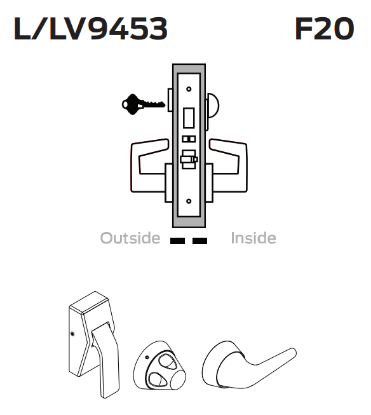
If you are deciding between the two most common families, our comparison of mortise locks vs cylindrical locks covers the trade offs in installation, strength and cost of ownership.
Deadbolts
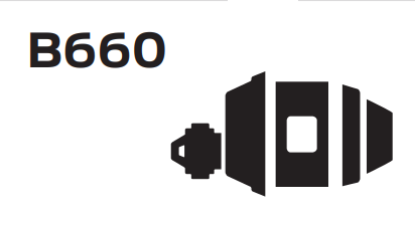
A commercial deadbolt adds a separate bolt to a door, usually above the main latch. Commercial deadbolts such as the Schlage B Series come in single cylinder, double cylinder, classroom and one sided versions. Our Schlage B Series deadbolt guide covers the series in detail.
Storefront locks
Aluminum and glass storefront doors have narrow stiles with no room for a standard lock, so they use narrow deadlocks and deadlatches designed for that frame. Adams Rite is the best known name here, and our Adams Rite parts guide covers the trim kits, faceplates and handles.
Exit devices
On doors that are required exits, the lock is often an exit device, a push bar that unlatches the door from the inside in one motion. Outside trim controls whether the door can be opened from the outside. Our panic hardware guide explains when they are required.
Electronic and keypad locks
Commercial keypad and electronic locks combine a mechanical lock with a keypad, card reader or wireless module. Examples include the Schlage NDE Series wireless cylindrical lock and the Adams Rite 3090-150 eForce keyless entry, a battery operated keypad for compatible deadlocks, deadlatches and exit devices. Replacement keypads and components are listed in our electronic lock keypads section.
What Do ANSI Grades Mean for Commercial Door Locks?
ANSI/BHMA grades rate how much use and abuse a lock is built for. Grade 1 is the heaviest commercial rating, Grade 2 suits lighter commercial use and Grade 3 is essentially residential. For a busy commercial door, Grade 1 is the safe default.
Grade matters most on doors that see heavy traffic or rough handling, such as corridors, classrooms, stairwells and staff entrances. A lower grade lock on those doors tends to loosen, sag or fail early. Our ANSI/BHMA grade guide explains the standards behind each grade.
What is a heavy duty commercial door lock?
Heavy duty usually means Grade 1, with a strong chassis, solid levers and a latch built for constant use. When a listing says heavy duty without a grade, look for the BHMA grade and the standard it was tested to. The grade is the measurable part of the claim.
Which Lock Function Does Each Door Need?
The function decides how the lock behaves: which side is locked, how it is locked and who can open it. Choosing the function matters as much as choosing the lock type, because the wrong function creates either a security gap or a door people cannot use properly.
| Function | How it behaves | Typical door | Schlage example |
|---|---|---|---|
| Passage | Both levers always free, no locking | Corridors, closets, open office areas | ND10, L9010 |
| Privacy | Inside push button or turn locks the outside lever | Single occupant restrooms | ND40, L9040 |
| Office or entrance | Inside push button locks the outside lever; key or inside lever unlocks | Private offices | ND50, L9050 |
| Classroom | Outside key locks or unlocks the outside lever; no inside control | Classrooms, meeting rooms | ND70, L9070 |
| Storeroom | Outside lever always locked; key entry only | Storage, IT and mechanical rooms | ND80, L9080 |
The table is a simplified summary. Our commercial lock function codes guide explains every ANSI function in detail, and our Schlage ND80 storeroom lock guide covers the storeroom function on its own.
How Do You Choose the Right Commercial Door Lock?
Work through the door rather than the catalog. Five questions settle most choices:
- What kind of door and frame is it? Hollow metal, wood or aluminum storefront decides which lock types physically fit.
- Is it a required exit or a fire door? Required exits may need an exit device. Fire doors need a lock listed for fire doors that latches every time.
- How busy is it? Heavy traffic points to Grade 1 cylindrical or mortise.
- Who should be able to open it, and when? That decides the function.
- How is the building keyed? Conventional, full size or small format interchangeable cores, and whether the lock must join a master key system.
If the door also needs access control, decide whether the lock will be electrified, paired with an electric strike, or replaced by an electronic lock. That choice affects power, wiring and the door frame as well as the lock.
Should You Replace a Commercial Door Lock or Just the Parts?
Most commercial locks are designed to be repaired. Before replacing the whole lock, check whether one of these parts solves the problem:
- Chassis kit. When a cylindrical lock stops retracting or the inside mechanism strips, a chassis kit replaces the internal mechanism. The Schlage ND50 and ND53 chassis kit, for example, ships unassembled with no finished parts, so you keep your existing levers and roses.
- Lock case. On mortise locks, the case can be replaced on its own. Lock cases are usually supplied without the armor front, strike, screws or cylinder.
- Cylinder or core. A lost key or a worn cylinder rarely needs a new lock. Our Schlage lock cylinder replacement guide explains the options.
- Conversion kit. Changing function does not always mean a new lock. The Schlage 40-325 kit, for example, converts an installed ND70 or ND94 classroom lock to the ND50 office function on the door.
Replacing the whole lock makes sense when the door prep is damaged, when the existing lock is obsolete and parts are no longer made, or when the door is changing to a different lock type. Our commercial door hardware replacement guide covers the decision in more depth.
How do you change a commercial door lock?
Identify the lock first. On cylindrical locks, the label inside the chassis shows the series, function code, finish and handing.
Then confirm the backset, door thickness and strike. For the Schlage ND Series, the standard backset is 2-3/4 inches with 2-3/8 inches optional. With those details, a like for like replacement uses the existing door prep and strike.
What Should You Confirm Before Ordering a Commercial Door Lock?
| Detail | Where to find it | Why it matters |
|---|---|---|
| Brand and series | Lock label, faceplate or trim | Parts are series specific |
| Function | Label, or how the lock behaves | Decides who can open the door |
| Backset | Edge of door to center of the cross bore | The latch must match the door prep |
| Door thickness | Measure the door | Spindles, screws and through bolts vary |
| Cylinder type | Look at the key face and core | Conventional, FSIC or SFIC parts differ |
| Handing and finish | Read handing from the outside; finish code on the label | Some trim is handed; finish must match |
Browse cylindrical lock parts, mortise lock parts and deadbolt parts by series, or start from Schlage parts if that is what is on your doors.
About the Author
Security Parts has supplied repair parts for commercial door hardware since 2001, covering Von Duprin, LCN, Schlage, Falcon, Detex and Adams Rite at the component level. Our diagram based lookup exists so a technician can confirm a part before ordering it. This guide was written by the Security Parts team from supplier documentation and the questions our customers bring us.
If you are not sure which lock is on a door, or which replacement fits, contact us with a photograph of the lock, the label and the edge of the door, and we will help you identify it.