 Trusted Since 2001


Quick Summary
Key points
- The ND80 is the storeroom function in Schlage's ND Series cylindrical range. The outside lever is permanently fixed and only the key retracts the latch.
- The inside lever always works. Storeroom function locks the way in, never the way out, which is what makes it usable on doors people have to escape through.
- Two electrified versions exist. The EL version is electrically locked and fail safe, the EU version is electrically unlocked and fail secure, and choosing between them is a life safety decision rather than a preference.
- Existing ND locks of other functions can often be converted to ND80 with a stocked kit rather than replaced.
- If staff keep reporting the outside lever is broken because it will not turn, that is the function working as designed, not a fault.
| Side | Lever behaviour | What opens the door |
|---|---|---|
| Outside | Fixed, does not rotate | Key only |
| Inside | Always free | Lever, every time |
| Latch | Deadlocking | Resists being pushed back when the door is closed |
In This Guide
- What Is the Schlage ND80 and What Does the Function Do?
- How Does ND80 Differ From the Other ND Functions?
- Where Should an ND80 Be Specified?
- What Do ND80EL and ND80EU Mean?
- Which One Do You Need: Fail Safe or Fail Secure?
- Can You Convert an Existing ND Lock to ND80?
- What Parts Are Serviceable on an ND80?
- Does an ND80 Need a Particular Strike?
- What Goes Wrong With an ND80?
- How Do You Order the Right ND80?
- About the Author
The ND80 is one of the most specified locks in commercial buildings and one of the most misunderstood. Half the service calls about it are not faults at all. The outside lever does not turn because it is not supposed to turn.
This guide covers what the function actually does, how it compares with the other ND functions, what the electrified versions change, and how to convert or order one correctly.
What Is the Schlage ND80 and What Does the Function Do?
The ND80 is a cylindrical lockset from the ND Series with the storeroom function. Storeroom means the door is locked from the outside at all times, and only a key gets you in.
The outside lever does not rotate. It is rigid, deliberately, so there is no mechanism to force and nothing for a user to misread. Turning the key retracts the latch for that entry and the door relocks behind them. There is no way to leave it unlocked by accident.
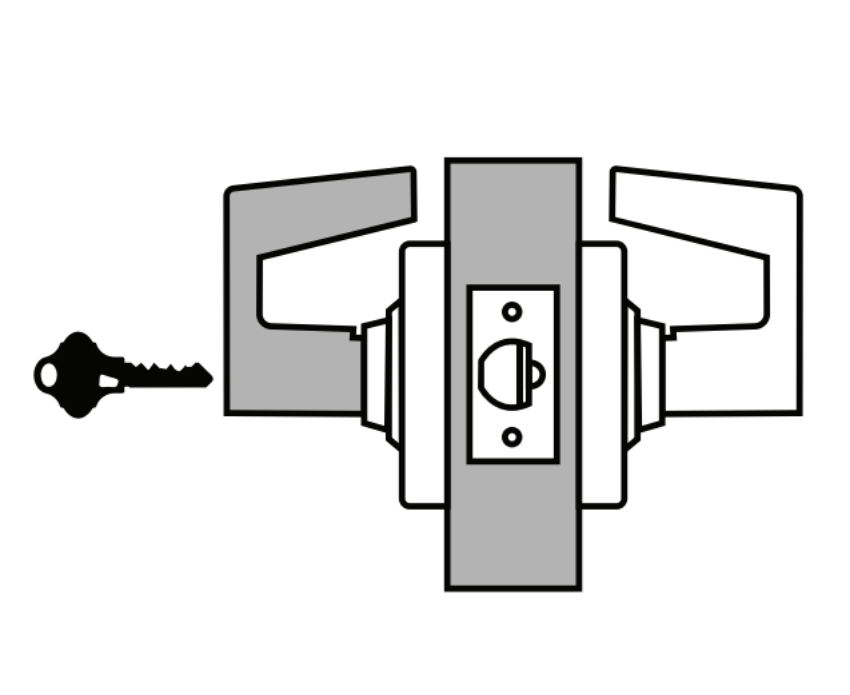
The inside lever is always free. Push the door, turn the lever, and you are out. That is not a convenience, it is an egress requirement on the overwhelming majority of commercial doors.
What is a deadlocking latch and why does it matter here?
A deadlocking latch has a small auxiliary plunger beside the main latch bolt. When the door is closed the plunger is held in by the strike, and that stops the main bolt being pushed back from outside. Without it, a storeroom function door with a permanently locked lever would still be vulnerable to the oldest trick there is.
How Does ND80 Differ From the Other ND Functions?
Function codes are the whole language of commercial locks, and the ND number is what carries the function.
| Behaviour | Outside lever | Typical use |
|---|---|---|
| Storeroom | Always fixed, key retracts the latch | Plant rooms, stores, server rooms, back of house |
| Classroom | Key locks and unlocks the outside lever | Rooms locked and unlocked on a timetable |
| Office | Locked from inside, usually by a button or turn | Rooms the occupant controls |
| Passage | Always free, no locking | Doors that only need latching |
| Privacy | Locked from inside with emergency release outside | Restrooms and changing rooms |
The distinction people most often get wrong is storeroom against classroom. A classroom function can be left unlocked. A storeroom function cannot. On a door that must never be found open, that difference is the whole specification.
Our commercial lock function codes guide works through the full set and how the codes are read.
Where Should an ND80 Be Specified?
Anywhere the door has to be secure by default and nobody should be able to change that from the corridor.
Plant rooms, electrical intake rooms, server rooms, stock rooms, cleaners' cupboards and any space holding equipment or material that walks. The common thread is that occupancy is occasional, access is by key or credential, and leaving the door unlocked is never the intended state.
Where is it the wrong choice?
On a door people pass through regularly in both directions. A storeroom function on a busy internal door means every single entry needs a key, and the predictable result is somebody wedging it open, which defeats the lock entirely.
That failure pattern is worth naming because it is so common. If a storeroom door is permanently propped, the answer is usually the wrong function rather than badly behaved staff.
What Do ND80EL and ND80EU Mean?
Both are electrified versions of the same storeroom function, and the two letters describe what the electricity does.
The EL version is electrically locked, described as fail safe. Power holds the outside lever locked, and when power is removed the lever becomes operable.
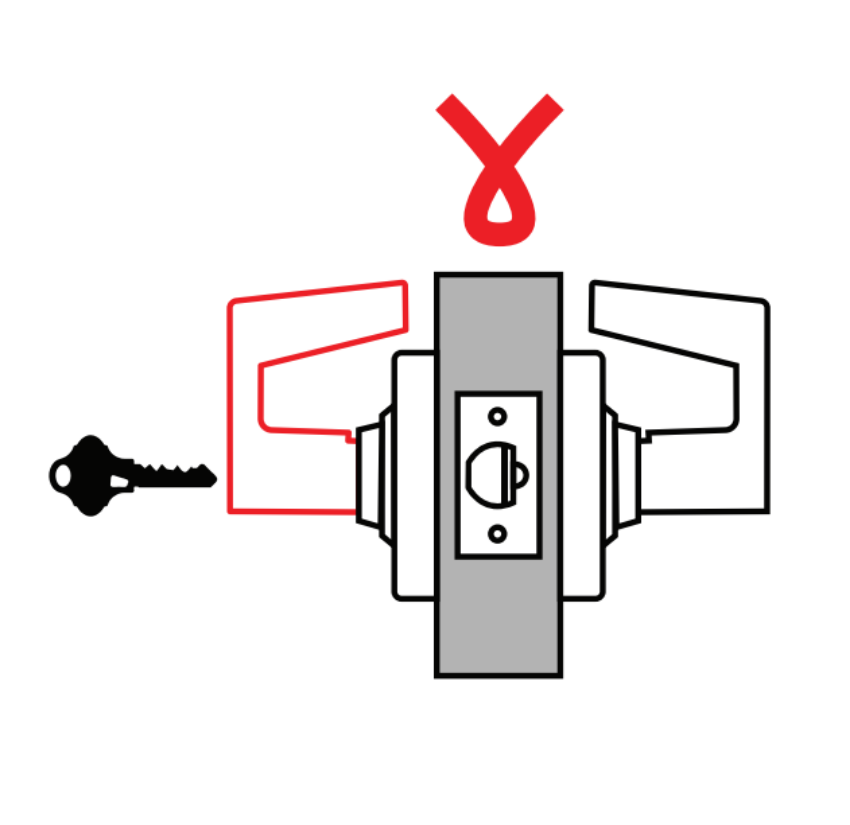
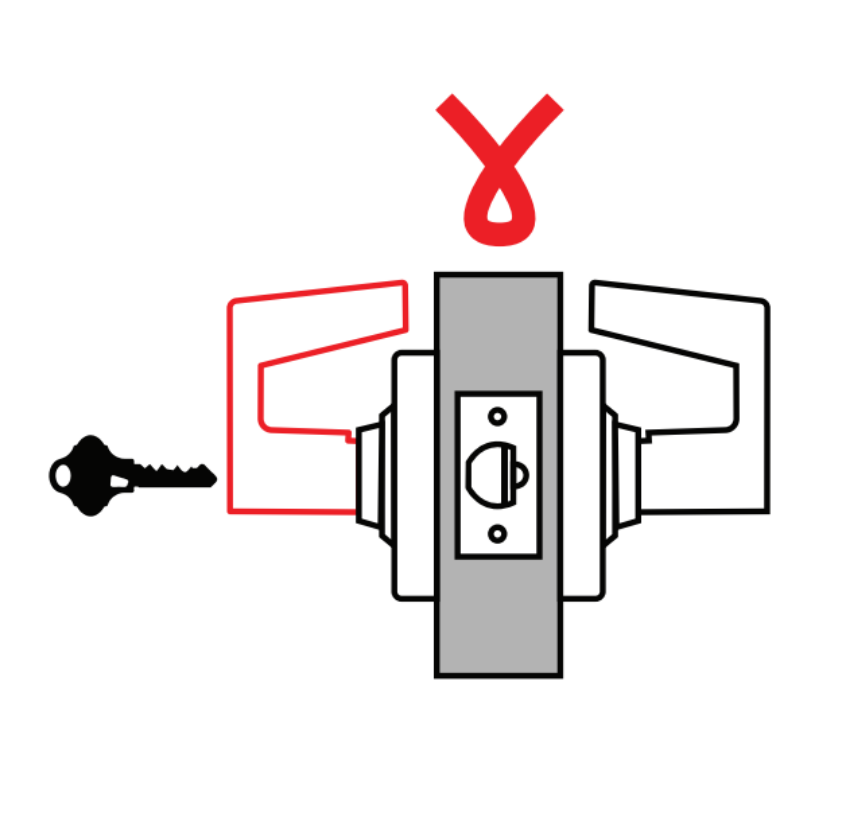
The EU version is electrically unlocked, described as fail secure. Power releases the outside lever, and when power is removed the door stays locked.
Does electrifying the lock change egress?
No, and this is the point that reassures people. On both versions the inside lever stays mechanically free. Whatever the electronics are doing, and whatever the power is doing, somebody inside can always get out by turning the lever.
Which One Do You Need: Fail Safe or Fail Secure?
This is decided by what has to happen to that specific door during a power failure, and it is a question for the people responsible for the building rather than for whoever is ordering the part.
| Consideration | Fail safe, EL | Fail secure, EU |
|---|---|---|
| On power loss | Outside lever becomes operable | Door stays locked |
| Current draw in normal state | Continuous, power holds it locked | None, power is only applied to release |
| Suits doors that must release in an emergency | Yes | No |
| Suits doors that must stay secure regardless | No | Yes |
| Typical application | Doors on an egress or fire strategy path | Stores, plant and equipment rooms |
Get this wrong in either direction and the consequences are real: a store room that unlocks itself during an outage, or a door on an escape route that locks people on the wrong side of it. Our access control integration guide covers how these choices sit alongside the rest of the system.
Can You Convert an Existing ND Lock to ND80?
Often, yes, and it is far cheaper than replacing the lockset.
A conversion kit changes the function of an existing ND lock to storeroom. The chassis stays in the door, the trim stays, the keying stays, and the behaviour changes.
Conversion is the right call when a room changes use, when a classroom function door keeps being left unlocked, or when a site is standardising its functions. It is the wrong call when the chassis itself is worn out.
What Parts Are Serviceable on an ND80?
Most of it. These locks were designed to be repaired rather than discarded, which is a large part of why they are specified in institutional buildings.
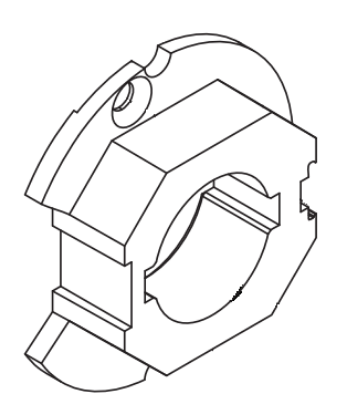
Levers, roses, hubs, springs, latches, strikes and cylinders are all separate items. The chassis is the part you replace last, not first.
Does an ND80 Need a Particular Strike?
It needs one that lets the deadlocking plunger do its job, and that is a more specific requirement than it sounds.
The plunger has to land on the solid face of the strike, not drop into the latch hole alongside the main bolt. If the strike is misaligned, or if the hole is oversized from a previous repair, the plunger falls into the cavity and the deadlocking feature stops working. The door still latches and still feels secure, and it is no longer resisting anything.
This is worth checking on any storeroom door, because it is invisible from the corridor. Close the door, then try to push the latch back with a thin piece of card against the bolt. If it moves, the plunger is not engaging.
What about the lip length?
The lip is the curved part of the strike that guides the latch in. Too short and the latch catches on the frame, too long and it projects into the opening where people and trolleys will find it. On a storeroom door that gets used with hands full, a correctly sized lip is the difference between a door that latches and one that gets left ajar.
Our guide to strike plates, lip length and alignment covers how to measure for the right one.
What Goes Wrong With an ND80?
| What gets reported | What it usually is | Action |
|---|---|---|
| Outside lever will not turn | The function working correctly | Confirm the function before touching anything |
| Key turns but the latch does not retract | Cylinder, tailpiece or the chassis | Check the cylinder and tailpiece first |
| Inside lever has play or droops | Hub or spring wear | Inside hub, spring cage components |
| Door can be pushed open when closed | Deadlocking plunger not engaging the strike | Strike alignment and latch condition |
| Electrified version will not release | Power supply, wiring or the transfer route | Measure voltage at the lock while it operates |
| Door unlocked after a power cut | EL fitted where EU was intended | Confirm which version is installed |
On the electrified versions, remember the lock sits in a moving door, so the wiring has to cross from the frame. Our electric hinge guide covers that route and why it causes most intermittent faults.
How Do You Order the Right ND80?
Six details, and they are all readable at the door or from the schedule: the function you need, whether it is mechanical or electrified, fail safe or fail secure if electrified, the lever design, the finish, and the handing.
Cylinders are usually a separate line. A lock supplied less cylinder lets the site key it to its own system, which is almost always what a building with a key hierarchy wants. Our Schlage lock cylinder replacement guide covers that side.
If you are weighing the ND Series against the lighter range, the Schlage ALX Series guide sets out where each one belongs. For the parts themselves, browse cylindrical lock parts and Schlage replacement parts.
About the Author
Security Parts has supplied repair parts for commercial door hardware since 2001, covering Von Duprin, LCN, Schlage, Falcon, Detex and Adams Rite at the component level. Our diagram based lookup exists so a technician can confirm a part before ordering it. This guide was written by the Security Parts team from supplier documentation and the questions our customers bring us.
If you are not certain which ND function is on the door, describe how the levers and key behave through our contact page and we will identify it before you order a kit or a lock.