 Trusted Since 2001


Quick Summary
Key points
- Falcon door hardware covers four families you will meet on a commercial opening: exit devices, cylindrical locks, mortise locks and the cylinders and trim that go with them.
- The exit devices split into the 19 Series, the narrow stile 24 Series and the wide stile 25 Series, and the series decides almost every part number downstream.
- Falcon service parts carry their own prefixes. Q330 numbers belong to T Series cylindrical lock parts and levers, Q500 numbers cover deadbolt cylinders.
- Falcon cylinders and keyways are handled with their own tailpieces and keyed in lever kits, which is what makes a Falcon lock orderable with a Schlage trim part number.
- Almost nothing on a Falcon opening has to be replaced whole. Spring cages, levers, cams, cylinders and chassis parts are all stocked individually.
| Family | Where it is used | Typical service parts |
|---|---|---|
| 19, 24 and 25 Series exit devices | Egress doors, including fire rated openings | Channels, end caps, dogging parts, trim |
| T Series cylindrical locks | Classrooms, offices, general traffic doors | Spring cages, levers, latches, strikes |
| M Series mortise locks | Heavier doors and higher security functions | Cams, cylinders, trim, latch parts |
| Cylinders and keying parts | Across all of the above | Deadbolt cylinders, tailpieces, keyed in lever kits |
In This Guide
- What Is Falcon Door Hardware and Where Does It Sit?
- Which Falcon Product Families Will You Find on a Commercial Door?
- How Do You Tell Which Falcon Exit Device You Have?
- What Is the Falcon T Series and How Is It Serviced?
- What Does the Falcon M Series Cover?
- How Do Falcon Service Part Numbers Work?
- Which Falcon Parts Fail First?
- Can You Mix Falcon Parts With Other Hardware on the Same Door?
- How Do You Confirm a Falcon Part Before You Order It?
- Where to Start for Each Falcon Family
- About the Author
Falcon hardware tends to turn up on a job without any paperwork. Somebody inherits a building, a lever snaps or a device stops dogging, and the only clue to what is installed is a stamping on the chassis and a shape that looks familiar.
This guide is the orientation layer. It covers which Falcon families exist, how to tell them apart on the door, how the service part numbering behaves, and which of our deeper part guides to go to once you know what you are holding.
What Is Falcon Door Hardware and Where Does It Sit?
Falcon is a commercial door hardware line covering exit devices, cylindrical locks, mortise locks and the cylinders and trim that serve them. It is specified where a building needs dependable, serviceable hardware without the weight and cost of the heaviest institutional ranges.
The practical consequence for a facilities team is that Falcon openings are repairable. The ranges were designed around replaceable sub assemblies rather than sealed units, so a failure usually resolves to one part rather than to a new lock.
That is also why identification matters more than it does on some ranges. The same lever can appear across several chassis, and the same looking exit device can be a 24 or a 25 depending on the stile it was built for.
Which Falcon Product Families Will You Find on a Commercial Door?
Four families account for nearly everything in service. Knowing which one you are looking at narrows the part search from thousands of numbers to a few dozen.
Exit devices
The 19 Series is the lighter of the three exit device ranges. The 24 Series is the heavy duty narrow stile device, built for aluminium and glass openings where there is very little stile to work with. The 25 Series is the heavy duty wide stile device used on hollow metal and wood doors.
Each of those series then carries configurations: rim, surface vertical rod, concealed vertical rod and mortise. The configuration decides which latching parts exist, so it has to be settled before any part is ordered. Our Falcon 19, 24 and 25 Series parts guide works through each one.
Cylindrical locks
The T Series is the Grade 1 cylindrical lockset. It is the family you meet on classroom and office doors, and the one whose spring cage becomes a talking point once levers start to sag. The Falcon T Series parts guide covers the function codes and chassis numbers.
Mortise locks
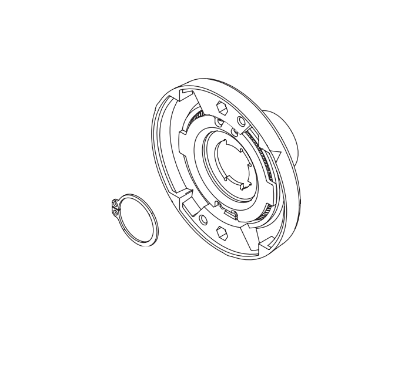
The M Series is the mortise family. Mortise locks carry their functions inside a single case set into the edge of the door, and the function is changed with cams and internal parts rather than by swapping the whole lock.
Cylinders, trim and keying parts
Cylinders sit across all three families. Deadbolt cylinders, keyed in lever kits and the tailpieces that connect a cylinder to a chassis are ordered separately from the locks themselves.
How Do You Tell Which Falcon Exit Device You Have?
Start with the door, not the device. The stile is the single most useful clue, because the narrow stile and wide stile ranges were built for different openings and rarely appear on the wrong one.
| What you see | Likely series | What to check next |
|---|---|---|
| Aluminium and glass door, very little frame to work with | 24 Series narrow stile | Rod configuration and the stile width |
| Hollow metal or wood door, generous stile | 25 Series wide stile | Whether it is rim, vertical rod or mortise |
| Lighter chassis on a general purpose door | 19 Series | End cap style and channel length |
| Fire rating label on the door edge | Any series, fire configuration | Dogging must be absent, and latching has to be positive |
Next look at the rods. No rods at all means a rim device latching into a strike on the frame. Visible rods running up and down the face of the door mean surface vertical rod. No visible rods but latches top and bottom means concealed vertical rod, with the rods running inside the door.
Finally check the dogging. A hex dogging keyhole in the touchpad end tells you the device can be held in the retracted position, which in turn tells you it is not a fire rated configuration, because fire devices are not allowed to be dogged down.
What Is the Falcon T Series and How Is It Serviced?
The T Series is a cylindrical lockset, meaning the working parts sit in a chassis that passes through a bored hole in the door face, with the latch running into the edge.
Service on a cylindrical lock is mostly about three sub assemblies. The chassis carries the function. The spring cage returns the lever. The latch and strike decide whether the door actually stays shut.
The symptoms and what they point to
A lever that droops points at the spring cage. A lever that turns but does not retract the latch points at the chassis or the lever connection. A door that will not stay shut, with the lever behaving normally, points at the latch or at strike alignment rather than at the lock.
That last one is worth separating out, because a misaligned strike gets blamed on the lock more often than anything else. Our cylindrical lock parts guide covers how the pieces relate.
What Does the Falcon M Series Cover?
The M Series is the mortise range. A mortise lock case is let into a pocket cut in the edge of the door, which gives it room for more internal mechanism than a cylindrical lock has.
That extra room is why mortise locks carry the more complex functions, and why the cam becomes an ordering decision. Cams translate the turn of the cylinder into movement inside the case, and different functions take different cams.
If you are working on the mortise case itself rather than the cylinder side, the mortise lock parts guide covers the internal components, and commercial lock function codes explains how the function designations are read.
How Do Falcon Service Part Numbers Work?
Falcon service parts do not all share one numbering scheme. They carry prefixes that group parts by the family they serve, and recognising the prefix tells you which family you are in before you read the rest of the number.
| Prefix | What it covers | Example of the kind of part |
|---|---|---|
| Q330 | T Series cylindrical lock parts and levers | Spring cage kits, lever styles, trim |
| Q500 | Deadbolt cylinders | Five pin and six pin cylinders in different finishes |
| A09894 and A09897 | M Series cams | Cams split by deadbolt and non deadbolt function |
The lesson is simple. A partial number is not enough. The suffix after the prefix usually carries the finish, the pin count or the specific variant, and two parts that differ only in the last three digits can be completely different items.
Which Falcon Parts Fail First?
Across the families the failures cluster into a short list, and most of them are wear items rather than defects.
| Symptom | Family | Usual cause |
|---|---|---|
| Lever sits below horizontal | T Series | Spring cage worn |
| Device will not dog, or will not undog | 24 and 25 Series | Dogging assembly or a worn hex key socket |
| Top or bottom latch not engaging | Vertical rod configurations | Rod length out of adjustment, or a worn latch |
| Key turns but the bolt does not move | M Series | Wrong or worn cam |
| End cap loose or missing | All exit device series | Impact damage, fixings backed out |
| Door rattles but is latched | All families | Strike alignment rather than the lock |
The pattern is that a Falcon problem is usually a sub assembly problem. Before ordering a complete lock or device, confirm which of these the symptom actually matches.
Can You Mix Falcon Parts With Other Hardware on the Same Door?
Within the cylinder and keying world, yes, and the catalogue reflects it. There are tailpieces and keyed in lever kits made specifically so a Falcon cylinder can serve a lever or chassis from another range in the same family of brands.
That is a deliberate convenience rather than an accident, and it is why you will find parts described as a Falcon tailpiece or a keyed in lever for a Falcon cylinder sitting under a different brand name in the parts list. The cylinder dictates the keyway, the tailpiece dictates the fit.
Outside of cylinders and keying, mixing is a different matter. Chassis parts, latch assemblies, rods and dogging components are family specific, and a part from one exit device series will not serve another even where it looks similar.
How Do You Confirm a Falcon Part Before You Order It?
Four pieces of information settle almost every Falcon order. Collect them before you search.
| Information | Where to find it | Why it matters |
|---|---|---|
| Family and series | Stamping on the chassis or device, plus door type | Narrows the part list immediately |
| Configuration | Rim, surface vertical rod, concealed vertical rod or mortise | Decides which latching parts exist |
| Function | Behaviour of the lock, or the function code if visible | Cams and chassis parts follow the function |
| Finish | Existing hardware on the door | Carried in the part number suffix |
Fire rated openings add one more step. Confirm the rating from the label on the door edge, because fire configurations exclude dogging and insist on positive latching, and those two facts rule several otherwise identical parts out.
Where to Start for Each Falcon Family
Once you know the family, go straight to the part level rather than browsing. The Falcon replacement parts section is the starting point, and the family guides go deeper.
For egress hardware, use the 19, 24 and 25 Series parts guide alongside the exit device parts section. For cylindrical locks, the T Series guide and the cylindrical lock parts section. For deadbolt cylinders and keying parts, the Q500 parts guide and the deadlock parts section.
If you have a Falcon part number already, the parts by brand index and the full products and parts index will take you to the item directly.
About the Author
Security Parts has supplied repair parts for commercial door hardware since 2001, covering Von Duprin, LCN, Schlage, Falcon, Detex and Adams Rite at the component level. Our diagram based lookup exists so a technician can confirm a part before ordering it. This guide was written by the Security Parts team from supplier documentation and the questions our customers bring us.
If the stamping on the device is unreadable or the series is not obvious, contact us with a photograph of the chassis and the door type, and we will confirm the family before you order.