 Trusted Since 2001


Quick Summary
Key points
- A roller strike replaces the fixed lip of a conventional strike with a rotating roller, so the latch rolls across the keeper instead of dragging over it.
- It exists to solve friction, not security. The usual symptoms are a door that needs a shove to latch, a squealing latch, and a worn groove across the strike lip.
- Roller strikes are matched to the exit device and the opening, not chosen by preference. The device series, the configuration and the device length all narrow the part.
- A roller strike will not rescue a badly aligned opening. If the latch is landing in the wrong place, the alignment has to be corrected first or the roller simply wears instead of the lip.
- On a fire rated opening the strike is part of the listed assembly, so the replacement has to suit the device and the door rather than just fit the hole.
| Point of difference | Fixed lip strike | Roller strike |
|---|---|---|
| How the latch engages | Slides across a static lip | Rolls across a turning roller |
| Closing effort needed | Higher, rises as the lip wears | Lower and more consistent |
| Typical wear point | Groove worn into the lip | Roller bearing and spindle |
| Noise in use | Scrape or squeal when dry | Quieter, less dependent on lubrication |
| Best suited to | Low traffic and light closing force | High traffic, strong closers, heavy leaves |
In This Guide
- What Is a Roller Strike and How Does It Work?
- When Do You Actually Need a Roller Strike?
- Which Roller Strike Suits Your Device?
- What Do You Give Up by Choosing a Roller Strike?
- When Should the Strike Also Act as a Door Stop?
- Does a Roller Strike Affect a Fire Rated Opening?
- What Should You Check When Fitting a Roller Strike?
- When Is the Strike Not the Problem at All?
- About the Author
A roller strike is one of those parts nobody specifies until a door starts misbehaving. The door closes, stops just short, and sits there unlatched until somebody pushes it the last inch.
This guide covers what a roller strike actually changes at the opening, how it differs from the fixed lip strikes most doors are fitted with, when it is the right answer, when it is the wrong one, and what has to be confirmed before ordering a replacement.
What Is a Roller Strike and How Does It Work?
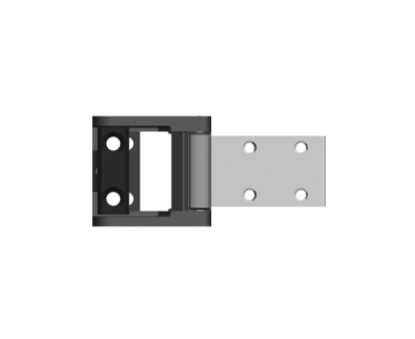
It is a strike whose keeper face is a rotating roller rather than a fixed metal lip.
On a conventional strike, the latch bolt of an exit device slides across a static lip, is pushed back into the device by the ramp of that lip, and then springs out into the keeper once it clears. Every one of those cycles is metal sliding on metal. On a roller strike, that same latch meets a roller mounted on a spindle. The roller turns, the latch rolls over it, and the sliding contact is largely replaced by rolling contact.
The practical result is that less of the door's closing energy is lost at the strike. On a heavy leaf with a strong closer that difference is barely noticeable. On a door where the closing force is already marginal, it is the difference between latching and not latching.
Does a roller strike change how secure the door is?
Not in the way people sometimes assume. The roller changes how the latch gets into the keeper, not how well the keeper holds it once it is there. A latch seated in a roller strike is retained by the body of the strike exactly as it would be in a fixed strike. What a roller strike does not do is add deadlocking or resist manipulation on its own, so a door that needs that still needs the hardware designed to provide it.
When Do You Actually Need a Roller Strike?
When friction at the strike is the reason the door is not latching reliably, and the alignment is already correct.
That second half matters more than the first. A roller strike is a friction fix. If the latch is landing high, low or short of the keeper, friction is not the problem and a roller will not help. Our strike plate guide covers the geometry side, and alignment should be proven before any part is changed.
| What you observe | Likely cause | Is a roller strike the answer? |
|---|---|---|
| Door needs a push to latch, mark is centred | Friction at the strike lip | Yes, often |
| Latch mark is above or below the cutout | Alignment or hinge wear | No, correct alignment first |
| Squeal as the latch crosses the strike | Dry sliding contact | Yes, and check closer settings too |
| Visible groove worn into the lip | Repeated sliding under load | Yes, replace the worn strike |
| Door bounces back off the frame | Closing speed or latch speed set too high | No, adjust the closer |
Could the closer be the real problem?
Frequently. A closer with latch speed set too low cannot drive the latch over any strike, roller or not. A closer with latch speed set too high throws the door at the frame and it rebounds. Before changing the strike, watch the last few inches of the swing and see whether the door is arriving with too little energy or too much. Our guide to a door that slams covers the adjustment side of that behaviour.
Which Roller Strike Suits Your Device?
The device decides it, not the frame.
Exit device strikes are matched to the latch they receive. The latch throw, the latch shape and the height at which it presents all come from the device, so a strike that suits a rim device on one series will not necessarily suit another. Narrow stile openings narrow the choice further, because there is less frame face to work with.
Does device length change the strike?
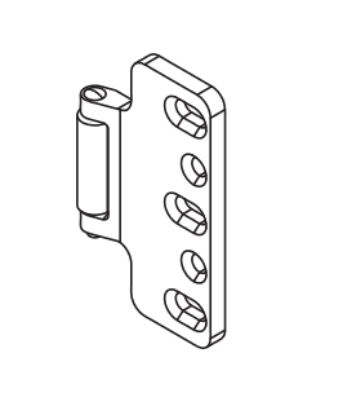
It can, and this catches people out. Some roller strikes are listed against a specific device length because the latch position and the reinforcement behind it differ on that build. A strike described as suiting a five foot device is not a general purpose part, and fitting it to a shorter device leaves the latch meeting the roller off centre.

What Do You Give Up by Choosing a Roller Strike?
A moving part where there previously was none.
A fixed lip strike is a piece of shaped metal. It wears, but it has nothing to seize, and a worn lip still works after a fashion. A roller strike has a roller on a spindle, and a roller that stops turning is worse than a fixed lip, because it presents a smaller contact face for the latch to drag over. In a dusty environment, or one where the opening is washed down regularly, that is a real consideration.
| Opening condition | Better choice | Reason |
|---|---|---|
| High traffic interior corridor | Roller strike | Cycle count is the main load |
| Exterior door, exposed to grit | Fixed lip, maintained | Nothing to seize |
| Heavy leaf with strong closer | Roller strike | Reduces energy lost at the strike |
| Door that also needs a stop | Integral stop strike | One part does both jobs |
| Pair of doors with a mullion | Device matched strike | Latch positions are fixed by the pair |
What is the fixed lip alternative?
A standard panic strike. It is the part most exit devices leave the factory expecting, and on a well aligned opening with a correctly set closer it does the job for years. If the diagnosis points at alignment rather than friction, this is usually what should go back on.
When Should the Strike Also Act as a Door Stop?
When the opening has nowhere sensible to put a separate stop, and the door is over travelling.
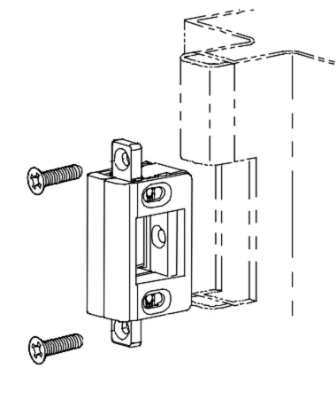
An integral stop strike combines the keeper with a stop face, so the leaf is arrested at the frame rather than by a floor or wall mounted stop. On openings where a floor stop would be a trip hazard, or where the wall behind the door is glazed, that combination solves two problems with one part.
It is not a free upgrade. The stop face takes the full impact of the door every time somebody pushes it hard, and that load now goes into the frame at the strike rather than into a stop designed for it. On a door that gets thrown open, a separate stop is still the better engineering answer.
Does a mullion change the strike choice?
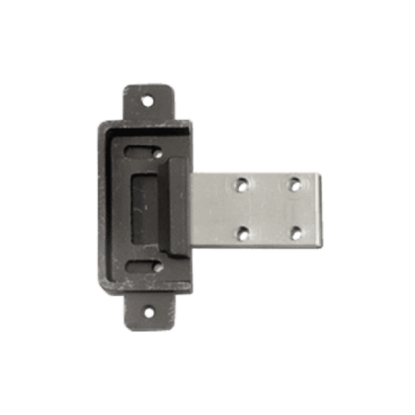
Yes, because on a pair of doors with a removable mullion the strike is mounted on the mullion rather than the frame, and the mullion defines where the latch lands. Our mullion guide covers how those openings are put together and why the strike cannot be chosen independently of the mullion.
Does a Roller Strike Affect a Fire Rated Opening?
It is part of the assembly, so yes, it has to be treated as such.
A fire rated door is listed as a complete assembly: leaf, frame, hinges, closer, exit device and strike. Changing the strike changes a component of that assembly. The replacement has to be one that suits the device and the opening as listed, and positive latching has to work every time, because a fire door that does not latch is not performing its function at all.
This is also where the friction argument carries the most weight. A fire door is required to close and latch under its own closer with no help from anybody. If the strike is the reason it needs a push, that is not a comfort issue, it is a performance failure. Our fire rating guide covers what else on the opening is bound by the same listing.
What about an accessible opening?
Accessible routes limit how much force a person should need to open a door. Opening force and latching force are different measurements, but they share a cause: an opening fighting itself. A strike that drags increases the force the closer has to supply, and the usual fix for that is to wind the closer up, which then raises the force a person needs to push the door open. Reducing friction at the strike can let the closer come back down.
What Should You Check When Fitting a Roller Strike?
Four things, in this order: position, engagement, fixings and function.
Position means the strike sits where the latch actually arrives, not where the old one happened to be. Engagement means the latch is seating fully into the keeper rather than catching on the edge of it. Fixings means the screws are landing in frame material or reinforcement rather than air. Function means the door latches from a standstill under the closer alone, several times, with nobody touching it.
| Check | How to test it | What a failure means |
|---|---|---|
| Latch rides the roller centrally | Mark the latch and close slowly | Strike is high, low or out of plane |
| Roller turns freely | Spin it by hand | Spindle damaged or strike distorted by fixings |
| Latch seats fully | Pull the door after it latches | Keeper too shallow or strike set too far out |
| Closes under the closer alone | Release from 30 degrees, repeat | Closing force or remaining friction still insufficient |
| No new rattle in the leaf | Push and pull the closed door | Strike set too far back from the stop |
How tight should the fixings be?
Firm, not forced. Over tightening into a thin frame face can pull the strike body out of shape, and a distorted body is the quickest way to stop a roller turning. If the screws feel like they are turning without biting, the fixing holes are worn and the frame needs addressing before the strike goes back on.
When Is the Strike Not the Problem at All?
More often than the symptoms suggest.
A door that will not latch is reporting a symptom, not a diagnosis. Hinge wear drops the leaf and moves the latch down. A sagging frame moves the keeper. A dragging weatherseal absorbs closing energy before the latch ever reaches the strike. A device whose latch no longer throws fully presents less bolt to engage with. Each of those produces the same complaint at the door, and each is unaffected by fitting a roller.
The quick discrimination is to open the door, operate the device by hand, and watch the latch. If the latch is sluggish, short or sticky with the door open and nothing touching it, the fault is in the device. Our hardware troubleshooting guide covers how to work through the rest of the opening, and the rim exit device guide covers how the latch end of those devices is put together.
What should you record before ordering?
The device series and configuration from the stamping, the device length, whether the opening is a single or a pair, whether a mullion is involved, whether the door is fire rated, and a note of where the latch is currently landing relative to the cutout. That last one is what tells you whether you are ordering a roller strike to solve a real friction problem or about to fit a new part to an old alignment fault.
About the Author
Security Parts has supplied repair parts for commercial door hardware since 2001, covering Von Duprin, LCN, Schlage, Falcon, Detex and Adams Rite at the component level. Our diagram based lookup exists so a technician can confirm a part before ordering it. This guide was written by the Security Parts team from supplier documentation and the questions our customers bring us.