 Trusted Since 2001


Quick Summary
Key points
- A Schlage emergency unlock tool releases a privacy function from outside. It is the deliberate override on a restroom, changing room or patient room door.
- It is not a lever removal tool. One takes trim off for service, the other opens a locked door, and the two look similar enough to be confused on a van shelf.
- The tool only works because the lock was built with an emergency release. If the function has no release, no tool will open it.
- The release itself is a stocked component. A privacy lock that will not override usually has a worn turn button or plunger rather than a broken chassis.
- Access to the tool is a procedure question as much as a hardware one. A tool nobody can find at two in the morning is not an override.
| Tool | What it does | When you reach for it |
|---|---|---|
| Emergency unlock tool | Releases a privacy function from outside | Somebody is locked in or unresponsive |
| Spanner wrench | Depresses a catch so trim can be removed | Servicing or replacing the lever |
| Cylinder nut tool | Turns the retaining nut behind trim | Changing a cylinder on exit device trim |
| Control key | Removes an interchangeable core | Rekeying a site that runs cores |
| Hex key | Sets dogging or closer arm fixings | Routine device and closer work |
In This Guide
- What Does a Schlage Emergency Unlock Tool Do?
- How Is It Different From a Lever Removal Tool?
- Which Locks Have an Emergency Release?
- Does a Mortise Privacy Lock Work Differently?
- Why Will My Privacy Lock Not Override?
- Where Should the Tool Actually Live?
- What Should Happen After an Emergency Unlock?
- What Do You Need to Know Before Ordering?
- About the Author
A Schlage emergency unlock tool is the small item that nobody thinks about until a restroom door will not open and somebody inside is not answering. It exists because privacy locks are designed to be overridden, and the override needs something to turn it.
This guide covers what the tool actually does, how the emergency release inside the lock works, why it is not the same as a lever removal tool, what fails, and how to make sure the override is there when it is needed.
What Does a Schlage Emergency Unlock Tool Do?
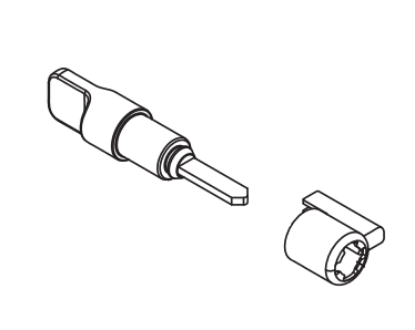
It operates the emergency release built into a privacy function lock, from the outside of the door.
A privacy function locks the outside lever from the inside, usually with a push button or a turn piece. There is no key cylinder, because the room is not meant to be secured against the building, only against somebody walking in. What there is instead is a small opening in the outside trim with a slot, a hole or a shallow recess behind it, connected to a plunger that releases the lock.
The tool engages that release and turns or pushes it. The lock unlocks, the outside lever works, and the door opens. The design intent is that this takes seconds and needs no key and no permission.
Why is there no key on a privacy lock?
Because a keyed lock creates a different problem. If a restroom needed a key to override, the person with the key would have to be found first, and the lock would then be part of the building key system with everything that implies. The emergency release gives immediate access without making the door part of the security hierarchy. Our lock function codes guide covers where privacy sits among the other functions.
How Is It Different From a Lever Removal Tool?
They do completely different jobs and only look alike.
A lever removal tool, usually a spanner wrench, depresses a hidden catch so the lever and rose can be pulled off the chassis. It is a service tool, and the door is normally open when it is used. An emergency unlock tool operates a release inside the lock to open a door that is locked and that somebody may be behind.
The confusion is understandable. Both are small, both engage a hole in the trim, and both end up in the same pouch. The consequence of mixing them up is that somebody tries to remove the trim from a door they are trying to open, which wastes the one resource an emergency does not have. Our lever removal tool guide covers the service side in full.
Can you open a privacy lock with a screwdriver or a nail?
Sometimes, and it is worth knowing in an emergency, but it is not a method. The release is sized for a specific tool, and anything approximate rounds out the opening or pushes the plunger out of alignment. A lock that has been opened with improvised tools a few times is a lock whose override will eventually fail at the moment it matters.
Which Locks Have an Emergency Release?
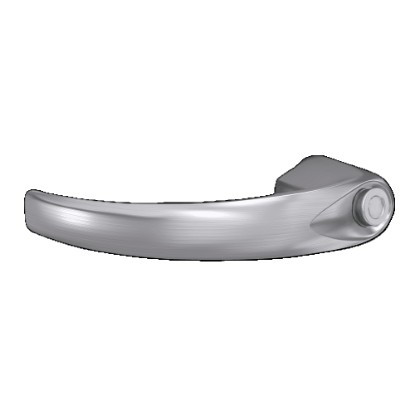
Privacy functions, and only privacy functions, because they are the ones designed to be locked by an occupant.
A storeroom function has no release, because the outside lever is permanently locked and a key is the intended access. A classroom function is controlled by key from outside. An office function is locked and unlocked deliberately by a key holder. None of these are the situation an emergency release is for.
Privacy is different: the person inside locks it, nobody outside has a key, and the building still needs a way in. That is the whole reason the release exists, and it is why checking the function is the first step when somebody asks whether a door can be overridden.
| Function | Who locks it | Emergency release? |
|---|---|---|
| Privacy | The occupant, from inside | Yes, that is what it is for |
| Storeroom | Always locked outside | No, key access is the route |
| Classroom | Key holder, from outside | No |
| Office or entry | Key holder or inside button | Not usually |
| Passage | Nobody, it does not lock | Not applicable |
Do hospital and patient room locks work the same way?
They follow the same principle with different hardware. A hospital privacy function gives the occupant privacy and staff a way in, and the override is built around the same idea of immediate access without a key. The specific release and the tool that fits it vary with the lock family, so confirm against the lock rather than assuming the tool on the van fits.
Does a Mortise Privacy Lock Work Differently?
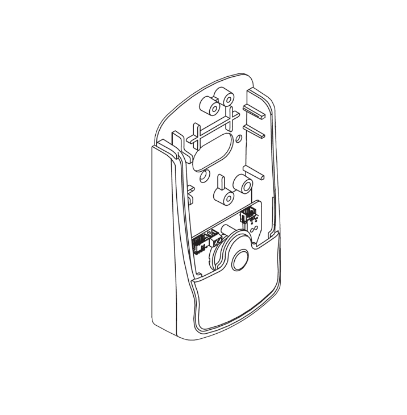
The idea is the same, but the hardware sits in an escutcheon rather than a rose, and the release is part of that escutcheon.
On a mortise privacy lock the inside face carries a turn piece, and on some functions a deadbolt as well. The outside face carries the emergency release. Because the escutcheon is a single plate covering the whole preparation, the release position is fixed by the plate design rather than by a small rose.
That has a practical consequence: the escutcheon is a stocked part in its own right. A damaged outside plate, or one where the release opening has been worn out, can be changed without touching the lock case. Our mortise lock parts guide covers how those assemblies break down.
What changes when the privacy lock also has a deadbolt?
The override has more to do. On functions where the inside turn throws a bolt as well as locking the lever, the emergency release has to retract that bolt too. If it does not, the door stays shut after the lever frees up. Check what the inside turn actually operates before assuming the release covers it.
Why Will My Privacy Lock Not Override?
Usually the plunger or the turn button rather than the lock itself.
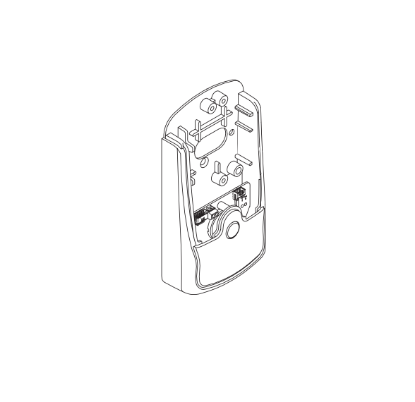
The release mechanism is a small plunger that has to move freely when the tool pushes or turns it. It sits behind an opening in the trim, which means it collects dust, cleaning product and whatever else gets near a restroom door. A plunger that has stiffened will resist the tool, and a plunger that has seized will not move at all.
The turn button on the inside wears in the same way. Buttons that are pushed thousands of times develop play, and a worn button can set a lock that the release then cannot clear cleanly.
| Symptom | Likely cause | Usual fix |
|---|---|---|
| Tool turns but nothing releases | Plunger seized or disconnected | Turn, button and plunger assembly |
| Tool will not engage | Wrong tool, or opening damaged | Correct tool, then inspect the trim |
| Releases but lever still locked | Deadbolt thrown on that function | Confirm what the inside turn operates |
| Lock sets itself at random | Worn button | Replace the button and plunger |
| Override works but lever is loose | Trim wear, unrelated to the release | Trim or spring cage parts |
How often should the override be tested?
As part of routine maintenance, on every privacy door, because it is the one function on the opening that nobody exercises in normal use. The occupant uses the button, the public uses the lever, and the release sits untouched for years. Our hardware maintenance checklist covers where it fits alongside everything else on the door.
Where Should the Tool Actually Live?
Somewhere a person on shift can reach in under a minute, which is rarely where it ends up.
An emergency unlock tool in a technician's van is not an override for a building whose staff need access at night. The usual answer is a small number of tools held at reception, in a facilities office or with a duty manager, with people who know what they are and when to use them.
The second half is knowing which doors they fit. A site with several lock families may need more than one tool, and the only way to find that out calmly is to check in advance rather than during an incident.
What should be written down?
Which doors have privacy functions, which tool each one takes, where the tools are kept, and who is expected to use them. That list takes an hour to compile and removes the part of an emergency that is pure confusion. Our hardware troubleshooting guide covers how to work through the door itself once you are inside.
What Should Happen After an Emergency Unlock?
Someone should find out why it was needed, because an override is a symptom rather than an event.
A privacy lock that had to be overridden once because somebody could not work the inside button is a training matter. A lock that has needed overriding three times in a month is telling you something mechanical is wrong, and the next time may be the time the override does not work either.
Check the inside release, the latch and the strike while the door is open and accessible. Most repeat overrides come from a latch that is binding rather than from anybody misusing the lock. Our mortise lock repair guide covers narrowing that down.
Should the override be recorded?
On any door where occupant privacy matters, yes. A short note of when the door was opened and why protects everybody involved, and over time it is also what shows a particular lock is becoming unreliable before it fails completely.
What Do You Need to Know Before Ordering?
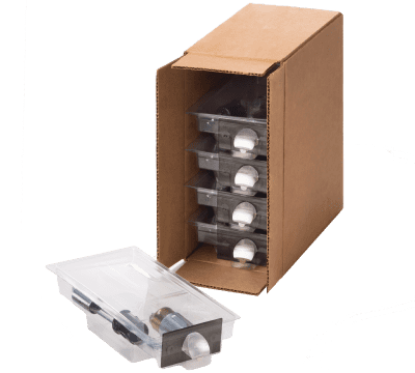
The lock series, the function, and whether you are buying the tool or the mechanism it acts on.
The series decides the tool shape and the release design. The function confirms there is a release at all. And the distinction between tool and mechanism matters, because a door that will not override needs a part, not another tool.
Also note the finish if trim is involved, and whether the opening is in a setting where wear is likely to be high. Restroom and changing room doors live hard, and the components that fail there are the small ones. Our ND Series storeroom lock guide covers the neighbouring functions on the same chassis family.
Can the function be changed instead?
On several series, yes, with a function kit. If a door keeps being locked when it should not be, or privacy is not actually the requirement, changing the function solves the problem more completely than repeating overrides. The lock body stays in the door and the trim and keying are unaffected.
About the Author
Security Parts has supplied repair parts for commercial door hardware since 2001, covering Von Duprin, LCN, Schlage, Falcon, Detex and Adams Rite at the component level. Our diagram based lookup exists so a technician can confirm a part before ordering it. This guide was written by the Security Parts team from supplier documentation and the questions our customers bring us.