 Trusted Since 2001


Quick Summary
Key points
- The LCN 4642 is part of the 4640 Auto Equalizer family, a low energy power operator rather than an ordinary door closer, so the parts list looks different from a 4040 or a 1460.
- Parts split across two numbering groups. Items specific to the 4642 carry a 4642 prefix, and items shared across the family carry a 4640 prefix.
- The cylinder assembly is the single most ordered item, and there are variants with and without a concealed input and output switch.
- The controller is a separate assembly from the cylinder. Electrical faults and hydraulic faults need different parts, and they present very differently.
- Because the unit is a powered operator, it has to satisfy low energy operator requirements as well as the usual accessibility rules for the opening.
| Prefix | What it covers | Example part type |
|---|---|---|
| 4642 | Items specific to this unit | Cylinder assemblies, cylinder only |
| 4640 | Items shared across the Auto Equalizer family | Controller, mounting plate, fixings |
In This Guide
- What Is the LCN 4642 and How Does It Differ From a Door Closer?
- Which Cylinder Assembly Does a 4642 Take?
- What Does the Controller Do, and When Does It Need Replacing?
- What Mounting Parts Does the Unit Need?
- What Symptoms Point to Which Part?
- What Accessibility Rules Apply to a Low Energy Operator?
- What Activates a 4642, and Does That Change the Parts List?
- Can a 4642 Be Serviced in Place, or Does It Come Off the Door?
- How Long Should an Auto Equalizer Last Between Service Visits?
- What Should You Confirm Before Ordering 4642 Parts?
- About the Author
LCN 4642 enquiries almost always start the same way. Someone has a unit at the head of an accessible entrance, it has stopped behaving, and the only identification is a number stamped on the body.
This guide covers what the 4642 is, how its parts are numbered, which assembly to suspect for which symptom, and what to confirm before ordering. Everything here is at part level, because that is how these units are repaired.
What Is the LCN 4642 and How Does It Differ From a Door Closer?
The 4642 sits in the Auto Equalizer family. That means it is a low energy power operator: it opens the door under power when somebody activates it, and it controls the door closed afterwards.
An ordinary door closer only does the second half of that job. It never opens the door, it only manages the return. The operator does both, which is why it has a controller, a power supply and activation inputs that a closer has no equivalent for.
That difference is the reason the parts list contains electrical assemblies alongside hydraulic ones, and the reason a fault can sit on either side.
Why is it called an equalizer?
The family name comes from what the unit does for the user: it removes the physical effort of opening the door, so a person who cannot manage the opening force of a conventional closer can still use the entrance independently.
Which Cylinder Assembly Does a 4642 Take?
The cylinder assembly is the hydraulic heart of the unit and the most commonly ordered part. There is more than one version, so this is where confirming before ordering actually saves money.
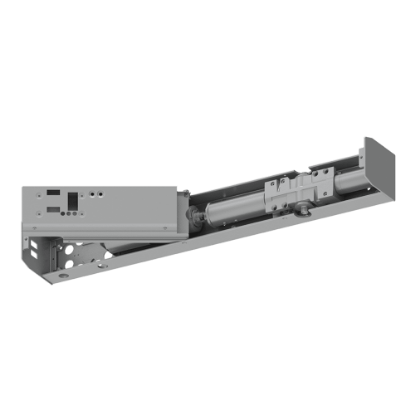
There is also a version built with a concealed input and output switch. That switch provides signalling to and from the operator without anything visible on the outside of the unit, and it is specified where the opening is integrated with other systems.
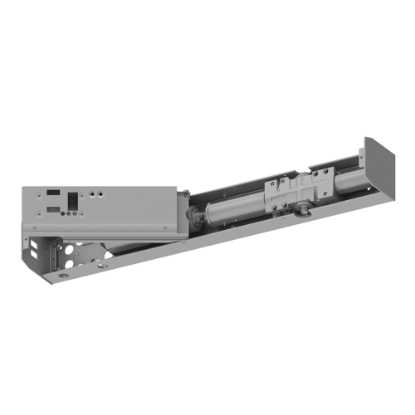
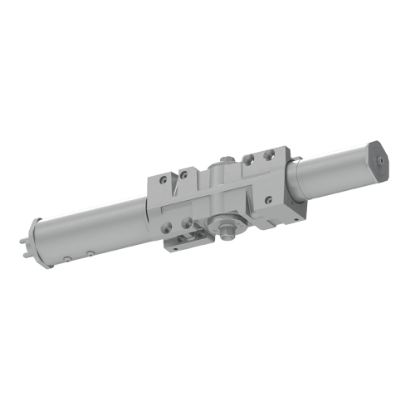
What is the difference between a cylinder assembly and a cylinder only?
The assembly includes the surrounding components the cylinder mounts with. The cylinder only item is the bare hydraulic unit, for cases where everything around it is sound and being reused.
What Does the Controller Do, and When Does It Need Replacing?
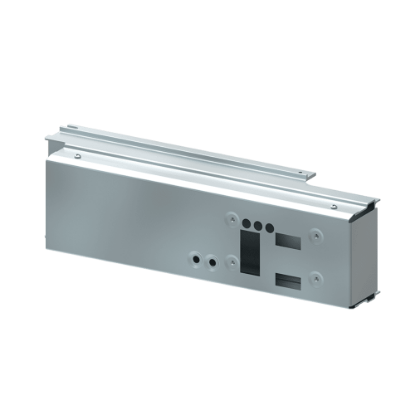
The controller is the electronics. It takes the activation signal, decides what the operator does, and sequences the opening and closing.
Controller faults look different from hydraulic faults. A failed controller typically means the door does nothing at all when activated, or behaves erratically and inconsistently. A failed cylinder means the door still responds but the movement itself is wrong: too fast, too slow, or uncontrolled on the way closed.
How do you tell a controller fault from an activation fault?
Test the activation device separately. If a push plate or sensor is not sending a signal, the controller is behaving correctly by doing nothing. Prove the signal arrives before condemning the electronics, because activation devices and their wiring fail far more often than controllers do.
What Mounting Parts Does the Unit Need?
The mounting plate assembly carries the unit and transfers its load into the frame or the door. It is a 4640 part because the mounting arrangement is common across the family.
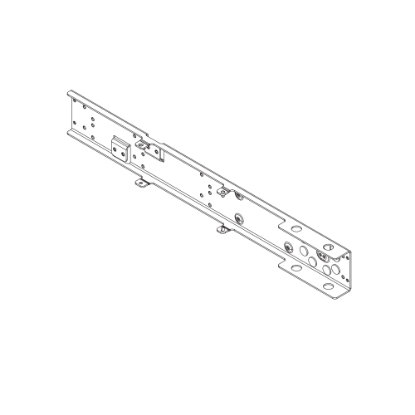
Fixings are listed separately too, including the controller screw. On a unit that has been opened and closed repeatedly for service, replacing fixings alongside the assembly is cheap insurance.
What Symptoms Point to Which Part?
| Symptom | Most likely area | Check before ordering |
|---|---|---|
| Nothing happens on activation | Activation device, wiring, then controller | Prove the signal reaches the unit |
| Door opens but closes uncontrolled | Cylinder assembly | Look for oil on the unit or the door |
| Door opens too slowly or stalls | Cylinder, or mechanical binding | Swing the door by hand with the arm disconnected |
| Operation erratic and inconsistent | Controller or power supply | Supply voltage under load, not at rest |
| Unit loose at the head | Mounting plate or fixings | Condition of the plate and the substrate |
| Door fails to latch after closing | Closing force, latch or strike | Latch and strike alignment first |
The pattern worth remembering is that the activation side fails more often than the operator, and the mechanical side of the opening fails more often than either. Our commercial door hardware troubleshooting guide covers the wider sequence.
What Accessibility Rules Apply to a Low Energy Operator?
Two sets apply at the same time, and they are easy to confuse.
The operator itself is governed by the standard covering low energy power operated doors, which sets how slowly it must open, how slowly it must close, and the limits on the force it may apply.
The opening is separately governed by the accessibility requirements that apply to any accessible door: clear width, maneuvering space, hardware height and so on. Fitting an operator does not remove those, although it does solve the opening force question entirely. Our ADA door clearance guide covers that side.
Does the unit still need to control the door closed?
Yes. A powered operator takes over the closing function from the closer, so the closing behaviour has to be correct in its own right. That is why a cylinder fault on these units shows up as a door that slams or drifts rather than one that will not open.
What Activates a 4642, and Does That Change the Parts List?
Activation is a separate decision from the operator, and it has its own failure modes and its own parts.
Push plates, touchless wave sensors, bollard mounted actuators and wireless transmitters all do the same job. What changes is where the user has to be standing and what they have to touch, which matters a great deal for an accessible entrance.
Because activation is separate, an activation change rarely touches the operator at all. Our commercial door operators guide and the door operator parts guide cover the components across the whole powered opening.
Can a 4642 Be Serviced in Place, or Does It Come Off the Door?
Most of the work happens in place. The cover comes off, the assemblies inside are accessible, and the cylinder, controller and fixings can all be changed without taking the unit down.
The unit comes off the door when the mounting plate is being replaced, when the substrate behind it has given way, or when the arm geometry has to be reset after structural work on the frame. Those are the jobs worth planning for, because they need the opening out of service for longer.
What should you do before opening the cover?
Isolate the power and confirm it is off at the unit, not just at the switch. These are powered operators with a motor and a controller inside, and the sequencing logic can move the door when you are not expecting it.
Then open and close the door by hand with the arm disconnected. It takes a minute and it rules out the most common cause of complaints about powered doors, which is that the door itself has gone stiff and the operator is being blamed for it.
How Long Should an Auto Equalizer Last Between Service Visits?
Longer than most of them get, is the honest answer. These units are normally fitted on main accessible entrances, which means high cycle counts, and they are often the last thing anybody inspects.
The realistic pattern we see is that the hydraulic side fails gradually and the electrical side fails suddenly. A cylinder gives warning for weeks as the closing swing gets less controlled. A controller or an activation device tends to work one morning and not the next.
That difference is useful for planning. If somebody reports the door closing harder than it used to, that is a scheduled repair. If the door stops responding entirely, the opening needs attention the same day, because an accessible entrance that does not open is an access problem rather than a maintenance one.
| Check | What you are looking for |
|---|---|
| Closing swing by eye | Early signs of cylinder wear before it becomes a complaint |
| Oil on the unit, cover or door face | A seal that has started to pass |
| Activation from the normal user position | Sensors drifting out of range or plates failing intermittently |
| Door swung by hand, arm disconnected | Hinge, seal or alignment problems masquerading as operator faults |
| Fixings at the mounting plate | Movement that will eventually damage the plate and the substrate |
| Latching on every closure | Closing force and strike alignment, especially on rated openings |
What Should You Confirm Before Ordering 4642 Parts?
| Item | Why it matters |
|---|---|
| Exact unit number from the body | 4642 parts do not cross to other family members |
| Whether the cylinder has a concealed switch | Standard and CS assemblies are different parts |
| Whether the fault is electrical or hydraulic | Decides controller against cylinder |
| Condition of the mounting plate | Often needs replacing with the unit |
| Activation devices on the opening | Rules out the most common cause first |
| Whether the door is fire rated | Restricts what may be fitted to the opening |
If the unit is one of the other Auto Equalizer variants rather than a 4642, the Auto Equalizer parts guide covers the wider family, and the Senior Swing parts guide covers the heavier operator range.
About the Author
Security Parts has supplied repair parts for commercial door hardware since 2001, covering Von Duprin, LCN, Schlage, Falcon, Detex and Adams Rite at the component level. Our diagram based lookup exists so a technician can confirm a part before ordering it. This guide was written by the Security Parts team from supplier documentation and the questions our customers bring us.
If the stamping is unreadable or you are unsure whether the cylinder has the concealed switch, contact us with a photograph of the unit with the cover off, or browse LCN parts and the door operator parts section.