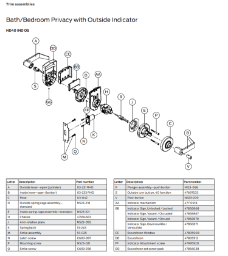
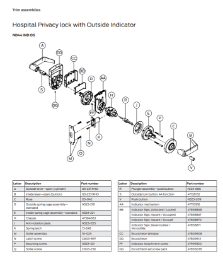
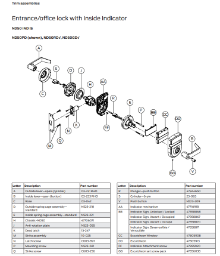
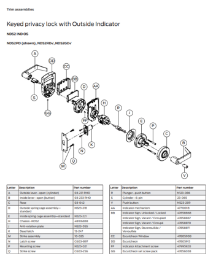
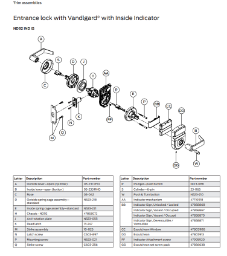
The Schlage 47856038 is the escutcheon set screw pack for the ND Series indicator trim assembly- one of those small parts that nobody thinks about until it's missing and suddenly the whole indicator housing is wobbling loose on the door. The screws secure the escutcheon to the trim baseplate after it's pivoted into position. One screw per installation, driven into the baseplate slot with a hex key. That's it. When it strips, backs out, or gets lost during a service call, this pack is what you need.
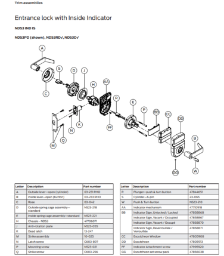
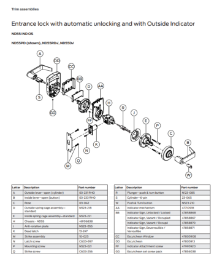
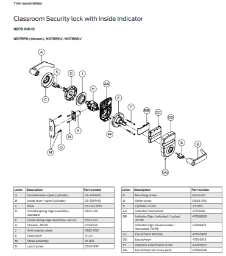
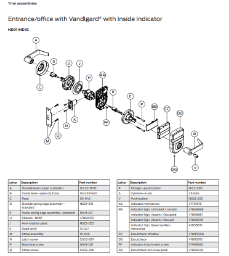
It covers nine ND Series indicator functions: ND40 IND OS, ND44 IND OS, ND50 IND IS, ND52 IND OS, ND53 IND IS, ND55 IND OS, ND78 IND IS, ND91 IND IS, and ND92 IND IS- all trim assembly placement.
How the Escutcheon Mounts on ND Indicator Locks
The indicator escutcheon on these ND functions is not installed the same way as a standard rose. It has tabs on the back edge that hook into notches in the trim baseplate- that's what aligns it. Once the tabs are seated, you pivot the plate inward until it sits flush against the door face, then drive the set screw into the slot to lock it in that position. The Schlage ND40/44 installation instruction says exactly this: "Hook escutcheon tabs into baseplate notches. Pivot escutcheon against door. Tighten one (1) set screw into baseplate slot with hex key."
What that means in practice is there's only one fastener actually holding the escutcheon against the door once it's installed. If that screw isn't there, the whole housing flexes every time someone presses the lever. Over time- or immediately on a busy corridor door- that flex misaligns the indicator mechanism and the sign stops switching correctly. A door that reads "Vacant" when it's locked, or "Locked" when it's open, fails its purpose entirely.
Schlage Cylinder Locks and the Indicator Escutcheon
Six of these nine functions have cylinders inside the trim. The ND44 has the emergency outside turn-button. ND50 and ND53 have a key cylinder on the outside lever for entrance/office operation. ND52 uses an outside cylinder to override the inside push button. ND55 adds automatic unlocking through the cylinder. ND78 uses a cylinder on the inside indicator trim for the 180-degree classroom lockdown function.
In all these cases, the escutcheon isn't just covering the lever- it's also housing the cylinder position. That's why the single set screw needs to be correctly seated and torqued. A loose escutcheon on a cylinder function means the cylinder housing shifts slightly with every key turn, which puts uneven stress on the cam interface and can cause premature cylinder failure on high-traffic doors.
Escutcheon vs Rose Trim: Which Needs This Screw Pack
The 47856038 is for the escutcheon trim format only. If the indicator function is installed with rose trim, the mounting is different and this screw pack doesn't apply. The escutcheon is the wider rectangular plate that covers both the lever hub and the indicator window in one housing. It's common in healthcare and institutional specs where the indicator needs to be readable from a distance across a corridor- the larger plate gives more surface area for the window. Rose trim is smaller and typically used where the door aesthetic requires a lower-profile trim footprint.
If you're not sure which trim format is installed, look at the outside of the door. If the trim plate is wide enough to span from the lever down past the indicator window in one piece, it's escutcheon- and this is the right screw pack. If the trim is a small circular rose around the lever only with a separate indicator housing, rose-format screws apply instead.
 Trusted Since 2001